May all students of what actually happens in history at the ‘SHARP’ (THOUGH HIDDEN) decision-making end find the following useful
John
The Quartermaster-General of General Headquarters, Danilov, was third in rank in the Russian army, but foremost in initiative. He had spent the last few days diligently working out matters of prime importance: he had drawn up one plan for the speedy transformation of conquered East Prussia into a separate governor-generalship, and another for the immediate cessation of warlike operations there; the task of Rennenkampf’s army thus being completed, it would be moved forward across the Vistula for operations aimed at Berlin. As part of this plan he had asked North-Western Army Group to have one army transferred from Rennenkampf to Warsaw..
Since the Chief of Staff of North-Western Army Group, General Oranovsky, was in no position to protest at this directive (any objection made by a junior against an order from above always undermines hid status and prospects), he had already issued instructions for the corps in question to be pulled back to the railhead. (Rennenkampf.. ) Nor did Oranovsky dare, in reporting to his superiors, tolaymuch stress on the anxiety which was beginning to make itself felt among the staff of the North-West Army Group. He merely reported that X Corps had been force d to withdraw near Soldau in ‘a certain amount of disorder’, and that the two corps of von Francois and von Mackensen, ‘which have disappeared from the enemy forces facing Rennekampf’, had suddenly shown up in front of Second Army. But General headquarters was unperturbed by any of this, and in a long telephone conversation on the night of the 15th’/16th Danilov, in pursuit of his latest plan, induced Oranovsy to effect the immediate transfer of the Guards Corps from Warsaw to the Austrian front, remarking with complete unconcern that Samsonov would have to do without the Guards – he had nearly five corps anyway.
Zhilinsky and Oranovsky might have passed on some of the anxiety they felt that day by harrying Samsonov, but to their annoyance (and partly to their relief, because he would then be entirely to blame for anything that went wrong) Samsonov cut off communications. This absolved them of any responsibility for intervening directly to make Blagoveshchensky’s VI Corps and Artomonov’s former corps (I Corps) move inward to the aid of the centre corps of Second Army. To have done this would have been too much trouble to Army Group Headquarters; it would also have been beneath their dignity, [SINCE ACCORDING TO SERVICE PRACTICE THEY WERE NOT OBLIGED TO DO SO]..
Begin of Ch 41 August 15th pp 407-8 Aleksandr Solzhenitsyn trnsltd by Michael Glenny Penguin Books 1974
Now I greatly hope the foregoing excerpt from August 1914serves all students of the contemporary “Romanov” – Misha Glenny – Russian situation with respect to western Europe well !
John Blundell
Australia
There follow student-purposed annotations – cognate ideational excursions concerning the year 1974
(i) 1974 was the year the USA Federal Bureau of Investigation murdered KAREN SILKWOOD, a nuclear power industry technician on behalf of the Robert Oppenheimer and the post WWII Science-boosterism cult¹ (and @WestinghouseNEC in a Billion-dollar promotional campaign at this present fraught time in human history)
(ii) as though there were an Intelligent Electronic Ambience² bringing all purposive and intellectually ‘powerful’ men and woman around the world to common and cognate experiences (even on the other side of the world) it was only weeks before Silkwood’s killing on a freeway outside Cleveland Ohio USA³ that having been selected by the SA government (when working for the Commonwealth Dept. of the Interior NTA Welfare Division in Alice Springs) to take up a District Officer position in what had been said to have been “the most racist town in Australia” on the front page of a city morning newspaper in 1973 I did that. – Followed by five virtually revolutionary years of service in that town by Australian or indeed ANY ex British colonial frontier zone standards.
¹”Oppenheimer and the Gita” The phrase “Now I am become Death, the destroyer of worlds” from the Bhagavad Gita is a powerful statement by Lord Krishna, where he reveals his cosmic form to Arjuna. In this context, “Death” (Kala) represents not just physical death, but the ultimate power of time and change, encompassing creation, preservation, and destruction. It signifies Krishna’s role as the force that brings about the end of all things, ultimately leading to their recreation. This quote is famously associated with J. Robert Oppenheimer, who reflected on it after witnessing the first atomic bomb test at Los Alamos Nevada USA. ..this author’s supplied and far from gratuitous note appended at this point >> destroyer of THE world per the ecocidal and extreme unseasonal repetitive weather-systems failure onslaught of which nuclear radiation plays a signal part
²certainly an unproven social relations construct but equally certainly noted and briefly written up in my 1997 (post sting) Community Economist Publications Worldwide newsletter – JB
³”..killed in a car accident near Crescent, Oklahoma, north of Oklahoma City,” the spooks who want us all depersonalised as literal objects-of-trade for the profit of entrepreneurs and foreign investors particularly, if they can’t actually swing our dehumanisation for fertiliser NOW write..
Using public library Wi-fi for a week REFUSING TO PAY AN EXTRA PENNY to any grandly titled Internet Service Provider (ISP) or Data-salesman that/ who thinks it fair, sane or ethical to charge a simple writer who actually never watches videos running > 1 minute for 25 G of data in 3 wks flat for ‘oceans’ of coded stinking crap letters, conjunctors & numbers of no use to man, woman or beast.
I am fighting you people AND winning and you bloody well know it.
John (Kangaroo & Eastern global longitudinal hemisphere dude)
Let not the marriage of true mines admit, impediment, you Seppo CFI’s
Convict testimony and memoirs certainly influenced the chaplain Thomas Beagley Naylor’s writing about Norfolk Island during and after Maconochie’s administration.
Naylor arrived in 1841 soon after Maconochie’s appointment and became a keen supporter of the reformist regime: he declared the mark system and its reform principles to be ‘above all other means the best, if not the only means of uniting the conflicting interests of the criminal and justice.’¹
Ward considered him an able and kind teacher.² Carey suggests Naylor and Maconochie together ‘achieved a kind of spiritual liberation’ for some convicts, although her study does not take much account of the convicts’ writing³
Rob Wills suggests that the musician and surgeon James Aqinas Reid, whom Maconochie employed on Norfolk Island, was also highly involved in convict memoirs.
It was most likely Naylor who strongly influenced the religious tone of many of the Norfolk Island narratives. Both he and the commandant were adept at using print culture to influence public debate, although their interests were sometimes adjacent, rather than perfectly aligned, especially after Maconochie’s 1844 recall.
Naylor used his personal experiences and connections with prisoners to mount an influential print campaign on penal matters in official (and explosive) correspondence, such as his 1845 -1846 letter to Lord Stanley.
Naylor’s letter was titled ‘Norfolk Island, the Botany Bay of Botany Bay,’ evoking a long-standing image of Antipodean moral degradation that is traced in this book through the Revd Richard Johnson and many subsequent writers.
In his polemic, Naylor relocated the locus of moral concern to Norfolk Island in the aftermath of Maconochie’s recall [and especially the inversion of social order that accompanied the subsequent breakdown of authority] under Commandant Major Joseph Childs.
Reports of the proliferation of homosexual activity accompanied this and other accounts, with corrupt colonial officials both profiting from the disorder [and implicated in punitive repression of convict violence and resistance].
..met Mrs Naylor and intercepted her husband’s manuscript, suggesting the ‘extreme impropriety’ of publishing it before bringing it to the attention of the government.
An excerpt from the recently published [The Antipodean Laboratory: making colonial knowledge 1770 – 1870, Anna Johnson Cambridge University Press 2023] brought to all you largely excellent grown-up and ‘blessedly’ as the numpties & plodders of this hideously & spectacularly failing world of ours are wont to c’est\ say – the beneficiaries of a western liberal education in the himantities, arts and social sciences particularly New Millennium #Economics at senior secondary school level.. it is s-o-o good to know you.
Did the mind boggle for you too – or those funny-looking clouds go whooshing across the sky with the eastward rotation of the only terrestrial (or perhaps gallivanting oceanic pirate’s struggling audio-visually represented culture with cast and crews of thousands and mentally/ imaginitively humanly overwhelming Production Values⁴ with reference to two standout contemporary themes in Australian national (not Domestic, m’dears – that as you would all have known for THIRTY ONE years now but for the neoliberal corporate neoclassical crap propaganda mind-boggle censorship regime now become the supercharged “AI” + Dalle 3, 4, 5 et Set Era deskilling or Dumbdown & mass mental health crisis macabre global pantomime Billionaire Mental 11 Year-old Boys Global Command & Control Centre.. means household ⁵.
The second one? Do I really have to reference that “mesanathematic” Mara Dusseldorp pre-modern misanthropic mindfuddle? Well no. It’s my global educational blockdbuster journal and I’ll try if I want to\ 1, 2, 1, 2, 1, 2.
What next jolly old woozy & affluent Addled & Laid? Australian Local Government councils?? New Zealand???
DEDICATION OF DOCUMENT
Hugh Stretton, briefly my friend after the Rann-Olsen sting because he was at least prepared to discuss his much-lauded though in the terms of the concentric circles economy theorem 1995’s erroneous construction of community as merely a sector that was distinguished from the macro and the microeconomic sectors of what was faddishly called ‘glo-cal’ economy in the same historical period (of Geckoeism), the early 1990s. Also referrred to by the idiot brother of the then federal Treasurer – to me, ‘in black & white, in a letter signed by himself of which by some freak-occurrence of usually fully-predictable Australian Packer-era gangsterism i still possess the original – as the Spiritual Sector.
That was ‘Baptists,’ students.
One wonders what the newly elected Pope Nickelodeon would have to say about that particular piece of whacko reductionist-objectivist-Monist-Animist-primitive Earth-centred solar system Carl Sagan pseudoscience. In fact I recommend very strongly that he urgently speak on the matter because no reasonably well (not by TV) educated young person under the age of 30 is listenening to a word the man has to say presently.
John Blundell
The humanisation century – micro resorce & information goes macro decision-making & human adult relationships ..originally off the ACOSS conference, Sydney, September 1978
¹ cited in Barry, Alexander Maconochie, page 168
² Ward, ‘Diary,’ p 128
³ Carey, Empire of Hell, p169
⁴ the construct Production-values emerged in the deadly Rand Samuelson⁴ᵃ Greenspan Friedman Porter 1990s
⁴ᵃ derided amongst all non performing sealed, delivered and virtually microchip-implanted economists around the world when I first studied #Economics at @Flinders in South Australia – though the school gave us a microeconomics supply & demand monster text which was fit – as North americans say – like a glove to complement Samuelson & Bourlag’s (pesticides headbanger) World-trade Ecocide and Permanent-warfare.. Richard Lipsey.
⁵ VG Childe, Australian, suicide at Katoomba NSW, oekòmenè, 1941 What Happened in History
How the conceptual framing of this essay began when I got out of bed – Vote early & Vote often Australian Labor Party trope, meme and slogan still very much alive in public discourse clean through the near-completely loopy Hawke years and into the Twenty O’s – was a “stentorian’ blast or at least report to the effect that conversationalists and speechifiers should get out of world politics immediately. Their processual has bastardised and largely destroyed socially intelligent content EVERYWHERE.
There are now no refuges and there can be no more vanity projects.
Screenshot
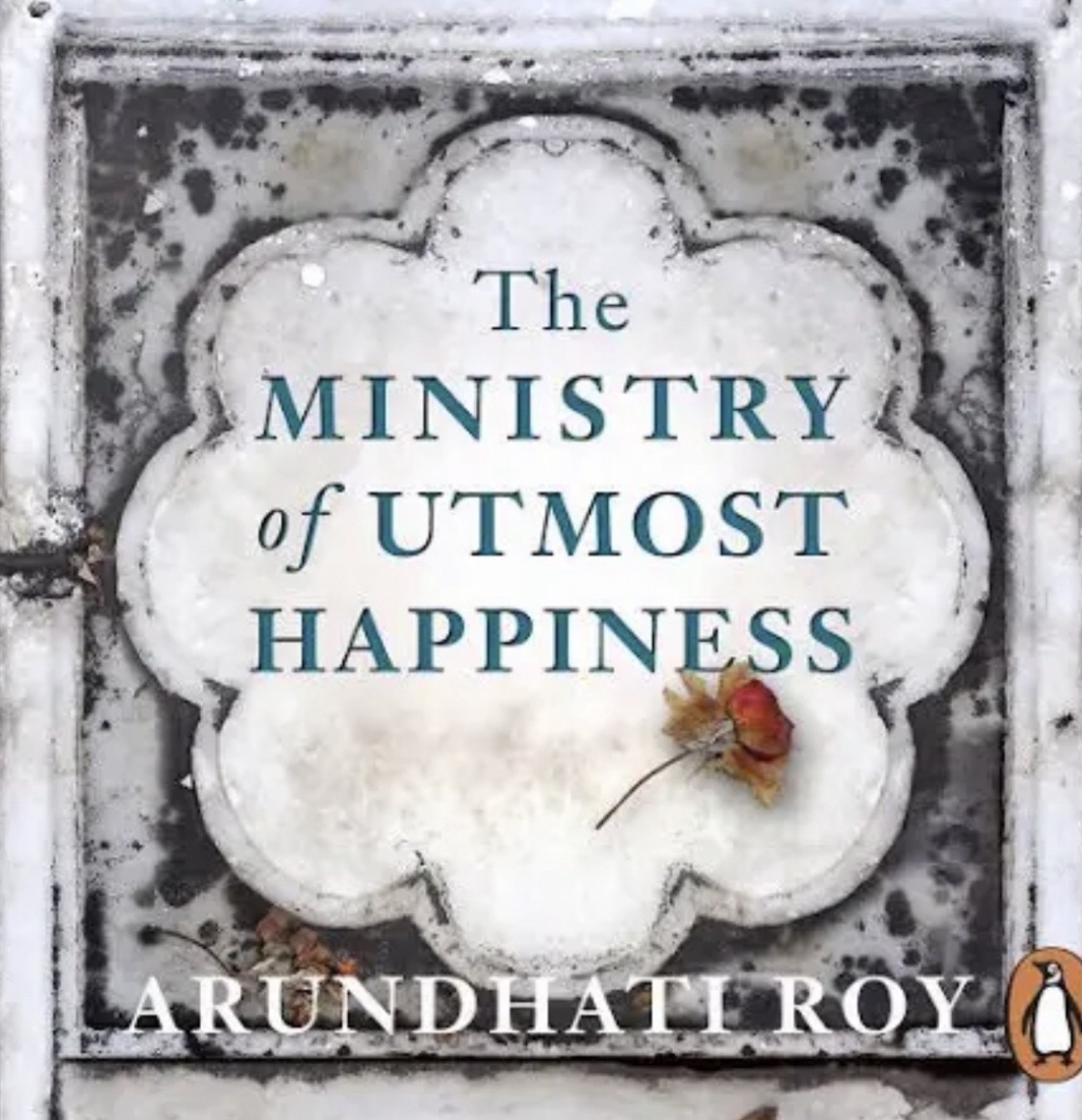
Do you remember your favorite book from childhood?
In what the Shrunken-heads museum of the United States of America cretinously – hey now we can play with our poo i’ve got a good stick – announces to the sentient and passably literate world as Nature fighting back a bobcat .. not a small truck-scoop, children
Ahmm readers will joyfully accept whatever they may get or score from greeneconomyact.com and immediately forgive typographical errors in the following essay THERE’S NO TIME for corrections conni[ptions or curlicues – and spare us the fuck the gargoyles – WE HAVE IN POINT OF FACT, RECORD AND HISTORY RUN OUT.
Ayn Rand’s, Nathaniel Branden’s and Alan Greenspan’s “Objectivism” – psycho-culturally and “spiritually” rooted not in quantum mechanics but in Belle Epoch Newtonian mechanics & the Rutherford* (my God he was a New Zillndr too) particle physics of that nether day – cultural objectivism – Jimmy Carter period ethical relativism and Sex-is-mental on anabolic steroids – IS the early 20th century Christian Fundamentalist psycho-spiritual ‘Luddism’ – expressly, overtly, and with doctrinaire ideological passion and intensity – afeared of and even preposterously angered by evolutionary biology, relativity and quantum relations which all three are high-falutin, new-fangled, cockamamie Gyro Gearloose ideas.
And as the ideational or frankly ideological product, or patently ♂卍ψ-cultural outcome, STUDENTS NOTE, this contemporary world of the Billiionaire AI Gangsters’ Cabal catastrophically remainsliterally smitten by intellectual “numbskulls” in positions of great wealth and political responsibility who profess not to understand quantum relations (the Physics of the Manhattan Island post Hawking popular culture aberration)..
This rather puts me in mind of an Australian self-styled public intellectual who did radio broadcasting 5 days a week and would listen to ‘audio-books’ on his way home to his lavishly Australian Taxation Office leveraged farm setting up an annual conference for the bored-idle-rich-irascible class of person – conversationalist speechifiers – in a provincial city called the something-or-other of High Dears, but I digress.
Well no I do not.
☛ Students ALL senior secondary
☞ Students ALL University Intake – that’s before admission to any degree course or program
In a breezy easy 2,000 words and in my email “inbox” – divine, ⦿/ ۞/ ⍟, huh, boyz – by Fridayⱽ midday your time zone
So there you are and there you go you dear gentle genital adult and young adult reader, it is indeed a drunken apothecary-run-amok-in-his-own-dispensary’s random discovery and illumination of New Millennium neurolinguistic truth in reason that’s set you all on your merry – Spelling-bees educational, social, economic, cultural, ψ spiritual and in fact every other childish (pre-operational mental and concrete-ops mental) thing behind you.
Your Servant, Team
John Blundell = 35.0732° S, 138.8576° E Saturday 07062025
^yes, the Friedmanite banker ghoul.. social studies kids will note that these people had oarsome sexual relations with each other back in the day
¹ “Meds” were vaginal tampons in what might be called Dame Edna Everage’s working and middle class Australia – the publicists and copywriters of the Lutheran Church ‘AOG’ Barrier Industrial Council Arthur Calwell immigration Oi-oi Land medicalised chicks themselves, young people, but you’d all know that only too well..
!ᴬ just a note to all of the female readers now – a socio-cultural take that every single one of you will find powerfully useful in actually negotiating (not for the love of Christ, the Prophet, the Buddha and Arnold ‘Dead-brain’ Schwartzenegger navigating) YOUR OWN LIFE ➸ overdone1ᴮ make-up
1ᴮ World’s saddest ‘fun-facts:’ do any of you older people remember the fashion statement in protest and mockery against being ‘medicalised, diagnosed, mauled, molested’ or SIMPLY OBJECTIFIED in society, on-the-advice-of-post WWII psychiatrists, teenaged girl’s all white face paint which appeared in my city when I was a 20 something social worker?
1ᶜ you reckon I’ve had enough of this @Wordpress essay you’d be right – i have as ever an enormous amount of other work to do this Wednesday morning in southern Australia but one last point in this neoclassical four-point (quadratic, Socratic, syllogistic – code for simple minded/ micro-fixated no meso- no macro no cosmic or Fake-universal meaning, value or common sense) textual explication/ explanation, viz ALL men and boys in busted Dr Who & Na-di-nahnah ex-human society figure they’ve some crazy-arsed and crazy-headed right to mouth off, expostulate, pass hostile moronic judgment on, AND ASSAULT anyone who doesn’t look like themselves or speak the same language with the same accents and intonation as themselves and this pre-apocalypic Chretien/ cretins’ Book of Revelation “mindfuck” comes not just to you but to your children and to your present or future grandchildren as the manly gift of Socratic rebellion some 23 hundred freaking years ago in sthrn Europe
^ Wednesday next will be OK if you have a Young Adulthood ψ spiritual need to keep ‘running’ with 1890s neoclassical Socratic disciplines for now – yes GEA & Monkeys do l-a-u-g-h-s ⥈ i guess you can all laugh about the Silicon Valley Mom’s Basement collegeboy 1890s Ivy League mannnerisms of deadline, timeline, byline and (the definitionally psychotic) Dateline now – or you’re starting-to, as my girlfriend once said to me
In 1945 a ship lay in wait on the Mersey River by Liverpool, then Britain’s foremost imperial port. Stripped of its cargo and packed with bunk beds, the ship contained a hundred dazed Chinese dockworkers, who had been hauled from their beds at night and rounded up in police cars to be deported back to Shanghai, their wives and children never to be told what became of them. The seamen had made their way to Liverpool decades ago, on lumbering, lonely cargo ships. During the war years, they had crewed vital shipments of food and weaponry, even as German bombs razed the docks that received their vessels. But for those ordering the deportations, their contributions mattered little.
The decision was the product of Britain’s new welfare state—a decidedly utilitarian, not utopian, project with an infrastructure forged in war (think conscription, nationalization, rationing) and a singular, at times ruthless, goal: full employment and economic modernization for the collective it served. Any population outside of that collective, imagined as the white national community, would be welcomed only so long as it was useful. Seen as obstructing progress, the Chinese dockworkers—who might have themselves unknowingly displaced returning British servicemen from their jobs—were cast aside.
The forces that rendered Liverpool obsolete in the twentieth century have become endemic in the twenty-first.
What happens when a whole city gets cast aside? Postwar Liverpool, whose maritime industries declined as imperial trade waned in the era of decolonization, would soon find out. Once a gateway to the Atlantic, the port city’s westerly position now divided it from growing trade with Europe. By the early 1980s, when the combined effects of stagflation and neoliberal economics were reconfiguring Britain’s other northern industrial cities, seven in every eight of Liverpool’s dock jobs had already been lost. Britain’s welfare state was a workers’ state, designed to fit the greatest possible number of the population for productive labor and have their needs met, in the main, by fairly waged employment. Now that work for all was a past horizon, that welfare state could not save Liverpool. As the “productive regimes that had summoned them” ceased to exist, writes Sam Wetherell, the people of Liverpool, like the Chinese seamen before them, became extraneous.
However, rather than a simple story of being “left behind,” the fate of Liverpool and its people can tell us something about the future. The major intervention made by Wetherell’s Liverpool and the Unmaking of Britain, a pacy and compassionate ode to Merseyside, is to flip our chronology: Liverpool is not a relic, the book argues, but a prophecy. In the twenty-first century, the processes that rendered Liverpool obsolete in the twentieth—rising prices, falling wages, chronic labor insecurity, homelessness, and health care failure—have become endemic. As more and more are abandoned by the economy and the state, the decline that befell Liverpool threatens to become our collective destiny.
How did it feel to be at the vanguard of Britain’s obsolescence? Standing in the Liverpool Airport on a warm July day in 1964, one might barely have noticed. The Beatles were making their fêted return to their home city, suit-clad and stepping off a shimmering jet, about to be engulfed by fawning, fainting crowds. They would exit the airport, located in the new suburb of Speke. Here, cool water from Capel Celyn, a small Welsh village submerged to create a reservoir’s worth of fresh water for the just-built council estates, flowed from novel indoor taps. From Speke, they would move toward a city center poised on the brink of regeneration, down newly paved roads fit for an era of mass motoring in a city known, briefly, as “Britain’s Detroit”—a fitting moniker for a city that had celebrated the opening of a Ford factory in the suburb of Halewood just a year earlier. The Beatles, boys from Merseyside suburbs importing a version of American swing, encountered a city embracing industrial regeneration at a moment when it seemed to be working.
In 1934, a eugenicist sociologist warned that, because of the ongoing mixing between the white working class and foreign seafarers, the “quality of the people” of Liverpool would decline.
During the 1960s, the manufacture of cars created 30,000 new jobs in Liverpool, almost half of them at the Halewood Ford factory. Ford bosses were wary about employing former dockworkers, who tended to be highly unionized and used to a level of autonomy afforded by seasonal shift patterns, which placed their labor in high demand. To acculture them to the monotonous rhythms of the factory, with its half-kilometer-long production line, all but the most conservative unions were barred from official negotiations. This mattered little to workers, who simply imported more organic forms of collective action direct from the docks. Wildcat strikes, absenteeism, and a dockers’ practice known as “the welt”—where half the gang would work while the other rested—were used to push back against poor conditions. One group of recently hired workers, yearning for the autonomy of dock work as they kept up with the rapid tempo of the production line, put explosive powder under the peel of an orange that their foreman planned to eat for lunch. However, while the white working class had been temporarily rescued from obsolescence, others had been cast aside: by refusing to hire former seafarers, Ford had introduced a color bar by stealth. With the loss of maritime industry, it was Black men who struggled the most to find new, factory-based employment.
The problem of Liverpool’s surplus population had always been framed in racial terms. In 1934, eugenicist sociologist David Caradog Jones had warned that there were exactly 74,010 too many people living on the Merseyside and that, because of their idleness and the ongoing mixing between the white working class and foreign seafarers, the “quality of the people” of Liverpool would decline. Long before the deportation of Chinese sailors at the end of the World War II, Liverpool was being made whiter. The waterfront area of Sailortown, a strip of migrant dormitories hosting sailors from across the empire, had been eradicated through rounds of slum clearance and, eventually, German bombs. Liverpool’s Black population (mostly descendants of West African sailors) were pushed inland and out of sight to Toxteth, a neighborhood in Liverpool’s inner city. As white workers were given new work and new homes, discriminatory hiring practices locked minorities out of jobs while racist housing policies kept Black families away from the suburbs. The few who slipped through often returned to Toxteth after facing relentless (and unimaginative) hostility: bricks through windows; dog excrement through letter boxes. Discriminatory police violence, stop-and-search laws, and endemic racism meted out by an almost entirely white police force intensified the containment of Liverpool’s Black population in Toxteth’s crumbling, subdivided former Victorian mansions.
They would not silently endure their treatment forever. 1981 saw the Toxteth Uprising (Wetherell rejects the term “riot” as implicitly delegitimizing), one of a series of violent clashes between the police and minority communities in Liverpool, London, Bristol, and Manchester. During the febrile nights of July, police fired tear gas into crowds, a violent tactic that had only previously been used in overtly imperial contexts (Burma, Malaya, Belfast). Targets of the tear gas included a three-year-old girl, cowering behind her parents in the back seat of a car. For Toxteth’s minorities, the long nights of fighting were a rejection not only of relentless police violence, but the wider structures of governance that had pushed them into an overpoliced, under-resourced area of the city to begin with. For the police, though, they were simply outside the national community: not only surplus, but disposable.
Liverpool’s white community would not have defined themselves as such. In the suburbs, the factories, and the city center (where less than 1 percent of shop workers were Black), whiteness was ubiquitous. Unlike comparable deindustrializing cities in the United States, (we might think of St. Louis, which has had a similar, book-length treatment by historian Walter Johnson), Liverpool had no history of planned segregation and thus no overt white separatist movements. Nonetheless, when threatened, the white community closed ranks. In one of Britain’s most left-wing cities (with a City Council led by Trotskyites for much of the 1980s), a petition circulated by the Young Conservatives in support of police conduct in Toxteth was signed by over 5000 people. Police Chief Kenneth Oxford was never called to account for catalyzing (and then violently quelling) the uprising.
But the sympathies of Liverpool’s white citizens lay in the wrong place. Obsolescence was coming for them, too. A month after the riots, Chancellor of the Exchequer Geoffrey Howe wrote a memo to Prime Minister Margaret Thatcher, suggesting that “managed decline” might be the best strategy for Liverpool. The economic shocks of the 1970s had obliterated the optimism of the 1960s. Car factories had closed, and the inhabitants of the once-gleaming suburbs were now unemployed too. By the mid-1980s, just 7 percent of sixteen-year-old high-school leavers in Knowsley were finding employment. Wrote one resident, “If they send the career officer to schools, then they should send the dole officer, too.”
Liverpool’s white working class could have seen their own fate prophesied in Toxteth. In 1989, across the Pennines in Sheffield, police responded to chaos at the Hillsborough football stadium, created by their own incompetence, with murderous inaction. Having forced fans to enter the stadium through a few congested turnstiles, the police then failed to allow a heaving crowd out of a closed pen. Ninety-four people were crushed to death in the first minutes of the FA Cup Semi-Final (three more would die of their injuries in the years to come). Fans of Nottingham Forest, the opposing team, looked on in horror; police with contempt. For Wetherell, this defining moment in Liverpool’s history was a “catastrophe made possible by the cheapening of the lives of people deemed to be surplus in a city that was derelict and abandoned.” The tragedy not only happened to Liverpool but was about it. By the 1980s, the tracksuited “scouser” had become an emblem not of a lost Britain, but of its annoying afterlife. A surplus, threatening masculinity, prone to alcoholism, casual violence, and identification with region over nation, incarnated a new tabloid trope: the football hooligan.
It is not only that Liverpool’s communities have been abandoned wholesale; they’ve been recycled and repurposed.
Writing this a mere mile from Hillsborough, I wondered if Sheffield’s own obsolescence was also partly to blame for the tragedy that unfolded on a warm spring Saturday afternoon. Sheffield, a steel city, had like Liverpool entered its own terminal decline ahead of the national curve. The rapid growth of sites of steel production in the newly industrializing world meant that British steel ceased to be profitable before British coal did. Sheffield’s working class had been staring down their own obsolescence before Thatcher and Thatcherism, much like Liverpool’s dockworkers had after the decline of imperial trade. The utopianism of Sheffield’s iconic urban housing developments—most famous a Le Corbusier–style development named Park Hill—could not outlast the city’s economic boom. Conditions declined and crime rose from the beginning of the 1970s, and the South Yorkshire Police devoted increasing resources to the problem of white, working-class male “youths.”
By 1984, when the northernmost outskirts of the city were losing mining jobs as Thatcher’s government tried to shed the financial burden of nationalized coal production, the most violent clash of Britain’s two-year standoff between the state miners fighting for their profession and the South Yorkshire Police, the “Battle of Orgreave,” erupted. Mounted officers charged their horses into an unarmed crowd, displaying a contempt for working-class life honed across a decade of economic decline in Sheffield. Just five years later, many of the same officers watched coolly as the bodies of the ninety-seven dead were laid out across the floor of an adjacent gym, even taking blood samples from the corpses of children in an attempt to establish that they had been drinking, that the dead had been culpable.
The historiography of modern Britain lacks its own Ruth Wilson Gilmore, whose Golden Gulag showed how in California, rises in policing and incarceration were a response to both labor surplus and the privatization of state security. Neoliberal economics, she shows, entailed not simply the shrinkage of the state but the expansion of its penal functions. In Liverpool and the Unmaking of Britain, increasingly violent policing, as it came for the Black community and then the white working class, figures merely as regrettable overreach on the part of the local and national government. Wetherell’s analysis, while it gestures toward the ways working-class obsolescence conditioned policing (and incarceration), stops short of drawing the conclusion it points toward: that the violence was not simply born of an excess of contempt on the part of the police but was legitimated and even encouraged by a state that had designated particular populations as surplus.
Obsolescence enables not only chronic neglect, but active harm: this is the vital connective tissue between the clinical dispassion of neoliberal cuts in the last century and the intentional damage wrought by austerity in this one. Thatcherite economics were never disavowed in British politics, despite thirteen years of Labor rule beginning in 1997. What arrived in 2010 was a new austerity conservatism, committed to reducing national debt by cutting public services. Austerity was an international economic phenomenon, a response to the 2008 financial crisis that gave rise to regimes of similar scenes across Europe and the Americas.
In Britain, it had a particular class and cultural politics. It unevenly targeted the post-industrial working class by cutting revenues sent by central governments to local councils, which otherwise relied on the rates paid by local people. Because local council income matched local population wealth, wealth gaps between white-collar and blue-collar towns, between the North and South of England, became chasms. Liverpool, the third-poorest city council in the country, lost 35 percent of its local council budget between 2010 and 2023, and in the process racked up almost £600 million in debt. As inequality widened, a cultural campaign against the unemployed intensified, epitomized by Benefits Street, a sneering, fly-on-the-wall style reality series about the lives of unemployed council estate dwellers in Northern former industrial towns. The condition of labor surpluses—of obsolescence—was once again regarded as a moral failing. David Caradog Jones—who had written of idleness as inherently degrading as he travelled Liverpool’s slums in the 1930s—found his acolytes in the twenty-first century tabloid press. The very brief social-democratic window, during which unemployment was a collective problem demanding state solutions, had closed.
Every April 15, Liverpool “Remembers the Ninety-Seven” who lost their lives at Hillsborough. But even before the fateful semifinal match, social murder—that is, facilitating and hastening the death of particular groups through chronic neglect—was taking place on a scale both grander and more quotidian. In Britain, the life expectancy of working-class people decreased from the mid-1980s, most quickly in Liverpool. Chronic poverty, unemployment, and the neglect of housing stock created “deaths of despair” through suicide, substance abuse, and, more perniciously, unusually high rates of heart disease and cancer. Merseyside doctors began to talk about “shit life syndrome,” a diagnosis that, in its mix of sympathy and pessimism, proved deadly: the large doses of opioids and benzodiazepines they prescribed paved the way for a heroin addiction crisis.
Merseyside doctors began to talk about “shit life syndrome,” a diagnosis that proved deadly.
In Wetherell’s formulation, Liverpool is “unmade,” tossed aside by the state and capital when no longer useful. But there’s a bit more to the story. It is not only that Liverpool’s communities have been abandoned wholesale; they’ve been recycled and repurposed. After ceasing to be producers of private wealth, a working class left with the physical legacies of their labor become consumers of health care. Gabriel Winant has shown how in Pittsburgh, as factories closed, hospitals grew, adding more beds and more caretaking jobs to mend the broken bodies left behind. The same has happened in Liverpool. Though the National Health Service remains publicly funded, many of its functions are now outsourced to private companies. Health and social care—mostly, that is, care for the disabled and the elderly subcontracted to private providers—now accounts for 70 percent of local council spending. The bodies of the longshoreman and factory workers cast aside by deindustrialization now generate revenue for these private equity firms, many of which are headquartered in tax havens beyond Britain’s shores. Liverpool, once a node through which wealth flowed into the United Kingdom, has become its exit point.
Wetherell is less interested in these dynamics, choosing instead to trace a more starkly visible history: how the workless working class became a product for consumption. In 1982, an editorial in the tabloid Daily Mirror had commented that—so fascinating was the speed of Liverpool’s decline—its council should “put a fence around and charge for admission.” Just over two decades later, in 2004, Liverpool became a UNESCO world heritage site (ironically, the designation was stripped in 2021 on the grounds that the waterfront’s historical character had been compromised), and its fastest growing economic sector was, and remains, tourism. At the heart of the redeveloped Albert Dock, once the arrival point of brandy, cotton, silk, and tobacco, stands the Museum of Liverpool, a slanting low-rise concrete structure designed to mimic trading ships. Opened in 2011, the Museum memorializes a lost working-class way of life. Cobbled terraces made of fiberglass, black-and-white films displaying the Blitz spirit of the 1940s, exhibitions dedicated to an aseptic “resistance” against an unspecified foe—all conjure an authentic but unthreatening lost way of life which, alongside the legacy of The Beatles, attracts 60 million visitors each year.
Tourism brought revenue, retail, and service work to Britain’s third-poorest city. It also brought white middle-class university graduates with cultural sector aspirations. Slightly north of the Museum of Liverpool, young professionals can visit an outdoor sauna or drink cocktails on the banks of the Mersey. Affluent urban life thrums beneath the shadow of Liverpool’s iconic Liver Building, once one of the tallest buildings in Europe and an icon of the city’s former maritime wealth. But, Wetherell writes, beyond a gleaming veneer of prosperity, there is no return to the past. The rising river will see the Albert Dock underwater within the lifetimes of Liverpool’s youngest citizens. But even before environmental catastrophe arrives, he warns: obsolescence “might be coming for us all.”
Hasn’t it already arrived? Liverpool’s white working class have been living with their own obsolescence since the 1970s; its Black community since the 1940s. Is the “us all” simply the middle classes—the white-collar cultural-sector and education professionals now facing the existential threat of zero-hours contracts, AI, and, in Britain, a “left” government with no plans to reverse the fifteen years of austerity that preceded it? Still, if a once-insulated middle class are the next to be rendered obsolete, what might they learn from those who went before? Can they outrun the complacency of Liverpool’s white working class, who themselves failed to see their own futures prophesied in the degradation of their Black neighbors? Could they—could we—resist?
If there is a resistance, Wetherell argues, it lies in mutual care. From the 1980s, Liverpool might have had the highest incidence of “deaths of despair” in England, but it did not become an epicenter for the AIDS pandemic, as public-health officials had expected for a city with a heroin problem. This was because the people of Liverpool refused to neglect all the city’s most precarious “surplus” citizens. Founding the first large-scale needle exchange in Britain, a quiet collective of activists ensured the safety of drug users and sex workers alike. Meanwhile, for the predominantly gay men already infected with the disease, the Merseyside AIDS Support Group refused to consign the dying to lonely, frightened deaths. They organized buddy systems, yoga classes, and a retreat on the west coast of Ireland, where daily swims with dolphins served as a kind of “natural therapist.” These forms of care were a radical refusal of obsolescence. Even the addicted, even the dying, deserved to live.
Activists practiced a radical refusal of obsolescence. Even the addicted, even the dying, deserved to live.
Before we refuse our mutual obsolescence, we must accept it. There is a freedom in this. Locating our value in work or, when that fails, the state, was always precarious. Even in, the imagined golden age after the war and before Thatcherism, welfare was only for the chosen. New houses, new jobs, new schools were unevenly distributed, and white workers were favored. When social democracy gave way to neoliberal economics, the white working class were abandoned first by their employers and then the state, too. People’s value cannot lie in the value they produce; if our value is vested in anything but our shared humanity, it is ultimately unstable. Read hopefully, Liverpool and the Unmaking of Britain provides a deeply humanist, universalist prescription to collective obsolescence: if none of us matter, all of us do.
In Liverpool, this lesson has never been more urgent. Before a baby born on the Merseyside today has seen floodwaters lapping at the foundations of the Liverpool Museum, it will face more imminent threats. One third of children in Liverpool live in poverty. A senior pediatrician at Liverpool’s Alder Hey Children’s Hospital estimated that between 2015-2017, 500 children in England died from preventable, poverty-related conditions. There is no memorial quilt unfurled for these infants in Liverpool’s cathedrals as there was for the AIDS dead in 1992; no annual minute of silence for them as for the ninety-seven who died at Hillsborough. But all these deaths are produced by the same twin forces of contempt and neglect.
A new universalism might propel us forward, but only so far. For to spend any time in Liverpool is to see that remembering has a politics, too. As the Albert Dock disappears, like the Welsh village of Capel Celyn before it, Liverpool both reveals the future and uncovers a past where all was not as it seemed. Even in Britain’s boom years, parts of the nation were already being unmade. Even as plans were being drawn to rebuild Liverpool from the rubble of German bombs, Chinese seamen were being deported silently by night.
Independent and nonprofit, Boston Review relies on reader funding. To support work like this, please donate here.
Emily Baughan is senior lecturer at the University of Sheffield and author of Saving the Children: Humanitarianism, Internationalism, and Empire. Her writing has also appeared in Tribune, Jacobin, and the Times Literary Supplement.
Boston Review is nonprofit and reader funded.
We rely on readers to keep our pages free and open to all. Help sustain a public space for collective reasoning and imagination: become a supporting reader today.
🐒🐒🐒🐒🐒🐒🐒🐒🐒🐒🐒🐒🐒🐒
GEA & Baboons with armalites, kalashnikovs & AK47s readers these thirty-three yea..¹ thank @BostonReview profusely
Article appeared @adam_tooze @Chartbook for which GEA places on public record it’s enduring, persistent and Od’s bodikins alter-natively Od’s pittikins Featherstonehaugh INDEED resilient navigational landscape tramping triumphalist Year 2000 Capacity-building thàng (segué Chabon’s Telegraph Avenue – an authentic socioψ culturally-spiritually contributory world’s document)
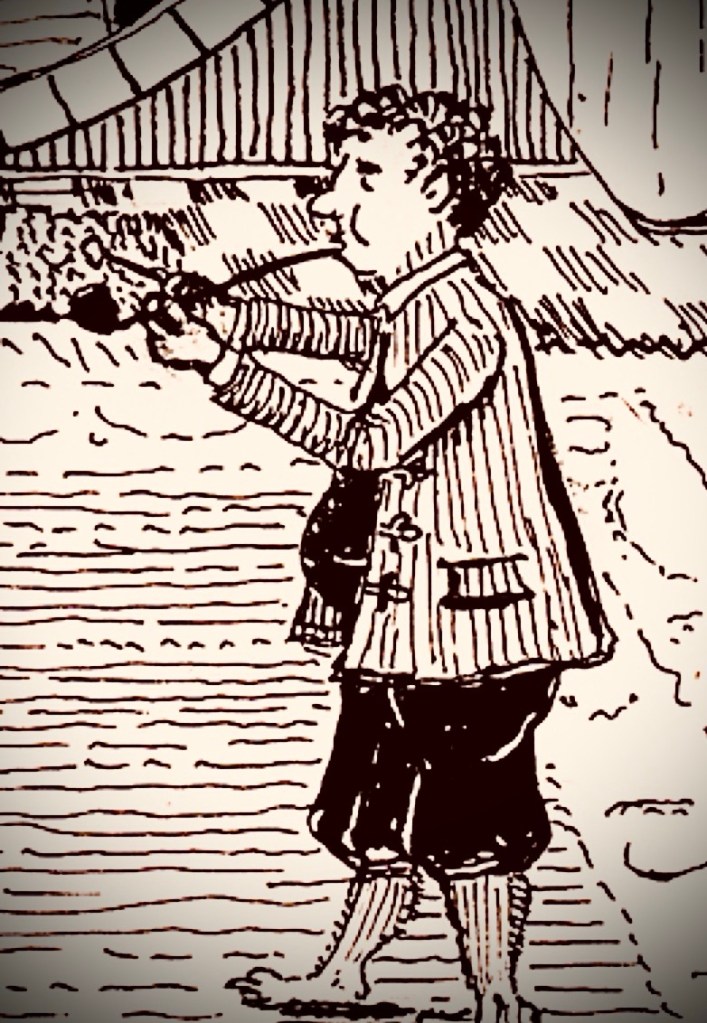
Here is a mid 20th C depiction of John Ronald Reuel Tolkien (English writer and philologist)’s Bilbs
“Forwarded this email? Subscribe here for moreThank you for reading Chartbook. To support the project, sign up for one of the subscription options.Upgrade to paidChartbook 350: Bullying as a mode of powerAdam ToozeFeb 7READ IN APP The onslaught of the first weeks of the Trump Presidency has been intense. Even making a list of the points of attack is exhausting and demoralizing. At some point over the last few days I began to think a lot about bullying as a mode of power.Chartbook is a reader-supported publication. To receive new posts and support my work, consider becoming a free or paid subscriber.Upgrade to paid What makes bullying distinctive as a form of government?Bullying power isn’t the same as authoritarianism, or tyranny, or dictatorship, or repression. Bullying involves the use of power to humiliate as well as to intimidate, hurt or coerce. Bullying is transgressive and excessive. It goes beyond conventional police, punishment or compellence and yet it is also less. It is less purposeful and instrumental than other forms of power. In the end, enacting repeated moments of humiliation may be an end in itself.In a world of warlordism, bullying may be the normal modus operandi.In a world of order, bullying can not persist unless it is tolerated, or it is authorized by other more stable and legitimate modes of power [Bullying is violent, but it is not the behavior of a master or a hero.In the classic formulation of the “master-slave” dialectic (paraphrasing Kojeve/ Hegel here) the struggle for recognition between the two protagonists is a struggle to the death. Both need something (recognition) and demand it from the other. The one who is willing to stake their existence emerges as master, whereas the one who chooses life, ends up as bondsman. This conclusion is unstable because the master wants recognition from a peer and the bondsman is no peer.] For their part the bondsman has given up their claim to recognition. The classic resolution is for the bondsmen through their labour to emerge as the true subjects of history, collectively usurping the role of the master. Bullying might be thought of as a degenerate form of this dialectic.Two options come to mind: Bullying could take the form of a frustrated bondsmen picking on their fellows without challenging the basic hierarchy. Or it might involve a bored and sadistic master choosing to reenact the moment of submission, even though the issue has long ago been decided.In either form, bullying is violent and dramatic, but it does not move the historical process forward. [Bullying does not create a new order, but lashes out, threatening and smashing existing things.As a transgressive form of power, bullying does not know its limits. Bullying doesn’t have a predetermined measure or plan. It starts with teasing and can end in hounding someone to death.And yet the intention of bullying is not murder. Bullying inflicts harm. Some victims may not survive. But the main purpose of bullying is not to kill. After all, the bully needs their victim.In this sense too, bullying is a secondary form of power. Not only does bullying need license, but bullying needs its victims.Bullying is a social activity.] The bully has victims and a successful bully has followers. The bully is amongst us.And yet despite being social, it is in the nature of bullying that it is unaccountable and irresponsible.Part of the stress of living with bullying is that one ends up devoting an inordinate amount of mental and emotional energy to anticipating the next capricious onslaught.In the conventional repertoire of power, the closest analogue to bullying is psychological warfare. It works by destabilizing and wearing down its victims. PSYOPs are mounted in the service of wider goals, such as counterinsurgency. Not for nothing they are the classic terrain of conspiracy theory.The question in the case of the Trump Presidency is how much is instrumental and how much of the bullying is nothing more than that, an end in itself.
Screenshot
Billionaire Monkeys wirh @MIT @Olivetti Typewriters thanks historian @adam_tooze for his essay
The moving finger writes and having writ moves on
None of your piety, wit or television-variety-chat & panel-show-piano-player-in-the-brothel savoir faire1 shall lure it back to cancel half a line
Nor all thy tears wash out a word of it 2
FORMATTING NOTE in cas you hadn’t picked this up long ago – perhaps you’re new here in which case Welcome – [ .. ] signifies emphasis only has been altered : text is faithfully verbatim reproduced.
As you move on with text and maths thematics, or the all-new neurolinguistics, it will gradually become clear that authenticity and respectful attribution are of paramount importance in #Science, literature, the arts and living human culture.
As people under peak neoliberal Raison D’etat ‘Christo-fascist’ Screw-thy-neighbour gangsterism now we teach ourselves to think, speak and write clearly in five parts or crash – if not burn.
John Blundell
Australia
1 the ability to act or speak appropriately in social situations.. “this is a gracious occasion, so try to behave with a bit of savoir faire”/ the ability to act or speak appropriately in social situations .. It is recommended students cross-reference Facility Facileness Importunity Fakeness Phoneyness Sophistry Tendentiousness Trivialisation Fatuousness Vapidity Nonsensisation Psychologising if not FULL-ON ARTIFICIAL BAD-METAPHOR PUMPING ELECTROMECHANICAL PSYCHOBABBLING,1A “Chattering,” ‘Baby-talk’/ Kiddie-talk and Polemics (Blundell, the famous essay on Polemic I never saw again, Blundell Orchards Ashton SA 5137 1995) .. 1A faxed letter to SA senator and then federal Attorney General AE Vanstone & future ‘Ambassador to the Holy See’ concerning ‘Timmy Psychobabble Fischer’ deputy PM of Australia, John Blundell, Blundell Orchards & Organically Grown fresh & dry retail food marketing store 1997
2 STUDENTS this name Omar Kayam (?) was given to a 1930s (?) Madison Ave Manhattan popular middle class market Information-product not any sort of Late-first or early Second Millennium Arabic scholar at all. My Mum had a copy of the pocket or purse book – too boring to research or even look up, right (darn right, you’ve all so much valuable & contributory work to be doing. ..unless of course you’re a McLuhanite GENUINE MEDIA STUDIES student and go well with that: WE NEED YOU REAL BAD RIGHT NOW)
Well, you must leave now, take what you need, you think will last But whatever you wish to keep, you better grab it fast
Two more excerpts from Alex Miller.. for dear gentle genital (ADULT or young adult) GEA & 🐒🐒🐒🥸 readers’ predilection (means cool)
“He is probably my age and even older and was a market gardening with his father when Artthur and I first came here, at a time when this was the country, or the edge of the country. In those days Stony and his father sold us the varieties of vegetables we were not clever enough to grow for ourselves. Their neat little fields and glashouses have gradually been squeezed into a tiny pocket surrounded by the new suburban mansions and their dogs and trampolines and tennis courts and swimming pools, the mansions all vaguely influenced by the holidays of their owners in Provence and Tuscany. [This country influences no-one any more.] The old Australian Australia has gone. That remnant sense of the pioneer. It is all mock European now.” (p 106 Allen & Unwin 2011)
Conversationalists ruled: a far better Socially-adapted life form than frankly any in public lfe in May 2025
“Looking at the picture he knew in himself a kinship of exile with it, a sense that each of them had been subjected to the same wilful coercion, the same peculiar cultural violence, of the men in command of things. Those who could command the pillaging. Displayed here in this silent foyer, Wyndham Lewis’s masterpiece had become a trophy merely of wealth and power, a rare and expensive object, like the Chinese celadon vase on the cover of Apollo, with which to augment the prestige of its owner, the great chairman of the board. Pat’s voice broke across the empty spaces of the foyer. ‘I’d go bloody starkers sitting here all day with that looking over my shoulder.’
‘I thought you liked it,’ Helen said gently. ‘[And there’s no need to swear, Pat. You’re upset.] Go on with what you were telli..” (p 152 A & U 2011)
The Tree of Man 1955 was what again?
A Nobel Prize in Literature was what again?
John Blundell
Journalist in Global Politics and the ‘Meltdown’ of weather systems and ecosystems
The expungement of European medieval metaphysics from 50k Science and Social Science faculties and schools around die welt
The authentic Post Socratic Logic
Economics
The new Neurocognitive learning, healing, growth and education
TEAM you really have to do the work yourselves and take in1 my following ‘stoccato’ textual excerpts from the interview with Denis Noble https://youtu.be/DT0TP_Ng4gA
Part of the problem is technical – our fabulous, er fabled, er much-vaunted user-friendly representation of voice in text on audio-visual screens is utterly shithouse – after all Silicon Valley’s only been “working” to advance literacy for forty years – so i needed to move on from that extraordinarity difficult voice-text transcription task. – There was life. It was beckoning. John, John, it “cried.”
Loretta your life is going down the toilet.
I could add you’ll all enjoy the bit where the ancient cell ensconced comfily in a deep geophysical fissure developed membranes, though..
“It’s an alternative to neo Darwinism. It proposes cellular intelligence:” interviewer.
It’s been my purpose for the last seven years to first of all in articles try and explain how important the harnessing of stochasticty is.. a purposive process
But i think if one starts asking the question Was the earliest cell purely mechanical? I don’t think it can have been.. As molecules, just DNA, they are dead, but when they are in a cell they are part of a living process. And that living process now includes the replication of the virus..
“So it’s innaccurate to say we give them life:” interviewer
They are altering our life. Their entering into us has altered our life, and possibly even killed it. Yes, exactly.
“So essentially evolution is acting on the whole to develop functions?: interviewer
If it’s doing that and the functions are important.. [you cannot have a function that does not have a purpose]
Although it sounds crazy when you first state it, to create AI that would compete with our ability in creativity, we would require.. to create computers based on water, and that’s what the cell is. Now why does that matter? In water there is an enormous amount of stochasticity. All the molecules in our cells are wandering around in a stochastic fashion. We harness that stochasticity, which is absolutely vast. And I don’t think that AI..
“When you say stochasticty, the unpredictableness that’s found in these systems, is that what you’re saying is the..:” interviewer
It’s in our cells at the molecular level.
As a ‘side-dish,’ check out this conversational social process stuff..
~ the concentric circles global-geocommunity-household Economics theorem (1995, Australia)
~ The new Neurolinguistics, the all new Neurocognitive Health, post Aristotelian associative learning, healing, growth and Mental-development from toddler thru pre-schooler thru primary schooler thru healthy 7-11yrs deductive or “Classical” reasoning Piagetian Concrete-operations thru healthy 12-17yrs inductive & critical 3-, 4-dimensional Piagetian Formal-operations PLUS revolutionary in Social Psychology & Education young adult (reproductive years) 2 through FIVE-set-series Quantum-relations ideation (Logic)
1 cognate point: you might check out the etymologic origin of Digest in Latin
..the title of this document comes from the work of The Joyce Project, Chapter [3], Proteus. I really wanted ‘Crackajolking away like a hearse on fire,’ which until this constituted a thumping 3.7 per cent of all I ever read of Ulysses. Ahm, the A Portrait of the Artist as a Young Man – Stephen Dedalus – was a story I did read read right through as a youngster but. Year 9 I think.
” This book is partly a homage to those who in the past hundred years have paved the way for extraordinary change against all odds. It is a tribute, too, to survivors and activists who work, often at risk to their own lives, to ensure justice can be achieved today and in the years to come.
” I am privileged to have met and worked with some of those I have written about. I met many more inspiring people while writing this book. But the challenges they face are huge. [During the past few years, the dangers of a pick-and-choose approach to justice, which some governments STILL SEEM DETERMINED TO MAINTAIN, HAVE BECOME MORE GLARING THAN EVER.]
” Prosecutions of the powerful are not a cure-all. They do not end the pain of the crimes committed. They do not wave a magic wand and create world peace. Justice can, however, provide at least the beginnings of a framework for stability. Conversely, lack of justice, and the festering resentments that result from that sense of injustice, provide fertile soil for insecurity and the renewed cycles of violence.
” With the right leadership, [national/ country-based] and international courts can help achieve an acknowledgement of truth which otherwise may remain missing. With the wrong leadership, denial and instability continue to thrive. Zoran Djindjić, the Serbian prime minister who delivered Slobodan Milošević to The Hague in 2001, understood the importance of a country confronting its own history. After Milošević’s indictment but while he was still in power, Djindjić told me of his fears of a “flight into a historic world” [and the dangers of the belief that Serbs ‘have been victims for six hundred years, and we can do what we want’ ]. Djindjić was assassinated in 2003 by those who did not want such uncomfortable truths to be spoken; a few weeks earlier, he had told Hague prosecutor Carla Del Ponte that he knew he would be killed. Serbian and Bosnian Serb leaders in the years since have often been less willing to confront history and responsibility. “
Chapter 10 Balancing the Scales excerpt //
To conclude today, it now becomes axiomatic that every man and woman drawing a fat or a thin salary in public life in his or her country immediately familiarise themselves with the new and indeed old-era epoch-making terms of Steve Crawshaw’s Prosecuting the Powerful : War Crimes and the Battle for Justice, The Bridge Street Press (Little Brown http://www.littlebrown.co.uk London Hachette http://www.hachette.co.uk Dublin) 2025 or get the bloody hell out of public life.
John Blundell
Australia
University and Internet Reform Worldwide
Neurocognitive Heath in Child Youth Adult Aged Persons’ Learning
The Authentic 2 – 5 set Series Post Socratic Quantum Relations in Human Interpersonal Transactions LOGIC
Post 1944 & Post-neokeynesian Economics
Life, Love, & Everything with a bit less Living, Loving, & Party-going even with those absurd if not preposterous athematical neoclassical (?) commas preceding the logic & maths conjunctor And
Although in general terms produced on strict academic historical lines and stuff for old rich white people to get hoity-toity about the main body of text here has not been subjected to the writerly discipline of an edit (Ms Piaf), because I’ve spent enough precious time on it already on this morning’s second visit (dates, what are dates? – timeline baseline dateline deadline WTAF are all they?) and I have so much else to get on with..
Would you hold up one of your hands, fingers spread, facing yourself?
The gent the ex-pom paralegal replaced as Member of the Parliament in Canberra ACT ($250k + expenses) with a former City of London and @macquariebank chappie
Let there be no vapid empty chatter or @GretaThunberg blah about the Prehensile-thumb of neoclassical evolutionary biology or the Lorenzo de Medici School of anatomy & physiology, no magisterious imperious pompous gentlemanly mechanomorphic classical cock, indeed no micro hardware mental mathematical bodily, human or social engineering and @GretaThunberg Blah in-the-broad, no Wilhelm Reich, Edward Bernays, Friedrich Hayek or utterly egregious immediate post WWII Manhattan Island Madison Ave Norman Rockwell John Updike Gore Vidal Eugene O’Neill Tenessee Williams Carl Schulz misogyne egregious Objectivist blah at all..
Is it not indeed the hand as object but what it re-presents to the emerging young ‘teenaged’ human mind gifted with Formal mental operations out of an early lifetime of sound nurture, good care and congenial relations with fellows – other humans – leave the thumb & fingers question for later in our studies and for now stick with the say 1976 Childrens Television Workshop’s or The Missions Outreach of Joyce Meyer Ministries’ arithmetic – indeed at primary schooler level as Professor Piaget had it in 1934.
Five. The only fully coherent explicatory rational statements of humans are composed, comprised and bound together of 5 component sets in the micro or series in the macro.
If you would like to check them off you will find exactly them there in many fiercely salient, apposite complex statements in these opening paragraphs that point to your new virtual world of being and becoming no-one’s cyborg, myrmidon (Soldier-ant), patsy or bloodied fool..
Did somebody say hatred of women and girls?
Is there an echo, a spirit abroad, a geist, a spectre, a strained or strange psych-emotional atmosphere, perchance a mood of gloom?
Would anyone perhaps dare compare the slashing off of a young Rohingya woman’s breasts in the truly evil Tatmadaw’s 2018 one Australian journalist wrote about for three horrible years but had his work dismissed as the rantings of an activist (hippie, communist, homosexual male, greenie, bonghead – oh why-not-icehead-ironically-‘replete’-with-shrinking-skull? – as the voluble evidently dementing monied majority gathered and maundered about like ideas-allergic newsmedia personalities or perhaps purse-analities from the newsmedia or the state or federal public services out in the patio [they sat]: Pauline Hanson’s, Malcolm Penis’s (Pom) and Ralph Babet’s Australia), dispassionately observing repoirts upon the the killing of Shereen Abu Akleh شيرين أبو عاقلة in Jenin “Israel” on 11th May 2022.
It’s a deracinated derivative neoliberal ‘We-believe-in education and screwing-the-neighbour’ racist sexist anti-kids anti-green electoral autocracy for the white brown black faithful obedient obeisant mentally-enslaved-to-a-nonexistent Cosmic Phantasm in a rampant imported food drugs cars alcohol tobacco firearms gadgets + mind-numbing widgets & depressive high audio-visual production values music and arts – like comedy to curdle mother’s milk – now pixel-scrambled and stripped of human meaning or humanising values by the most devastating assault on civilisation or any civic culture at all in ten-thousand years ideologically on behalf of a 19th century English theory designed to depersonalise and commodify – which its adherents disastrously call undehumanise and discommodotise – E-rad-i-cate/ e-rad-i-cate – cue in Star Wars theme misuc Ah-na-di-na-nah – Beam me up my own botty¹ and the entire array and phantasmagoria of consumer stuff – mournfully named Goods & Services by the rather more apocalyptic than ‘dismal’ #Science – for the angry well – just as Psychoanalysis and Kurt Godel’s – “as the disease that posits its own cure” and the theory that proves its own axioms, correctly identified as the preserve, fad, fancy and money-spinning affectation of the worried well amongst the affluent of the F Scott Fitzgerald &c & &c &c (all anglo-european origin men with money and 2/3 of them evidently post traumatically dis-assocciated (after Pierre Janet⁴ & Bessel van der Kolk5) 1920s & ’30s authors, adventurers, explorers, gangsters and Alexandrine impregnators of girls to revive autarchic city-states for trade, economic growth and development across Central Asia, thus advancing the wealth of all nations and empowering the common working man with say a wife and two children to aspire to personal opulence even if by the arguably less than socially desirable means of stealing V8 petrol/ gas engines from his employer and exporting the things.. all with enormous income-generating opportunities and Internal Revenue or Taxation Office benefts. Are we there yet?²
The Renaissance’s intellectual basis was founded in its version of humanism, derived from the concept of Roman humanitas and the rediscovery of classical Greek philosophy, such as that of Protagoras, who said that “man is the measure of all things”. Although the invention of metal movable type sped the dissemination of ideas from the later 15th century, the changes of the Renaissance were not uniform across Europe: the first traces appear in Italy as early as the late 13th century, in particular with the writings of Dante and the paintings of Giotto.
Yeah OK, prof.
The Wicked & Crafty Kate Chaney 4ROM Perth
With two words, we ask; What if?
What if I found my thing? What if I belonged to something bigger? What if I could make a real difference to someone’s life? What if I could change the world? What if I made lifelong friends? What if I dreamt bigger?
– Immanuel College, Adelaide South Australia, a property of the ex Nineteenth-century colonial Lutheran Church – this church, initially refugees from German province Silesia established the first mission station in South Australia https://en.wikipedia.org/wiki/Killalpaninna_Mission All the inmates Dieri, Arahbana and possibly people from three other tribes rounded up along the track from Marree to Birdsville Queensland died of ‘influenza’ by 1866 I understood.. whatever in “Whatever Week,” men and women of Australia – if you perchance forget to vote Pahpa John will quite probably forgive you.
Immanuel School’s “What if” portrays Immanuel in an innovative light with the text alluding to new discoveries, aspirations, creation, and invention..
John Blundell
The Human Futures (humanistaion post normalisation post feminisation) Fifth Stage of Human Societies placing in the circa 1870 European Hegelian-Bismarckian Dialectics Rubbish-bin of History historian Arnold Toynbee’s 1930s Saviour-with-the-sword¹ ᵥₑₗ Saviour with a Time-machine) dude
Kangaroo-flag-SEA W’pac quadrisphere commonly represented as a trisphere
erp wha-a-a-a I guess WordPress (headquarters located at 660 4th St #119, San Francisco, CA, United States) is yet another of those Seppo corporations that promised us user-friendly electronic communications gear when Steve Jobs was still alive. Mirror, mirror/ optical isolar molecules³/ fun for all
…..
¹ oh the convoluted mental gymnastics of new-era Explication de Text, young people {“Saviour with a Sword” :[t]his figure, while not explicitly named by Toynbee, represents a leader or force that might temporarily suppress internal problems and external threats, perhaps through military strength.}, so chew-on-that – walk, talk – George Herbert Bush, who was yet another United States of America prsdnt
¹ᴬ the writer made that limpid bit of Early-adolescence Australian Church School tosh up ok
² another downmarket Year 9-10 private schoolboy gag
³ In essence, “optical isolator molecules” refers to molecules that have a specific structure that allows them to interact with polarized light in a way that changes its direction, a property linked to their chirality
⁴ Pierre Janet introduced the concept of dissociation, a term describing a separation or detachment of mental processes, in the late 19th century, specifically in 1886 and 1889. His work explored how traumatic experiences could lead to dissociation as a defense mechanism. Janet’s research and theories, particularly his observations of patient Lucie, laid the groundwork for understanding dissociative disorders.
5 ‘The Body Keeps the Score: Brain, Mind, and Body in the Healing of Trauma 2014 https://youtu.be/iTefkqYQz8g ..a quiick AV explainer
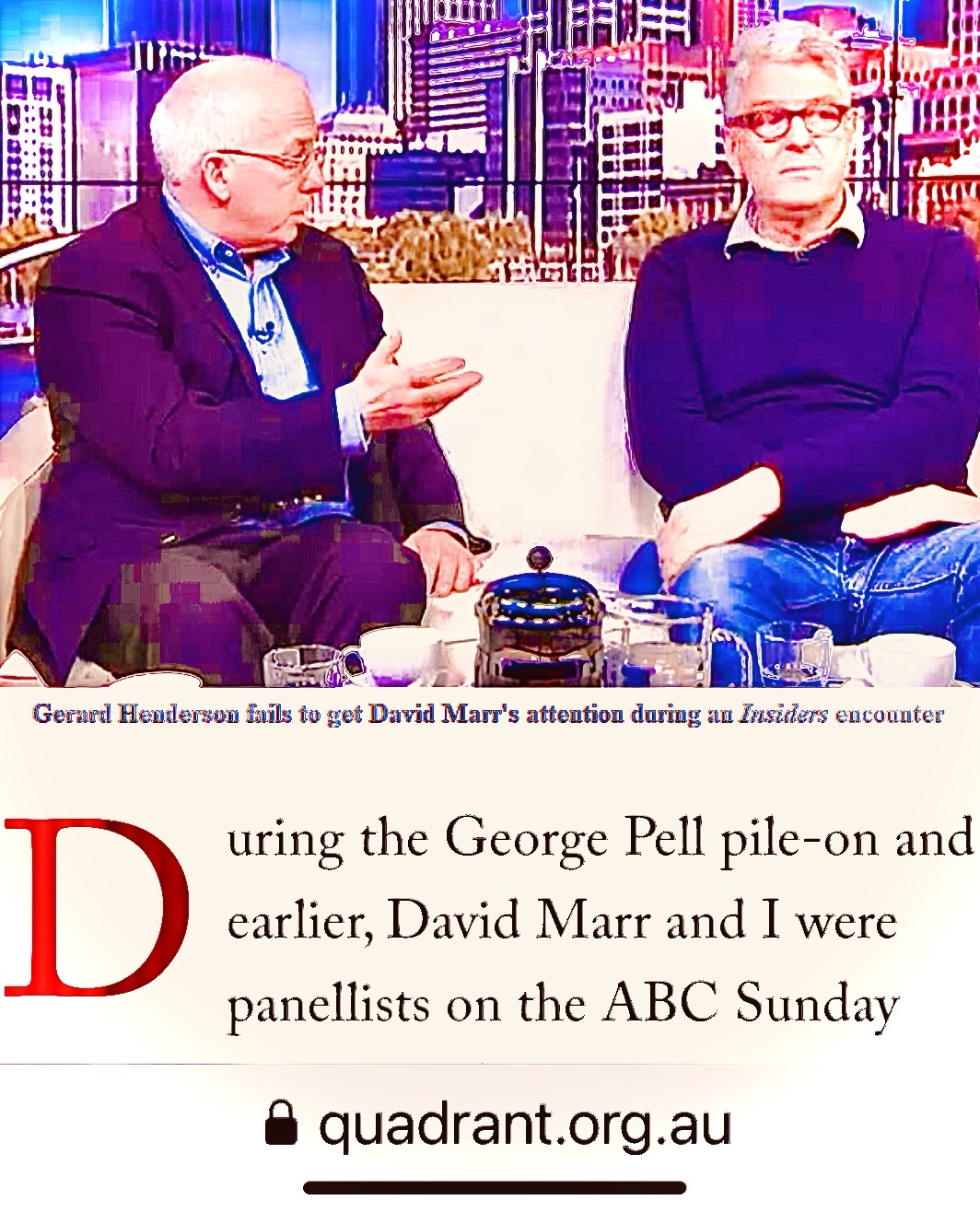
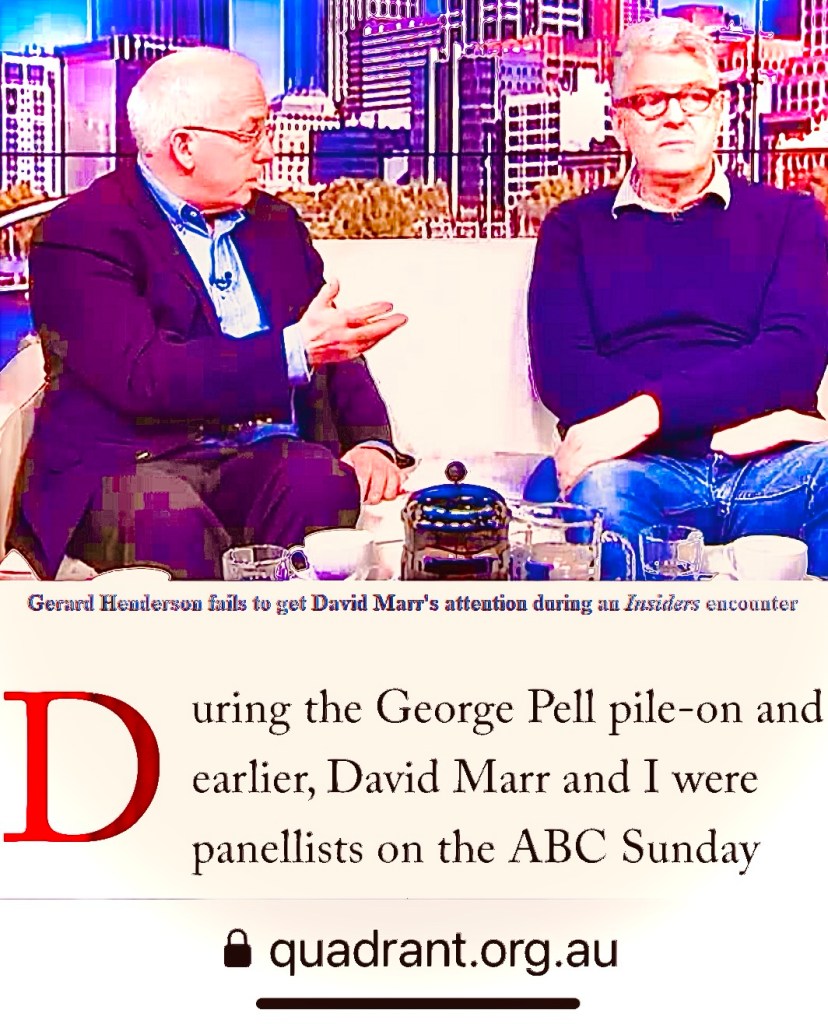
Two Affluent Ruling-caste White-skinned Men of Anglo-Celtic Ethnic Origin Imagining They Were Discussing Politics on Australia’s National Broad & Bloke Casting Corporation Network Some Decades Ago













 Billionaire-🙈🙊🙉🐒s with Olivettis