As the regular Blundell crew of mega-influencers – which reminds me of a kid joke The budgie went missing but hey grandfather (the writer’s own grandpa, a 1920s-on South Australian public educator steeped in Alfred Marshall, Wm McDougall & Albert Venn Dicey was an Oxford University Press pre-publication appraiser) opened the door and influenza, you’ll all be passionate about the fundamental Content : Process dial-out and consequent upon your studies of the last five years champing-at-the-bit to demand that it be mainstreamed in every educational institution on Earth on pain of cessation of public funding (in the breach) AND to the challenges of document titling, ever socially conscious that the mere announcement, presentation and display of a brand or category of study ensures Foucaultian artificial or socially-constructed ex fact compartmentalisation and ‘siloing’ of your written works – as the million so-called posts on X Comms that are 95%, say, lost to reflective deliberation, assessment and decision1 by the public in 30 minutes flat.. to 99.9 recurring beyond 35mins.. So yes it’s shaped up as Content-Enumeration-Process, ahmm.
Beavers
Castoroides (from Latincastor (beaver) and –oides (like)[2]), or the giant beaver, is an extinct genus of enormous, bear-sized beavers that lived in North America during the Pleistocene. Two species are currently recognized, C. dilophidus in the Southeastern United States and C. ohioensis in most of North America. C. leiseyorum was previously described from the Irvingtonian age but is now regarded as an invalid name. All specimens previously described as C. leiseyorum are considered to belong to C. dilophidus.
Yes Everyone it’s a Photo of Sarah Cooper from, Well/ Cromwell, Say Seven Years Ago
GEA 1/6
I see the way ahead to the light, but I could hardly leave my family in the state it is: I love you, Annette, in spite of everything. What kind of man would I be if i just abandoned you? Not much cop on the wheel of life. I’d fall right off, right through to the cockroaches. Laughing?
‘Trying to,’ said Annette.
‘Take another slug of Easy Night. Gilda rang me. She was really worried about you. Go back to sleep, sweetheart. See you later. We’ll bring back fish and chips.
‘And Dr Rhea Marks? Will she come too for fish and chips?’
‘I shouldn’t think so,’ said Spicer. ‘You’ve terrified her out of her wits, Annette. I’m not exactly lkng frwrd 2 Rainbow Puppeteers. Don’t make matters even worse than you’ve made them already.’
‘Sorry, Spicer. Is this call being broadcast through the office?’
‘Yes,’ said Spicer, ‘come 2 think of it. But you’re a media personallty. It shouldnt worry you.’
GWA 2/6
‘Mrs Horrocks?’ ‘Yes.’ ‘This is the Oprah Winfrey Show. Amelia speaking.’
‘Oh, hi.’ ‘We mean to record tomorrow and hold over and screen for our New Year show. We like to do things
GEA 3/6
live but even Oprah has to have a holiday sometimes. Can I just say how much I loved Lucifette Fallen? Of course the timing is good for you – Ernie Gromback tells me he’s scheduled publication to fit in with our transmission. isn’t he a charmer?’
‘Oh yes,’ said Annette.
‘We’re building the programme around the domestic row,’ said Amelia. We reckon
GEA 4/6
God and Lucifer had the first one: brilliant of you to have seen that Lucifer was female. After that it was Jupiter and Juno. What can the rest of us poor mortals do in the face of the archetype? We have our pet psychotherapist to help us see through the dark to the light.
GEA 5/6
That’s the bit we’d like you to read from Lucifette Fallen : on page eight of the proof copy. I must say your publisher whizzed ir round to us. The para beginning “Where darkness becomes light” – down to “What can a child do but repeat the experience?” And then sit next to Oprah and chat a bit about your own experiences and what drove you to write the novel,’
GEA 6/6
‘I’m sorry – I’ve lost you. I’m still a bit sleepy – ‘
‘You are very central to the show, Mrs Horrocks, said Amelia. Have you had experience of TV before?’
‘No,’ said Annette.
‘Welcome to the real world,’ said Amelia.
John Blundell 🦘🇦🇺 🌏
In celebration of Fay Weldon 22 Sept 1931 to 4 Jan 2023 with detail from Affliction 1994. Oh that year in John Foster Dulles’s Christendom. Australia? No, too hard.
FW
1 Australia’s ABC Radio National this evening 8th July ran its weekly program The Law Report with four academics in startling explication on certain issues that the institution’s sub-editors figured should be billed ‘AI and Automated Decision-making,’ oh Whoop, oh Lord Jesus, we have been very good and tried our hearts out and stuff
The English-speaking world’s first embedded television journalist Lise Ducette, extremely famous Christian anarchist Alex Jones, Didn’t I Just C’est That? Memory-test dude Jimmy Carr, Benedict Cumberbatch’s heaps smarter younger sister and Taylor Swift walk into a bar1. First up Mr Jones makes an announcement to all concerning synchronicity, serendipity and lowers vocal tone a little, say 2 steps out of 10 ‘back’ towards the Hushed end of the scale God. What the f… happens next?
There will be a prize.
msn.com
I first and last read about USA commercial pop psychology’s NLP around 1979. Human services people and educators from the Jimmy Carter dcd. and Sesame St Childrens Television Workshop era will probably remember ‘Bio-rhythms’ – those PEI waves, yarda freaking yarda, too. – The self-education system or psychotherapeutic practitioners’ and teachers’ schema for authenic powerful self-esteem and human relationships building Carkhuff and Berenson’s Human Resource Development also emerged at the time. – I need to emphasise here that a million of us teachers and social workers around the world in that exciting period of technical research-based innovation with renewed professional schemata and discipline were doing it big-time and changing geo-communities forever and for good, and NOT doing it for any hairy guru, prophet, church, cult, bunch of anodyne Christian Sunday School “Peoplemaker” Virginia Satir or Margaret Kubler-Ross (also 1970’s) anodyne cliches or turgid – if not dead spooky like something out of Salt Lake City Utah – Win Friends & Influence People ‘Dork City with Jimmy Olsen cub reporter’ inspired by a Madison Avenue grunge-bag and ideological fascist like Professor Freud’s brother-in-law..
My only interest in ‘NLP’ emanated from the LCHS – RCHS quick eye movements indicating not crudely Lie or Truth but what i will ever be proud to report became study of ideation and conscious & unselfconscios task execution after I left Adelaide SA for a state government (cops and politicians – evidently the whole bang lot of them) enforced 14 year sabbatical over on our magnificent Great Australian Bight coast with a copy of Ernest Becker’s TLaDoM2 in my jeans hip pocket.
GEA and Olivetti Monkeys always try to keep the referencing rigorous so there follow..
~ Economics, History, Human (ising)-cultures, Education & Internet Reform
~ Devisor of post neoclassical 2 – 5 set Quantum-relations Thematics-logic urgently targeting 25,000 universities
~ Philosophy of Science
Dr Barry Boettcher urged me to study Phil. of Science not P of Psychology in 1969
1 Bar, ba.? Younger students would have to look that up. But never fear, young people your ‘Mad Sammy‘ and ‘Jumpy Jensen‘ internet will have you sorted in ‘no’ time. Onward a.. and after that the better-behaved among you may bathe in the blood of Jesus and of course come out whiter than white – with stern-but-fair avuncular Sundarajan Pichai and the marvellous Microsoft that’s spent millions promoting its @Copilot AI junk hardware’s Satya Nadella
McLuhan with a discursive gesture some decades ago: you all shld hv caught one of his ‘quizzical’ looks: change yr lf 4 you t’hat
..the following being strictly, faithfully & scruplulousy reproduced for English language text & general Communications-production studies (urgent educational reform) purposes from The Antipodean Laboratory: Making Colonial Knowledge1770 – 1870, by Anna Johnston University of Queensland Centre for Critical and Creative Writing.. Faculty of Humanities and Social Sciences, excerpts ‘4ROM’ pages 221-225
Note: Billionaire Monkeys with Olivetti Group @MIT Typewriters’ document title is comic though like every word, sentence and paragraph of our text on the record historically factual.
I found the fabulously apposite to serious active human scholarship Persuasion quote in an afternoon’s study at the State Library of South Australia ten years ago.
Creating Colonial Readers and Imperial Networks ☞
Political problems could be managed over dinner, too. When members of a committee of inquiry into the Orphan School arrived in 1842, Jane Franklin entertained two of the reformist convict-ship surgeons who had been charged by Elizabeth Fry to check on conditions for female convicts and their children. Jane Franklin, notoriously judgemental of convict women, assured Dr Dunn and Mr Nain over dinner of her deep interest in convict welfare and organised a personal inspection tour for Dunn to the Female Factory. She targeted Nain over dinner, taking ‘some pains to impress him with my views of things since he is likely to be on the board of investigation. Jane Franklin’s dinner party diplomacy was highly effective, if not subtle, in managing the Franklins’ reputation locally and globally.
The publication of the Tasmanian Journal ignited intercolonial rivalries. The Sydney Herald compared it favourably to a publication from an English provincial town: ’emanating as it does, from the press of Van Diemen’s Land, and from a Scientific Society there, it is still more wonderful’. The paper uncomfortably noted that Sydney ‘as the Southern Metropolis’ might instead have been expected to have produced the first scientific society and journal of record. The Port Phillip Gazette declared the Tasmanian Journal to be very creditable, but used the opportunity to spruik an intended publication The Melbourne Magazine, spurring its colonists to to produce a rival ‘in emulation for the literary fame of Australia Felix’. So, too, Jane Franklin’s Ancanthe museum was ahead of its time in its vision of engaging the colonial public. The ‘vineyard of literature’ that had produced the Tasmanian Journal was distinctive and based in the robust Tasmanian print culture as well as marked by the considerable, if controversial, influence of both Franklins.
The Platypus Journal and the Felon Print Press.. 1820s-1840s At a large dinner party at Government House in August 1841, Franklin’s personal secretary, Francis Henslowe, artfully arranged the dinner table with the first edition of the Tasmanian Journal. Jane Franklin approvingly noted the copies were perused by ‘the ladies as well as the gentlemen with much curiosity and interest’. Sir John Franklin fondly called the Tasmanian Society’s publication the Platypus journal. Like the famed Ornithorhynchus anatinus, rumours of the journal were considered a hoax by sceptics such as Sir John Pedder. Pedder and the solicitor Robert Pitcairn expressed their delight when copies appeared on the dining table. The platypus was a fitting visual symbol that graced the journal’s title page, encircled by the single-sided surface with no boundaries that would be termed a Mobius strip in 1868 (Figure 6.2) with a Latin tag, Quocunque aspiucius, hic paradoxus erit: ‘Whichever way you look at it, this is baffling’, or, as Captain Parker quipped, ‘All things are queer and opposite here’.⁴⁶ Both the frame and the animal had been deemed impossible in European theories of nature. For Jane Franklin, Parker’s phrase became useful to explain everything from black swans to the colony’s erratic postal system; more broadly, it also became metonymic of perplexing knowledge produced through colonial science. ..
It was also a durable textual artefact that Sir John and Jane Franklin used as an intellectual carte-de-visite. Jane’s determined focus on its production concentrated the attention of busy members of the society.. saw the journal as her particular property, Alison Alexander suggests, soliciting papers ‘without consulting existing members, “considering myself invested with a general commission” ‘. .. Little situated the initiative within the broader contexts of scientific association and publication. The journal was efectively the ‘ “Transactions” of the infant Philosophical Society of Tasmania’, but Lillie disavowed its members’ pretensions to be philosophers ‘in the modern acceptation of the term’. Society members were characterised as sincere and passionate amateurs, labouring under the disadvantage of distance from the institutions and leaders of science in Europe. They were motivated to communicate the outcomes of their leisure-time scientific activities and thus, by example, to influence colonial society in ‘a salutary direction towards liberal and scientific pursuits’.
The journal’s scope included zoology, botany, geology, and meteorology, aiming, over a number of years, to publish a full account of Tasmanian flora and fauna. .. – again, Sir John’s contacts were invaluable, as his mail often contained new scientific publications. The journal heeded Matthew Friend’s admonition about colonial speculations on ‘dubious and undetermined questions of theory’: instead, it aimed to be ‘a trustworthy repository of well-ascertained facts’. Some of the utilitarian knowledge it produced was directly applicable in exploiting natural resources in agriculture, geology and botany.
JB
Thematics 2-5set series logic, Neurocognitive Health, Child Moral Development, Education Reform, Economy, the Human (isation) Project, in general teaching ALL, everywhere, of the fundmental mental distinction AND indispensable dynamism beyond age 11yrs of macro (reflective or ideational signifiers or no-things) and micro see-hear-taste-smell-touch supply-siders’ commonly marketed crap and staying well
⁴⁶ Franklin, ‘Lady Jane Franklin’s Journal: Van Diemen’s Land Vols. 8 and 9’, January 1842; see Moyal, Bright and Savage; Moyal, Platypus
⁵⁶ For example, the meeting on 6 November 1839 heard Sir John reads ‘a portion of Captain Washington’s last letter … relating to Dr Chotoley and his Australian Vocabulary, also Mrs Whiwell’s letter relating to the tidal phenomena at Port Arthur, when Sir John related the means which had been adopted to improve the observations made there, and an old letter of Mr Spence’s on the virtue of keeping large meshes for keeping off mosquitoes and flies,’ Lady Jane Franklin’s Journal: Van Diemen’s Land Vols. 3 and 4
This surely is too much of a coincidence. The work of the prowler begins to look like the cooperative efforts of a gang, except of course but by their very nature these crimes are private and solitary. Or perhaps a club has been formed to act out the attacks as they have been described in the newspaper. A bizarre notion! Who would devise such an entertainment and why? Still, imitators there are, and more than one of them. Of this the police have no doubt.And how does the prowler himself feel about this, the original prowler, I mean, the initiator, whose integrity consists in his comitment to his own crimes? How strange if his path should cross that of one of the others, if they should meet face to face over the body of a victim; or stranger still, if two of the false prowlers should meet, each just sufficiently like the original to be recognizable but each seeing in the other enough that is different to make clear how much of themselves they have allowed to creep in, to what an extent they are no longer imitators of the prowler but significant variants. If two of the false prowlers were captured would there be enough in common between them for the real prowler to be identified?ᵛ And supposing all seven to be taken, would it be clear which of them was real? All seven, as the police know, would lay claim to the first attack, might even create a prior one, in order not to be deprived of the rest. (Perhaps one might guess that the least insistent of them, assured of his authenticity, would be the true original. [19 words]) This is clear from the large number of men who have already come forward and confessed to the crimes [19 werdzz]. Men of all ages and occupations, from a fifteen-year-old schoolboy to a retired ship-builder of seventy-seven: widowers, pensioners. young men newly married, metho-drinkers, known homosexuals – all desperate, it would seeem, to have the prowler’s acts define them.
Some of these men simply want to draw attention to themselves. Others have become obsessed with the assaults and long to be their perpetrator, to approximate to themselves the daring, the fierce aura of sexuality they believe the prowler must be possessed of, his deep sense of relief when, returning to his own house, he stands naked before thew mirror and says ‘Yes, I am the prowler’, or, concealing his violence behind a front of patient domesticity, slips in quietly beside his wife.
Your Editor’s Schpiel 👉🏿
Popeye’s “I yam what I yam” can be a reminder that we are what we are in truth — the children of God. And that’s all that we are. DAILY BIBLE VERSE Now, O Lord, thou artour father; . . . and w e all are the work of thy hand.7 Jan 1981
But I got an emptiness deep inside
And I’ve tried
But it won’t let me go
And I’m not a man who likes to swear
But I never cared
For the sound of being alone
“I am”… I said
To no one there
And no one heard at all
Not even the chair
“I am”… I cried
“I am”… said I
And I am lost and I can’t
Even say why
“I am”… I said
“I am”… I cried
“I am”
^UH OH senior students Pahpa John needs you get to mental work on that statement: your clues, guide-ropes and vicarious safety barriers are the mediaeval the Yes & the Not, Sir Karl Popper’s endless banks of Sideshow-alley open-mouthed brightly enamelled fibreglass clown-bust theories disproof and disestablishmentarian atheistic Anti-ism AND ALL OF the post 1945 fake political culture zeitgeist – whoopee this should be awesome fun for yous aull – burning mega-forest just off the road too ∻
..Fort McMurray AB, April 30 to June 1, 2016. In May 2016, wildfires broke out in northern Alberta resulting in the most expensive natural disaster in the history of Canada
This essay is a bit of a scramble but in terms of the NOW literal – you gotta learn to use that word NOT to mean fanciful or made-up, young people – i know WORD and MANY others like it represent a HUGE mental challenge to you all – particularly as only 5 per cent of older people including of course your parents understands their own bogan language they’ve bribed, bullied and blackmailed all schools to smash into your heads since the end of World War II – actual factual global psycho-cultural cataclysm hot on the honey-money (Y-U-C-k).
Point 2 it’s a cab that’s been waiting at the rank for weeks.. it’s a ψo -spiritual jungle in there ≣ 🚕🚕🚕🚕✡
John
ⱽ Fort McMurray AB, April 30 to June 1, 2016. In May 2016, wildfires broke out in northern Alberta resulting in the most expensive natural disaster in the history of Canada
My Lady D’Arbanville, why does it grieve me so? But your heart seems so silent, why do you breathe so low, why do you breathe so low?
Consumer Advisory: excoriating acid Peter Sellers Bal-ham, Gateway to the South2 style humour ☞you might like to sit down OK ➜ The Tasmanian Journal of Natural Science, Agriculture, Statistics, etc. late August 1841 – 1849 Anna Johnston 2023 begin ?verso-recto page 214 at at-a-glance Level 4.7 (of 10 of course 9th century Kitab al Jabr Kurdish Persian Babylonian الجبر (al-jabr), your Fecunt bedtime Mood-meter Crescent read-out or some such post Global Human Deskilling Project ‘AI’ Prescriptive-text classical cocko.
GEA Monkeys again thank Anna Johnston University of Queensland Australia – only criminal scumbag plagiarist true Marxian societal parasites and the heirs & successors of Euro-amer-aus Belle Epoch flaneurs or boulevardeiers profit from the republication of her writing per MINE ➪➪➪ CEP Worldwide 1996 Information shall be free refers.
AJ
Due to his success in 1820s Arctic exploration, Sir John Franklin was lionised within ‘arctic circles’ and embedded in highly influential networks of knowledge, exploration and science9. Franklin was part of a scientific social world that forged professional as well as personal relationships, including marriages between elite families. … John’s first wife, the poet Eleanor Porden, while his second wife, Jane, became adroit at managing the scientific and government networks that surrounded her husband10. The period of the Tasmanian Journal provided an opportunity for Jane to observe her husband’s correspondence networks with learned gentlemen with political influence – and develop her own voice and interests within those networks – that would underpin her later, tireless advocacy following Sir John’s disappearance on his final Arctic voyage after his ignominious recall from Van Diemen’s Land.
The 1830s saw new directions in British science that made the Franklins’ tenure in Tasmania particularly valuable to the advancement of knowledge. The ‘Magnetic Crusade’ successfully advocated by Edward Sabine, Humphrey Lloyd, John Herschel and others led to a concerted acceleration of data collection through a global network of geomagnetic observations11. The 1839 Erebus and Terror expedition led by Captain James Clark Rose to establish the Southern Arctic geomagnetic field spent three months in Hobart in the winter of 1840. The Hobart Town Courier encouraged colonists to ‘show that Van Diemen’s Land, which is the maximum point of intensity in magnetism is not the minimum one in all that appertains to the social relations of life’, and the visit proved to be both a social and a scientific success to the Franklins12. The personal connections established between Ross and John Franklin, as well as between others such as the visiting botanist Joseph Hooker and local scientific enthusiast Ronald Gunn, underpinned years of later correspondence on scientific matters, and colonial and imperial politics.. joint scientific and strategic.. pure and applied aspects that ensured the support of the Royal Society (because the massive data collection promised to lead to principles that might join laws of terrestrial magnetism to ‘cosmical’ theories of the earth’s field) as well as the admiralty’s support (because it promised safer navigation at sea through better understandings of magnetic north)13. Franklin’s nephew Lieutenant John Henry Kay accompanied the expedition and was put in charge of the observatory Franklin swiftly built using convict labour. Franklin took great interest in the exhaustive system of observations, funding and appointing additional men when the first technicians were overwhelmed by the process; he also advocated for their promotion through the admiralty. He reported regularly in his letters to Sabine, Ross and others about the local contribution made the Tasmanian magnetic observatory. Jane Franklin named the facility Rossbank and commissioned a portrait of it by convict artist Thomas Bock as part of Franklin’s vision of the interconnected, improving cultures of arts and sciences (Figure 6.1)14
The Franklins’ role in this well-regarded global enterprise was undoubtedly motivated by scientific factors, but John Franklin was also aware that his support kept open strategic communications channels that could be used to pursue his political interests in London while he was in Hobart … national rivalry between Britain and France in the geomagnetic field. The geomagnetic campaign was central to the establishment of the British Association for the Advancement of Science (1831), a crucial part of British ambition and scientific nationalism that also led innovation in science communication. Remote colonies had a significant role to play in establishing British leadership in these observational sciences, which had important political and economic objectives, in addition to their intellectual prestige.
The Tasmanian initiatives joined efforts in other Australian colonies. The Philosophical Society of Australasia was established in Sydney in 1821 as an exclusive cadre of gentlemen with a general interest in science. …
Rumker and Brisbane’s observations from New South Wales were sent to influential international journals, societies and collaborators. Yet personal enmities and colonial politics stymied lasting local scientific outcomes21. The Sydney Philosophical Society was short-lived, and Brisbane’s ambitions to bring ‘the Science of Political Economy’ to Australia were thwarted. .. John Franklin revived the Mechanics Institute in the late 1830s, but because Franklin rarely attended meetings the institute languished26 Each of these experiments with associations created the conditions for local scientific publication, but did not coalesce until the Tasmanian Journal appeared in 1841. …
..John Franklin described it as ‘a little private scientific society consisting only of half a dozen individuals which meets every fortnight in my library to read papers and converse. It is without name and seeks to hide itself from public notice27. Members included key colonial officials, such as the treasurer Adam Turnbull, who had reported on the 1830 visit of Captain Matthew Friend. Science was linked to the nascent school system, represented by.. principal of Queen’s Orphan School, and.. The Presbyterian minister Revd John Lillie provided the moral authority for science.. Francis Henslowe, who was also John Franklin’s private secretary at Government House. … Visiting officers with interests in science and exploration were made corresponding members, such as Dumont D’Urville (the French rear admiral and gifted natural scientist whose second Antarctic voyage was launched from Hobart in 1840) and the Erebus and Terror officers Ross, Hooker and James Robertson. So too John Gould, who, with his wife Elizabeth, stayed with the Franklins for a considerable time.. ‘Count’ Paul Strzlecki, as well as Alexander Maconochie and the Revd Thomas Naylor, then both at Norfolk Islandᵛᵛ.. the interests of the society and the ambitions of Jane Franklin..29
Footnote14 was it uh
Named Rossbank by My Lady Fandango oa woa woa woa wó
John Blundell
🦘⌨️🥸🌐
*/1 a sacrifice in which the offering was burned completely on an altar.
2 The “best seller” by Peter Sellers released in 1958 was his first studio album, a comedy LP titled The Best of Sellers.
9 see the excellent doctoral thesis by Annaliese Jacobs, ‘Arctic Circles‘
10 Jacobs, ‘Arctic Circles‘
11 Cawood, ‘Magnetic Crusade‘
12 Savours and McConnell, ‘History of the Rossbank‘, 533. On Jane Franklin’s role in maximising the social and intellectual influence of the Ross expedition in Tasmania, see Alexander, Ambitions, 114-16
13 see Cawood, ‘Magnetic Crusade‘, 494-96
21 Field, Geographical Memoirs. Field also published the first book of poety in Australia, First Fruits of Australian Poetry (1819)
26 See Alexander, Ambitions, 109
27 John Franklin to Francis Beaufort, 17 February 1840, in Franklin, ‘Lady Jane Franklin’s Journal: Letters to Mary Simpkinson‘
29 Franklin, Lady Jane Franklin’s Journal: Van Diemen’s Land Vols 3 and 4, 18 May 1839
^^ readers of “@wired4weld“\ greeneconomyaction.com may be kind enough and sufficiently earnest & dogged in their studies (reading) to inspect our 9/12 and 10/12/ 2025 pieces – Where sYDNEY cOVE.. and Cadwallader having Sex.. OK
Margaret Thatcher (UK PM 1979-1990) and François Mitterrand (French President 1981-1995)
Kevin you are dashed lucky you weren’t thrown into one of those Forensic Psychiatry Facilities to be found in every state capital run by Geoff Kennett, Ian Hickie and the psychotropic drugs for teens 2008 Australian of th.. oh
STUDENTS
You are human and that is a magnificent if humbling fact of life on earth OK so say (I suggest by the surging resurgent mellifluous high internsity interval training bodily carry-on in which you all so righteously yet, [Ahem 1960s USA soft-covers comic book textual reworking on reductionist neoclassical academic lines meaning makes-funny-throat-clearing- grandpa [der] Großvater-opa-pahpa-noise], er, [granddad, grandfather, geezer, pop, fogey] humbly persist and obtain) but goodness you all have to learn to read your own enthusiasms because if you are so Up to Copy a 4,200 word-or-so super new world macro political consciousness document across from your Hewlett Packard was a motor car and you-guessed-dell-was-text-and-image Comics THAT you jubilantly press Control v twice you’ll lose the f_cker.
On the other hand you may save all that publication palaver and get on with @TripleJ Unearthed bangin’ AND WRITE SOME NEW LESS SCARY MUCH-MORE-EDUCATIONAL AND FUN ‘STUFF.’
This actualised choice of Second-pic was against Fly Away Peter – έτσι κι έτσι
John Blundell
Thematics Logic, Nrcgntv Health, Edication, Economy, Kangaroos & all sorts of micro bullshit since the evening of Sat 20/5/1992
First we took Caracas then we all felt kinda funny in the head.
🥸🥸🥸🥸🥸🥸🥸🥸🥸🥸🥸🥸🥸🥸
Chapter 12
I DECIDED TO SPEAK TO MY FATHER. Not because we were particularly close. My father was undemonstrative, and could neither share his feelings with his children, nor deal with the feelings we had for him. For a long time [i] believed there must be a wealth of undiscovered treasure behind that uncommunicative manner, but later [i] wondered if there was anything behind it at all. Perhaps he had been full of emotions as a boy or a young man, and by giving them no outlet had allowed them over the years to wither and die. But it was because of the distance between us that [i] sought him out now. I wanted to talk to the philosopher who had written about Kant and Hegel, and who had, [i] knew, occupied himself with moral issues. He should be well positioned to explore my problem in the abstract, and, unlike my friends, to avoid getting trapped in the inadequacies of my examples. When we children wanted to speak to our father, he gave us appointments just like his students. He worked at home and only went to the university to give lectures and seminars. Colleagues and students who wished to speak to him came to see him at home. I remember queues of students leaning against the wall in the corridor and waiting their turn, some reading, some looking at the views of cities hanging in the corridor, others staring into space, all of them silent except for an embarrassed greeting when we children went down the corridor and said hello. We ourselves didn’t have to wait in the hall when our father had made an appointment with us. But we too had to be at his door at the appointed time and knock to be admitted. I knew two of my father’s studies. The windows in the first one, in which Hanna had run her fingers along the books, looked out onto the streets and houses. The windows in the second looked out along the plain over the Rhine. The house we moved to in the early 1960s, and where my parents stayed after we had grown up, was on a big hill above the city. In both places the window did not open the room to the world beyond, but framed and hung the world in it like a picture. My father’s study was a capsule in which books, paper, thoughts, and pipe and cigar smoke had created their own force field, different from that of the outside world. My father allowed me to present my problem in its abstract form and with my examples. ‘It has to do with the trial, doesn’t it?’ But he shook his head to show that he didn’t expect an answer, or want to press me or hear anything that [i] wasn’t ready to tell him of my own accord. Then he sat, head to one side, hands gripping the arms of his chair, and thought. He didn’t look at me. I studied him, his grey hair, his face, carelessly shaven as always, the deep lines between his eyes and from his nostrils to the corners of his mouth. I waited. When he answered he went all the way back to first principles. He instructed me about the individual, about freedom and dignity, about the human being as subject and the fact that no one may turn him into an object. Don’t you remember how furious you would get as a little boy when Mama knew best what was good for you? Even how far one can act like this with children is a real problem. It is a philosophical problem, but philosophy does not concern itself with children. It leaves them to pedagogy, where they’re not in very good hands. Philosophy has forgotten about children.’ He smiled at me. ‘Forgotten them forever, not just sometimes, the way I forget about you.’ ‘But…’ ‘But with adults i unfortunately see no justification for setting other people’s views of what is good for them above their own ideas of what is good for themselves.’ ‘Not even if they themselves would be happy about it later?’ He shook his head. ‘We’re not talking about happiness, we’re talking about dignity and freedom. Even as a little boy, you knew the difference. It was no comfort to you that your mother was always right.’ Today I like thinking back on that conversation with my father. I had forgotten about it until after his death, when [i] began to search the depths of my memory for happy encounters and shared activities and experiences with him. [When I found it, I was both amazed and delighted. At the time I was confused by my father’s mixing of abstraction and concreteness. But eventually I sorted out what he had said to mean that I did not have to speak to the judge, that indeed I had no right to speak to him, and was relieved. My father saw my relief. ‘So do you like philosophy?’ ‘Well, [i] didn’t know if one had to act in the circumstances [i] described, and [i] wasn’t really happy with the idea that one must, and if one really isn’t allowed to do anything at all, [i] find that…’ I didn’t know what to say. A relief. A comfort? Appealing? That didn’t sound like morality and responsibility. ‘I think that’s good’ would have sounded moral and responsible, but [i] couldn’t say [i] thought it was good, that [i]thought it was any more than a relief. ‘Appealing? ‘my father suggested. I nodded and shrugged my shoulders. ‘No, your problem has no appealing solution. Of course one must act if the situation as you describe it is one of accrued or inherited responsibility. If one knows what is good for another person who in turn is blind to it, then one must try to open his eyes. One has to leave him the last word, but one must talk to him – to him and not to someone behind his back.’ Talk to Hanna? What would I say to her? That I had seen through her lifelong lie? That she was in the process of sacrificing her whole life to this silly lie? That the lie wasn’t worth the sacrifice? That that was why she should fight not to remain in prison any longer than she had to, because there was so much she could still do with her life afterwards. Could i deprive her of her lifelong lie, without opening some vision of the future to her? I had no idea what that might be, nor did [i] know how to face her and say anything at all. I didn’t know how to face her. I asked my father: ‘And what if you can’t talk to him?’ He looked at me doubtfully, and i knew that that question was beside the point. There was nothing more to moralise about. I just had to make a decision. [‘I haven’t been able to help you.’ My father stood up and so did [i]. ‘No, you don’t have to go, it’s just that my back hurts.’ He stood bent over, with his hands pressed against his kidneys. ‘I can’t say I’m sorry I can’t help you. As a philosopher, I mean, which is how you were addressing me. As your father, I find the experience of not being able to help you almost unbearable.’ I waited, but he didn’t say anything else. I though he was making it easy on himself: I knew when he could have taken care of us more and how he could have helped us more. then [i] thought that perhaps he realised this himself and found it really difficult to bear. But either way [i] had nothing to say to him. I was embarrassed, and had the feeling he was embarrassed too. ‘Well then..’ ‘You can come any time.’ My father looked at me. I didn’t believe him, and nodded.
1 OH WELL F re 1 – don’t ask me what i think of you i might not give the answer that you want [ me two]; oh well – let stork 𓅣 RETAILING shall we?
Two years without a little bit of you know which Two years, he went without it and during that time He did indulge in a bit of self-styled psychedelic hand shaking I’m sure all the men would appreciate that it does always seem to come down to a time When you’ve got to do the rattlesnake shake
The store specializes in retailing desirable brand name men’s underapparel, accessories, cosmetics, footwear and housewares.
Many outlets though sport multiple formats for retailing food, apparel, fashion, electronics, lifestyle products, music and books.
Its businesses cover gold ornament, jewellery, watch, fashion and gift retailing, bullion trading, securities broking and diamond wholesaling.
Internationalization in retailing: modeling the pattern of foreign market entry.
The depot became an owner-operated sawmill and landscaping business while the service station is gradually being developed for retailing and hospitality.
In addition, online retailing or e-commerce is leading to disintermediation.
It comprises all the basic to the standard amenities like shopping, retailing, wi-fi, waiting hall, metro connectivity etc.
A building where such retailing takes place (commonly a superficially unremarkable home) is a tinnie house.
In 1907 his father purchased a meat retailing business in town and became a butcher, peddling meat products door to door on a horse-drawn wagon.
Thus, franchisees are not in full control of the business, as they would be in retailing.
These examples are from corpora and from sources on the web. Any opinions in the examples do not represent the opinion of the Cambridge Dictionary editors or of Cambridge University Press or its licensors.
AHMM 2 “CONCLUDE” THIS WORDPRESS “LONGREAD” ®☟
Billionaire 🐒🐒🐒🐒 and World Politics’ superordinate short-essay documents from #auspol GEA gratefully thank Bernhard Schlink
YOUNG PEOPLE there will be a test next oooowheeee it is Tuesday morning in south-cntrl Australia and the prime minister of the country is Mr Anthony Albanese – the peacenik lady is called Francesca but her face & speech are not allowed to be ‘aired’ on Australian television because she’s Germaine Greer Greta Thunberg Julian Assange Stella Morris South African lawyer type leftie type-shit
Start with the basic building block of all narrative, Dummkopf
Penguin 1986, say p8
My father had been a lawyer in the Old Country but worked now at the Vulcan Can Factory. He was passionately interested in philosophy, and the Professor was his only companion on those breathless flights that were, alon with the music of Beethoven and Mahler, his sole consolation on the raw and desolate shore where he was marooned. Seeing me come wobbling towards them with the Pils – which I had slopped a little – held breast-high before me, all golden in the sun, [he would look startled, as if I were a spirit of the place he had failed to allow for]. It was the Professor who recogniized the nature of my errand. ‘Ah, how kind,’ he would say. ‘Thank you my dear, and thank the good mama too. Anton, you are a lucky man.’ And my father, reconciled to the earth again, would smile and lay his hand very gently on the nape of my neck while I blushed and squirmed.
The Professor had no family – or not in Australia. He lived alone in a house he had built to his own design. It was of pine wood, as in the Old Country, and in defiance of local custom was surrounded by trees – natives. …
So there he was all through my childhood, an intimidating presence, and a heavy reminder of the previous world, where his family owned a castle, and where he had been, my mother insisted, a real scholar. …
‘I wish, when the Professor comes,’ my mother would complain, that you try to speak better. The vowels! For my sake, darling, but also for your father, because we want to be proud of you,’ and she would try to detain me as, barefoot, in khaki shorts and an old T-shirt, already thirteen, I wriggled from her embrace. ‘And put shoes on, or sandals at least, and a nice clean shirt. I don’t want that the Professor think we got an Arab for a son. And your Scout belt! And comb your hair a little, my darling – please!
Those 4cyl ’65 👑s with electric overdrive
TEAM
The explainer is that this excerpt of David Malouf’s Antipodes was going nowhere for me as a useful psycho-spiritual educative lit piece so I abandoned it.
However, putting it in full 1934 Piagetian (rather than wooden mechanomorpic micro 1934 Popperian) Formal-operations or ‘critical thinking’ terms with that ⤴ groovy document titling has however relatively saved the proverbial day – and the ink not,
John Mon 5 Jan 1:45 ………………………………………………………………………………………………………………………………………………………………………………………………………………………………………………………………………………………………………………………………………………………………………………………………………………………………………………………………………………………………………………………………………………………………………………………………………………………………………………………………………………………………………………………………………………………………………………………………………………………………………………………………………………………………………………………………………………………………………………………………………………………………………………………………………………………………………………………………………………………………………………………………………………………………………………………………………………………………………………………………………………………………………………………………………………………………………………………………………………………………………………………………………………………………………………………………………………………………………………………………………………………………………………………………………………………………………………………………………………………………………………………………………………………………………………………………………………………………………………………………………………………………………………………………………………………………………………………………………………………………………………………………………………………………………………………………………………………………………………………………………………………………………………………………………………………………………………………………………………………………………………………………………………………………………………………………………………………………………………………………………………………………………………………………………………………………………………………………………………………………………………………………………………………………………………………………………………………………………………………………………………………………………………………………………………………………………………………………………………………………………………………………………………………………………………………………………………………………………………………………………………………………………………………………………………………………………………………………………………………………………………………………………………………………………………………………………………………………………………………………………………………………………………………………………………………………………………………………………………………………………………………………………………………………………………………………………………………………………………………………………………………………………………………………………………………………………………………………………………………………………………………………………………………………………………………………………………………………………………………………………………………………………………………………………………………………………………………………………………………………………………………………………………………………………………………………………………………………………………………………………………………………………………………………………………………………………………………………………………………………………………………………………………………………………………………………………………………………………………………………………………………………………………………………………………………………………………………………………………………………………………………………………………………………………………………………………………………………………………………………………………………………………………………………………………………………………………………………………………………………………………………………………………………………………………………………………………………………………………………………………………………………………………………………………………………………………………………………………………………………………………………………………………………………………
YELP you barking mad 16C proto @UN cartographers and old commonly tree-biting Wealth-of- imperial-powers people with Economic Geography degrees.
Yelp²
South Australians
“On page a hundred and Twenty-five in your discussion you have a reference..”
“yes..”
“to Australia’s role in the Security Council of the.. United Nations.”
“Berkeley’s two gentlemen conversing in the garden” refers to the opening scene of George Berkeley’s Three Dialogues Between Hylas and Philonous (1713)
This scene serves as the introduction to Berkeley’s philosophical arguments against materialism and in defense of idealism.
📲🐒🥸📲🐒🥸📲🐒🥸📲🐒🥸📲 🦍
STUDENTS
You must now actively and deliberately with no malice aforethought but to take every action in your personal micro gift and power to expunge and destroy internet malefactors seeking to futher enrich themselves by literally the capture of all human culture on behalf of their mentally deranged deracinated1 ideologically totalitarian megalomaniacal prescribed text and speech.
AI Search ⇶ a whizz, a toy, and useful to all writers – though screamingly not for audio-visual gogglebox cultural junk (video – any, all, I would write ‘off-the-cuff’.. “more” later as and if the deadly serious grown-ups’ conversation runs) and AI ‘Tell’ ≣ a 2029 global apocalypse on a popsicle stick (not Like, OK?).
John Blundell
Thematics Logic, Neurocognitive Health, 21st Century Education, 5th Stage Organised Collaborative Human (regional, national and international) Groups, the dead-end of Master-servant nonsensisation of economy, culture, the arts & history (& concerning his 1993 rhetorical riposte “The Dialectics of the Damned”
🦘🌏
Melaleuca known historically by Europeans in Australia as paperbarks (query M Incana)
11590s, “to pluck up by the roots,” from French déraciner, from Old French desraciner “uproot, dig out, pull up by the roots,” from des- (see dis-) + racine “root,” from Late Latin radicina, diminutive of Latin radix “root” (from PIE root *wrād- “branch, root”). Related: Deracinated.
1ᴬThe French past participle, déraciné, literally “uprooted,” was used in English from 1921 in a sense of “uprooted from one’s national or social environment.”
This is far and away the longest article Mr Blundell has ever republished.
I extend my public thanks to American Journal
This public announcement display presentation would be for readers who have heard me speak this morning in the Adelaide Hills on the psycho-spiritual death of undergraduate Public Square^ chatter concerning the ghastly ‘gladiatorial’ 500 years to 2008 contest of pluralism and collectivism a useful jumping back point in patriarchic studies.
Have I myself read it, no. The first line in the ‘blurb’ or promotional schpiel named Oliver Wendell Homes one of the ‘Second’ or New-world’s grand and eloquent jurists. That did me.
John
Thematics logic, neurocognitive health, internet reform, economy, education, have-a-good-day
REVIEW ESSAY The Technological Republic: Hard Power, Soft Belief, and the Future of the West Alexander Karp and Nicholas W. Zamiska Crown Currency, 2025, 320 pages
America has gifted mankind two great patrimonies. The first is a familiar set of institutions and ideals. These are crystallized in our civic catechism, captured in certain phrases: “We hold these truths to be self-evident,” or “government of the people, by the people, for the people.” The institutions (constitutions, legislatures, courts, and so forth) that realize these ideals have had immense global influence.
Democracy, despite the challenge posed by alternative systems, remains the global default. This would not be true if Americans had not first proven that democratic governments could endure. We were the first people to gamble the fate of our nation on Enlightenment ideals and the first to demonstrate that those ideals could serve as the foundation for a stable political order. Two centuries on, American poets and politicians still celebrate this improbable achievement.
Americans are less proud of their second gift to the species. Yet on the civilizational scale, this second contribution may be more consequential than the first. It was the American people who first leapt from the agrarian age to industrial modernity, a revolution whose importance is only rivaled by the invention of agriculture itself. This revolution replaced mules with machinery, lamps with electricity, and bricks and wood with concrete and steel. Humanity would henceforth live in a world of wires, engines, and endless acceleration. This world had no precedent in human experience. It was a world built by the United States of America.1
The scene was prepared by the British, whose inventors harnessed steam power during the First Industrial Revolution of the late eighteenth and early nineteenth centuries. But the inventions that make modern life possible emerged between 1860 and 1930.2 These years saw the invention and diffusion of steam turbines, internal combustion engines, electric motors, alternators, transformers and rectifiers, incandescent light, electromagnetic waves, recorded sound, aluminum smelting, dephosphorized steel and steel alloys, reinforced concrete, nitroglycerin, synthesized ammonia, radio transmission, plastics, and gas turbines. The architecture of our industrial civilization was assembled within one lifespan.
Americans did this assembling. The science that underpinned these technologies was international, but these technologies were refined, commercialized, and scaled in the United States. The Second Industrial Revolution unfolded as American industrialists built the corporate and financial machinery needed for industrial-scale production. Out of this crucible came not only new machines but new forms of management, bureaucracy, and social organization that, over the course of a century, would be imitated, adapted, and imposed across nearly every society on Earth. The United States was the birthplace of the technological republic.
By naming their new book The Technological Republic, Palantir executives Alexander Karp and Nicholas W. Zamiska gesture toward this heritage. The book comes at a unique juncture in Silicon Valley’s history. Its leaders have awoken to their status as a distinct social elite but remain uncertain as to what obligations that status carries. Their old “Californian Ideology,” half libertarian fantasy and half globalist prophecy, has collapsed. What creed will take its place is not clear.3 Few seem better placed to address these questions than Karp, a founder known as much for intellectual ambition as for entrepreneurial success. While leading a defense tech company, with close ties to the sitting administration, he and Zamiska are perfectly positioned to lay out a new civic philosophy for America’s technological elite.
Readers hoping for such a book, however, will be disappointed. The Technological Republic is not a serious exploration of the political foundations of technology, nor a study of the technological foundations of American power. It is not a sober forecast of technological trends or a reckoning with their implications for the American public. It is not even a business history of Palantir itself. The Technological Republic aims at something “substantial and ambitious,” inhabiting “the interstitial but we hope rich space between political, business, and academic treatises.”4 It reads like a collection of TED Talks. Its chapters are discrete and disconnected. The themes that tie them together are nowhere explicitly laid out but must be inferred by the reader.
The most persistent of these themes is a critique of Silicon Valley’s “engineering elite.” Karp and Zamiska insist that the fortunes and fame of this elite were not created ex nihilo. This class is, in fact, deeply indebted to the civilization that made their firms possible, one that most of them feel no kinship with or obligation to. At the center of that civilization is the United States. The American nation should demand the loyalty of those who prosper most from it. This loyalty should be freely given. Karp and Zamiska believe that tech leaders should focus their substantial talents on bettering this nation. Like Palantir, their firms should not shy away from the provision of public goods. Silicon Valley should boldly take part in the “articulation of the national project.”5 Alas, the instinct of the Silicon Valley founder is to move as the market lists. How does the market list? Toward “lifestyle technologies” whose main purpose is to “enable the highly educated . . . to feel as if they have more income than they do.” America’s engineering elite is brilliant, but their brilliance is wasted on baubles.6
These observations may be accurate, but the goal of The Technological Republic is to inspire American technologists to become American techno-nationalists. Regrettably, Karp and Zamiska offer no roadmap for accomplishing this. The two men invoke the technologists of generations past as archetypes the modern engineering elite might aspire to, but they do not investigate the religious, social, political, or economic milieu that created these technologists. This is unfortunate: Karp and Zamiska’s sermonizing is not sufficient to make patriots out of a generation of engineers who have never been trained to think of themselves as stewards of a state. Elevating Silicon Valley’s engineering elite into a governing class would require much more: institutions, alliances, and traditions that root the wealth and expertise of our technologists in service to the nation.
The United States has had such a class in the past. They were the architects of the Second Industrial Revolution: engineers, industrialists, and entrepreneurs who believed that a technological revolution was needed to propel America toward greatness. They were, in this sense, America’s first governing class of techno-nationalists. In the mid-twentieth century, Americans would label their descendants the “Eastern Establishment.” This class did not materialize out of thin air. Examining their origins, and the reasons for their seventy-year dominance of American business and government, provides a useful corrective to Karp and Zamiska’s fragmented thinking and hazy wishcasting.
The Genesis of America’s First Techno-Nationalist Elite
The techno-nationalist sees technology and nationhood as two intertwined goods. As technology advances, so does national power. Only a powerful state can unite a populous nation around a common identity and protect it from both external enemies and centrifugal forces. Such a nation then functions as a vast open market that allows emerging industries to benefit fully from economies of scale. These industries create wealth; wealth invested expands industrial capacity; booming industrial development stimulates the invention and adoption of new technologies, beginning the cycle anew.
This vision of techno-nationalist development has a long American pedigree. Alexander Hamilton described its essential elements more than two centuries ago. Hamilton predicted that American independence would last only if the thirteen American states fused their economies into one national market governed by an energetic executive. This government would spur industry, uphold American credit, and deter foreign predation. This was an explicitly industrial vision. He believed that “not only the wealth but the independence and security of a country appear to be materially connected with the prosperity of [its] manufactures.” Industrial development, in turn, required the security and scale that could only come from a large and unified nation. Hamilton argued that the U.S. Constitution would create this nation. By “bind[ing] together [our states] in a strict and indissoluble Union,” the constitution would “erect one great American system . . . able to dictate the terms of the connection between the old and the new world.”7
The Hamiltonian program for “one great American system” of growing integration, advancing industry, and rising power was not realized in Hamilton’s lifetime. While the U.S. Constitution laid the groundwork for a technological republic, it was not enough to bring one into being. What the new republic required was a national elite resolutely committed to their nation’s technological ascent. But it would take decades before a class with such techno-nationalist inclinations came to helm the American state and economy.
There were several reasons for this. Antebellum elites thought of themselves as the first men of their states, not as the first men of the Union.8 Most came of age in an era when communication between regions was slow and halting. A letter from New Orleans to New York, cruising the country’s waterways, could take a month to arrive.9 In such a world, elite social networks were centered in their local communities. The leading patriarchs of Philadelphia, New York, Charleston, Baltimore, and Boston did not marry beyond state lines.10 Elite universities were anchored just as firmly in their regions. For instance, more than 70 percent of Harvard students were born in New England well into the 1870s.11
Commerce lacked the weight, and industry the reach, to forge a constituency for national integration. Most antebellum corporations were chartered by individual states and were required to ply their trade within state lines.12 The defeat of the Second Bank of the United States in 1832 left the country a fractured financial mosaic, its credit system a patchwork quilt of competing state-based institutions. Even with the advent of the railroads, uninterrupted transportation for more than a hundred miles was rarely possible. Most antebellum railroads were locally built and used completely different gauges. The system was fragmented between hundreds of competing lines. By 1860, no more than half a dozen crossed state borders.13
Geographic distance was compounded by cultural rifts. The United States was founded by a variety of settler cultures, each with distinct views on virtue, freedom, and honor.14 These cultural cleavages persisted into the nineteenth century, sparking tensions wherever pioneers from different backgrounds settled in close proximity.15 The Congregationalism of the old Boston Brahmins contrasted sharply with the Anglicanism of the Tidewater aristocrats and Philadelphia merchants; both were distinct from the Methodist and Presbyterian creeds which dominated the Midwest and the Scots-Irish backcountry.16 Orators played up these differences and often framed political debates as battles between culturally and economically distinct regions, such as “the North,” “the West,” and “the South.”17 In this environment, Washington was, like Brussels today, less the seat of a cohesive governing elite than a forum where representatives of competing polities met to hammer out deals.18
The most significant fissure split the slaveholding South from the rest of the republic. For decades, influential southerners were dogged enemies of national integration, fearing it might erode the stability of their “domestic institution.”19 These forces controlled the balance of American power. Eight of America’s first fifteen presidents hailed from the South; in twenty-four of the thirty-two years that preceded the Civil War, the presidency was controlled by the Democrats, whose party was dominated by southerners. The strength of the slave power not only reinforced the localist, antinationalist thrust of American politics, it also fueled fierce resistance to any national program of technological development. Southern elite life revolved around counties, not cities; agriculture, not industry; and the export of raw materials, not the import of foreign capital. The Democratic press thus attacked proposals for industrial development with special venom.
A Hamiltonian economic program, declared Argus of Western America, “runs the whole round of the British devices to enslave a people.” The Southern Review told its readers that “ours is an agricultural people, and God grant that we may continue so. It is the freest, happiest, most independent, and with us, the most powerful condition on earth.” The Democratic Review was more venomous, calling it “almost a crime against society to divert human industry from the fields and forests to iron forges and cotton factories.” A Georgia newspaper was even more scathing: “Free Society! we sicken at the name. . . . The prevailing class one meets with [in the North] is that of mechanics struggling to be genteel . . . [but] who are hardly fit for association with a Southern gentleman’s body servant.”20
The fortunes of the wealthiest Northern families were yoked to the slave power; their politics often echoed its priorities. New York’s merchant houses served as financial brokers for the cotton magnates and their British customers. They had as much disdain for “mechanics struggling to be genteel” as the Southerners; their dealings and their wealth were oriented toward the Atlantic, not the American interior.21 The other great bloc of Northern wealth, the tight-knit dynasties who raised the textile mills of Lowell and Lawrence, confined their investments to New England. Their mills hummed only so long as the Southern plantations fed them raw fiber. The coalition they formed with Southern planters (what Charles Sumner would scornfully call “the lords of loom and the lords of the lash”) further magnified Southern political power.22
The wealthiest elite groups of the antebellum era thus resembled Karp’s picture of the contemporary tech elite: they were suspicious of executive power, distrustful of American nationalism, insulated from the American public, and focused their investments in whatever field promised the highest returns, regardless of the political consequences for doing so. Many were localists; some were Atlanticists. Almost none were nationalists. Their favored politicians, men like Franklin Pierce, William Marcy, Howell Cobb, and James Henry Hammond, dismantled America’s system of centralized finance, slashed its tariffs, vetoed internal improvements, shoved industrial policy down to the states, and maligned the rising class of industrialists.
America’s most powerful regional elites simply had no material stake in a technological republic, and they lacked the nation-spanning institutions or social networks needed to lead one. The handful of antebellum statesmen who, with Daniel Webster, urged Americans to become “one people, one in interest, one in character, and one in political feeling,” were rewarded with a lifetime of political disappointments.23 All of this would change with the Civil War.
The conflict elevated two social groups that had hitherto played second fiddle on the American stage: the disparate Northern regional elites, newly united beneath the Republican banner, and the rising class of industrialists and their financiers.24 The first seized the commanding heights of the Union’s politics; the second built the commanding heights of its economy. War bound them together in a common techno-nationalist project. The personal ties, institutions, and ideology that saved the Union would continue long after the guns went silent at Appomattox.
The ascent of this new elite class was hastened by the eclipse of its old rivals. With a few Maryland grandees excepted, the great planter aristocracy—ferociously hostile to both industry and the Union—followed their states in secession. Before their rebellion was over, the economic and political foundations of their power lay in ruins. Their ports were blockaded; their fields were stripped bare by marauding armies; their traditional customers found other sources of cotton; and emancipation, in a stroke, erased the largest store of Southern wealth.25 During Reconstruction, the plantation class was denied formal political power; after Reconstruction, they were only a junior coalition partner in the weaker national party. It would be a full century until any representative of a secessionist state would be elected president.
The Republicans of the 36th Congress moved quickly to exploit the absence of Southern obstruction. They advanced a legislative program which has since been called “the blueprint for modern America.”26 The package included vast land grants to transcontinental railroads, high tariffs to stimulate domestic manufacturing, and a host of measures designed to spur national development. As the Civil War stretched on, demand for iron, rail lines, machine tools, telegraph wires, steam engines, and armaments surged. The combination of new protective tariffs and the threat of Confederate commerce raiding ensured that domestic producers met this demand. For enterprising industrialists, this was an extraordinary opportunity to amass wealth on a scale that antebellum America had never offered.27
War also birthed a new kind of American financier. At the outset of hostilities, Washington lacked both the taxation machinery to fund its armies and the appetite to inflate away the nation’s currency. Instead, it turned to a rising class of bankers who marketed bonds in Philadelphia, Boston, and, above all, New York. These financiers, in turn, closely advised the federal government on how to design a national banking system capable of supplying the Union with a universal currency and a uniform system of credit.28 Young upstart J. P. Morgan began his ascent serving as one of these financial intermediaries.29 He was not alone in this. Out of the ten largest banks in New York City in 1870, five did not exist before the war.30
To a striking degree, the war effort was sustained through the voluntary efforts of the Union’s most prominent citizens. Some of these contributions, such as John D. Rockefeller’s sponsorship of thirty Cleveland soldiers, were individual.31 Others required association. Across the North’s largest cities, prominent citizens organized Union League Clubs, which functioned both as social clubs for nationalist elites and as political action committees for the Union cause. Through the course of the war, the members of the Philadelphia Union League Club would outfit “nine regiments, two battalions, and a troop of cavalry.”32 Its New York counterpart would print 900,000 Unionist pamphlets and would put New York’s first black regiment into the field.33
More impressive still were the efforts of the New York City Union Defense Committee, organized days after the first shots at Fort Sumter; it rushed workers to fix sabotaged rail lines, aided the families of poor conscripted soldiers, and raised a total of sixty regiments.34 The Sanitary Commission, a volunteer aid society led by the same upper-class northeastern elites that flocked to the Union League clubs, mobilized and trained thousands of nurses to tend to the North’s wounded and sick. A similarly organized Christian Commission provided religious literature and services to soldiers and sailors on every front of the war.35
The men who joined this effort drew from it a new national consciousness. “What I learned from the Civil War,” recalled Oliver Wendell Holmes Jr., who served as a regimental officer in the Army of the Potomac, “was that Boston is just one city in America.”36 It was a lesson learned by many young Boston Brahmins on the frontlines. Of each class that graduated from Harvard between 1855 and 1861, between a third and a half went to war.37 They were thrown into a great melting pot of young northeastern patricians. Of 120 Union staff officers who were not West Point graduates, ninety-three were natives of the New England states, New York, and Pennsylvania; of 134 cavalry officers, seventy-three were natives of the Northeast.38 There, working in close contact with commanding officers who had earlier worked with the regional railroads, these young men would gain firsthand experience with the industrial methods of organization, logistics, and accounting that powered the Union war machine. And they would not forget these skills when they returned to civilian life. As historian George Fredrickson observed, the war transformed them “from a demoralized gentry without a clearly defined social role [in national life] into a self-confident modernizing elite.”39
This would shock and disconcert their fathers and grandfathers; most were still devoted to the romantic individualism that had dominated American culture during their own youth.40 The Civil War thus marked a decisive generational turning point. Most Union generals were in their thirties or forties when they assumed command; their junior officers were younger still. Nor was the Union’s civilian leadership dominated by elder graybeards. In William H. Seward’s words, at the dawn of the Civil War, the Republican Party was “chiefly a party of young men.”41 Wall Street saw it the same way. One prominent financier later recalled that the struggle to mobilize finance occurred just after the panic of 1857, during which the “old conservative element [of Wall Street] had fallen . . . and its place supplied by better material and with young blood.”42 The Civil War both elevated a new generation of elites into public life and served as the crucible that defined their worldview; they would carry this worldview with them through the rest of their public careers, which often stretched well into the twentieth century.
Few understood the significance of these developments better than Frederick Law Olmsted, a pivotal figure in New York politics who founded the city’s Union League Club and served as the first secretary of the Sanitary Commission. Reflecting on the Club’s mission, Olmsted compared its members with rebel plantation masters, who fought to protect a “legally privileged class” modeled on European nobility. In contrast, the Union League Clubs represented a “true American aristocracy.” This democratic gentry would be composed partly of “men of substance and established high position socially . . . men of good stock, or of notably high character . . . and especially those of old colonial names well brought down.” But it must also draw in “promising young men—quite young men, who should be sought for and drawn in and nursed and nourished with care, but especially of those rich young men . . . who don’t understand what their place can be in American society.”43
The rebellion had shown these young men what that place might be.44 Republican politicians, army officers, industrialists, and financiers had been thrown together by common cause. In the sweat and strain of wartime administration, these young men worked shoulder to shoulder. They met in committee rooms and counting houses, in field headquarters and Union League clubs. In the process, they formed bonds of trust that endured long after the Civil War’s close.
In war, they had saved the Union. Now, they would build its strength in peace. Their task was to stitch the continent into a single market, to tie its farms and cities together with railroads and telegraphs, and to develop new American industries, thereby empowering the American people on the world stage. They would be the architects of a new, continent-spanning technological republic. Such an ethos would sustain America’s new elite through the Gilded Age.
Consolidation of a Techno-Nationalist Elite
The partnership between Northern industrialists and political leaders only deepened in the postbellum years. Both groups “embraced continental integration as a heroic undertaking and infused it with an exhilarating sense of grandiosity.”45 Their solidarity was expressed in political alliances, reinforced by common schools and civic clubs, and deepened through widespread intermarriage. By the end of the Gilded Age, it no longer made sense to speak of them as two separate camps. They had fused into one governing stratum: the “Eastern Establishment.”
Consider the composition of Theodore Roosevelt’s cabinet. Before he served as Roosevelt’s postmaster general or the chairman of the Republican National Committee, Henry Clay Pyne worked as both an electricity and railway executive. He was not the only railway or electricity executive in the cabinet: Roosevelt’s vice president, his first secretary of the interior, and two of his Navy secretaries had been railway men, while his first secretary of commerce and second postmaster general both served as the presidents of electric utilities.
The cabinet also included several accomplished industrial lawyers, among them Victor Metcalf, Elihu Root, and Philander Knox, who began his career representing Andrew Carnegie. Before he led the State Department, Robert Bacon managed J. P. Morgan’s steel and railroad interests; Lyman Gage, in contrast, would leave the administration to serve as the president of U.S. Trust. Even the literary-minded John Hay, who never held a corporate job in his life, was thoroughly enmeshed in the world of industry by way of marriage: his wife was Clara Stone, daughter of Ohio railroad mogul Amasa Stone. During the Second Industrial Revolution, the families that governed the United States and the families that captained its industries were one and the same.
This was America’s first techno-nationalist elite class. Their nation-building program, and the fortunes that sustained it, demanded coordinated action across economic, political, social, and cultural fronts.
In the years following the Civil War, the vast financial machinery built to market war bonds now opened its coffers to the railroads, telegraph companies, and manufacturing. The scale of expansion was extraordinary. In the seven years after the Civil War, the number of American factories doubled. By 1873, $400 million dollars had been invested in manufacturing capital, four times the amount invested in 1865. It only took four years for the railroads to gather $500 million dollars in new investment. To handle this boom in financial activity, the number of bankers in New York City grew from 167 in the year 1864 to 1,800 in 1870. The railroad companies they invested in would lay thirty-five thousand miles of track over those same years, which amounted to more track than existed in the entire railroad network of 1860.46 That was only the beginning: by 1895, railroad capitalization was fourteen times the national debt, and four times all local, state, and federal debt combined. At that point, 183,601 miles of rail line had been laid, approximately 42 percent of the global total.47
The sheer volume of physical material that could now be produced, transported, and processed by these new technologies had no precedent in human history.48 Existing corporate forms could not manage the torrent. The railroads, which had to coordinate hundreds of trains moving across multiple states and time zones on a finite number of lines, were the first to confront the problem head-on. Their solution was to invent the modern corporation: vast, vertically integrated bureaucracies with multi-level, managerial hierarchies. These structures shifted decision-making power away from the decentralized marketplace and into the hands of salaried technicians and middle managers, creating a template that would define American business—and American power—for the next century.49
Corporate hierarchies gave businessmen, a profession created by this technological revolution, the tools to master scale. But scale alone did not guarantee profit. As technology proliferated, so did competition. Cutting-edge industries required enormous capital outlays, yet ruthless price wars drove returns downward. In this environment, financiers found it difficult to justify further investment in technological development. Once again, an organizational answer was found. Under the prodding of financiers like J. P. Morgan, firms first formed cartels or “pools,” then coalesced into trusts, and at last fused into horizontally integrated holding companies.50 Consolidations would reach a fever pitch in the years between 1897 and 1904, as 4,277 industrial firms were merged into just 257.51
America’s technological revolution could not have been possible without a corresponding revolution in legal doctrine. Before the Civil War, corporations were generally quasi-public bodies chartered individually by state legislatures to accomplish public aims. Their activities were confined to narrow public purposes, with their capitalization, geographic scope, and permissible lines of business limited by their charters.52 National industrial systems were not possible within this framework. The Second Industrial Revolution was premised on a legal architecture designed and defended by the Eastern Establishment’s jurists and legislators.
This great reformation began with a salvo of new laws across northeastern states that replaced incorporation through legislation with a standardized system of procedural filing. New legal statues provided directors and shareholders with nearly unlimited power to amend articles of incorporation, modify the character of their business, and modify the rights of classes of their shares. Northeastern states also relaxed restrictions on internal business operations, liberalizing the definitions of capital, surplus, and profits to enable complex corporate accounting practices, removing requirements to receive state permission to operate outside of the state, allowing corporations to hold stock in foreign state companies, and loosening merger requirements. This process went furthest in New Jersey, whose state legislature undermined trust-busting efforts by passing a general incorporation law for consolidated holding companies just before the federal Sherman Antitrust Act went into force.53
The courts strengthened the new corporations’ legal standing in a series of groundbreaking cases. Wabash v. Illinois (1886) barred states from regulating interstate commerce, leaving corporations largely free to operate across state borders. Reflecting back on the case at the dawn of the twentieth century, one legal analyst described its consequence: “in the last 30 years [the Commerce Clause of the constitution] has been so developed that it is now in its nationalizing tendency perhaps the most important conspicuous power possessed by the federal government.”54 Just as important may have been Santa Clara County v. Southern Pacific Railroad’s (1886) formulation that corporations were constitutional “persons” entitled to due process and equal protection. When coupled with Chicago, M. & St. P. Railway v. Minnesota (1890) and Allegeyer vs. Louisiana’s (1896) substantive due process doctrines that barred rate regulation absent “just compensation” and prevented state governments from breaching “liberty of contract,” this doctrine “rendered many efforts to regulate economic activity impossible.”55
The effect of these decisions was to create a large, unified national market unencumbered by state regulation, one which accelerated “the centralization of power in the Federal Government, the obliteration of State lines, and the degradation of the State judiciary,”56 as one contemporary opponent of the federal courts described it.
Justices in this era would occasionally cite the benefits of an integrated national market explicitly in these decisions.57 But their belief in the importance of integrated national systems was most visible in their treatment of corporate receivership. Before the 1880s, insolvent railroads were typically broken up and their assets liquidated for the benefit of bondholders. But as the scale of the major interstate railroads grew, railroad managers began petitioning federal courts for receivership even before default, hoping to ward off dismemberment. Judges obliged. Beginning in the 1880s, federal judges began to protect managers by appointing them as receivers of their own companies, subordinating creditor rights to the larger imperative of maintaining a nationally integrated system of rail lines.
The overleveraged industry embraced the new arrangement: twelve of the nation’s twenty-eight largest railroad systems—firms that owned one-third of all American railroad mileage—entered “friendly” receivership. This allowed them to write off terrific amounts of debt: of the sixty-eight companies so reorganized between 1885 and 1900, the average firm slashed its fixed charges by 34 percent as it passed through receivership!58 In the words of legal scholar E. Merrick Dodd, “the tendency [of the legal environment] was to permit a capitalist to combine a considerable measure of control over a business with a sharing in its profits without becoming responsible for its debts.”59 This was a setting favorable to the progress of capital-intensive technologies and the expansion of industrial infrastructure.
The politicians of the new establishment did their part to create a macroeconomic environment equally conducive to techno-nationalist development. Their chosen political vehicle was, naturally, the victorious party of Lincoln. The GOP regularly endorsed a Hamiltonian vision of America’s future. Because, as James Garfield put it, “the civil society of our country is honeycombed through with disintegrating forces,”60 the United States was in desperate need of a strong centripetal force, which is exactly how most Republicans saw industry. Benjamin Harrison articulated a common belief when he argued that the new industrial economy was “working mightily . . . to efface all lingering estrangements between our people.”61
For two generations, Republicans used the powers of the American state to strengthen this new national industrial order. Republican congressional majorities offered more than 120 million acres—more than double the area of Virginia—in land grants to transcontinental telegraph and railroad companies.62 They built a wall of tariffs to protect American manufactures, especially the producers of iron and steel.63 Republican presidents appointed friendly justices to the federal courts (in the year of the Wabash and Santa Clara County decisions, all nine justices on the U.S. Supreme Court had been appointed by Republicans).64
These presidents also maintained America’s commitment to the gold standard against a tidal wave of populist agitation against it. This was particularly important to industrial interests dependent on foreign investment, such as the railroads. The scale of this investment was substantial. By 1895, the value of British railway bond holdings exceeded the annual expenditure of the U.S. federal government. And there was widespread fear that foreign investors would dump American securities if the United States abandoned the gold standard for greenbacks or free silver.65 Republican statesmen had to justify this monetary status quo to a national constituency all throughout the late nineteenth century, something they did with great zeal.
The Republican Party of this era was a political alliance between the Protestant clergy and the petit bourgeois of small-town New England and New York; the prosperous farmers of the Midwest, many of whom were Union veterans; and the new Eastern Establishment.66 The policy suite enacted by the GOP benefited each of these groups. Protective tariffs not only favored the large industrialists, but also smaller manufacturers across the North. Industries like wool were given special carve-outs in order to keep their producers in the Republican column. Tariff revenues, in turn, were used to fund generous pensions to Union veterans.67 These commitments often extended beyond government policy into acts of private patronage, such as when, during a federal budget shortfall, J. P. Morgan personally lent $2.5 million to the Army payroll to ensure that the payment of veteran pensions would continue, or when George Westinghouse underwrote the national gathering of five thousand chapter leaders of the Grand Army of the Republic in his hometown.68
The magnates of the Gilded Age grasped a lesson their twenty-first-century successors have largely forgotten. Technological development is only possible when a governing coalition commits to it; potential coalition members must be courted and convinced.69
The Eastern Establishment understood its project in generational terms. They knew that the integration of the American nation and the growth of American power would not be accomplished in their lifetime. They wanted their children to inherit their select position in American society—and to be worthy of that inheritance. These anxieties came to a head in the 1880s, as the first generation with no memory of the Civil War came of age. During this decade, New England boarding schools like St. Paul’s reinvented themselves as national preparatory academies for the sons of the industrial elite, drawing students from New York, Pennsylvania, and Ohio.70 In their wake came a crop of new boarding schools—Lawrenceville (1883), Groton (1884), Hotchkiss (1892), Choate (1896), St. George’s (1896), Middlesex (1901), and Kent (1906)—each catering to a nationally defined upper class.71
Ivy League universities would follow suit. In the 1870s, Harvard instituted a standardized test for admissions that could be administered outside of Boston. By 1880, applicants were sitting for them in New York, Pennsylvania, Ohio, Illinois, and California. Alumni clubs were sprouting up in America’s major cities just as quickly, and the Board of Overseers soon opened to Harvard graduates living outside of Massachusetts.72 The result was a truly national institution and a reliable training ground for corporate America. On any given year between 1860 and 1900, between one-quarter and one-half of all Harvard students studied business.73
These institutions were not, and could never be, a complete replacement for the Civil War experience, though they did seek to cultivate the virtues the Civil War generation revered, such as patriotism, self-discipline, rationalism, professional competence, and physical courage.74 Just as importantly, they gave the children of a geographically dispersed elite a shared background, a common set of expectations, and enduring social bonds. Social clubs, intermarriage, and business partnerships reinforced these ties, allowing the Establishment to act with coherence and confidence long after the war had faded from living memory.
The economic, social, and political activities of the Eastern Establishment were mutually reinforcing pillars of a larger program. Members of the Establishment used the wealth generated by new technologies to secure political influence, used that influence to sustain a national market and legal framework geared for yet more technological expansion, and then presided over a conscious effort to preserve and transmit the values of their class to future generations, ensuring that the unity and discipline they gained in shared struggle would not dissipate amid power and prosperity. Through these means, a techno-nationalist elite guided America’s development for more than seventy years. Under its stewardship, the United States became the world’s wealthiest, most industrially advanced, and most powerful nation: a true technological republic.
A New Techno-Nationalist Elite?
This historical review offers uncomfortable lessons for those who dream, as Alexander Karp and Nicholas Zamiska do, of a twenty-first century techno-nationalist elite. The Technological Republic’s call for a “union of the state and the software industry” is, at bottom, a call for a new governing class.75 Any governing class requires three things: a political coalition to which it owes allegiance and over which it exercises influence; an economic base that provides this class with wealth and unites its members around shared material interests; and finally, a set of institutions, rituals, and social customs that give this class a culture distinct from the country at large. Absent the first two, a leadership class lacks the power to lead; absent the latter two, it lacks the ability to act as a class. The Eastern Establishment’s seventy-year dominance rested on its possession of all three.
It is not enough, therefore, to advocate for “a closer alignment of vision” between Silicon Valley and the state without asking what economic, political, and cultural arrangements could make such an alignment possible.76The Technological Republic suggests that the federal government could profit from Silicon Valley’s organizational ingenuity, but it does not suggest how elected officials or federal bureaucrats might gain that expertise firsthand. It argues that technologists must identify with the American nation-state, but it never explains how this culturally progressive, immigrant-heavy industry might actually do so.
Part of Karp and Zamiska’s problem lies in how they conceive of this task. The Technological Republic speaks of the fusion of a “sector” and a “state,” but sectors and states are abstractions; what must be fused are people. This was also true for America’s first techno-nationalist elite. Behind the Eastern Establishment stood a dense web of personal ties that bound its families together. Many of these ties were consummated, quite literally, on the marriage bed. Karp and Zamiska are loathe to think in these terms. They write a great deal about the engineering elite’s waning commitment to Western civilization, but they have little to say about its waning commitment to raising the next generation of that civilization. The Eastern Establishment was self-consciously reproductive: it built schools, endowed universities, and founded literal dynasties. Part of building “a shared culture . . . that will make possible our continued survival” is creating the children who will survive us.77
The only concrete suggestion Karp and Zamiska offer for stopping the “most talented minds of our generation [from] splintering off . . . from the nation” is to restore “a core curriculum situated around the Western tradition” in America’s top universities.78 To this end, an entire chapter of the Technological Republic is spent relitigating the “canon wars” of the 1980s. This is thin gruel. If John Calhoun lacked national feeling, it was not for want of reading Plato and Homer, nor can the public-spirited ethos of the old Eastern Establishment be chalked up to a reading list. It was first forged in total war. It was later passed on and maintained through a lifelong system of education and socialization that started with the spartan boarding schools of youth and culminated in restrictive codes of behavior that governed all adulthood. A two-semester survey of the Western canon is no substitute for a way of life.
Karp and Zamiska recognize that Silicon Valley’s engineering elite lack the cultural confidence to defend any way of life. In a revealing passage, they lament that America’s technologists shy away from “the vital yet messy questions of what constitutes a good life, which collective endeavors society should pursue, and what a shared and national identity can make possible.”79 This fundamentally misdiagnoses the problem, however. Silicon Valley’s failing is not that its leaders refuse to ask such questions: it is that they refuse to answer them. Here Karp and Zamiska cannot escape the disease they so confidently diagnose. They insist that “the reconstitution of a technological republic will require a reassertion of national culture and values” but never tell us what those values are.80 They lament that Silicon Valley has been swallowed by “narrow and thin utilitarianism,” yet they do not articulate a richer moral vision to replace it.81 There is no passage in the Technological Republic that attempts to “define the good life” or “describe what a shared national identity can make possible.”
The technologists of an earlier century were not so reticent. They spoke frankly about their understanding of duty, hierarchy, patriotism, and moral standards. They preached an ethic of service to the nation that both sustained their power and defined its use. So confident were they in their vision of American life that it not only defined the worldview of their children and grandchildren but gave those descendants the ambition to “Americanize” the rest of the country, and, in time, much of the globe.
One looks in vain for such confidence in The Technological Republic. Karp and Zamiska devote entire chapters to urging the American public to tolerate corporate leaders who are strange, discomforting, or corrupt. They argue that too many of these leaders “are reluctant to venture into the discussion, to articulate genuine belief . . . for fear that they will be punished in the contemporary public sphere.”82 There is nothing objectionable in that argument, but it is painfully procedural. When Karp and Zamiska lament that that too many “founders say [they] actively seek out risk, but when it comes to public relations and deeper investments in more significant societal challenges, caution often prevails,” they could be describing themselves.83 They demand a pulpit for America’s technologists but never summon the courage to state what gospel they should preach.
Large passages of The Technological Republic thus read as a throat clearing exercise in place of substantive content that never arrives. Karp and Zamiska correctly observe that “an overly timid engagement with the debates of our time will rob one of the ferocity of feeling that is necessary to move the world.”84 But the book itself refuses to engage in any of the “debates of our time.”
To pick a timely controversy, what is the dispute over H-1B visas if not a debate over the very questions Karp says Silicon Valley must confront: “what is this country, what are our values, and for what do we stand?”85 Karp abstains from staking a position in this debate, or in any of the dozens of debates that touch on technology’s relationship to “substantive notions of the good or virtuous life.”86 What is his vision for America’s place in the world? What principles should govern the relationship between artificial intelligence and the American polity? Does transhumanism violate or embody the “shared purpose and identity” Karp and Zamiska believe we must forge? If what we need is a “larger project for which to fight,”87 then what precisely should that project be?
America’s first techno-nationalist elite did have such a project. Many of them died fighting for it. The industrial civilization they built would have been impossible without their ironclad commitment to America’s national greatness. Judged by that standard, Karp and Zamiska’s arguments are intolerably thin. “Those who say nothing wrong,” Karp and Zamiska warn, “often say nothing much at all.”88The Technological Republic says nothing wrong and nothing much at all.
This article originally appeared in American Affairs Volume IX, Number 4 (Winter 2025): 108–31.
Notes
The author wishes to thank “Dean Marshall,” an attorney based in Washington, D.C., for his assistance in writing this essay.
1 A fact more generally recognized and celebrated outside of America than inside it. For examples, see: Thomas Hughes, American Genesis: A Century of Invention and Technological Enthusiasm (New York: Penguin Books, 1989), 249–355.
2 See: Vaclav Smil, Creating the Twentieth Century: Technical Innovations of 1867–1914 and Their Lasting Impact (Oxford: Oxford University Press, 2005); Vaclav Smil, Transforming the Twentieth Century: Technical Innovations and Their Consequences (Oxford: Oxford University Press, 2006).
3 Nadia Asparouhova, “Rewriting the California Ideology,” American Affairs 9, no. 2 (Summer 2025): 209–21.
4 Alexander Karp and Nicholas W. Zamiska, The Technological Republic: Hard Power, Soft Belief, and the Future of the West (New York: Crown Currency, 2025), 219.
5 Karp and Zamiska, The Technological Republic, 74.
6 Karp and Zamiska, The Technological Republic, 107.
7 Alexander Hamilton, “Alexander Hamilton’s Final Version of the Report on the Subject of Manufactures, [5 December 1791],” Founders Online,National Archives, accessed October 2025; Alexander Hamilton, Federalist No. 10, in The Federalist Papers, ed. Yale Law School—The Avalon Project, accessed October 2025. For a longer exposition of Hamilton’s proposed system, see: Edward Meade Earle, “Adam Smith, Alexander Hamilton, Friedrich List: The Economic Foundations of Military Power,” in The Makers of Modern Strategy: Machiavelli to the Nuclear Age, ed. Peter Paret (Princeton: Princeton University Press, 1986), 217–65.
8 E. Digby Baltzell, Philadelphia Gentlemen: The Making of a National Upper Class (Glencoe, Ill.: The Free Press, 1958), 384–85; Peter Hall, The Organization of American Culture, 1700–1900: Private Institutions, Elites, and the Origins of American Nationality (New York: New York University Press, 1984), 218–19; William Freehling, The Road to Disunion, vol I: Secessionists at Bay, 1776–1854 (Oxford: Oxford University Press, 1991), passim, but especially 9–37.
9 The transportation and communication networks of the early republic are described in: Daniel Walker Howe, What God Hath Wrought: The Transformation of America, 1815–1848 (Oxford: Oxford University Press, 2009), 40–41, 212–26.
10 Hall, The Organization of American Culture, 81–88; John Ingham, The Iron Barons: A Social Analysis of an American Urban Elite, 1874–1965 (Westport, Conn: Greenport Press, 1978), 22, 147. In Charleston, marriages between the state’s lowland and piedmont planter elites were viewed as bridging two fundamentally different cultures. See: William Freehling, Prelude to the Civil War: The Nullification Controversy in South Carolina 1816–183 (Oxford: Oxford University Press, 1992), 19–24.
11 David McCullough, Mornings on Horseback: The Story of an Extraordinary Family, a Vanished Way of Life, and the Unique Child Who Became Theodore Roosevelt (New York: Simon and Schuster, 1981), 199. See also comments on Princeton in: Ingham, Iron Barons, 95.
13 Hall, The Organization of American Culture, 241–42.
14 David Hacket Fisher, Albion’s Seed: Four British Folkways in America (Oxford: Oxford University Press, 1989); E. Digby Baltzell, Puritan Boston and Quaker Philadelphia, (1979; reissued, New York: Routledge, 2017), 57–177.
15 Howe, What God Hath Wrought, 136–37.
16 Howe, What God Hath Wrought, 164–203; Baltzell, Puritan Boston and Quaker Philadelphia, 364–66; Robert Swierenga, “Ethnoreligious Political Behavior in the Mid-Nineteenth Century: Voting, Values, Cultures,” in Religion and American Politics: From the Colonial Period to the Present, eds. Mark Noll and Luke E. Harlow (Oxford: Oxford University Press), 144–68.
17 For a prominent example, see: Daniel Webster, The Webster-Hayne Debate on the Nature of the Constitution: Selected Documents, ed. Herman Belz (Indianapolis: Liberty Fund, 2000).
18 The Jacksonian party system reinforced the localist tendencies of Jacksonian ideology. Leaders of the Whig and Democratic parties were localists by necessity, not national organizations but loose networks of local political machines. Through the 1880s, national party committees were weak or nonexistent. National leaders were chosen through pyramidal nominating conventions, which empowered local bosses. The spoils system, rooted in geography, handed patronage to congressmen and party bosses rather than the president, further entrenching parochial interests. In the words of historian Daniel Klinghard, the system was “designed to empower the preferences of state and local organizations” over the concerns of the national electorate.
See: Daniel Klinghard, The Nationalization of American Political Parties, 1880–1896 (New York: Cambridge University Press, 2000), 25–66, 191–235. Here, as elsewhere, this would change when leaders of the Eastern Establishment built a new set of national institutions at the tail end of the Gilded Age.
19 Howe, What God Hath Wrought, 221–22; Freehling, Prelude to the Civil War, 98–9, 118, 256.
20 As quoted in: Lawrence Frederik Kohl, The Politics of Individualism: Parties and the American Character in the Jacksonian Era (Oxford: Oxford University Press, 1991), 28, 141; James M. McPherson, The Battle Cry of Freedom: The Civil War Era (Oxford: Oxford University Press, 2003), 99.
21 Sven Beckert, The Monied Metropolis: New York City and the Consolidation of the American Bourgeoisie, 1850–1896 (Cambridge: Cambridge University Press, 1993), 20–97, especially 60–64, 87–88.
22 Noam Maggor, Brahmin Capitalism: Frontiers of Wealth and Populism in America’s First Gilded Age (Cambridge: Harvard University Press, 2017), 22, 26–30, 34–35, 50.
23 Quoted in: Kohl, Politics of Individualism, 138.
24 On the consolidation of the Northern regional elites during and immediately after the war, see: Hall, Organization of American Culture, 275–89; on the industrial elite, see: Beckert, The Monied Metropolis, 115–32, 135–37, 148–58.
25 Richard Franklin Bensel, Yankee Leviathan: The Origins of Central State Authority in America, 1859–1877 (Cambridge: Cambridge University Press, 1990), 233–34, 416–20. Their allies in the Northern textile mills and New York merchant houses were likewise forced either to anchor their fortunes elsewhere or sink into decline. See: Maggor, Brahmin Capitalism, 8–10; Beckert, Monied Metropolis, 120–21, 151–54, 164–71.
26 Leonard P. Curry, Blueprint for Modern America: Nonmilitary Legislation of the First Civil War Congress (Nashville: Vanderbilt University Press, 1968).
27 Kessner, Capital City: New York City and the Men Behind America’s Rise to Dominance (New York: Simon and Schuster, 2003), 36–43; Allan Nevins, The War for the Union: The Organized War, 1863–1864 (New York: Scribner, 1971), 249–57; Beckert, The Monied Metropolis, 136–37.
28 Long after becoming one of the most successful bankers on Wall Street and an adviser to several Republican governments, Henry Clews remembered his participation in Union War financing as the most significant accomplishment of his career. He would memorialize his profession’s participation in war financing with the following words: “There was patriotism worthy of Patrick Henry, as well as profit, in this. . . . As General Grant said long afterwards to me, we were not fighting for the Union as soldiers in the field, but we served it equally well by helping it in its struggle for money to prosecute the war; and I felt proud of the active part I took in thus helping to preserve the Union as one of its army in civilian life.” See: Henry Clews, Fifty Years in Wall Street: “Twenty-Eight Years in Wall Street,” Revised and Enlarged by a Résumé of the Past Twenty-two Years, Making a Record of Fifty Years in Wall Street (New York: Irving Publishing, 1908), xlii–xliii, 91.
29 He was not entirely successful; in Vincent Carrosso and Rose Carasso’s judgement, Morgan’s activities brought his firm “added recognition and the satisfaction of contributing to the Treasury’s efforts to reorganize the debt” but did not result in profits. See: Vincent Carrosso and Rose Carasso, The Morgans: Private International Bankers, 1854–1913 (Cambridge: Harvard University Press, 1974), 94–114
30 Beckert, Monied Metropolis, 150.
31 Rockefeller was not yet the oil magnate he would soon become, but a prosperous shipper of dry goods. See: Ron Chernow, Titan: The Life of John Rockerfeller, Sr., 2nd ed. (New York: Random House, 2004), 87.
32 Baltzell, Philadelphia Gentlemen, 345.
33 In both cases, the Union League Club did this in conjunction with other associations: the Loyal Publication League and Loyal League of Union Citizens, for the first; the New York Association for Promoting Colored Volunteering, for the second. The membership of these organizations drew from an overlapping set of wealthy activists in which manufacturing magnates like Peter Cooper dominated. See: Beckert, Monied Metropolis, 131, 134–35.
34 Beckert, Monied Metropolis, 116. The committee was initially funded solely by donations from wealthy New Yorkers and the New York Chamber of Commerce; by the end of the war, it would also draw from the New York City municipal budget.
35 Allan Nevins, The Organized War, 1863–1864, 317–23; on the class background of the Commissions’ leaders, see: George Frederickson, The Inner Civil War: Northern Intellectuals and the Crisis of the Union, rev. ed (Champaign, Illinois: University of Illinois Press, 1991), 99-100.
36 Louis Menand, The Metaphysical Club (New York: Farrar, Straus and Giroux, 2001), 67.
37 Hall, Organization of American Culture, 270–71.
38 Hall, Organization of American Culture, 270.
39 Frederickson, Inner Civil War, viii, 173–76. On the question of the railroad influence on Army organizational practice, see: Hall, Organization of American Culture, 280–87; on the impact military service had on late nineteenth century corporate culture, see: Nevins, The Organized War, 1863–1864, 329–30.
40 This generational conflict in ideals is explored in: Frederickson, Inner Civil War, passim, but especially 173–76; Menand, The Metaphysical Club, 3–69.
41 William H. Seward, The Works of William H. Seward, Vol. 1 (Boston: Houghton Mifflin, 1884), 384.
42 Henry Clews, Fifty Years in Wall Street, 6. This generational turnover in financial and industrial circles during the 1860s is also emphasized in: Maggor, Brahmin Capitalism, 36–40; Beckert, Monied Metropolis, 123.
43 Michael Allsep Jr., “New Forms for Dominance: How a Corporate Lawyer Created the American Military Establishment,” PhD diss. (University of North Carolina at Chapel Hill, 2008), 129.
44 Senator John Sherman described their vision as such: “The truth is, the close of the war with our resource unimpaired gives an elevation, a scope to the ideas of leading capitalists, far higher than anything ever undertaken in this country before. They talk of millions as confidently as formerly of thousands… our manufacturers are yet in their infancy, but soon I expect to see, under the stimulus of great demand and the protection of our tariff, locomotive and machine shops worthy of the name.” Quoted in: Allan Nevins, The War for the Union: The Organized War to Victory, 1863–1864 (New York: Scribner, 1971), 373.
45 Maggor, Boston Brahmins, 9.
46 Kessner, Capital City, 46–7; Beckert, The Monied Metropolis, 145.
47 Richard Franklin Bensel, The Political Economy of American Industrialization (Cambridge: Cambridge University Press, 2000), 295.
48 James Beniger, The Control Revolution: Technological and Economic Origins of the Information Society (Cambridge, Mass.: Harvard University Press, 1986), 219–91.
49 Alfred D. Chandler, The Visible Hand: The Managerial Revolution in American Business (Cambridge, Mass.: Harvard University Press, 1977), passim, but especially 81–122; 145–188. See also: Gerald Berk, Alternative Tracks: The Constitution of American Industrial Order, 1865-1917 (Baltimore: John Hopkins University Press, 1994), 1–2, 12–13, 65–71; Bensel, Political Economy, 314–18.
50 Kessner, Capital City, 285–335; Chandler, Visible Hand, 315–44.
51 Kessner, Capital City, 298.
52 Between 1789 and 1865, for example, Connecticut passed something like three thousand special acts incorporating every conceivable kind of social and economic organization. See: William J. Novak, “Putting the ‘Public’ in Public Administration: The Rise of the Public Utility Idea,” in Administrative Law from the Inside out: Essays on Themes in the Work of Jerry L. Mashaw, ed. Nicholas R. Parrillo (Cambridge: Cambridge University Press, 2017), 373–97.
53 E. Merrick Dodd Jr., “American Business Association Law a Hundred Years Ago and Today,” in Law: A Century of Progress 1835-1935, Vol. 1, ed. Alison Reppy (Oxford: Oxford University Press, 1937), 254–84; Grandy, “New Jersey Corporate Chartermongering.”
54 Quoted in: Bensel, Political Economy, 327; this passage draws in his broader discussion from 321–54. See also: Berk, Alternative Tracks, 58–60, 156–58.
55 Bensel, Political Economy, 336.
56 Quoted in: Tony Freyer, “The Federal Courts, Localism, and the National Economy, 1865–1900,” Business History Review 53, no. 3 (Autumn, 1979): 359–60.
57 Consider, for example, Justice Samuel Miller’s decision in Cook v. Pennsylvania (1878), striking down a Pennsylvania law that taxed the sale of out-of-state goods sold at auction, which reads in part: “If certain states could exercise the unlimited power of taxing all the merchandise which passes from the port of New York through those states to the consumers in the great west, or could tax—as has been done until recently—every person who sought the seaboard through the railroads within their jurisdiction, the constitution would have failed to effect one of the most important purposes for which it was adopted.” Quoted in: Bensel, Political Economy, 325.
58 Berk, Alternate Tracks, 65.
59 Dodd, “American Business Association Law,” 258.
60 Quoted in: John Gerring, Party Ideologies in America, 1828–1996 (Cambridge: Cambridge University Press, 2001), 99.
61 Benjamin Harrison, Speeches of Benjamin Harrison, Twenty Third President of the United States (New York: United States Book Company, 1892), 142. See also James G. Blaine’s comments about the “spirit of industrial enterprise” and the “unification of financial interests” in: James G. Blaine, Twenty Years in Congress, (Norwich, Conn.: Henry Bill Publishing, 1884), 671.
62 This was accompanied by loans for $16,000 per mile (for construction on the plains) and $48,000 per mile (in the mountains) of government bonds to the Central Pacific and Union Pacific Railroads. See: H. W. Brands, American Colossus (New York: Knopf Doubleday, 2011), 49.
63 Bensel, Political Economy of American Industrialization, 8–18, 205–88, 457–509.
64 Moreover, seven of these were from the Northeast. See: Bensel, Political Economy of American Industrialization, 344–55. Railroad executive Charles Elliot Perkins thought that this was the most important role of the GOP. As he wrote in one letter, “There are so many jack-asses about nowadays who think property has no rights, that the filling of the Supreme Court vacancies is the most important function of the presidential office,” See: Freyer, “The Federal Courts, Localism, and the National Economy,” 346.
65 Bensel, Political Economy of American Industrialization, 355–456.
66 On the origins of this coalition, see Richard Cawardine’s account of the election of 1864 in: Richard Cawardine, Lincoln: A Life of Purpose and Power (New York: Knopf Doubleday, 2007), 249–310. Also see: Phillip Shaw Paludan, “War Is the Health of the Party: Republicans in the American Civil War,” in The Birth of the Old Grand Party, eds. Robert F. Engs and Randall M. Miller (Philadelphia: University of Pennsylvania Press, 2002), 60–81. On the maintenance of this coalition through the Gilded Age, see: Bensel, Political Economy, 130, 490–5, 502–6; Robert Marcus, Grand Old Party: Political Structure in the Gilded Age, 1880–1896 (Oxford: Oxford University Press, 1971).
67 Bensel, Political Economy, 487–502.
68 Kessner, Capital City, 217–218; William Huber, George Westinghouse: Powering the World (Jefferson, N.C.: McFarland & Company, 2022), 223–24.
69 The leaders of nineteenth century industry did not just seek to materially reward coalition members but also built institutions to persuade coalition members of the value of favored policies. Consider the example of the American Iron and Steel Association, the million tracts it distributed in the run-up to the election of 1888 and the network of “question clubs” it founded across American towns devoted to debating tariff policy. See: Klinghard, The Nationalization of American Political Parties, 76–81.
70 Ingham, The Iron Barons, 93–94, 148, 217; Baltzell, Philadelphia Gentleman, 307–12.
71 Baltzell, Philadelphia Gentleman, 306.
72 Hall, The Organization of American Culture, 321–22. Similar reforms occurred across the Ivy League
73 Hall, The Organization of American Culture, 289.
74 Jerome Karabell, The Chosen: The Hidden History of Admission and Exclusion at Harvard, Princeton, and Yale (Boston: Houghton Mifflin, 2005), 27–38.
75 Karp and Zamiska, The Technological Republic, 27.
76 Karp and Zamiska, The Technological Republic, 53–54.
77 Karp and Zamiska, The Technological Republic, 243.
78 Karp and Zamiska, The Technological Republic, 154, 106–7.
79 Karp and Zamiska, The Technological Republic, 14–15.
80 Karp and Zamiska, The Technological Republic, 31.
81 Karp and Zamiska, The Technological Republic, 53–54.
82 Karp and Zamiska, The Technological Republic, 17.
83 Karp and Zamiska, The Technological Republic, 69.
84 Karp and Zamiska, The Technological Republic, 64.
85 Karp and Zamiska, The Technological Republic, 95.
86 Karp and Zamiska, The Technological Republic, 231.
87 Karp and Zamiska, The Technological Republic, 250, 96.
88 Karp and Zamiska, The Technological Republic, 85.
About the Author
Tanner Greer is a writer and deputy director of the Open Source Observatory at the Council of Foreign Relations.
Often, as Jim later discovered, you entered the war through an ordinary looking gap in a hedge. One minute you were in a ploughed field.. and peasants off at the edges of it digging turnips and winter greens, and the next you were through the hedge and on duckboards, and..
..
The smell got worse as the pushed further towards it. It was the smell of damp earthwalls and rotting planks, of mud impregnated with gas, of decaying corpses that had fallen in earlier battles and been incorporated now into the system itself, occasionally pushing out a hand or a booted foot, all ragged and black, not quite ingested; of rat droppings, and piss, and the unwashed bodies of the men they were relieving, who also smelled like corpses, and were, in their heavy-eyed weariness as they came out, quite unrecognisable, though many of them were known to Jim by sight and some of them even by name; the war seemed immediately to have transformed them. They had occupied these trenches for eleven days. ‘It’s not so bad,’ some of them mumbled, and others, with more bravado, claimed it was a cakewalk. But they looked beaten just the same.
They stayed eleven days themselves, and though the smell did not lessen, they ceased to notice it; it was their own. They were no longer the ‘Eggs a-cook’ of the easy taunt; ‘Verra nice, verra sweet, verra clean. Two for one.’ They were soldiers like the rest. They were men.
For eleven days they dug in and maintained the position. That is, they bailed out foul water, relaid duckboards, filled and carried sandbags to repair the parapet, stood to for a few minutes just before dawn with their rifles at the ready, crouched on the firestep, waiting – the day’s one recognition of the reality of battle – then stood down again and had breakfast. Some days it rained and they simply sat in the rain and slept afterwards in the mud. other days it was fine. Men dozed on the firestep, read, played pontoon, or hunted for lice in their shirts. They were always cold and never got enough sleep. They saw planes passing over in twos and threes, and occasionally caught the edge of a dogfight. Big black canisters appeared in the sky overhead, rolling over and over, very slowly, then taking a downward path; the earth shook. You got used to that, and to the din.
Jim never saw a German, though they were there alright. Snipers. One fellow, too cocky, had looked over the parapet twice, being dared, and had his head shot off. [ His name was Stan Mackay, and it worried jim that he couldn’t fit a face to the man even when Clancy described the man. He felt he ought to be able to do that at least. A fellow he had talked to more than once oughtn’t just go out like that without a face.]
Snipers. Also machine-gunners.
One of them, who must have had a sense of humour, could produce all sorts of jazz rhythms and odd syncopations as he ‘played’ the parapet. They got to know his touch. Parapet Joe he was called. he had managed, that fellow to break through and establish himself as something more than the enemy. He had become an individual, [who had then of course to have a name]. Did he know he was called Parapet Joe? Jim wondered about this, and wondered, because of the name, what the fellow looked like. But it would have been fatal to try and find out.
One night, for several hours, there was a bombardment that had them all huddled together with their arms around their heads, not just trying to stop the noise but pretending, as children might, to be invisible.
But the real enemy, the one that challenged them day and night and kept them permanently weary, was the stinking water that seeped endlessly out of the walls and rose up around their boots as if the whole trench system in this part of the country were slowly going under. Occasionally it created cave-ins, bringing old horrors back into the light.. The dead seemed close then. They had to stop their noses. Once, in heavy rain, a hand reached out and touched Jim on the back of the neck. ‘Cut it out, Clancy,’ he had protested, hunching closer to the wall; and was touched again. It was the earth behind him, quietly moving. Suddenly it collapsed, and a whole corpse lurched out of the wall and hurled itself upon him. He had to disguise his tendency to shake then, though the other fellows made a joke of it; and two or three times afterwards, when he dozed off, even in sunlight, he felt the same hand brush his neck with its long curling nail, and his scap bristled. Once again the dead man turned in his sleep.
Water was the real enemy, endlessly sweating from the walls and gleaming between the duckboard-slats, or falling steadily as rain. It rotted and dislodged A-frames, it made the trench a muddy trough. They fought the water that made their feet rot, and the earth that refused to keep its shape or stay still, each day destroying what they had just repaired; they fought sleeplessness and the dull despair that came from that, and from their being, for the first time, grimily unwashed, and having body lice that bred in the seams of their clothes, and bit and itched and infected when you scratched; and rats in the same field-gray as the invisible enemy, that were as big as cats and utterly fearless, skittering over your face in the dark, leaping out of knapsacks, darting in to take the very crusts from under your nose. The rats were fat because they fed on corpses, burrowing right into a man’s guts or tumbling about in dozens in the bellies of horses. They fed. Then they skittered over your face in the dark. [ The guns, Jim felt, he would get used to, and the snipers’ bullets that buried themselves regularly in the mud of the parapet walls. They meant you were opposed to other men, much like yourself, and suffering the same hardships. But the rats were another species. And for him they were familiars of death, creatures of the underworld, as birds were of life and the air. To come to terms with the rats, and his deep disgust for them, he would have to turn his whole world upside down ].
All that first time up the line was like some crazy camping trip under nightmare conditions, not like a war. There was no fight. They weren’t called upon in any way to have a go.
But even an invisible enemy could kill.
It happened out of the lines, when they went back into support. Their section of D company had spent a long afternoon unloading ammunition-boxes and carrying them up. They had removed their tunics, despite the cold, and scattered about in groups in the thin sunlight, relaxed in their shirtsleeves, were preparing for tea. Jim sat aside a blasted trunk and was buttering slabs of bread, dreamily spreading them thick with golden-green melon and lemon jam. His favourite. He was waiting for Clancy to come up with water, and had just glanced up and seen Clancy, with the billy in one hand and a couple of mugs hooked from the other, dancing along in his bow-legged way about ten yards off. Jim dipped his knife in the tin and dreamily spread jam, enjoying the way it went over the butter, almost transparent, and the promise of thick golden-green sweetness.
Suddenly the breath was knocked out of him. He was lifted bodily into the air, as if the stump he was astride had bucked like an angry steer, an flung hard against the earth. Wet clods and buttered bread rained all about him. He had seen and heard nothing. When he managed at last to sit up, drawing new breath into his lungs, his skin burned and the effect in his eardrums was intolerable. He might have been halfway down a giant pipe that some fellow, some maniac, was belting over and over with a sledge hammer. Thung. Thung. Thung.
The ringing died away in time and he heard, from far off, but from very far off, a sound of screaming, and was surprised to see Eric Sawney, who had been nowhere in sight the moment before, not three yards away. His mouth was open and both his legs were off, one just above the knee, the other not far above the boot, which was lying on its own a little to the left. A pale fellow at any time, Eric was now the colour of butcher’s paper, and the screams Jim could here were coming from the hole of his mouth.
He became aware then of blood. He was lying in a pool of it. It must, he thought, be Eric’s. It was very red, and when he put his hands to raise himself from his half-sitting position, very sticky and warm.
Screams continued to come out of Eric, and when Jim got to his feet at last, unsteady but whole [(his first thought was to stop Eric making that noise; only a second later did it occur to him that he should go to the boy’s aid) he found that he was entirely covered with blood – his uniform, his face, his hair – he was drenched in it, it couldn’t all be Eric’s; and if it was his own he must be dead, and this standing up whole an illusion or the beginning of another life. The body’s wholeness, he saw, was an image of a man carried in his head. It might persist after the fact. He couldn’t, in his stunned condition, puzzle this out. If it was the next life why could he hear Eric screaming out of the last one? And where was Clancy?]
The truth then hit him with a force that was greater even than the breath from the ‘minnie’. He tried to cry out but no sound came. It was hammered right back into his lungs and he thought he might choke on it.
Clancy had been blasted out of existence. It was Clancy’s blood that covered him, and the strange slime that was all over him had nothing to do with being born into another life but was what had been scattered when Clancy was turned inside out.
He fell to his knees in the dirt and his screams came up without sound as a rush of vomit, and through it all he kept trying to cry out, till at last, after a few bubbly failures,his voice returned. He was still screaming when the others ran up.
He was ashamed to reveal that he was quite unharmed, while Eric, who was merely dead white now and whimpering, had lost both his legs.
That was how the war first touched him. It was a month after they came over, a Saturday in February. He could never speak of it. And the hosing off never, in his own mind, left him clean. He woke from nightmares drenched in a wetness that dried and stuck and was more than his own sweat.
..
The question was monstrous. Its largeness in the cramped space behind the screen, the way it lowered and made Eric sweat, the smallness of the boy’s voice, as if even daring to ask might call down the wrath of unseen powers, put Jim into a panic. He didn’t know the answer any more than Eric knew the question and the question scared him. [Faced with his losses, Eric had hit upon something fundamental. It was a question about the structure of the world they lived in and where they belonged in it, about who had power over them and what responsibility those agencies could be expected to assume]. For all his childish petulance Eric had never been as helpless as he looked. His whining had been a weapon, and he had known how to make use of it. It was true that nobody paid any attention to him unless he wheedled and insisted and made a nuisance of himself, but the orphan had learned to get what he needed: if not affection then at least a measure of tolerant regard. What scared him now was that people might simply walk of and forget him altogether. His view of things had been limited to to those who stood in immediate relation to him, the matron at the orphanage, the sergeant and sergeant major, the sisters who ran the ward according the their own or the army’s rules. Now he wanted to know what lay beyond.
‘Who?’ he insisted. The tip of his tongue appeared and passed very quickly over his dry lips.
Jim made a gesture. It was vague. ‘Oh, they’ll look after you alright Eric. They’re bound to.’
..
[..and Jim saw that it was this capacity in Clancy that had constituted for Eric as it had for him, the man’s chief attraction: he knew his rights, he knew the ropes.]
‘I can’t even stand up to take a piss,’ Eric was telling him. The problem in Eric’s mind was the number of years that might lie before him – sixty even. All those mornings when he would have to be helped into a chair.
..
Outside, for the first time since he was a kid, Jim cried, pushing his fists hard into his eye-sockets and trying to control his breath, and being startled – it was as if he had been taken over by some impersonal force that was weeping through him – by the harshness of his own sobs.
Your music is Raps in Blue (optional consumer choice\ world NOT your @AmazonWebServices oyster or a dinki-die coastal bay or inlet one OK)
It is, definitively, and until 12:00:01 tonight in any of the three global longitudinal1 trispheres today, also known as THE 23rd Dec 2025
“Delete?”, you may cry. “What about the rare, precious and patently epoch-making JOHN BLUNDELL document,” your plaintive whimper?
You’re not really well-in-the-head are you?
At least promise this author you will have a deadly serious thinkie-winkie about the philosophic AND PARTICULARLY the macro-economic as differentiated for human eternity from the Evel Knievel Gridiron Andy Griffiths 1957 what-it-was-was-football Ro-deo/ rodayoh/ roe-thio (In Greek, “thio” (θείος – theíos) means uncle, while the prefix “thio-” in chemistry comes from the Greek for sulfur (theîon), and “Theo-” (from theos¹) means God, as in Theodore, God’s gift, so, depending on context, “thio” relates to uncles, sulfur, or divinity) super risk-taking often dead or mentally knackered @Nickelodeon and @ABCKids ADHD boy1, some soon time, hmmmn.
A PERSONAL ‘SURVEY‘ NO NOT A POST 1987 GECKOE-FRIEDMAN AUSTRALIAN FINANCIAL REVIEW ERA FAKIE
.. which might LEAD YOU TO EXAMINE/ MAKE NOTE of how you operate in the psycho-cultural spiritual mental or commonly RCQS-side hesitant reflective thoughtful imaginative and truly MENTALLY CREATIVE (“ideas – not things”) MACRO AND micro lived experience domains..
~ in face to face relationships (in your own micro or community-level school, workplace, household or recreational domain) – technically identified and signified qua Household +Neighborhood +geo-community – or vaguely “Domestic-economy” after Community Economist international faxed newsletter October 1995 (the CCEc theorem you’ve all heard so much about down the years but Trump, Bannon, Thiel, Bill Nye the Seance Guy, AND Gavin Christopher Newsom born October 10, 1967, an American politician and businessman serving as the 40th governor of California since 2019 and shit don’t like one little bit).
~ in the psycho-cultural spiritual or commonly RCQS-side reflective, thoughtful, imaginative “ideas – not things” MACRO mental domain or OTHER SIDE OF CONSCIOUSNESS Emily Ngwarrai of Utopia around 1991 called in Eastern Arrente “landguage” KUHTA-NGUHLU
Do you hold yourself interpersonally in adversarial or defensive relation to other people ?
(i) Do you hold yourself interpersonally in non face 2 face, anonymous or virtual social RELATIONS where the other (party] is not known to you directly or personally in adversarial, defensive or basically suspicious or untrusting relation to him or her ?
(ii) How are your interpersonal RELATIONSHIPS with others affected by THEIR physical size (or social skills in speech or writing that is to imply how physically, socially or psychologically politically empowered these people are in relation to yourself) ?
~ NO NON no Monkeys and Green Ec DO NOT WANT your Survey responses emailed in !
~ The notes you might make are STRICTLY FOR YOUR FUTURE USE
GEA + ‘Billionaire Monkeys with MIT Olivetti Group Typewriters AUSTRALIA‘ are as you may already know the LETHAL enemies of PROLIFERATING GREY ECONOMY & Organised-crime CRAZY-ARSED START-UP consumer information theft/ gleaning bandit business outfits to further grow the disgusting and literally DUMBING DOWN AND ECOCIDAL Alpha-ON-Alpha (20%+ per year) profits of $0.5t to 1.0t a YEAR gargantuan accountancy “houses,” “investment” 4 the already super-rich “behemoths” and advertising & public relations robber barons, megalomaniacs and hateful old people.
You’ve probably heard five life-times worth of Socratic gadfly (pesky to Athenian horses and somehow emblematic of psycho-spiritual, ideological “activist” rebellion against crazy-arsed narcissistic vainglorious people) early 20th century ‘Young Turks’ (the Armenian genocide and attempted Kurdish one ongoing – with Israel, Syria & Iran) and undergraduate revolutionary shouties with NO economics and an abiding hatred Of Karl Marx’s dreaded Yoeman Farmers – Jeremy Clarkson I mean I askew, er Asquith, er arks-you Noah – and mind-numbing 3CR Melbourne splatter-chatter self-harm Fight China post Freudian/ Jungian ‘lick-the-ladies’ psychobabble re CRITICAL MINERALS.. I mean these are only words an’ words are all I have to ‘steal your heart away (Hi Barry Gibb, Florida is it?) for vivisectional and let’s face it sweetheart, Organ-harvesting purposes BUT YOU TAKE CHARGE NOW & do the work !
If you don’t feel good about your new Read-outs in week 2 through say the 3 month mark i won’t only feel disappointed but DEEPLY personally hurt because humanity – ALL OF IT – has no time to fool around or whistle Dixie and is losing the lot for Christ’s and mammon’s sake.
BLUNDELL, AU
Thematics Neurocognitive Health Futures Human Project²
Satya Nadella
¹the Greek word for “God” (or “god”) is theos (θεός), a common term used in both classical Greek and the New Testament for the supreme being or deities, and it’s related to words like “theology” and “theology,”.. while theos is general, other Greek terms like Kyrios (Lord) and Patēr (Father) are also used for God in Christian contexts, and theos can refer to a single god, multiple gods, or the concept of divinity
² that would be the all-new THP after Edward de Bono (dcd) 1977.. sharp as a shithouse 🐀 you my man my woman

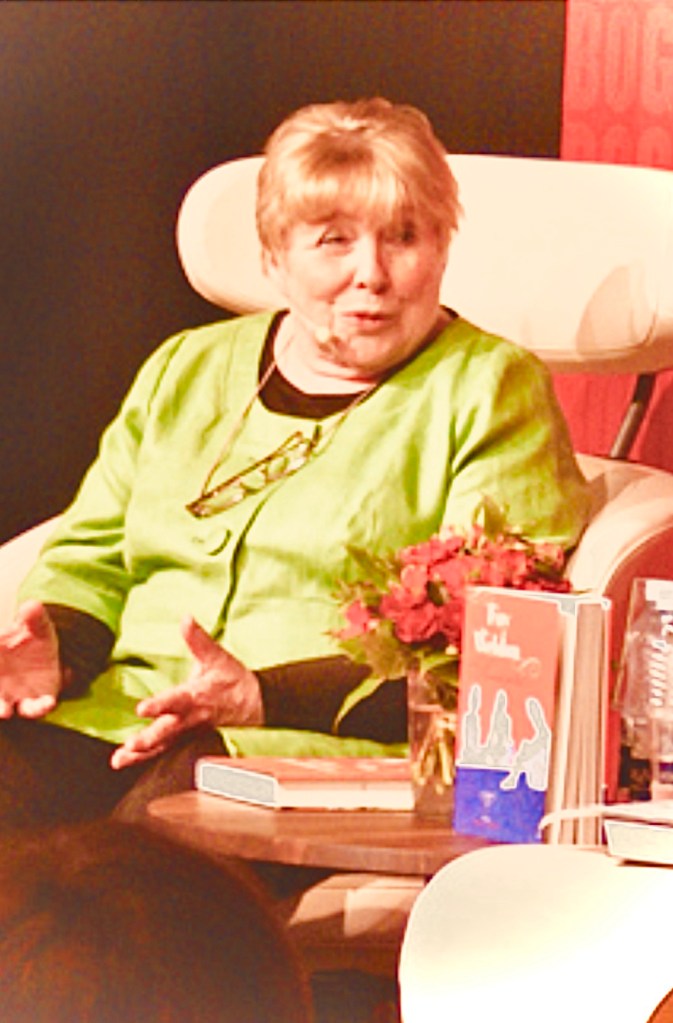


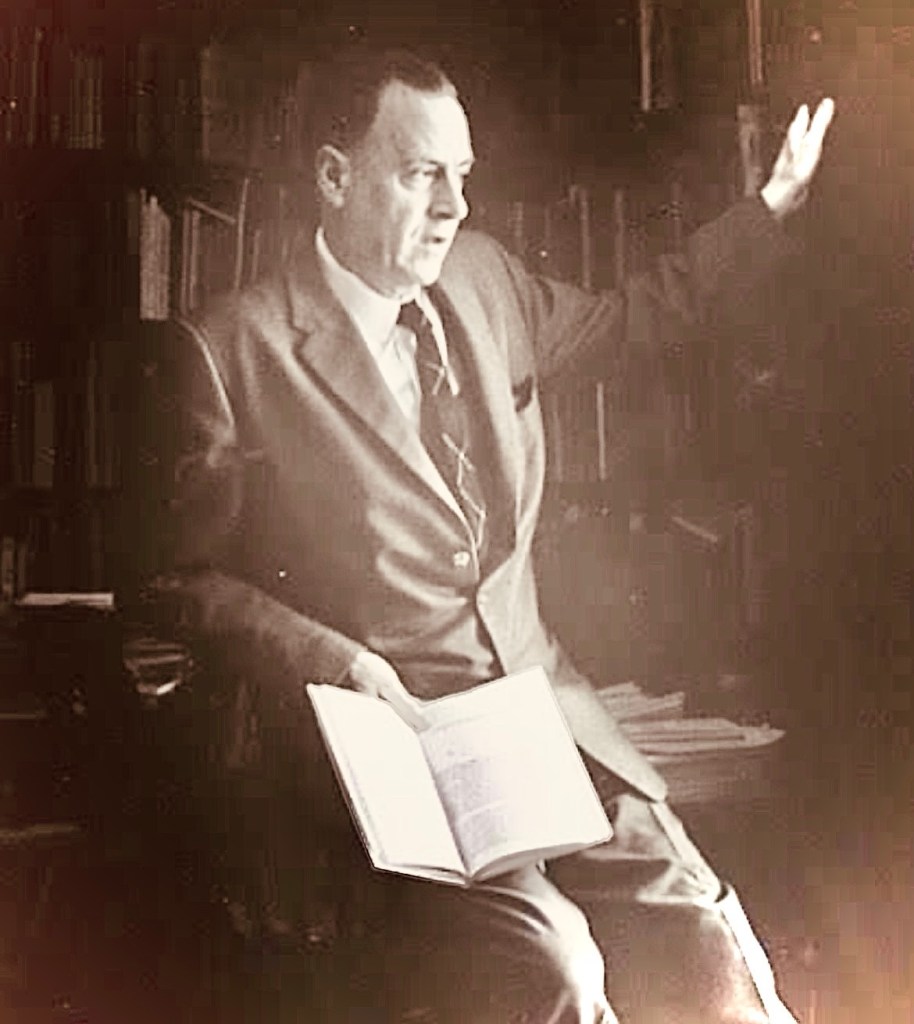
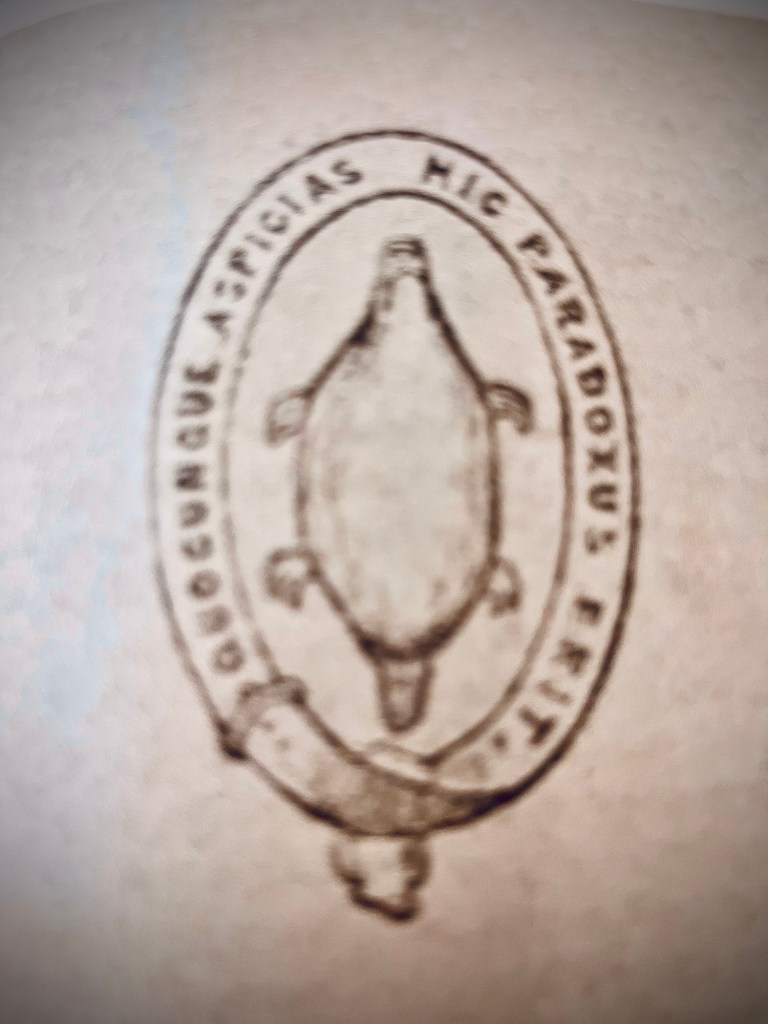


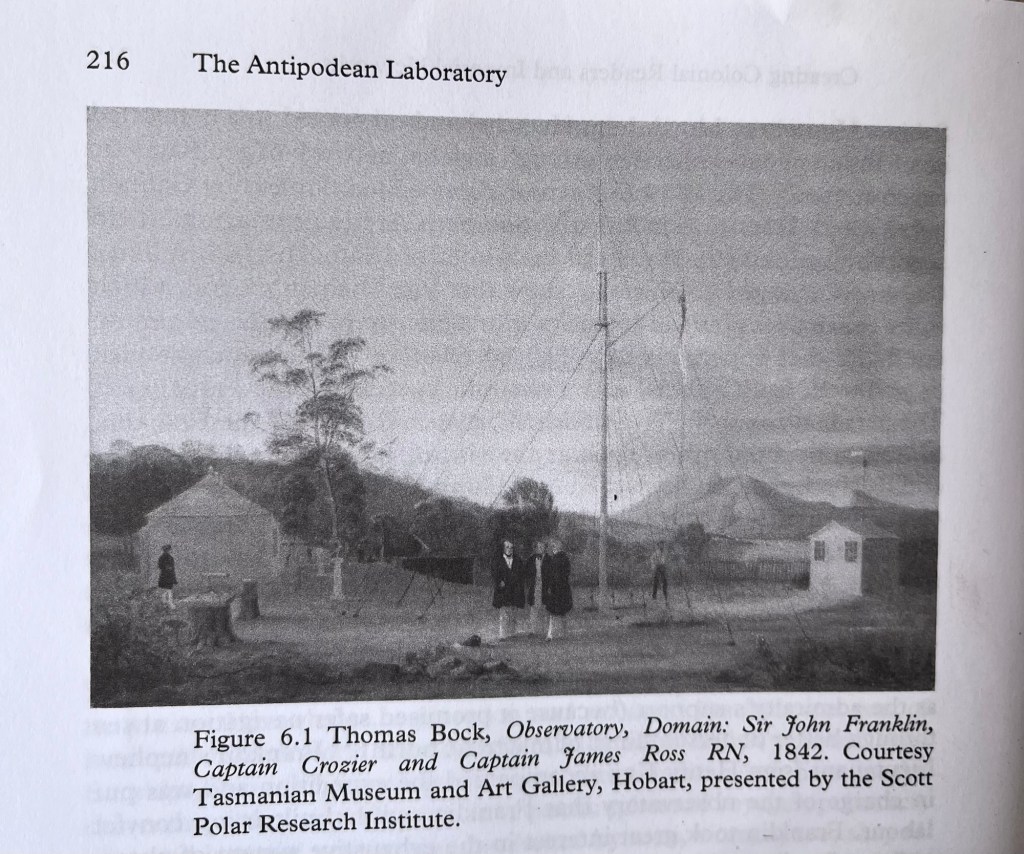
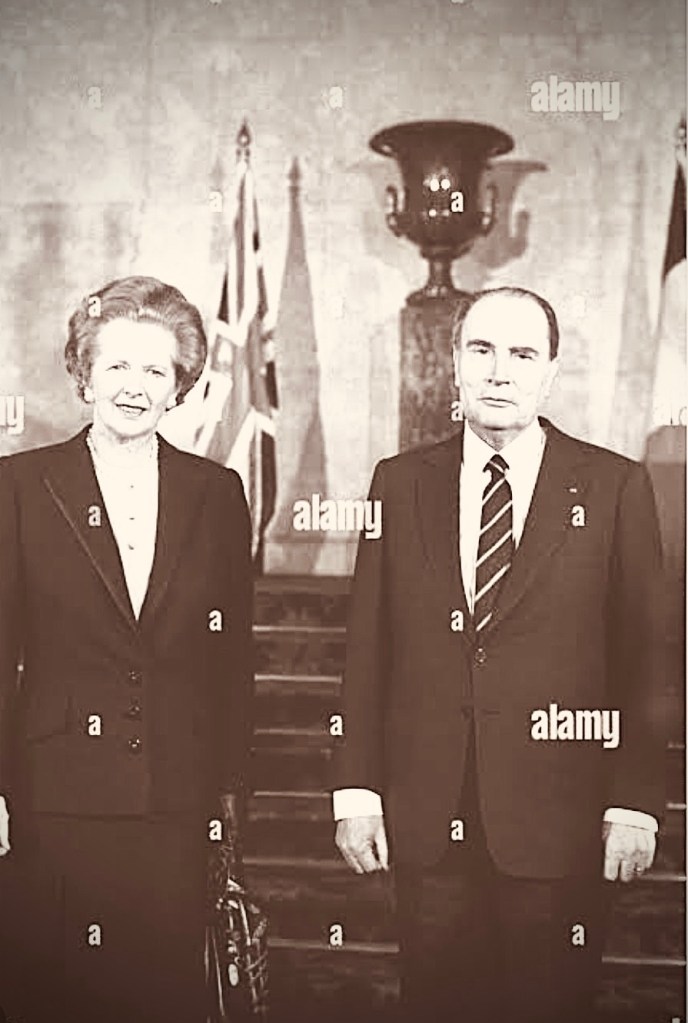








 Billionaire-🙈🙊🙉🐒s with Olivettis