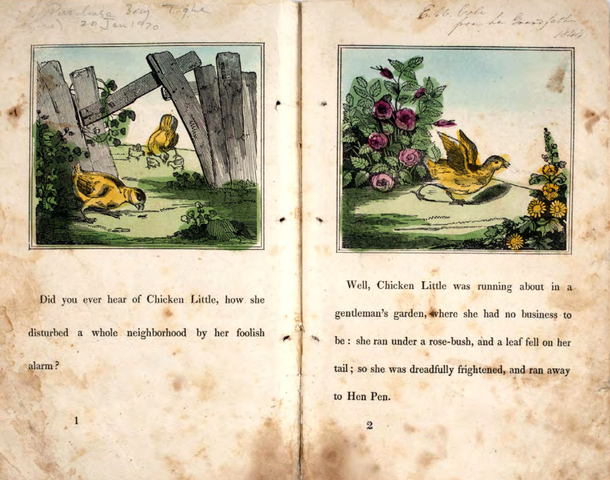
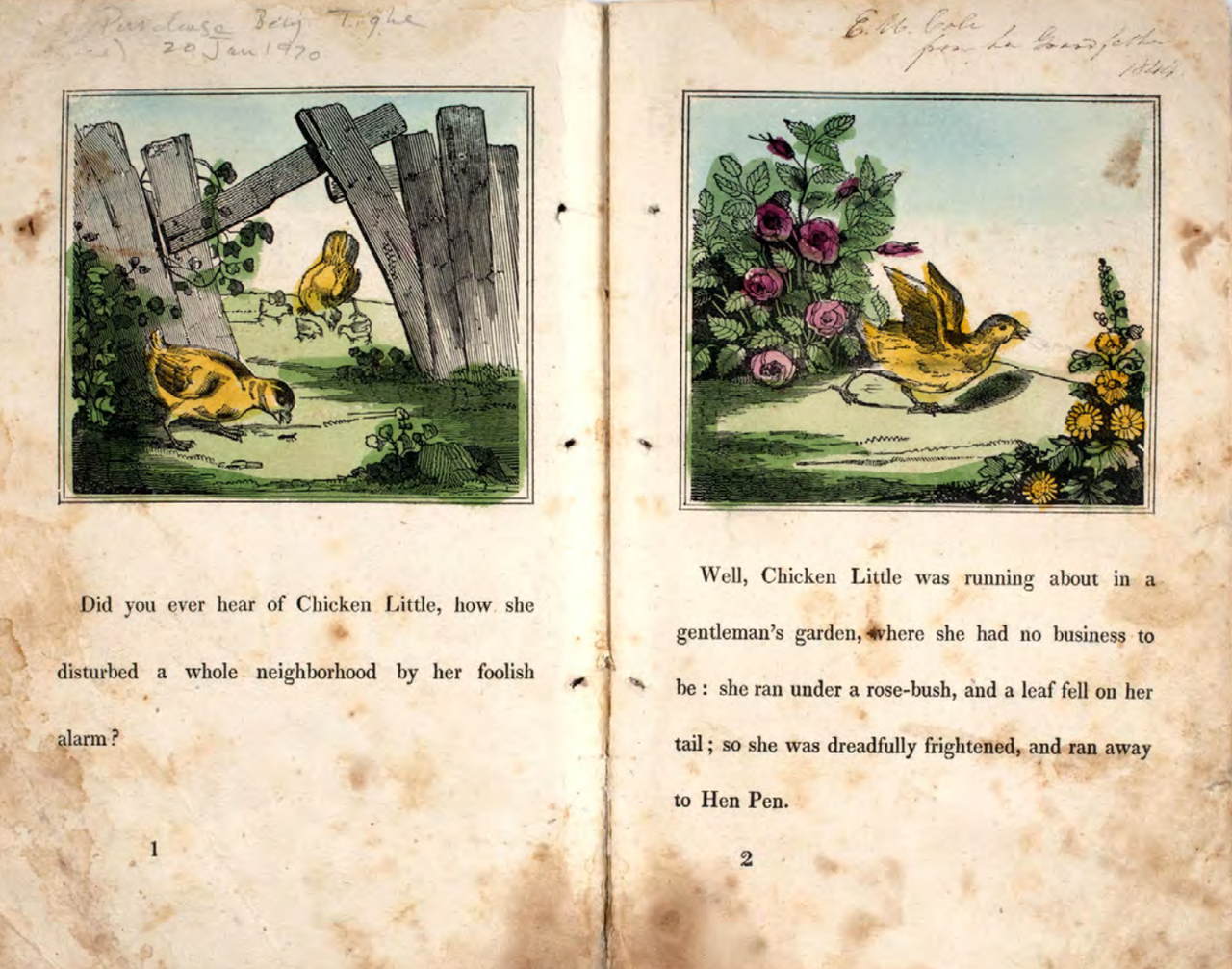
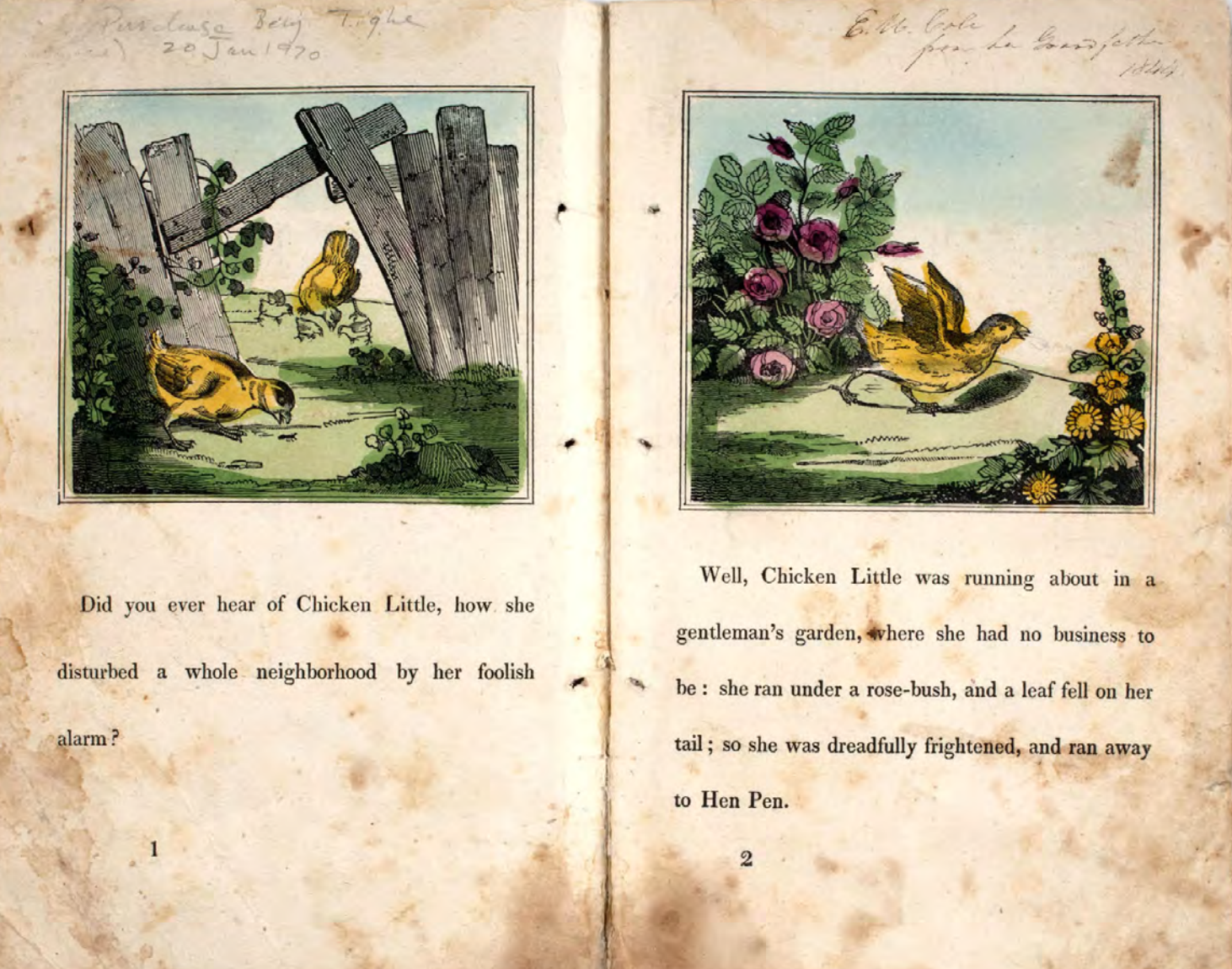
“Henny Penny“, more commonly known in the United States as “Chicken Little” and sometimes as “Chicken Licken“, is a European folk tale with a moral in the form of a cumulative tale about a chicken who believes that the world is coming to an end. The phrase “The sky is falling!” features prominently in the story, and has passed into the English language as a common idiom indicating a hysterical or mistaken belief that disaster is imminent. Similar stories go back more than 25 centuries[1]and “Henny Penny” continues to be referred to in a variety of media.
[Fades/ exit stage..]
Have we got a CONSUMER VANITY PROJECT for you?
As another longer essay has been in production for the best part of 18wks and my @greeneconomyact material has touched and built upon it conceptually for all that time I had better whizz this much out for my readers as useful or perhaps merely historical conceptual clutter lest it all however essentially frivolous or grave it may or may not be be swirled and swished away in the mists of time like some ephemeral and instantly forgettable stereotypical Australian story about the predictable stuff that happens to young white people raised in the neoclassical liberal materially acquisitive not to say completely grubby mental frame.. You quickly gather that our main target for virtual actual cultural demolition here is the mad reliance of neo-classical educational and entertainment media upon audio-visual and textual narratives (yarn-spinning, story-telling, variously glamorous or stern-looking television news-readings1, $200,000 government funded 20-minute videos on Play School kiddie pleasures or sexual consent or any of the stellar array of vanities conversational, geopolitical, global or outer spatial assembled on historical lines, as though life, art and history itself had nothing to say – or c’est – about where the bizarre insapient existentially challenged species Homo-sapiens is at in 2023, let alone ANY futures read-outs that are not the delusional money markets carbon offsets, “Fly Buys,” discounts, elite membership privileges, #cryptocurrency and #Econometric Post Keynesian mental splatter of “jobs,” inflation, banking-industry cash-rates and “Growth” – investment in blowing stuff up and destroying riverine environs PLUS pizzas, clothing, electricity accounts & rich people’s holidays or any of the myriad public-money bonfires of the vanities for pale, stale, urinally incontinent and increasingly mentally wobbly but robustly self-obsessed life denialists attending ludicrous imperial Gyro Gearloose New Global Technocracy conferences about “Adaption” in Adelaide, South Australia and being really nice to each other.
This is Margaret Atwood Doing a Joke YehGoodness Only Knows What This Is Gulp
GARGANTUAN ELECTRO-MECHANICAL COMPLEXITY FOR JUNK SCREEN DISPLAY NOW STANDS BY DEFAULT & NEGLECT of LIVED EXPERIENCE or REALITY to DESTROY ALL
We learn at snail’s pace and now despairingly belatedly that life, not even human life alone (if there ever were such a psychotic that is to write literally reality-denying hell on Earth: the Inferno2 this time with real fire and boiling seas) is not some galaxy-scale stewpot of letters, glyphs and numbers.
While most chatter, say ooh or ahh a lot, and worry about those proverbial Jobs being Taken Over by Machines – as though they were agricultural labourers and it was say 1850 in England (and, er, the lord was in his manor and all was well with the world
It’s how we codify one fragment of cultural detritus and in so doing learn utterly NOTHING about it’s social, economic or ecological purpose.
Spiritual and ideological purpose, oeuvre-genre-milieu??
But oh we’ve got it typed. You get me. Ich down I think Royals would aver. Essay on the uses of literacy and a global revival of intelligent non narcissistic fiction.
Philosophy of Science, Neurolinguistics, Sociology, Health, Economy
South Australia 26/7/2023
1 who are these people, how when, where, why and by whom was this activity encouraged and what is it actually for but goods & services marketing and tourism for the Devil-may-care Rich and their tragic middle-income imitators? ..we are just asking ..we are asking alright.
2The Inferno is a fourteenth-century epic poem by Dante Alighieri in which the poet and pilgrim Dante embarks on a spiritual journey..
At the poem’s beginning, Dante is lost in a dark wood, both literally and spiritually. He meets the soul of his poetic idol, the Roman poet Virgil, who agrees to guide him through hell..
Dante and Virgil enter hell and explore its nine circles, observing the punishments suffered by the various categories of sinners..
At the bottom of the Ninth Circle, Dante and Virgil encounter Lucifer. They climb the devil’s back in order to ascend to Mount Purgatory.
Sharp readers will note that the only ecolocically and socially viable model of economy available to humanity, “CCEc” Blundell 1995, posits or rather identifies nine concentric circles of global economy, a notional but again existent and decisive C10 – Earth’s lower to mid to upper that is tiered atmosphere – and within the sustainable perpetual domain the notional circles individual-adult through geographical-community (a notional 10km x 10km) C1 to C5
Oeuvre, genre, milieu – critical thought on the individual, societal & ecological condition from a 1996 Green Economist newsletter out of the sole-proprietor business Blundell Orchards, headquartered at Lindner Avenue Ashton South Australia..
Far be it from me a 35-year #Weather #systems and Atmospheric #Science student to make a fuss, but the world has a heating problem. This is not “climate change,” or any other kind of Christian Evangelical anthropocentrist tribal Disney-Biden-Take-a-Dump bullshit, OK?
So I beg of you all to please try to understand the nature, function and nefarious purpose of Oil Economy financiers’ and “alpha” (biggest risk & biggest returns..) investors’ PROPAGANDA to totally snowblind and bamboozle the working men and women of this world – not politicians, not gangsters, not @Instagram narcissists or money-grubbing #influencers, NOT near-completely deskilled programmed-by-rich-reward, free-real- estate and rides-in-big✈️✈️s @Harvard/ BF Skinner mid 20th 🥕&🪄operant conditioning US Information Service & Central Exploding-cigars Intelligence Agency losers, but ordinary people – the one’s who like worker-bees make the whole global circus economically possible.
That’s us, yeah? Not a professional Talking Head or self-obsessed podcaster amongst us and we’ve got the numbers.. no societal parasites or sundry political class performing baboons or career meme- & tweet-writers us: not one of.
There follows but one of an array of hard public policy stories I could only load onto my screen by copying the thing.. clearly to the Cabal soft, social, manipulable, non mainstream, non economic trashable activist-bait. subjective, affective, opinion-driven and experiential, so-o-o-o not STEMMIE and I mean, they mean, they ASK YOU, dear reader: what mischieve-ious sloppy “Socials”-style delinquent flamboyant discursive Chaser Boys scientobabble is this, they go, they just go, @JoanBloggs/ MFR Rest in peace Sept ‘22..
The following article represents in the micro a danger nobody properly understands or is prepared to mention for fear of attack by Elon Musk1 and other Public Square tits, cookers and patently bad neofascist electoral-autocracy actors: whither goest humanity?
– If life-on-earth, human society and the troposphere were/ was an earnest conversation, a soft Non-economic (!) social issue, a tv chat show, or a retail politics bidding war for white-skinned upper middle class HG Wells Ernest Hemingway Orson Welles social parasites, flaneurs and roues from somewhere in first half of the 20th century, a psychotically (reality-unlinked) excessively artificially compartmentalised wildly orgiastically riotously over-codified neofascist 1939-45 Nazi or 1970 Stasi style record-keeping archives-trawling relentlessly chomping on B-movies, embarrassing soap-opera and frankly creepy turgid undergraduate comedy to make the existential angst go away who – not that, for goodness’ sake – had figured out depersonalising marshalling regimenting everyone not “Elect of God”4 but primarily primary kids to make the best they can of growing up in various performative public presentation social mileux in constant fear of correction by powerful and violent adults there would you’d most certainly agree be “issues.”
“COVID-19 case numbers have been on the rise since March, and the number of positive tests reported in Australia increased by 19.7 per cent in the week from 16 May. And Dr Brendan Crabb, professional director and CEO of Melbourne’s Burnet Institute, expressed concern about the slowing pace of research and development for the tools and interventions required to meet the ongoing challenge”
Brendan Crabb, Burnet Melbourne
“Burnet Institute Director and CEO Professor Brendan Crabb AC has renewed his call for ‘straight talking’ from Australia’s political, health and scientific leadership as the nation confronts a looming fifth wave of COVID-19…
“And he’s expressed concern about the slowing pace of research and development for the tools and interventions required to meet the ongoing challenge.
“COVID-19 case numbers have been on the rise since March, and the number of positive tests reported in Australia increased by 19.7 per cent in the week from 16 May.
“COVID is the third leading cause of death in Australia, but it’s also driving a significant increase in cardiovascular deaths, which is the number one cause, so an extraordinary impact, ” Professor Crabb told the Australian National University’s Democracy Sausage podcast.
“To avoid the spread of infection … we need straight talking and honesty – there’s a need to be frank, even if it is, ‘look, here’s the scale of the problem’.
“We could also acknowledge … to community members that you do need to know the extent of the issue so here’s what you can do about it, and we’ll work with you as best we can, given that context.
“That would be vastly better than a misinformation campaign by ignorance, by ignoring it.”
“Professor Crabb nominated the well-established pillars of clean air, the use of effective masks, ongoing testing and vaccination as the most effective means to reduce transmission.
“It’s almost impossible to get tested now, especially with a PCR based test, and you can’t protect those around you if you don’t know you’re positive,” Professor Crabb said.
“And vaccines are still crucially important.
“The reason we have 20,000 deaths a year and not 200,000 deaths a year is because of the power of those the vaccines – they’re incredibly effective, even as the virus continues to evolve.”
“In the absence of effective public health interventions, Professor Crabb said there’s a need to step up the pace of research and development.
“We’ve gone into slow mode, research, slow mode,” he said.
“We need tools that are next generation, so a vaccine you take once that protects you forever, like measles; a vaccine that you perhaps spray up your nose rather than gets injected.
“Drugs that are much better, a more effective range of drugs, drugs for long COVID, this is all going to happen if we go at the pace we’re at, but it’ll happen in five to 10 years.
“We need warp speed now because we are still in a really desperate and needy situation given no one is willing to take any public health interventions effectively globally.
“Ignoring it is at the heart of all of these problems, and if we were were to face it with some straight-talking honesty, we’d be halfway there.”
“Click here to listen to the full podcast, Democracy Sausage: Does Australia need a new COVID-19 Strategy? hosted by Professor Mark Kenny, ANU Australian Studies Institute, and including Professor Chris Wallace, School of Politics, Economics and Society, University of Canberra.”
“Burnet Institute (Australia) is located on the traditional land of the Boon Wurrung people and we offer our respects to their Elders past and present. We recognise and respect the continuation of cultural, spiritual and educational practices of Aboriginal and Torres Strait Islander peoples of this land.“
The foregoing was a short essay re-presenting in full a Burnet Institute article I could not upload, with my attendant fears about the manipulation and blocking of public information in areas not considered favourable to neoliberal donor-, lobbyist- and advertiser-influenced government by the frenetic & fevered use of machine learning, trolling and website junking algorythms including #ChatGPT42– in the maliciously false name of quicker access to more information as celebrated in socially and educationally worthless anodyne information technology commentary along the utilitarian lines of ‘How does it work’ and ‘How can we learn to use it.’
Hjalmar Schacht was a German economist, banker, centre-right politician, and co-founder in 1918 of the German Democratic Party.
Whoopsie, you post 1509 Romance Era ex British-, Dutch, Belgian, German et-set-era totalit-Aryan mock-tribal misogyne environment-hating f…ing🐕🐕🐕🐕s at Alphabet-Google (& @Wikipedia? – uh-oh I’m about to burn my subscription with you – and I’ll not be the only one): it’s the National Socialist Party, most often referred to as the National Socialist German Workers’ Party (German: Nationalsozialistische Deutsche Arbeiterpartei, NSDAP),
Appreciate what is going down on liberal democracy itself, worldwide and you’ll no longer be puzzled – or even bewildered as billions are – by the breathtaking ignorance, arrogance, frankly psychotic belligerence and hubris on full public display by ‘robotic,’ wooden tin-eared talents like Albanese and Dutton, Sunak and Starmer, Biden and Who-the-Fu..-ever..
So What’s Going Down in Old Hjalmar’s Broken-down World Then?
This danger nobody properly understands or is prepared to mention for fear of attack by frankly misanthropic and dementing tits. cookers and political dilettantes on 24 Hour troll-bot activated Alert from Rekjavik Iceland to Santiago Chile..
Please people, please journalists of the non Jimmy Olsen (the peace jah-stice and the Ah-merry-can way of life thing 1970 circa) non Cornflakes packet cut-out-your-certificate qualified type, some discussion of the macro effects. The consumer-eye view of new toys and their tech-specs on a socio-economic AND political issue as significant, pervasive and insidious as machine-generated educational, literary and technical text is so foolish as to be disordered if not neurocognitively dire. It is a danger to society by its undergraduate or Australian Broadcasting Corporation and Triple J Radio style disingenuous analysis and consequently fatuous conversations and news reports.
If you’d say to me the major party apparatchiks, podcasters, jet-setters, meme-writers and tweet-crafters don’t believe in misogyne The Big Bang Theory tribal identity sub-culture garbage or the pseudoscience heroically identified in public by Carl Sagan in his and Ann Druyan’s 1995 ‘The Demon-Haunted World: Science as a Candle in the Dark,’ then on the valid double-blind, triple-blind evidence I have gathered as an ex social sciences McLuhanite scholar and educator for FIFTY-FOUR years it is proven that these people are play-acting at being kuckle dragging bottom sniffing social darwinists to schmooze their political owners. Not good. Nice country you’ve got here – is it for sale? Nah, sorry mate, gone.
I will no longer even listen to news bulletins making references like ‘scientists say’ or ‘an expert advised..’ Phoney, broken, beyond diseducational psychopathology. Dame Clara Butt, Phillip Adams, pastor Margaret Court, spunky hunky Israel Folau, Brendan Nelson, and all those archivists where are you? No. Don’t worry about it. Could you just, say.. never mind.
I am..
18 years public servant in family support services, integrated health services, community development and government enquiries secretary, in the early 1990’s sole proprietor of the largest vertically-integrated genuine-organic production ‘fresh & dry’ foods business in the Southern Hemisphere, Australian mafia-busted candidate for State political office and for the 31 years since an independent journalist.
I worked for Ngeringa Vineyards at Mount Barker South Australia (market garden organic produce and value-adding) from 10 April 2018 to 20 March 2023 when I was sacked and no reason was given. My only clue is that my ex supervisor had said a fews weeks earlier that he “did not like the way (I) talk to people” This man, an Australian & NZ organic/ biodynamic grower ‘legend,’ 36, suffered an MI not unrelated to Pfizer vaccine SARSCoV2 myocarditis3, has had to move on.
Australians all let us rejoice, for we are full of it.
Loyal to the company, did my job, kicked in the head, what a silly tit I am..
Rejoin the @CPSUnion (..we are people working in the C’wealth public sector, ACT & NT Govt, @CSIRO, @ABCaustralia, telecommunications service-providers and (the doddering, twitching mouth-frothing array of @TwitterAU-hating radio & television) broadcasters. Autho by M. Donnelly, CPSU National Secretary, Sydney?
Nah.
Try the @MEAA, @pen_int, @PENamerican @ScottMorrisonMP, @billshortenmp, @PeterGreste and say, @NickMcKim, @DavidShoebridge or any of the helplessly hopelessy polarised numpties of post #Coldwar polemical fragmentary siloed and psychotically over-codified, gibberisched, formulaic neoclassical academic Soft Social versus Hard Big Boys’ #Economic theory6.. Yay and Yeehah inflation & unemployment, duck curves, hockey-sticks and the NINE MILLION DOLLAR @KPMG contract for the sole purpose of #greenwashing the general public and getting the political heat off Bill Gates/ Tony Abbott 2014 COAL burners and exporters immediately prior to the Committee of Parties5 @IPCC_CH Glasgow conference 31/10 -12/11/2021 at the Scottish Event Campus?
Are you feeling well or what? – The answer is quadruple Nah: nobody under the age of 25 in Australia even knows what any of that dinosaur’s and old rich people’s political-class garbage is for.
..but the PhD’s, the Merde-Ockers, the ‘chuteless @SkyNewsBreak jumpers all three major political parties in Australia – most EGREGIOUSLY the party of federal political power and authority – keep telling you this is THE economy stupored. Darn right.
“Shut Up, Kevin!’/ Ooawhh Sorry, Mum/ “I said shut up!” [gloomph] – Blundell ngayagu 2004 Thevenard Rd Chihduna – Ceduna Wihrangu/ the 253-year Cap’n Cook colonial era Far West Frontier of SA
I’m missing the $150 a week (my savings are static) but my studies and public education work have stepped up with some excellent economic overhaul and reform material nowadays ‘gobbled up’ by thousands of readers and indirectly-linked people..
Revolutionary English Language Neurolinguistics 1997 Booker Prize TGoST
John Blundell
South Australia 22/6/2023
1 USA advertising industry guy still in the throes of trying to turn the world’s best and effectively in terms of distribution by news category or subset and public technical, professional and general interest-area reach only reliable news and current affairs medium into a marketplace and talking shop for deracinated – society? Margaret Thatcher said there wasn’t one and she like Angela Merkel was a sighin’-test – ecology? what even is that, an oowh wet juicy hippie #ClimateScam thing? – environment? 1) something to do with world government and Satan raved about by podcasters you would’nt want to meet in a dark alley? 2) Al Gore, John Kerry and @AOC @GretaThunberg razed in quiz shows – and, er, Canada atm 3) @NASA cartoon stuff for schoolkids and discyused on egghead tv panel shows for bored, affluent (at least cashed up or crypto’d in the short term) b-o-r-i-n-g Donald J Trump ‘Art of the Deal’ people?
2 I am not suggesting that the problems touched on in this essay are particularly or only due to the #ChatGPT ‘artificial intelligence’ chatbot developed by OpenAI (market valuation US$29 billion with 100m users by January 2023 @Wikipedia) and at least 5 other LLMs (large language models including Bing chat (it’s actually OpenAI’s GPT-4) triumphantly launched in Australia only May 22nd (see Wired, ZDNET for discussion). Examining the whole field in its functional micro compartments and in its macro inextricably interwined quantum-dynamic structure as future STEAM academic and technical enquiry will flatly and non-negotiably be statutorilly required to do, we take a holistic read because all users including those who like myself will not knowingly use Bing/ Edge for searches are not tangling with chatbot literary and technical textual & audio-visual meat-mincers alone but well know we are negotiating (no, not ‘navigating,’ please!)(Lego-world and Alan Greenspan’s 1955 Manhattan Island Objectivists)(eeyaaaghh) the array of user Curb, Control Censor & Crash algorythmic electro-mechanisms that apps like @TwittterSupport have developed over the years.
4 meaning the member of a household with a total net income of less than $110k AUD per year Open
5 Kids don’t allow political class “left-wing progressive” (you what? publications like @guardian) to persuade you that the intergovernmental panel of peer-reviewing or basically random if not haptic freelance/ ‘play us a catchy tune and we may choose to take YOUR product off the phantasmagorical supply-side-only #ClimateChange (there is no actual Twitter hashtag available here because the topic has been found to be too controversial and divisive for people in neurocognitive decline whose lives are passing them by as in a blur at present, the poor darlings, and the government has a bounden duty to help these folk cope mentally or at least steer them towards grosssly unskilled counsellors with the general knowledge of cookers and Catholic Right or other #ToryCorruption jer.offs who will ask them sh.. about How they feel, and say Then what happened, and Oawhh a lot) researchers’ Global Supermarket shelf or even renew your charmingly pointless deracinated no-connect-with-immanent-realities-just-vast-new-masses-of-energy-burning data so cleverly greenwashed & packaged for the voters, and especially you deskilled manipulable children, what!, as knowledge neoabsurdist studies and extravagant field project $100m-plus grants, to persuade you that a CoP is a cop, or worse, that the NACC is a knack for the Kerry Stokes’es, ex Major General Linda Reynolds’es, et alia, of this comprehensively battered, lost and cracking-as-we-write & read-country
6 The Market is the Market: you not only cant argue with the market but in the post John Kenneth Glbraith unhinged no-government dysregulated neoliberal Wealth of Nations-built-on-slavery, human trafficking and extractive industry now exponentially accelerating after some 290 years of a reasonably – and of course in the terms of both the haute-couture literary- and the post “Enlightenment’ neoclassical academic technoindustrial -elites comfortable upper middle class cum 1729 Birmingham Northern England model – on say 1,000-year historical time scales or periods the destruction of both both the human and the ecological ‘milieux’ or grounds of being – doing, becoming
Well, enormous thanks, your marvellous links included..
South Australia: we were billed by Douglas Pike in 1958 as “Paradise of Dissent: South Australia 1829 – 1957.” This writer and presenter of Kathryn Hughes’ article was during the prime ministerships of John Winston Howard and Kevin Michael Rudd placed in police cells 7 times – on one occasion for 2 1/2 days to put the fear of a vengeful Christian Old Testament Lord of Hosts into the dumb fu..
South Australia: we were billed by Douglas Pike in 1958 as “Paradise of Dissent: South Australia 1829 – 1957.” but, goodness, that was no more than a pretentious Edward Gibbon Wakefield ruling caste boast that we had no British civil & criminal prisoners – “..that you shall be hanged by the neck until dead.. no dammit, wait, transported to..”
Just between you and me and the gatepost, the State’s history with respect to protest or dissent has until this day some 190 years after it was first colonised by American sealers – I personally had a great-great-grandmother who was a little bruised in that encounter – readers who can’t even emotionally cope with not, say, a 1963 Hannah Arendt neoclassically-framed Fact & Value-affect “banality of evil” tag but shy and baulk at the most prudish, oblique, watered-down euphemistic references to brutalisation, rape, slaughter and crimes against humanity should call an ABC-approved counsellor – or let’s face it get the f… out of government, governance and public life in general immediately.
This writer and the presenter of the below Kathryn Hughes article was during the prime ministerships of John Winston Howard and Kevin Michael Rudd placed in police cells seven times with no valid charges against him {only the say-so of flatly lying thugs and a notorious, frankly infamous, former Assistant Police Prosecutor, a trades union and independent newspaper employee Hendrick Gout, and his own brother, who (in conjunction with the Australian Taxation Office on the advice of a State political candidate against whom he’d won a 46% Two Party Preferred vote in the Kavel by-election of 20/5/1992, John Wayne Olsen) had a plan – by 1999 successful – to defraud me of approximately $0.5 million, my entire assets – and my second marriage – and my home – and all of my family relationships}, on one occasion for 2 1/2 days to put the fear of a vengeful Christian Old Testament Lord of Hosts into him, with two attempts by the SA Police on the advice of Health Minister, and on the second occasion, in 2008, by the particular Health Minister who was former State Secretary of the Australian Labor Party John David Hill, whose frankly bizarre threats to his publication of newsletters Green Economist and Community Economist dated back to the moment of his first appearance in the electoral political commentary public domain, to “Loony Bin” him, the first on 4/2/2002 when he was punched in the head so hard by a cop it knocked him out, woke briefly on a gurney in Ceduna District Health Services, which as a District Officer for the SA Government and with the aid of Whitlam government money he had actually helped found and establish in 1974 – federal minister Douglas Nixon Everingham – was injected in the bum with Haloperidol and had a cannula needle inserted in his arm for a Chlorpromazine drip and twenty hours later woke up 900 kilometres away.
..contracted – paid for in cash – Labor Party home invasions, smashing their way in via door- and window frames, frenzied peddo-baiting.. well why not, these fu..ing dogs would say, he was the bastard who brought neo-nazi government and church child stealing to a dead-stop on the very day he set up office for the SA Government thirty-five years earlier,
You might question anyone tangled up with Elliott Johnston Chambers or its ludicrous “We’re-going-to-get-you” class-warrior predecessor firm Johnston Withers in Adelaide. But its historicising ABC archivists’ pfaff and secret Australian Security Intelligence Organisation ballocks now as we none of us at this epochal moment in human history as no less than five exitential crisies bear down on all – atmospheric, ecological, immunologic, educational and economic – may in good non-whacko, non depressive, non historicist conscience waste time on it or its like.
Like where’s the narrative drive, the cultural learnings, the Doing Being Becoming political sense in pawing over video of Mr Blundell showily displaying an outwardly raised middle finger to a bulky cluncky branded Channel Nine news camera 54yrs ago in Currie St Adelaide as he co-led a march to the offices of the Commonwealth department of Labour and National Service? Are you crackers? Compost this crap. And get help – you’ve lost the very plot of human decency & good graces.
On historical lines.. we are death the destroyer of present immanent worlds intent on raising our children to lives of febrile unproductive absurdity, then shuffling them into early graves.
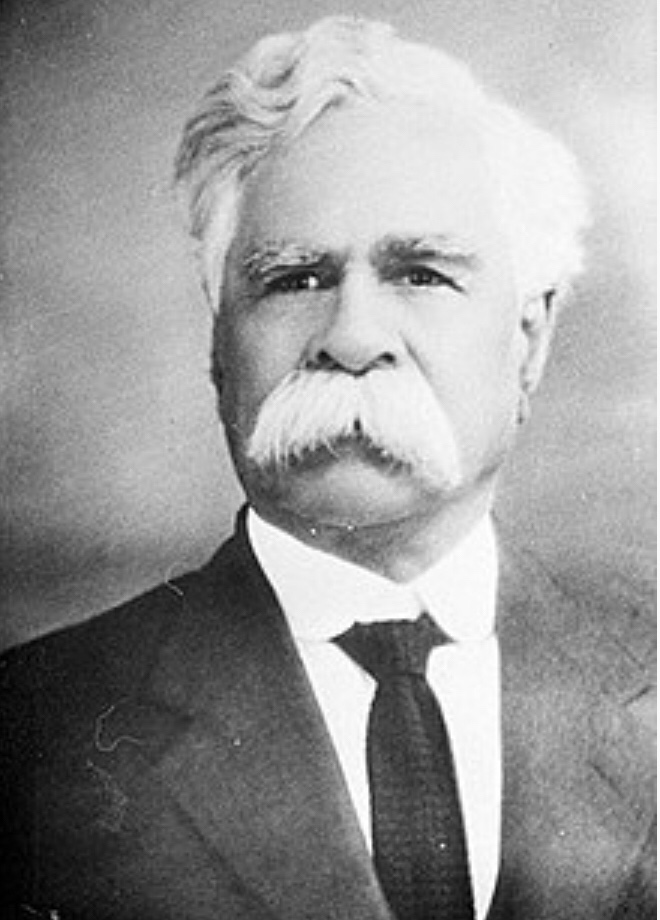
William Cooper, a classical leader of his people, Kahmeragahnja British Empire shame & global ignominy 1938
John Blundell
Economic Sociology, Neurolinguistics, Health, Philosophy of Science
Work to do. Fish to fry. Crooks and bloody misanthropes in their tens of thousands to be remove from public office, corporations and courts; critical socio-cultural input you would all agree.
“Sizzle, spice and not very nice: 100 years of the tell-all biography”
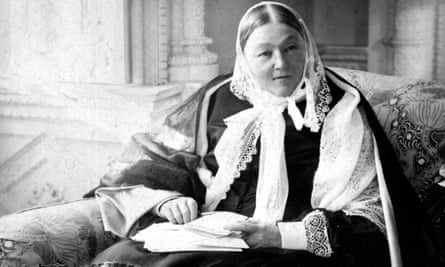
Lytton Strachey’s explosive biographies demolished reputations – not even Florence Nightingale escaped his wrath. But what is his impact on life writing?
A hundred years ago, Lytton Strachey published Eminent Victorians, a sequence of four biographical essays whose elegance belied their punkish intent. Strachey’s subjects, although “targets” might be more accurate, were Florence Nightingale, General Gordon, Thomas Arnold and Cardinal Manning. These four eminences – the founder of modern nursing, the British empire’s most honoured military man, the reforming headmaster of Rugby School and Protestant England’s most prominent Catholic churchman – were simultaneously knocked down, duffed up and left looking slightly ridiculous. With language sharpened to a scalpel, Strachey cut away the fatty layers of celebratory bluster to reveal these heroes of Victorian Britain as deluded narcissists whose achievements depended on the ruthless exploitation of those around them. Gordon drank, “was particularly fond of boys” and slapped his servants; Manning had gone over to Rome from the C of E because it offered better job prospects; Nightingale was a psychotic bully who ran her saintly helpers ragged; while Arnold, in a wonderfully allegorical description, had legs that were slightly too short for his body. And all of them knew for a fact that God was on their side.
Biography, for good and for ill, would never be quite the same again. Over the previous 100 years, roughly the span of the 19th century, biography valued reticence over revelation. Prominent men (and the very occasional woman) were memorialised on paper in much the same way as they were materialised in stone. While every market town and London square had a giant statue of Nelson or Gladstone caught at their most flattering angle, every bookshelf sagged under the weight of a two-volume life that conveyed the most admirable aspects of its subject’s public career and stayed silent on the rest. These lacunae included but were not limited to homosexuality, bankruptcy, illegitimacy, alcoholism and telling whopping fibs. The Great, it went without saying, were also always Good.
From the first page of Eminent Victorians it is clear that something is up. The tyro author – Strachey’s only previous book had been a volume of academic criticism – proclaims that the old ways of writing about past lives will no longer do. “Our fathers and grandfathers have poured forth and accumulated so vast a quantity of information,” he explains, that any 20th-century historian or biographer would struggle to find patterns, make connections or even come up with a serviceable summary. What was needed instead was a “subtler strategy”. The biographer “will attack his subject in unexpected places; he will fall upon the flank, or the rear; he will shoot a sudden, revealing searchlight into obscure recesses, hitherto undivined”. Such pre-meditated violence could not be more different than the approach of the previous generation in which the biographer resembled nothing so much as a loyal family retainer, one who knew all his master’s funny little foibles but would rather die than expose them to the world’s impertinent gaze.
‘A terrible woman’ … Florence Nightingale. Photograph: Florence Nighingale Museum/BBC
In that same two-page preface Strachey also airily dismisses the old biographical habit of throwing in everything in the hope that some of it would stick. In fact, he suggests, all it really does is bore people silly with its “ill-digested masses of material”, “slipshod style”, “tone of tedious panegyric”, “lamentable lack of selection, of detachment, of design”. What was needed instead was a “becoming brevity – a brevity which excludes everything that is redundant and nothing that is significant – that, surely, is the first duty of the biographer”.
What Strachey is talking about here is “significant form”, the guiding principle of literary modernism that was so important to his Bloomsbury peers Virginia Woolf and EM Forster. How something was written mattered just as much, maybe more, than the information it conveyed. Biography, like a painting or a novel, should be regarded not as objective but autonomous, a work of art with its own logical coherence and only a glancing relation to what lay beyond its frame. And it has turned out to be a thrilling legacy. For what is Alexander Masters’s brilliant trilogy of forgotten lives, starting with Stuart: A Life Backwards (2005), but an exploration of and challenge to biographical – for which read biological – form? Even those modern biographers who work within the cradle-to-grave tradition have been liberated by Strachey’s suggestion that what one leaves out is just as important as what goes in. No longer is it expected or even desirable to include chapter and verse on what the biographical subject had for breakfast or where their great-grandparents came from. Hilary Spurling’s exemplary two‑volume Matisse or Robert Caro’s multi-decker masterwork on Lyndon Johnson may be tethered firmly to the archive, but in voice and form they soar far above the clunky chronological dirge that used to pass as the only way of getting a life down on paper.
Unless a biography boasts a revelation, preferably of a sexual nature, then it’s as if the book has no reason to exist
It’s no coincidence that Strachey’s radical new proposal about how to write the lives of others appeared in the closing months of the first world war. Yet what Strachey didn’t acknowledge, but we surely must, is the mixture of desire, envy and Oedipal rage that is in play every time a biographer picks their subject. When he unleashed his silky contempt on high-minded and ostensibly public spirited Victorians he was, in a sense, attacking his own family. He had been born in 1880 to a highly distinguished clan of colonial administrators and soldiers and it is hardly an accident that two of the eminences he set about cutting down to size, Nightingale and Gordon, were likewise leading figures of the great imperial enterprise. Nightingale dedicated her post-Crimean life to the health of the British army in India while Gordon was the governor general of the Sudan. In addition Strachey had endured a miserable time at boarding school. Here, perhaps, are the origins of his particular loathing of Arnold, who, thanks to the boosterism of the novel Tom Brown’s Schooldays (1857), was now regarded as the man who had set the blueprint for what a proper young Englishman should be: pious, sporty, manly and not especially clever. For Strachey, who was gay, wheezy, atheist and a member of the intellectually elite Cambridge Apostles, it was hard to think of a less appetising model.
By marking the end of biographical deference Eminent Victorians bestowed an exhilarating freedom on the entire form. From now on life writers felt able to include the dark as well as the light. Sexual scandals, financial disgrace and general moral turpitude would be admitted to the public record rather than being left to languish in the margins as insider gossip and smirking innuendo. And yet, it sometimes seems as if this permission to be candid has degraded into a requirement to be rude. These days, unless a biography can boast a revelation, preferably of a sexual nature, then there is a feeling of flatness, as if the book has no particular reason to exist. And if, in the course of research, a biographer does happen to unearth something scandalous, then there’s a high risk that it will come to dominate the reviews, blotting out quieter but nonetheless crucial material. It happened 9 years ago when the coverage of John Carey’s judicious and scholarly biography of William Golding was dominated by news stories that trumpeted Carey’s discovery that, as an Oxford undergraduate, Golding had attempted to rape his 15 year old girlfriend. In the process Carey’s masterly analysis of Lord of the Flies, The Spire and Darkness Visible got temporarily drowned out.
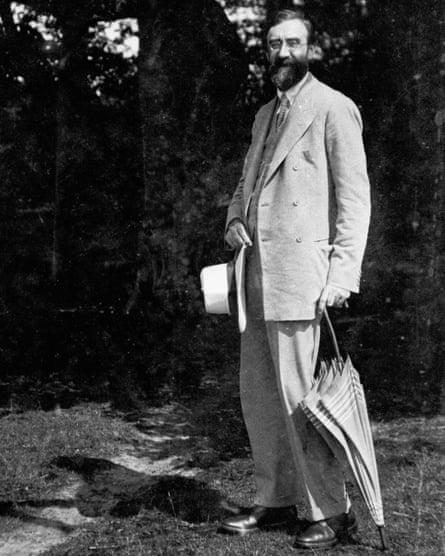
Tell-alls and takedowns … Lytton Strachey. Photograph: Dora Carrington/Getty Images
There are other ways too in which Eminent Victorians, for all its sizzle and spice, set up potentially damaging precedents. Strachey did not believe in research, at least not the kind that biographers and historians do. Instead of looking at primary sources, spending dusty hours sorting through diary entries about bad plumbing (Nightingale) or The Real Presence (Manning) he culled what he needed from extant biographies and histories. Indeed, when working on his Manning chapter Strachey ordered so many books on the history of religion that his landlady assumed he must be studying for the church. Likewise Strachey’s essay on Nightingale draws mostly on the two-decker biography by Sir Edward Cook (1913), a book that Strachey himself had once considered writing but rejected on the grounds that Miss Nightingale “was a terrible woman”. How much more fun to cherry-pick information from Cook’s foot-slogging effort and work it up into a sprightly, “cynical” (Strachey’s word) takedown of the Lady with the Lamp.
As Strachey triumphantly demonstrates, there is nothing wrong with being the second or 20th person to come to a particular biographical subject. Released from the requirement to tell a now familiar story from scratch, you are left free to write the book you actually want. This principle is on spectacular display in Geoff Dyer’s Out of Sheer Rage, his 1997 tour de force on DH Lawrence. Instead of adding to the heap of biographical and literary studies already in existence, Dyer produced an idiosyncratic account of his experience of failing to write the seminal work on his long-time literary hero. Just like Strachey, Dyer steered clear of dusty archives, limiting himself to the kind of printed sources that can be read in bed or packed into a suitcase.
In the 21 years since Out of Sheer Rage, biography has continued to be shaped by the legacy of Strachey’s Eminent Victorians. What used to be called “experimentation” as late as 1997 is now the new normal. Think of Helen Macdonald’s H Is for Hawk which nested a partial biography of the troubled mid- 20th‑century author TH White inside an excavation of the author’s personal experience of bereavement and birds. Or Craig Brown’s simply brilliant Ma’am Darling: 99 Glimpses of Princess Margaret which evinces a Stracheyan glee when dealing with “Her Royal Awfulness”, and throws chronology and chapter breaks into beautiful disarray. Even a more straightforward biography such as Jenny Uglow’s cradle-to-grave life of Edward Lear is able, in a way that no previous biographer quite has been, to speak candidly about the nonsense writer’s internal anguish in dealing with his homosexuality. These biographies are all Strachey’s children. We have so much to thank him for.
Dostoevsky’s Iconic Grand Inquisitor1?/ Just Another Lost-sheep Romantic Modernist?/ Or in their common neoclassical terms both ?Mother of All F…Ed Keeps Bobbing Up – Jingoes Dingos
As a bit of a sleuth I suspect Mr Gates has been ravaged by the zany threesome of Marjorie Taylor-Greene, Stephen Bannon and Representative McCarthy… Cwoaoarh that 1950s Yankee Doodle Dandy name..
Or he’s neurodegeneratively indisposed like all the mates Branson, Bezos, the remaining Koch brother, Jerome Powell and the world’s fave Renaissance Warrior-prince2. To get a steely grip on the ideological basis of this post 1509 ‘Hernan Cortes on a Peak in Darien’ Romance Era bulls… see our Footnote, courtesy Wikepedia & the Global Commons
Here a Celebration of Human Vanity Deranged Deracinated Unhinged Unrooted in neighbourhood-communal-regional, octospheric, quadrispheric, hemispheric or international reality
+ a special thank you to to the very special Masha Gessen, a Russian-American journalist, author, translator and [“]activist[“] who has been an outspoken critic of Vladimir Putin, the president of Russia… Gessen is the author of eleven books, including “Surviving Autocracy” and “The Future Is History: How Totalitarianism Reclaimed Russia”
John Blundell
Philosophy of Science, Australian
1
2Peter I (Russian: Пётр I Алексеевич, romanized: Pyotr I Alekseyevich, IPA: [ˈpʲɵtr ɐlʲɪˈksʲejɪvʲɪtɕ]; 9 June [O.S. 30 May] 1672 – 8 February [O.S. 28 January] 1725), commonly known as Peter the Great,[pron 1]was Tsar of all Russia from 1682, and the first Emperor of all Russia from 1721 until his death in 1725. He jointly ruled with his elder half-brother, Ivan V, until 1696. He is primarily credited with the modernisation of the country, transforming it into a major European power.
Bloke Gives John Stern Conversational/ Lonely ❤️s Club Twitter Talking ToJohn Rallies a Little From This Virtual Body Blow OhEdward Snowden Thinks It’s Hilarious
..while the embattled bewidered cracking privileged political class worldwide continues to psychobabble on about
This was an essay on explication de text and its fundamental indispensability to adult to adult communication.
It got mashed by mysterious powers operating just South of the ionosphere, or to be more exact at the tippy top of lower #atmosphere.
#Wordpress was ok when contemporary philosophers of science studying and writing at the very threshold (beyond any of the pre-pubescent Malcolm Gladwell social-pages magazine-journalist counter-upperer of Facebook & Meta – Christ help us all especially children – ‘Likes,’ “trends” and Things or thàngs) of human critical thought didn’t get their publications munched by the rabid ideological 1776 Adam Smith adamsmithsocity.com Ayn Rand Jimmy Carter Alan Greenspan & Institute for Economic Affairs London Neoliberal cognitively-impaired racist sexist neofascists and trumpite doctrinaire tree-biters.
Plus I pay good money for this service that now apparently isn’t.
So, as all the anxious Millennials go when questioned as if by some irascible sh..headed if not completely FITH professor, in a world now wracked by FIVE individual, household, neighbourhood, communal, regional, quadrispheric, hemispheric and global existential crises it will reward us all to have a little think about this lot, talk in a kindly and intelligent fashion with each other, expunge business criminals from public life – they really have had their shot at it, haven’t they? – and stop burning [🔥-ing] stuff.
John Blundell
Devisor of Authentic Green Economics 1995 Australia, Health Science, Sociology
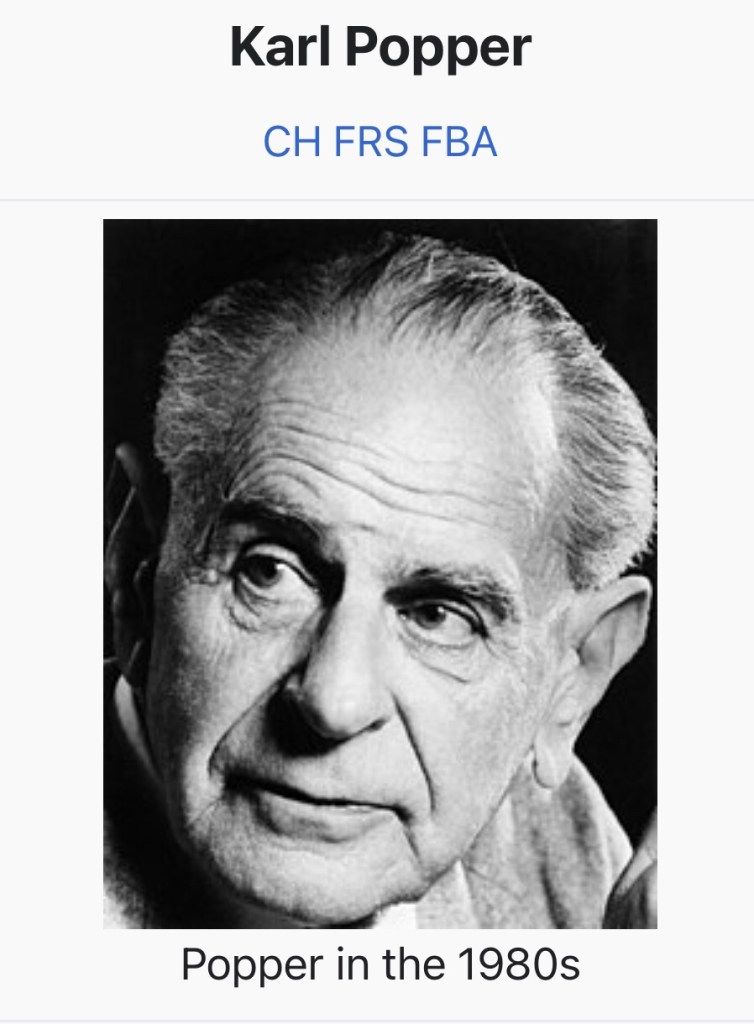
Born Vienna, Austria, 28th July 1902, cabinet maker apprentice, worked with delinquent teenaged boys, tramped the hills, taught himself maths and physics, became an active socialist educator, cracked a #PhD in Philosophy in 1928..
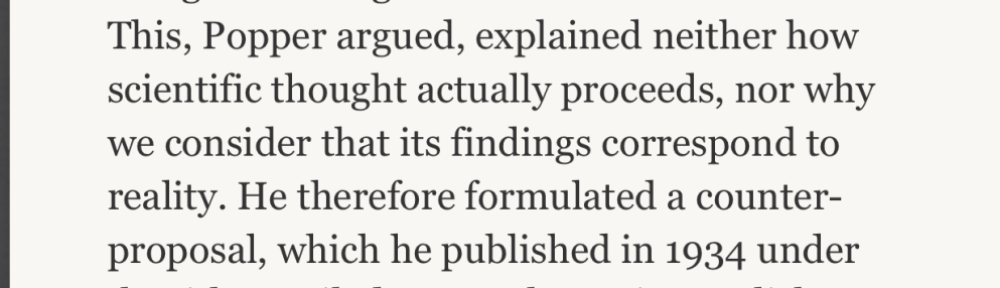
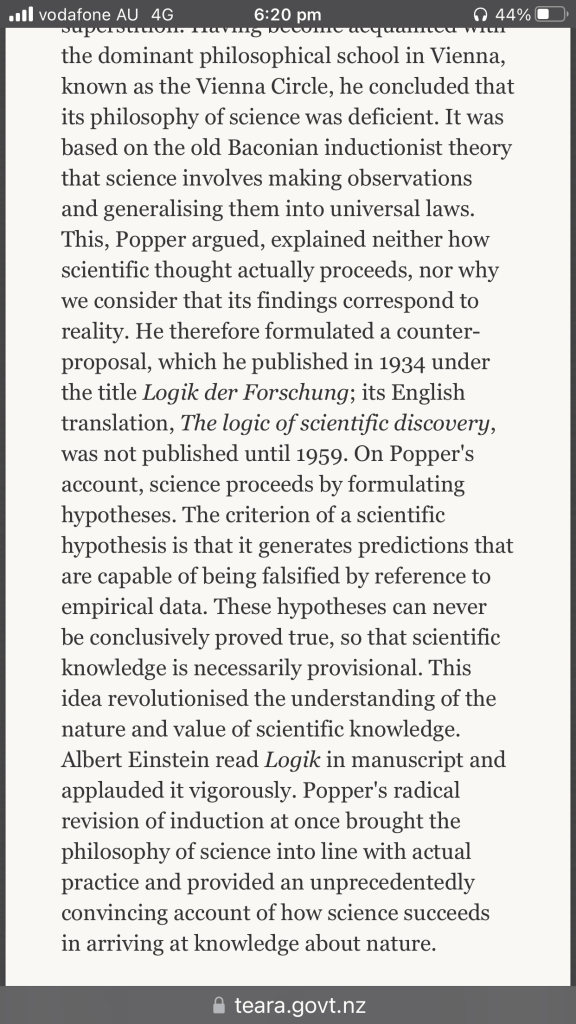
It was Popper’s practical and political interests that first directed him to the philosophy of science, because he realised that it was vital to be able to tell genuine knowledge from pseudo-knowledge and superstition.. continued at base here in screenpic text
The Poverty of Historicism is a 1944 book by the philosopher Karl Popper (revised in 1957), in which the author argues that the idea of historicism is dangerous and bankrupt.
The Poverty of Historicism was first written as a paper which was read in 1936, then updated and published as a book in 1957.[1]: iiiIt was dedicated “In memory of the countless men and women of all creeds or nations or races who fell victim to the fascist and communist belief in Inexorable Laws of Historical Destiny.”
Synopsis:
The book is a treatise on scientific method in the social sciences.[2] Popper defines historicism as: “an approach to the social sciences which assumes that historical prediction is their principal aim…”.[1]: 3 He also remarks that “[t]he belief … that it is the task of the social sciences to lay bare the law of evolution of society in order to foretell its future… might be described as the central historicist doctrine.”[1]: 105–106
Popper distinguishes two main strands of historicism, a “pro-naturalistic” approach which “favours the application of the methods of physics”[1]: 2 and the “anti-naturalistic” approach which opposes these methods. The first two parts of the book contain Popper’s exposition of historicist views (both pro- and anti-naturalistic), and the second two parts contain his criticism of them.[3] Popper concludes by contrasting the antiquity of historicism (which, for example, Plato is said to have espoused) with the claims of modernity made by its twentieth-century adherents.[1]: section 33
Popper’s criticisms of the poverty of the idea of historical prediction can broadly be split into three areas: fundamental problems with the idea itself, common inconsistencies in the arguments of historicists, and the negative practical effects of implementing historicist ideas.
Fundamental problems with historicist theory[edit]
i) A description of the whole of society is impossible because the list of characteristics making up such a description would be infinite. If we cannot know the whole of the present state of mankind it follows that we cannot know the future of mankind.
“If we wish to study a thing, we are bound to select certain aspects of it. It is not possible for us to observe or to describe a whole piece of the world, or a whole piece of nature; in fact, not even the smallest whole piece may be so described, since all description is necessarily selective.”[1]: 77
ii) Human history is a single unique event. Knowledge of the past therefore does not necessarily help one to know the future. “The evolution of life on earth, or of human society, is a unique historical process… Its description, however, is not a law, but only a singular historical statement.”[1]: 108
Study of history may reveal trends. However, there is no guarantee that these trends will continue. In other words: they are not laws; “a statement asserting the existence of a trend at a certain time and place would be a singular historical statement and not a universal law.”[1]: 115
In addition, given that historians are interested in the uniqueness of past events, it may be said that future events will possess a uniqueness that cannot be known in advance.[1]: section 30
iii) Individual human action or reaction can never be predicted with certainty, therefore neither can the future: “the human factor is the ultimately uncertain and wayward element in social life and in all social institutions. Indeed, this is the element which ultimately cannot be completely controlled by institutions (as Spinoza first saw); for every attempt at controlling it completely must lead to tyranny; which means, to the omnipotence of the human factor – the whims of a few men, or even one.”[1]: 158
Popper asserts that psychology cannot lead to a complete understanding of “the human factor” because “’human nature’ varies considerably with the social institutions, and its study therefore presupposes an understanding of these institutions.”[1]: 158
iv) A law, natural (i.e. scientific) or social, may enable us to exclude the possibility of certain events but it does not allow us to narrow down the range of possible outcomes to only one.[1]: section 29 This follows from Popper’s theory of science: a hypothesis is proposed (it does not matter how the hypothesis was derived) and is then subjected to rigorous tests which aim to disprove the hypothesis. If no tests disprove the hypothesis it may become known as a law but in fact remains simply a so-far-unfalsified hypothesis.
Equally, examples of where theories are correct are useless in proving the validity of the theory.
v) It is logically impossible to know the future course of history when that course depends in part on the future growth of scientific knowledge (which is unknowable in advance).[1] preface
Common inconsistencies in the arguments of historicists[edit]
i) Historicists often require the remodelling of man to become fit for the future society or hasten the arrival of this society. Given that society is composed of mankind, remaking man for a particular society can lead to any type of society. Also, a need to remodel man suggests that without this remodelling, the new society may not come about, and is therefore not inevitable.[1]: section 21
ii) Historicists are bad at imagining conditions under which an identified trend ceases. Historical generalisations may be reduced to a set of laws of higher generality (i.e. one could say that history depends upon psychology). However, in order to form predictions from these generalisations we also need specific initial conditions. To the extent that conditions change or are changing, any ‘law’ may apply differently and trends may disappear.[1]: section 28
iii) Historicism tends to mistake historical interpretations for theories. When studying history we can only examine a limited aspect of the past. In other words, we must apply a ‘historical interpretation’. It is necessary to appreciate a plurality of valid interpretations (although some may be more fertile than others).[1]: section 31
iv) Confusing ends with aims: historicism tends to foster the idea that the aims of society are discernible in the trends of history, or what will inevitably come to pass becomes that which should come to pass. The aims of society may be more usefully thought as a matter of choice for that society.[1]: section 22
Negative practical effects of implementing historicist ideas[edit]
i) Unintended consequences: the implementation of historicist programs such as Marxism often means a fundamental change to society. Due to the complexity of social interaction this results in many unintended consequences (i.e. it tends not to work properly). Equally it becomes impossible to tease out the cause of any given effect so nothing is learnt from the experiment/revolution.[1]: section 21 ii) Lack of information: large scale social experiments cannot increase our knowledge of the social process because as power is centralised to enable theories to put into practice, dissent must be repressed, and so it is harder and harder to find out what people really think, and so whether the utopian experiment is working properly. This assumes that a dictator in such a position could be benevolent and not corrupted by the accumulation of power, which may be doubted.[1]: section 24
In addition, Popper rejects the notion that history cannot be subject to experiment[1]: section 25 and that any ‘laws of history’ can only apply to a particular historical period.[1]: section 26 Both of these ideas are treated as typical of the anti-naturalistic historicist approaches by Popper.
Popper concedes that historicism has an appeal as an antidote to the idea that history is shaped by the actions of ‘great men’.[1]: section 31
As an alternative to historicism, Popper puts forward his own preference for “piecemeal social engineering” whereby small and reversible changes are made to society in order to be best able to learn from the changes made. The unpredictability of the future makes the effect of any larger changes random and untraceable. Small changes enable one to make limited, but testable and therefore falsifiable statements about the effect of social actions.[1]: section 20–1
When published as a book in 1957, The Poverty of Historicism was hailed by the anti-communist author Arthur Koestler as “probably the only book published this year which will outlive the century.”[4] The libertarian theorist Tom G. Palmer has described the work as “brilliant”.[5]
Popper’s usage of “historicism” has been criticized as differing significantly from the normal definition of the word.[6] That is, amongst historians themselves, a historicist is normally someone whose methodology is cautiously hermeneutical and exegetical, rather than predictive and speculative. This is perhaps closer to what Popper calls “historism“.
The Marxist philosopher Karel Kosík criticizes Popper’s statement that “All knowledge, whether intuitive or discursive must be of abstract aspects, and we can never grasp the ‘concrete structure of reality itself”.[7] Kosík refers to him as “a leading contemporary opponent of the philosophy of concrete totality”,[8] and clarifies that, “Totality indeed does not signify all facts. Totality signifies reality as structured dialectical whole, within which any particular fact (or any group or set of facts) can be rationally comprehended”[9] as “the cognition of a fact or of a set of facts is the cognition of their place in the totality of reality.”[8] He considers Popper’s work to be a part of atomist–rationalist theories of reality.[10] Kosik declares: “Opinions as to whether cognition of all facts is knowable or not are based on the rationalist–empiricist idea that cognition proceeds by the analytic–summative method. This idea is in turn based on the atomist idea of reality as a sum of things, processes and facts”.[8] Kosík also suggests that Popper and like-minded thinkers, including Ferdinand Gonseth of Dialectica[11] and Friedrich Hayek on The Counter-Revolution of Science,[12][8] lack an understanding of dialectical processes and how they form a totality.[13]
‘The recovery and assimilation of Greek works and Islamic inquiries into Western Europe from the 10th to 13th century revived “natural philosophy“,[6][7] which was later transformed by the Scientific Revolution that began in the 16th century[8] as new ideas and discoveries departed from previous Greek conceptions and traditions.[9][10] The scientific method soon played a greater role in knowledge creation and it was not until the 19th century that many of the institutional and professional features of science began to take shape,[11][12] along with the changing of “natural philosophy” to “natural science”.[13]
..his influence on literature, philosophy and the visual arts
Warning: This Short Essay Contains Acid Humour, Millions of Dead People and Abundant Authentic Non Machine-“Learning” Non-fascist References
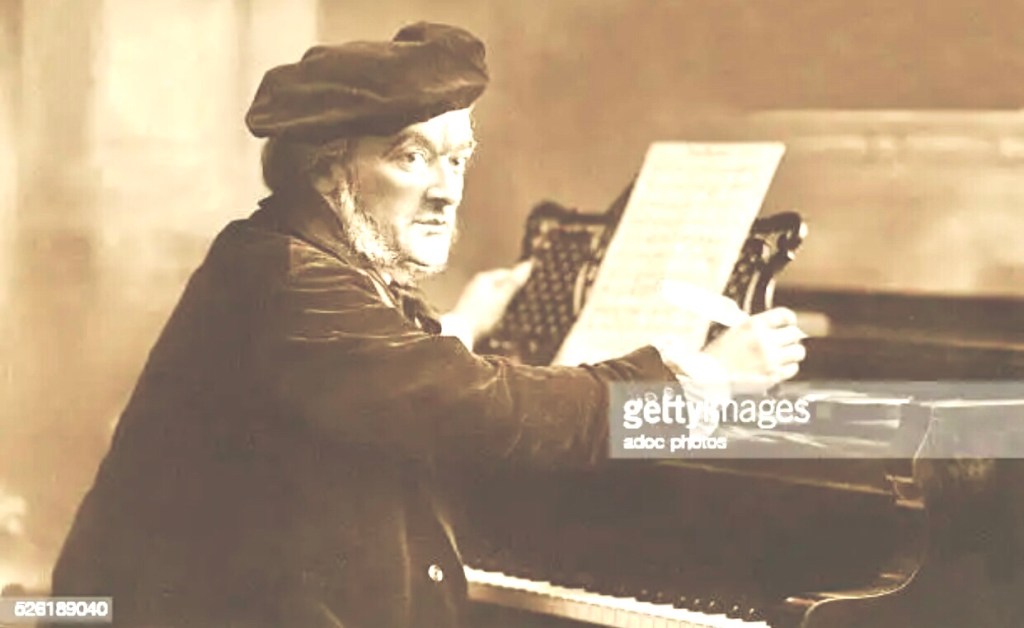
Wilhelm Richard Wagner
[Wagner’s] protean abundance meant that he could inspire the use of literary motif in many a novel employing interior monologue; … the Symbolists saw him as a mystic hierophant; the Decadents found many a frisson in his work.[223] [..cwoarrhh].
…an old white genitalman, location & provenance uncertain
@Wikipedia
Wagner’s operatic works are his primary artistic legacy. Unlike most opera composers, who generally left the task of writing the libretto (the text and lyrics) to others, Wagner wrote his own libretti, which he referred to as “poems”.[152] From 1849 onwards, he urged a new concept of opera often referred to as “music drama” (although he later rejected this term),[153][n 16] in which all musical, poetic and dramatic elements were to be fused together—the Gesamtkunstwerk. Wagner developed a compositional style in which the importance of the orchestra is equal to that of the singers. The orchestra’s dramatic role in the later operas includes the use of leitmotifs, musical phrases that can be interpreted as announcing specific characters, locales, and plot elements; their complex interweaving and evolution illuminates the progression of the drama.. @Wikipedia
The Master-singers Story: “Die Meistersinger von Nürnberg occupies a unique place in Wagner’s oeuvre. It is the only comedy among his mature operas (he had come to reject his early Das Liebesverbot) and is also unusual among his works in being set in a historically well-defined time and place rather than in a mythical or legendary setting. It is the only mature Wagner opera based on an entirely original story, and in which no supernatural or magical powers or events feature. It incorporates many of the operatic conventions that Wagner had railed against in his essays on the theory of opera: rhymed verse, arias, choruses, a quintet, and even a ballet. The story is set in Nuremberg in the mid-16th century. At the time, Nuremberg was a free imperial city and one of the centers of the Renaissance in Northern Europe. @Wikipedia
“The story is set in Nuremberg in the mid-16th century. At the time, Nuremberg was a free imperial city and one of the centers of the Renaissance in Northern Europe. The story revolves around city’s guild of Meistersinger (Master Singers), an association of amateur poets and musicians who were primarily master craftsmen of various trades. The master singers had developed a craftsmanlike approach to music-making, with an intricate system of rules for composing and performing songs. The work draws much of its atmosphere from its depiction of the Nuremberg of the era and the traditions of the master-singer guild. One of the main characters, the cobbler-poet Hans Sachs, is based on a historical figure, Hans Sachs (1494–1576), the most famous of the master-singers.” Again, courtesy @Wikipedia
“Friedrich Nietzsche was a member of Wagner’s inner circle during the early 1870s, and his first published work, The Birth of Tragedy, proposed Wagner’s music as the Dionysian “rebirth” of European culture in opposition to Apollonian rationalist “decadence”. Nietzsche broke with Wagner following the first Bayreuth Festival, believing that Wagner’s final phase represented a pandering to Christian pieties and a surrender to the new German Reich. Nietzsche expressed his displeasure with the later Wagner in “The Case of Wagner” and “Nietzsche contra Wagner.[224]” @Wikipedea
This was of course the neoclassical Romance & Rhetorick Era when Ruling Caste European & East Coast USA men bestrode the psycho-sexual landscape like titans and selected womenfolk supplied modest quanta of theatrical noise, colour, inclusivity and ethnic diversity, much as Marie Antoinette’s costumed dancers on the lawns at Versailles.
Whoops there goes the twentieth century European Flaneurs & Tormented Souls neighborhood.
“Many of Wagner’s concepts, including his speculation about dreams, predated their investigation by Sigmund Freud.[233]Wagner had publicly analysed the Oedipus myth before Freud was born in terms of its psychological significance, insisting that incestuous desires are natural and normal, and perceptively exhibiting the relationship between sexuality and anxiety.[234]Georg Groddeck considered the Ring as the first manual of psychoanalysis.”.[235]
Oh my giddy Oscar Wilde aunt there goes the genitally overwhelmed primitive psychiatry & John Maynard Keynes/ big-time stock market trader’s animal spirits neighbourhood as well.m
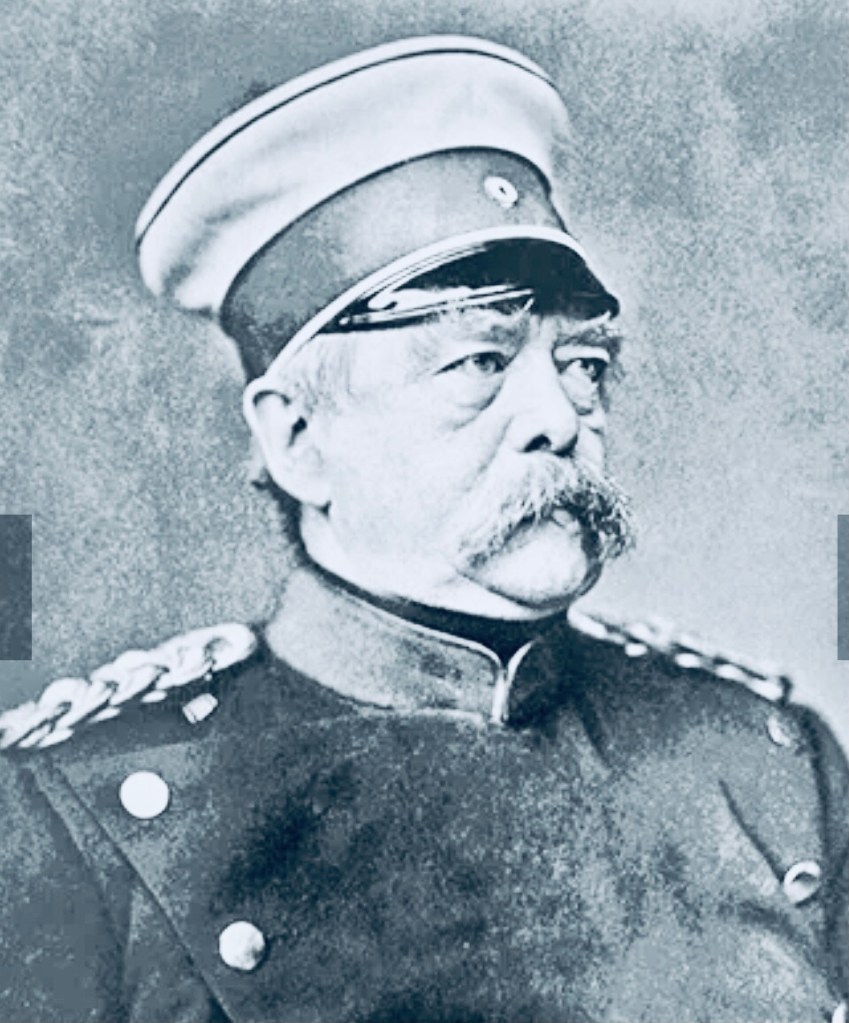
If perchance your appetite is whetted for more sex, dear reader, though I cannot for the life of me think why: the violent genocidal thrusting and parrying of post Otto von Bismarck vs Napoleon III warfare between jumped-up trumped-up regional mediaeval principalities of blood, conquest and really-excellent-paintings become the grandly named Nation States of this calamitous day will indeed put us all off sex permanently (by 2032 according to my own guesstimate of 2003 – Atmospheric and Weather Science advocates rarely if ever pass up an opportunity at self-promotion – the money’s lousy and publication moments are few and far between because the entire intellectually, cognitively, spiritually and morally bereft 20th centurypolitical class, numbering say three-million wordwide, fears, hates and dreads economic reform and seeks to persist with the complete demolition of liberal democracy for heroic gerontocrat Wagnerian fascism – with which cockamamie political outcome the others of us, some 7,000,000,097, disagree vehemently), try this: Psychoanalysis, Sexuality, and Lytton Strachey’s Theory of Biography Martin Kallich Vol. 15, No. 4 (WINTER 1958) pp. 331-370 The Johns Hopkins University Press
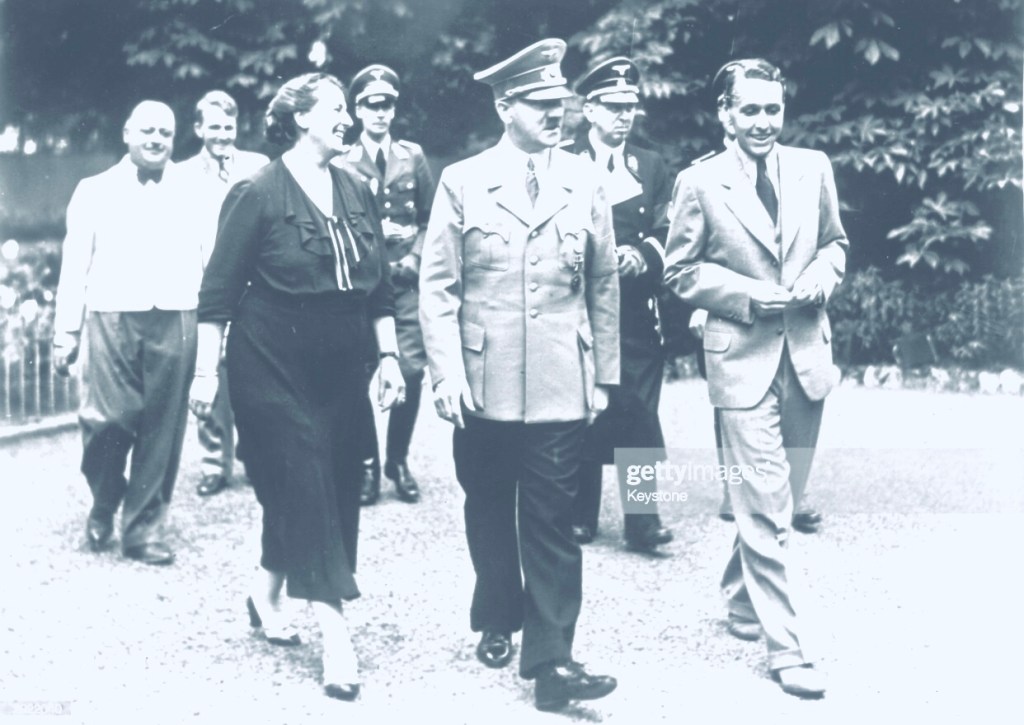
Otto von Bismarck Napoleon IIIWilliam Henry Gates IIIThe Boys Light Up, Berchetesgaden, Bavaria SE GermanySamuel Harris Altman in 2019, the Bernaysian Randite Billionaire Cabal & ideologically fascist Pluto-/ Gerontocrat Dupe 🥸🤓🤠 2023
I’m John Blundell, global ecosystems, economic redesign, the teaching revolution, neurolinguistics, cultural hegemonics, human health and Philosophy of Science.
J
This essay is dedicated to Em Prof Barry Boettcher Univ of Newcastle notably on his neurology work & advice to me circa July 1969 Flinders University of SA






















 Billionaire-🙈🙊🙉🐒s with Olivettis