Google Alphabet has for some 18 months now refused and blocked Typewriter 🐒🐒🐒🐒s (greeneconomyaction.com) and indirectly the fabulous @greeneconomyact (on Mr Musk & his Zero-sum Earth with endless fun from playing Pea & Thimble plus Rude-bits plus all-in-all a kind-of ngu-era🐮 onscreen Amusement Arcade) X medium
There will be “tears-before-bedtime” for any and all of these Stanford-inspired gangsters.
Mr Take-a-dump 4ROM the globally hegemonic human deskilling liberal-democratic extravaganza the You-essay
The story of this great struggle cannot be told here.
Hannibal crossed the Pyrenees, the Rhone, the Alps and descended upon Italy, where for fourteen years his army lived upon the Italian contryside, attempting with little success to detach the Italian allies from their loyalty.
After initial failures Rome dared not risk open battle. Q. Fabius Maximus, called ‘the Delayer’ for his ‘Fabian’ tactics, might nibble at the invading army, but no conclusion followed. Roman nerves stood delay no longer. A general was appointed and charged to put an end to the invader.
At Cannae in 216 B.C. the Roman army was annihilated – and Rome never rose to such heights. Patiently she set to work to regain lost ground, and Hannibal was provoked to advance on the city. Three miles away he turned aside; for no ally had joined him, no army met him, no proposals of peace were sent to him. He withdrew. His brother Hasdrubal hastening into Italy from Spain was defeated and slain; and at Rome P. Cornelius Scipio urged and was allowed to undertake the invasion of Africa. At Zama in 202 B.C. victory was won; Carthage was broken.
There are many interesting features about this war. Rome might have expected it to be fought in Africa or Spain; it was fought in Italy and, it fused Italy into a whole.Rome might have expected some respite after victory: she was commited to years of severe fighting in Spain to prevent Carthaginian consolidation there; and, if Spain was divided into two ‘provinces’ in 197 B.C., much work still lay ahead.
She might have expected that after the wars in Spain Carthage would give no further trouble; but Carthage attacked Numidia. Rome decided upon extreme measures; yielding to the increasing demand of M. Porcius Cato that ‘Carthage must be destroyed’, she destroyed the city in 146 B.C., and Africa became a Roman province.
Finally, Rome might have expected the thanks of posterity and some measure of admiration for her inflexible courage and endurance through sixty-five years of war and threat of war.
But such prosaic virtues are apt to pale beside the romantic figures of Dido and Hannibal; and neither Regulus, made immortal in an ode of Homer, nor Scipio Africanus can restore the balance in English minds.
When Vergil, the poet of the augustan age, told in the Aeneid the srory of Aeneas’ journey from the still-smoking Troy to found a new Troy on the Seven Hills he made his hero halt on the shore of Africa where Carthage was being built by Dido, her queen. Aeneas stayed as her guest and lover till his duty to the Trojan gods drove him once more in search of the promised land.
Betrayed and deserted, the queen killed herself and the moving scenes in which Vergil presents the whole drama enlist modern sympathy on the side of the Carthaginian queen; Aeneas the reader of today can scarcely understand. The curse of deadly enmity between the two nations called down by Dido was extinguished only by the extinction of Carthage herself.
..the foregoing WAS a verbatim excerpt strictly textually-framed, iced, psycho-culturally Cap’n-Cooked and literally nonsensised as roman a these “narrow-at-if” authoritarian fiction (Suleiman) in neoclassical academicpost Shakespearean mode English “4ROM” pp 35-6 Penguin Books “Ltd” Harmondsworth Middlesex and PB “Pty Ltd” 762 Whitehorse Rd Mitcham, Victoria (“Oi-oi Land”\ Years 10-12 Secondary please identify the text-quotes’ meanings) RH Barrow 1949 + 4 re-prints The Romans
Yours,
John Blundell
Onkaparinga Valley District Hospital 28051949 pictured below with a very politically powerful South Australian lady from the beginning of the TWENTIETH century who made a VERY special effort to ‘drum’ some sense into my person uh.
GA Sanders Headmistress, ‘co-ed’ (this crazy old British-colonial people’s wangka means her school had girls & boys) Unley SA Government secondary school
Students you should make deliberate (not casual ‘quiz-show’ expert/ competitive egotist child actor oeuvre) note that classical textual punctation is utilised in the formatting of the following transcript from RH Barrow 1949 by myself strictly for linguistics education\ Other-branded & diagnosed disturbing element cum bad actor
‘s whoowhoo 1960s\ and I hope to arouse if not ideationally-activate your new era 2-5set series maths-logic “learnings” (it’s a ‘trip.’ ..enjoi).
“Later, these same hill-men moved down to the plains and settled upon the site of the ‘Seven Hills’ of Rome. They were a pastoral folk. Their earliest festivals were concerned with the interests of shepherds ; milk, not wine, is the earliest offering, and wealth was reckoned in cattle ; the very word for ‘money’, pecunia (whence ‘pecuniary’), means ‘head of cattle’. They found other men of kindred race, Sabellian and Sabine, moving upon the plain and settling upon the higher ground; from the fusion of these settlements Rome took her origin. From her central position her soldiers could move north and east and south – along the valleys north and east, and down the plain to the south ; they soon learned the value of ‘interior lines’ .”
[Students, your lovely drawing of a kangaroo and the flag of Great Britain that we all so cherish we’d like to wrap around ourselves and quite possibly do naughty ‘things’ ‘in’ were inserted by virtue of operator error but i thought hey that’s good – and it’s only taken me another 9 1/2 minutes to jemmy it up and do a brief but not at all perfunctory or peremptory Welcome-to-my-country not wanting to get in trouble with the Professors of English Literature in 42 universities, ncldng 37 public, 3 private & 2 private international uh-oh make that 16mins 14, 15, 16 .. Will you stop being so naughty Kevin?! .. 47. 56.. But it’s highly pedagogic, Mother. The students are getting well and truly to grips with the differentiated but intimately intertwined 6, 8 or perhaps even10 psycho-culturally generated constructs of time. You’re as mad as a meat-axe, Kevin ;\: you’re worse than your father.]
“Indeed, some have thought that the site of Rome was chosen from the first as an outpost against the Etruscans from the north. And here, for the moment, we leave the Romans, as they join with outlying settlements, and turn to agricultural pursuits and trade with Etruscan and Greek merchants.
“To the north of the Tiber lay the Etruscan empire. The Etruscans were probably sea-wanderers (from the East?) settled at last in etruria, or Tuscany – cruel, overbearing, worshipping gloomy gods of the underworld and divining the future from the organs of slaughtered animals. They built enormously solid walls to defend their cities, and they traded with greek cities and with Carthage in Africa, and thus ‘borrowed’ fro civilisations superior to their own. From the sea they penetrated into the Campanian plain, and in the seventh century tried to move south to occupy it, circling round the hills to the east to avoid the swamps, and seizing some of the Latin towns on the high ground.
“About the time of the Latin migration to the ‘Seven Hills’, Greeks began their long process of seizing the best harbours on the south and west coasts of Italy and the eastern side of Sicily ; the Carthaginians, too, occupied the western half of the island. At first the Greeks wanted only trading stations, but in time colonies were sent from Greece to establish cities which soon became among the fairest of the Mediterranean. Perhaps the earliest Greek settlement was Cumae, on the bay of Naples, in the eighth, and of great moment to Europe ; for from the Greeks of Cumae the Latins learned the alphabet ; the Etruscans too adapted the same letters to their purpose, and passed them on to the inland tribes. From Cumae, also, Italy may first have learned of Greek gods, such as Heracles and Apollo. But the chief settlements of the Greeks werer in the extreme south of Italy and in Sicily. Syracuse and Agrigentum in Sicily, and Tarentum, Sybaris, Croton, and Rhegium in South Italy are all Greek in origin. They are most important in Roman history, for through them Rome came into full contact with the Mediterranean world.
” The Etruscans and the Greeks were the two most powerful influences during Rome’s early years. The rest of Italy was sparsely inhabited by tribes, many akin to the Latins. They lived in comparitive isolation in their hills, tending flocks and tilling the land and grouping together into settlements, as geography allowed, for defence and trade and worship.
“Now let us return to the Romans. The first three kings were Latins, the last three were Etruscan. The last of these was ejected by violence (traditionally 510 B.C.), and the word ‘king’ became anathema to the Romans. Yet the Etruscan influence remained. Temples and rites survived ; Jupiter was still enthroned on the Capitolene Hill, Diana on the Aventine. The insignia of Etruscan rulers became those of Roman magistrates, the ‘ivory chair’, the bundles of rods with two axes bound up with them (fasces). But, more important, Rome acquired an organisation which was to turn her into an imperial power.
“Till about 270 B.C. Rome fought perpetually for existence in Italy, and her fight could not cease till she was recognised as a leading power. The highest qualities of courage and resourcefulness were called for ; one tribe after another was overcome, and was incorporated on varying terms into the Roman state or sphere of influence. Leagues and alliances were created. At one crisis, the sacking of Rome by roving Gauls in 390 B.C. – the Latin cities failed to aid her ; they suggested federation, and Rome made up her mind that safety lay only in their conquest. At great self-sacrifice she reduced them to obedience, and then went forward as tribe after tribe appealed to her for aid, and eventually for alliance and the extension of her ‘rights’ to their cities. At last, Thurii, in the ‘instep’ appealed for aid against Tarentum. Rome hesitated – and agreed. Tarentum brought in Phyrrus, King of Epirus across the Adriatic ; and Rome emerged from his invasion of Italy the leader of the Greek states in South Italy. Thus, she passed into the sphere of the Carthaginians whose trade covered the seas of Sicily aand thge Western Mediterranean After half a century of struggle (264 – 202 B.C.) it was decided that Rome should become a ‘world power’, and that the lands of the West should be ruled by an Aryan, not a Semitic race.”
Oh hoodly-doodly young people we have really or at least virtually
– KEVIN, will you stop playing the class clown ?!
Mum it’s just a bit of a gag – i’ve been trying to teach our manly but largely vile priapist sheeple mweeple freeple, the St John the galaxy-scale bonghead of the Isle of Patmos – or Nova Scotia or was it Newfoundland – there be dragons and were icebergs floating by – the Bernaysians & the Lost-it Friedmanites about the Dialectics of the Damned which do they believe it or not don’t actually trade off or read out neatly or at all for goodness’ sake either with Quantum-relation qubits or Noah’s Freaking Arc – of the Covenant, you what – carpenter’s cubits since I wrote that one and only neat succinct short essay of the name for Green Economist newsletter in i believe1994.
Perhaps a note on the ontology of belief – to touch lightly on the questions of time at the beginning of this essay for I don’t want readers trampling any primary schooler’s or teenagers dream I do believe 1994 (and a heap of other years back to 1912 when my late father was born), no?
And a note – it’s a government-breaker this one. “Getting Franklin’s story right is crucial, because she has become a role model for women going into science. She was up against not just the routine sexism of the day, but also more subtle forms embedded in science — some of which are still present today…” so coy it’s Yogi Bear, Barny Rubble & Buffy Vampire-slayer cute, huh? Erp. Thank you for your readership. – You didn’t sign any paper? Oh yeh…
Often it would seem that both pessimist and perfectibilist agree as to the facts, differing only in their attitudes towards the facts.
The leisured and powerful are justified by their function, while the poor and humble who by their labours maintain them have the consolation of knowing that they ‘maintain the state of the world.’ To each his providentially appointed condition and estate! And if the people should murmur in their hearts2, cavil at their lot, question the providential nature of the arrangement, and seek to shake the foundations of authority itself? The in the conservative can appeal direct to his own power and his opponent’s weakness and ignorance.
In Ibsen’s dialogue between the Provost and Brand, it is the mocking castigation of their own inferiority by the Provost that is effective in undermining the people’s will to take up the challenge in the face of their fears.
What can you achieve,
Humble people born in a humble village?
Were you created to shake the world,
To right wrongs, liberate the oppressed?
The taunt strikes at each man’s own sense of personal impotence3 ever to alter the conditions under which he suffers; it reminds him of his customary status with its attendant feelings of deference to those set4 in authority over him. It reminds him that he is the subject5 [and that others are the rulers]; and it suggests that this dichotomy is eternal6 as Nature herself7. But is it ? The debate turns on the issue of what is human nature. It is precisely the issue as to who we are that is the most fiercely disputed. Can man7A by his own understanding and endeavours work out his own salvation8.? Or is he irrredeemably a fallen creature, seeing the better but following the worse ? suffering by virtue of his own folly and then wallowing in his own self-pity ?
You grind away God’s image, live like beasts,
Then join the grovelling queue to beg for grace
Often it would seem that both both pessimist and perfectibilist agree as to the facts, differing only in their attitudes towards the facts. The conservative has no difficulty in convincing himself that human nature [‘is what it is‘]. On the contrary [/ au contraire mon fromage\ ma cherie] [ comic insert to text – laugh or die young, team], it is his main stock-in-trade [English Language Students say Year 9 ‘up,’ look up oxymoron.. nh nh there’s the correct term and your writer will get ‘back’ to you on that matter as soon as he rem-embers i t – ‘think‘ comic Australian publication circa 1969 quite possibly by the famed Afferbeck Lauder..]. The progressive radical contemplates the spectacle with anguish, but would often seem to concede that the facts are as Ibsen3‘s3A Provost and Brand too in the end would have us believe.. [the far less French wooden mechanical Latin term for doubl-entendre gosh my brain hurts an’ i’m just lovin’ it..]. When Edmund Burke attacked the radicals struggling to achieve an extension of the suffrage, he was quick to fasten onto an allusion by Dr Price to the existing3AA voters as a few thousands of ‘the dregs of the people.’ ‘You will smile here,’ Burke comments, ‘at the consistency of those democratists, who, when they are not on their guard, treat the humbler part of the community with the greatest contempt, whilst, at the same time, they pretend to make them the [depositories] of all power.’ None struggled more devotedly to enlighten mankind than Denis Diderot [in the face of crushing blows by his enemies]. But even Didwerot, in a mood of despondency as he considered in retospect the malignant opposition which he had to overcome in order to produce the great [Encyclopaedia], was constrained to reflect: ‘The world does not profit from its advance into old age: it does not change. It is possible that the individual perfects himself, but the race becomes neither better nor worse in the mass. The sum of evil passions remains the same, and the enemies of the good and useful remain as numerous as ever 3AAA.’ Nevertheless.. the good always enjoyed one vital advantage.. ‘The good man is susceptible of an enthusiasm that the wicked man does not know…’
Let me end this essay with RV Sampson’s Ibsen’s Brand..
‘While it may appear that man has only to heave himself to his feet with determination to take up the full weight of [‘]his cross[‘], in life the burden is too great for him. He quails before the magnitude of the effort and despairs, [or rather averts his gaz ..] tautology eep=eep=eep-eep whatever [e and passes by].
Oh dear the Sam Altman Geoffrey Hinton @Harvard god smote us yet aggenn
All of them have craving in their hearts\ But the sacrifice frightens them.\ Their will is weak; their fear is strong.
When you want a break we have music for you OK. Of the Spheres? Oh for Jesus’ sake Kevin, shut up and listen..
Just a note: Michel Fokine (1880-1942): Russian dancer and choreographer. Primarily he choreographed story ballets, such as Firebird (1909), but his signature work was an abstract ballet, Les Sylphides (1909).
Key binary: explication de text + the “act” of creation9 (human learning, creativity & authentic arts).. May we immediately retire every narcissist flaneur, poseur and eminent fiercely “evidence-based” expert science publicist on Earth ?
John Blundell
21st Century Neurolinguistics, Neurocognitive Health, Mentally-healthy Child Development, the authentic 21st C Post-socratic 2-5 set series quantum relations logic, Human liberation from 3,000 year-old Southern European and Eastern Mediterranean barbarism, superstition, female capture and non Islamic Mathematics
2 This happens during a heart muscle contraction. Systolic murmurs are divided into ejection murmurs (due to blood flow through a narrowed vessel or irregular valve) and regurgitant murmurs (backward blood flow into one of the chambers of the heart)
3 In medicine, refers to the inability to have an erection of the penis adequate for sexual intercourse. Also called erectile dysfunction.
3A Henrik Johan Ibsen was a Norwegian playwright and theatre director. As one of the founders of modernism in theatre, Ibsen is often referred to as “the father of realism” and the most influential playwright of the 19th century, as well of one of the most influential playwrights in Western literature more generally. Wikipedia
3AA Senior-secondary, undergraduate, Masters Degree, PhD level and all mature-aged cognoscenti bored out of their ‘tiny’ minds and actually driven to frank despair by totalitarian Christo-
What can you achieve,
Humble people born in a humble village?
Were you created to shake the world,
To right wrongs, liberate the oppressed?
fascist news-, education- & entertainment-media look up Athenian philosopher two millennia ago Aristotle’s usage(s) of the adjective Existing.. DAMN IT don’t use electro-mechanical search – you’re if you do searching nothing and learning nothing, just playing the narcissistic crypto-fascist Smart-arse or Jensen Huang’s or the neurocognitively-broken Billy Gates’s Useful-fool: ‘Do not Pass Go’ but ‘go’ directly to the old boy’s Finding out the existing means of persuasion.
3AAAAvertissement to Vol. VIII of the Encyclopedie, 1751-65
4 In mathematics, a set is a collection of different[1] things;[2][3][4] these things are called elements or members of the set and are typically mathematical objects of any kind: numbers, symbols, points in space, lines, other geometrical shapes, variables, or even other sets.[5] A set may have a finite number of elements or be an infinite set. There is a unique set with no elements, called the empty set; a set with a single element is a singleton.
4A gravitational singularity, spacetime singularity or simply singularity is a condition in which gravity is predicted to be so intense that spacetime itself would break down catastrophically. As such, a singularity is by definition no longer part of the regular spacetime and cannot be determined by “where” or “when”.
4AA Students will note there is presently dispute over the useable and Human Project-feasible (Stage 5 of human society) linguistic usages Set and Singularity that essentially liberates in the human imagination Two- to Five-set Series Quantum Relations Logic. It should be noted urgently that there can be no false dialectic, or polarisation motivated by partisan vastly cashed-up political interests of mathematics and logic.. Please note carefully the Diderot remarks by RV Sampson because they ‘go’ directly to the global deskilling or socially-engineered Gates-Huang &c criminally malfeasant Christo-fascist Cabal dumbdown. Historic: Locke’s Essay Towards Human Understanding around 1700 London will help readers with the big-picture or macroeconomic reframe. The micro particularities of the content, the Argumenta – all I ever read – at 17 – also rewarding reading, J
5 https://dictionary.cambridge.org/grammar/british-grammar/subjects.. a subject is one of the five major elements of clause structure. The other four are: verb, object, complement and adjunct. Subjects are essential in declarative, negative and interrogative clauses. The subject acts as the ‘doer’ or agent of an action. Subjects are typically noun phrases e.g. a noun or pronoun and any dependent words before or after it
6 having no beginning and no end: lasting forever. eternal bliss, continuing without interruption.
7 /7A I am not addressing these matters here. ‘Suffice to say’ the pinnacle audio-visual-Production-values rich, fecund, white American woman was right to publicly question human commodification- (HCuP), artificial compartmentalisation- (ACuP) & excessive codification Under Patriarchic Fiscal Elites (ECuP) as per Community Economist Publications international newsletter 1996 (copies unavailable as all were stolen but never recovered along with the entire Blundell Orchards office business records and research library on 17 April 1998, confirmed legally as an SA Government instigated and orchestrated fraud by th Supreme Court of South Australia in1999, but her proposed remedy was deranged and tragically misogynistic.
8 preservation or deliverance from harm, ruin, or loss..”they try to sell it to us as economic salvation” Similar:lifeline preservation conservation means of escape
9 doctrinaire socialist, ‘polymath,’ close associate of the ‘existentialists’ and literati9A social outsiders with money after post traumatically shocked 9 million dead WWII who killed himself and he’s missus.. er died too
9A Literati may refer to: Intellectuals or those who love, read, and comment on literature; Intelligentsia, a status class of highly educated people who … (Google Alphabet @NVIDIA iOS Official is it?). May we immediately retire every narcissist flaneur, poseur and eminent fiercely “evidence-based” expert science publicist on Earth ?
There follows one of the two essays i promised my X readers early last week. It’s not third time-round edited nor some of it even checked once. If as some wag wrote this week 30seconds inside the head of any cyborg, psychopath/ sociopath/ NPD/ Bipolar Affective Disorder autocue reader, publicist, professional & high-paid but near-totally physiologically or at least gross motor functioning- deskilled talking 🗣️ is “a long time” then a week is an age if not an aeon.. and what in any name that may be blessed or cursed is this time shit to a Palestinian child, teenager or young parent now?
SO PUBLISH, TIME TO FUCK AROUND WE DONOT HAVE
There is no micro in human ideation or conversation without a vital, vibrant, ‘screaming-at-us-all’ in a bizarre totally unprecedented world of denial, ruination, agony and hunger to be followed by mass human death some enfeebled or at least clinically dementing minds insist on calling Climate Change because there, in conscientious debate, aeroplane rides and travelogues amongst rich old people is financial bonanza and ‘disaster-capitalist’ (@NaomiAKlein 2009) ‘Windfall’ personal profits yippenoodie macro.
By the same ‘token’ [rotated through ninety degrees qua set and particle study4] there cannot be in any geocommunity anywhere on Earth expecting to actually survive in the coming two to three years that operates and manages itself on supply-side calls and decisions without close and conscientious government attention to demand – whjich simply means finding out what the adults of that town or suburb need and require by way of regulation, supervision and householder support to enable them to lead, educate and inspire their youngsters for life.
I tried to look up the White Man trope but other than a snide ethnocentric attribution of it to the French in 16th – 19th century North America lunatic cybersecurity provisions just shut down any further historical enquiry. Your internet working hard for you yeh. It’s something of an aside here but as a professional writer i’ve only today updated my WORKTIME WASTED on-phone navigating through (correcting) machine learnin and regenerative artificial ‘intelligence’ to 8 or 10 seconds every minute.
Thinking I should publish the below without – and without the TIME OR OPPORTUNITY at THIS MOMENT of outrageous blind rage, crisis, TV studio make-up, ludicrous mindless rhetoric-dripping regenerative artificial ‘intelligence’ (machine-learning) speech worked up by someone’s ‘holy spirit,’ coke-high or other reverie or out of Salt lake City, Utah USA or the Battle of Jericho and apocalyptic meltdown pulsing BY THE DAY by so-called leaders in nearly all countries and hence the dire urgency of getting at least a basic conversation about fear-wracked ‘freeze,’ flight & flight mental school BOYS out there.. with a DRAFT FORMAT essay now a week behind the actual Human Race Clock my personal call is “go.”
AS ALL OF YOU DILIGENT STUDENTS, READERS & LEARNERS HAVE NOW KNOWN FOR 5 YEARS from your 21st century Neurolinguistic Health & Neurocognitive Impairment studies right HERE on Billionaire Monkeys with Olivettis, @wired_we & @greeneconomyact there isno ‘Critical thinking,’ are no Piagetian Formal Mental Operations, and is no socially or environmentally adaptive resilient-in-hardship robust mental health..
Therefore at least for children’s sakes stop symptom-hunting, labelling, diagnosing, patronising, otherising, condescending-to, talking down to, treating like you might a little child, kid, young person, old or neurocognitively-impaired person as you might with your marvellous Red Cross lady or school chaplain interviewing skills, maliciously with phoney affective display or shit-eating smiles depersonalising let alone zombifying with psychotropic drugs anyone deeply distressed by loneliness and BY authority-figures podcasters and politicians who know less than nothing about ‘marauding’ polycrisis -meaning economy culture society education disease nutrition immunity morbidity – rapidly-rising across all species of living creatures – random brutalisation mass killings truly exponential (ABSOLUTELY DONT UNDERSTAND THE WORD EVEN NOW THEN ‘for the love of the Lord Jesus Christ’ and for the children’s and young people’s sakes if not your own RELATIVELY LOOK IT UP – PLEASE mass extinctions of ‘mega-,’ macro-, micro- & nano-organisms and state-run terrorism sweeping the planet – without hesitation (not of the ‘Senior’s-moment’ or delayed or worse permanently blanked demented Recall ‘hesitation,’) or thoughtful reflection – the construction-in-mind of three- to five-set Quantum-relations2 series.
ANYWAY, there follows the unedited section. I let it go.There’s No Time. Get on board if you really don’t want to destroy ‘the lot’ but worst – most vile sin of all – deskill for lived experience in a well environment every primary schooler on earth rendering them highly intelligent word- & number-gurgitator for the fun & profit of intelligences like Jensen Huang, Sam Altman, Sundararajan Pichai and Geoff Bezos..
Sigmund Freud’s parapraxes, the full specrum of neurocognitively disordered and totally treatable by non pharmacological and non surgical therapies NOW LUGUBRIOUSLY AND LUDICRPUSLY IN TERMS OF PSYCHIATRY & NEUROCOGNITIVE HEALTH KNOWLEDGE & TECHNOLOGY called “neurodiverse” to reversal of cause & effect and the blundering of grown men and women on huge salaries in positions of great if not sacred trust – for ECOLOGICALLY the winding back of “Big Oil” projects surely is a sacred trust AND HAS BEEN NOW FOR FULLY THIRTY YEARS – that’s hard-core fully fledged non public-relations & non neoliberal propaganda #Science these ghouls in political power keep talking about – into calamitously illogical and catastrophically erroneous misreadings of ALL studies that so much as suggest no new gas- or oilfields and insistence on their primary schooler ‘understandings’ of a world governed by speeches, rhetoric, superstition and ancient narrative.
How our children’ and young people’s ways of talking about self. other, community and world are being MALICIOUSLY BOTH CAPTURED AND CORRUPTED FOR THE PROFIT maximisation of internet service providers and the marketers of ludicrous deracinated so-called social media applications which DO NOT CATER to treither context, culture or science.
Ayn Rand’s, Alan Greenspan’s, Nathaniel Branden’s, Edward Bernays’, Paul Samuelson’s, Norman Bourlag’s, Milton Friedman’s, Stuart Holland’s, Michael Porter’s, Australia’s PP Mc Guinness and the appalling John Blundell society-, culture-, and environment-less London GB Institute for Economic Affairs till ten years ago..
As a 13 year-old schoolboy come from country town where every move one made spoke belonging, membership even ownership (mostly benign but catastrophically not to female human beings) to the city of haughty randomly coercive if not violating if not lethal patriarchal authority, timetables & factory whistles where the dominant social AND societal* values were hierarchic, military, and post WWII traumatically-shocked if not crazy, perhaps a Numpty- or Noddy-land of captains of industry with absurd Rolls Royce motorcars and old rural tory clowns like the Valley’s1 own HH Shannon MLC, a dude who blustered at this six year-old I would be Prime Minister one day – which i still of course think would be pretty 😎 if not quite schmicko at this insane moment in our history where everything’s been broken by primary-school level educated narcissistic mental grubs, now setting to work on childrens and toddlers heads and making terrifyingly rapid ‘progress.’
Flatly and absolutely the FIRST lesson ANY policy maker ANYWHERE more than 2 or 3 thousand people come together is there’s no micro without the macro and Thatcher’s Somerville College Oxford 1958 for a women’s magazine ‘No Society’ has now proven LITERALLY apocalyptic: available in full on internet as required by the Randites, by Pichai, Huang, Moret, Fink, Charles Koch, Joe Rogan, Russell Brand, Paul Theroux, Jordan Peterson, Billy Bragg, the dead John Blundell’s IEA London, The American Enterprise Institute for Public Policy Research, known simply as the American Enterprise Institute (AEI) and clowncar right lobbies and crypto-fascist media around the world, notably Lost-in-Cold War-50s-cum-WWI-1910s Catholics versus Church-of-England (or even Aboriginal People versus Bloated Capitalists, kings, queens, warlords, aristocrats, nasty cyborgs & the 18th century British) referenda.. tried to teach people Herbert Marshall McLuhan, the macro-less micro socio-political & educational collapse and basic1970s functionalist sociology – carefully & thoughtfully so they realise the only identity politics is mythic and foolish and the sort of towering inferno of irrelevancy that might well have grown out of some early 21st C diverse though specialised study group of ‘rich Mom’s Basement kids’ in San Francisco – were well worth a look at least personal Mental-health wisefor 55 years, but gave up and have in recent times resorted occasionallly to satire like my best friend I never met yet Arundhati Roy.
Almighty invisible God only Wise at my Church of England school figuratively screamed bloodthirsty psycho-cultural anchorage in lived experience i began my study of the Mental-crossover in unhealthy & harmful child development, so-called family dysfunction – V Satir 1964 for old social workers I think – an erroneous mechanistic usage3 micro relationships broken by ‘lust, greed or mental laziness’ and the rapacious frankly barbaric definition of ‘national interest’ enforced by legitimised flagrant false-equivalence hate-speech – proportionality reworked Goebbels-Riefenstahl style as dischronous, dysphoric dis-proportionality – violence, killing and even mass murder (raison d’etat RV Sampson 1965) not only an ethically deranged national & international-relations posture but a much-vaunted publicly praised go-getter mediaeval Warrior Prince, Explorer, Adventurer, Investigator, Inventor, Theorist & Scholar socially rancid & morally bankrupt Gordon Geckoe 1987 Wall Street individual character!
John Blundell
Sociology, neurocognitive health, authentic post Socratic & post 20th century neoclassical academic post 13th century English ruling class Vernacular versus Hieratic5 2-5 set series quantum relations logic, political theory, post Global-death or Christo-fascist economics, 21st century #Philosophy of #Science and the immediate reform of approximately 25,000 universities
Your servant, team
South Australia
1 Onkaparinga Valley – I was born at the OV District Hospital, Woodside South Australia
2 MEANING simply readable-in-any sequence, a rational comprehensive inclusive immediately practical & applicable, decisive basis-for-action plan typically encompassing Object, Person ( yes you do recall Jo Stalin’s Death Economy dialectics! ), Context, Discussion, Decision; it was loosely based on the Human Resource Development model of Other-empowerment from the ‘Jimmy Carter’ & Children’s Television Workshop era
3 WE ALL HAVE TO URGENTLY MENTALLY SKILL UP to get the Social Darwinist primary-schooler Fight, Feed, F…, Flight, FLUMMOX or Fear, Freeze, Flee, Kill the hell out of every teenager’s language not just our own as self-obsessed consumer society fluid obedient biddable buyable social ‘appendages’ under some three thousand or more years old monistic (“Vengeance is Me”) or !8th Century European ideologicallyDualist, Reductionist (Reductio-ad-absurdum as argument)( “Vengeance is Mine,” sayeth some hyper-penis, the Queen of the May or the King of England) religious business, personal development and real-estate acquistion plan = begin right here: their is no micro function(ality) without meso (geo-community level) or macro operations
4 my business, home and family smashed by South Australian gangsters & police I fled Adelaide to avoid further false imprisonment (against the terms of the UN covenant on Civil & Political Rights NOT accepted by my country), lethal assault and criminalisation I found refuge in a dusty museum shed 800km distant in1998 where I summed up the isolated professional writer or human services scholar’s experience as Conscientising Everything, Experiencing Nothing and one of my first mental challenges was to identify textual (what may well also be set transformations entirely consistent with Physics’s current knowledge of say 6 sub-atomic particles) micro alterations of form and therefore meaning per inversion, reversal/ mirroring, rotation through 90.. plus maybe one more for simplistic symmetrical Musk- Heisenberg elegange (because it would make 4).. as these meld with human culture’s macro dialectics Interiortity – exteriority, centripetal – centrifugal, in – out, up – down, recto – verso, leftward -rightward.. and so on to the multiplicity of so-called qubits talked about in Quantum-physics by people who are paid 10 to 5,000 times what I do very nicely on, thanks very much Australian Age Pensioner (as fellah kulak peon villein hulot or dutiful Lord’s retainer) who rents of course – to my own fabulous intelligent meso- (community, tribe, region, people) and macro Walbiri and Eastern Arrente 8 skin marriage law 33% more complex and therefore 33% more intergenerational human health-safe (the immunologic defence against inbreeding, and to an extent enviro-toxins and faltering natural life-support systems than the crude Levitical 6 skin law) Right-side – Other-side of ALL HUMAN consciousness.. mental jumping-off point Ernest Becker 1924 – 1974 The Life and Death of Meaning
5 you’ve several options there, no doubt: sacramental, self-sacrificial, sociopathic, hysteric & theistic will be on the list. The study of your life is yours not any sacerdotal, priestly, power-over relations ‘pompous ass’ ( my gran’pa ACL Sanders, Methodists 20th century) figure of authority or expertise – which latter is ALWAYS bogus
The race of man shall perish from the earth before the glory of Ciceroshall perish from their memories. VELLEIUS PATERCULUS
Cicero stands near the end of the age of conflict and disruption. From his pages we can reconmstruct much of the story of his time, as seen from the viewpoint of a member of the aristocracy. He was born in 106 BC and was put to death by Antony a year after the murder of Julius Caesar in 44 BC. His extant works take up eighteen volumes in a small pocker edition published in 1823; three volumes of ‘rhetorical’ treatises (or literary criticism and ‘education’), six volumes of speeches written to be delivered in Senate or law-court, four of philosophical works and one of fragments. In all these pages there is little that tells us of the manner of life led by the majority; in Latin literature, as in Greek, the outlook is that of the few. In Rome the government was in the hands of an oligarchy drawn from families ennobled by service to the state and counting among its numbers the most highly cultivated men of the day, In the writings of Cicero, the strength and the weaknesses, the blind prejudices, the massive culture, and the corruption of private and pulic integrity stand out clearly. He was a ‘new man,’ that is, he did not belong to one of the old families; he came from Arpinum, and like many before him he had migrated to Rome to stand for office as the preliminary to a public career. He was eminently successful, and after his famous consulship in 63 BC had held a short and inconspicuous term of office as proconsul in Cilicia. In senatorial circles – for, of course, he was a senator – he moved freely, for he was a leading advocate, politician and man of letters. Occasionally a slight trace of social uneasiness can be detected. He loved Rome and was miserable when away from it. To him and to his circle the only work that counted as work was in the service of the state (negotium); all else, no matter how urgent or exacting, was ‘time off,’ even though it might include a man’s main livelihood. For this class, land was the only worthy occupation; trade and industry were not acceptable pursuits. It was not that these men were above money; money was their curse, and some of the largest fortunes of history were gathered into the hands of men like Lucullus and Crassus, and were often expended on luxuries wicked and futile; moreover, towards the end of the Republic, senators evaded the rules forbidding them to have interests in trade and industry and transacted business of all kinds through intermediaries. What they disliked was retail trade and the routine of manufacture. But they were on close terms with contractors and producers ‘in a big way’ and with financiers and bankers; and they readily sold their estates and country houses and bought others, and speculated in the land and ‘house-property’ markets.
These men of senatorial rank moved about Rome and Italy and the provinces as though they were a race apart.. [Section report //]
NOW LADIES i WANT YOU’ALL TO BE ON your BEST BEHAVIOUR ALRIGHT ALRIGHT ALRIGHTAS WE ‘GO’ TO ( b ) THE FIRST AND SECOND CENTURIES A. D.
O Jupiter of the Capital, O Mars Gradivus, author and stablisher of the Roman name, O Vesta, guardian of the sacred flame that burns forever, and all the gods who have lifted this massive Roman Empire to the grandest pinnacle of the whole world – upon you in the name of the people I call in supplication : guard, preserve, protect this order, this power, this Emporer : [and when he has discharged his spell of duty upon earth, as prolonged as it can be, then raise up at the last hour men to succeed him, men whose shoulders shall be no less broad to bear the burden of world empire than we have seen this Emporer’s to be : and of the counsels of all citizens prosper what is pleasing to you, [and bring to nought what is unpleasing.] VELLEIUS PATERCULTUS
… the unmeasured majesty of the Roman [peace]. PLINY THE ELDER
[Rome is our common fatherland.] MODESTINUS (Digest)
I’m not at all incommoded by @Wordpress having whipped $164 and a $5 International Transaction Fee out of my bank last Saturday week the 2nd of March.
I was of course greatly cheered by this kind-hearted gesture.. Let’s face it team: we really are complete dopes who need these folk, along with the estimated 400,000 Chinese-Organised-crime conscientious Call-centre Team-players labouring mightily for us in frontier Thai, Malaysian, Burmese & Cambodian prison camps to organise our spontaneous little shopping centre, Fly-buys and extraordinary 85 North East Road, Collinswood, Adelaide, 5081 +61 8 8343 4000/ +61 8 8343 4000/ 0467 922 891/ 1300 222 891 lives for us OK?
As a global internet reformer and lethal opponent of the Gates-Huang-Bezos-Apple-Feku cabal’s socially engineered dumbdown, or systematic deskilling of my race, which is indeed the only one i’ve got and is plainly not doing well subject to the multiple paroxysms of its neoliberal trade-priorities death economy AND – hats we can handle hats – especially ‘Mortar-boards’ – plasterers of the World unite you’ve nothing to lose but your mental chains, you Galahs1 – a person with a few hundred dollars of assets for the storage of which he pays $190 per month and an Australian government pension income forced out his rental home by a major Oi-oi Land Political Class real estate corporation Ray White per its shelf-company Ray White Property Management at the end of 2021 and living with a barking-mad rich lady, a rapidly-ageing South Australian business-woman – think the former MHR for Boothby or her @AustralianLabor successor 1950s style Welfare Lady Louise Miller-Frost or the Liberal Independent @AdelaideBook who ran against them both having no idea what government was but displaying a passionate dislike of former federal Attorney General Christian Porter – or the completely postmodern @LSEGreen Cities an’ excellent music an’ social fluidity an’ Doughnut-economics person who ran against all three of them – BUT WITH each lady (or chaplet) 20-40 years older, yeehagghhh, who reckons I’m simple-minded, mentally 9 years old and VERY naughty) as the same country’s three major political parties mounted and launched a national housing affordabilty crisis now hurting 2.4m households and requiring 8m women, men, teenagers & children to skip or skimp meals EXPRESSLY TO HELP RICH PEOPLE & FOREIGN INVESTORS because nobody else would vote them back into office next time. Yee-ha.
Theda Bara
Yep, in 43 languages.
Data, we got data.
From @Wikipedia, the free encyclopedia that virtually costs the earth or at the very least of it worldwide human society by 20322
(i) acultural entertainment industry bullshit which is grossly diseducational and virtually moronising for young people, primary schoolers, little kids and toddlers
(ii) fresh water, and
(iii) vast carbon dioxide + Big Oil extractive, flaring, refining & transport + now almost inconceivably large volumes of Permafrost-melt, eutrophic (bacterially & virally attacked) glacier-melt CH4 methane gas discharged to the earth’s lower atmosphere
Bara was one of the more popular actresses of the silent era and one of cinema’s early sex symbols. Her femme fatale roles earned her the nickname “The Vamp” (short for vampire, here meaning a seductive woman),[a] later fueling the rising popularity in “vamp” roles based in exoticism and sexual domination.[4] The studios promoted a fictitious persona for Bara as an Egyptian-born woman interested in the occult. Bara made more than 40 films between 1914 and 1926, but most are now lost, having been destroyed in the 1937 Fox vault fire. After her marriage to Charles Brabin in 1921, she made two more films and then retired from acting in 1926; she never appeared in a sound film.
Bara was born Theodosia Burr Goodman on July 29, 1885, in Cincinnati, Ohio.[5] She was named after the daughter of U.S. Vice PresidentAaron Burr.[6] Her father was Bernard Goodman (1853–1936),[7] a prosperous Jewish tailor from Poland. Her mother, Pauline Louise Françoise (née de Coppett; 1861–1957), was born in Switzerland.[8] Bernard and Pauline married in 1882. Theda had two younger siblings: Marque (1888–1954) and Esther (1897–1965), who went by the nickname “Lori”.[9][b]
In 1890 the family moved to Avondale, a Cincinnati suburb with a substantial Jewish community.[12] Bara attended Walnut Hills High School, graduating in 1903.[13] After attending the University of Cincinnati for two years, she worked mainly in local theater productions, but did explore other projects. After moving to New York City in 1908, she made her Broadway debut the same year in The Devil.[14]
Most of Bara’s early films were shot along the East Coast, where the film industry was centered at that time, primarily at Fox Studios in Fort Lee, New Jersey.[15]
Bara lived with her family in New York City during this time. The rise of Hollywood as the center of the American film industry forced her to relocate to Los Angeles to film the epic Cleopatra (1917), which became one of her biggest hits. No complete prints of Cleopatra are known to exist today, but numerous photographs of Bara in costume as Cleopatra have survived. [16]
Bara was the Fox studio’s biggest star between 1915 and 1919, but tired of being typecast as a vamp, she allowed her five-year contract with the company to expire. Her final Fox film was The Lure of Ambition (1919). In 1920, she turned briefly to the stage, appearing on Broadway in The Blue Flame. Bara’s fame drew large crowds to the theater, but her acting was savaged by critics.[17]
At the height of her fame, Bara earned $4,000 per week (equivalent to $67,500 in 2022). Her better-known roles were as the “vamp”, although she attempted to avoid typecasting by playing wholesome heroines in films such as Under Two Flags and Her Double Life. She appeared as Juliet in a version of Shakespeare‘s Romeo and Juliet. Although Bara took her craft seriously, she was too successful playing exotic wanton women to develop a more versatile career.[citation needed]
Manuel Rosenberg autographed sketch of fellow Cincinnatian, Theda Bara, 1921 Cincinnati Post
The origin of Bara’s stage name is disputed. The Guinness Book of Movie Facts and Feats says it came from director Frank Powell, who learned Theda had a relative named Baranger, and that Theda was a childhood nickname. In promoting the 1917 film Cleopatra, Fox Studio publicists noted that the name was an anagram of Arab death, and her press agents, to enhance her exotic appeal to moviegoers, falsely promoted the young Ohio native as “the daughter of an Arab sheik and a French woman, born in the Sahara“.[18][19] In 1917, the Goodman family legally changed its surname to Bara.[7]
Bara was known for wearing very revealing costumes in her films. Such outfits were banned from Hollywood films after the Production Code (a.k.a. the Hays Code) started in 1930 under Will H. Hays and then rigorously enforced beginning in mid-1934 by Joseph Breen. It was popular at that time to promote an actress as mysterious, with an exotic background. The studios promoted Bara with a massive publicity campaign, billing her as the Egyptian-born daughter of a French actress and an Italian sculptor. They claimed she had spent her early years in the Sahara desert under the shadow of the Sphinx, then moved to France to become a stage actress. (In fact, Bara never had been to Egypt, and her time in France amounted to just a few months.)
A 2016 book by Joan Craig and Beverly F. Stout chronicles many personal, first-hand accounts of the lives of Bara and her husband Charles Brabin.[20]
Bara married British-born American film director Charles Brabin in 1921. They honeymooned at The Pines Hotel in Digby, Nova Scotia, Canada, and later purchased a 400-hectare (990-acre) property down the coast from Digby at Harbourville, Nova Scotia, overlooking the Bay of Fundy, eventually building a summer home they called Baranook.[21] They had no children. Bara resided in a villa-style home in Cincinnati, which served as the “honors villa” at Xavier University. Demolition of the home began in July 2011.[22]
Bara’s niche in the Great Mausoleum, Forest Lawn, Glendale
On April 7, 1955, after a lengthy stay at California Lutheran Hospital in Los Angeles, Bara died of stomach cancer.[27] She was survived by her husband, her mother, and her younger sister, Lori.[27] She was interred as Theda Bara Brabin at Forest Lawn Memorial Park Cemetery in Glendale, California.[28]
In addition to these, a few of her films remain in fragments, including Cleopatra (less than a minute of footage), a clip thought to be from The Soul of Buddha, and a few other unidentified clips featured in the documentary Theda Bara et William Fox (2001). Most of the clips can be seen in the documentary The Woman with the Hungry Eyes (2006). As to vamping, critics stated that her portrayal of calculating, cold-hearted women was morally instructive to men. Bara responded by saying “I will continue doing vampires as long as people sin.”[32] Additional footage has been found which shows her behind the scenes on a picture.[33] While the hairstyle has led some to theorize that this may be from The Lure of Ambition, this has not been confirmed. Small fragments from Salomé were discovered in 2021 by an intern at Filmoteca Española.[34]
In 1994, she was honored with her image on a U.S. postage stamp designed by caricaturist Al Hirschfeld.[35] The Fort Lee Film Commission dedicated Main Street and Linwood Avenue in Fort Lee, New Jersey, as “Theda Bara Way” in May 2006 to honor Bara, who made many of her films at the Fox Studio on Linwood and Main.[36]
Over a period of several years, filmmaker and film historian Phillip Dye reconstructed Cleopatra on video. Titled Lost Cleopatra, the full-length feature was created by editing together production-still picture montages combined with the surviving film clip. The script was based on the original scenario, with modifications derived from research into censorship reports, reviews of the film, and synopses from period magazines.[37] Dye screened the film at the Hollywood Heritage Museum on February 8, 2017.[38]
The short piano suite Silhouettes from the Screen, Op. 55 (1919) by Mortimer Wilson includes a miniature musical portrait of Theda Bara, who is portrayed in an atonal, expressionistic style.[41]
Bara was one of three actresses (Pola Negri and Mae Murray were the others) whose eyes were combined to form the Chicago International Film Festival‘s logo, a stark, black and white close up of the composite eyes set as repeated frames in a strip of film.[45]
The International Times‘ logo is a black-and-white image of Theda Bara. The founders’ intention had been to use an image of actress Clara Bow, 1920s “It girl“, but a picture of Theda Bara was used by accident, and once deployed, not changed.[46]
In June 1996, two biographies of Bara were released: Ron Genini’s Theda Bara: A Biography (McFarland) and Eve Golden‘s Vamp (Emprise).
In October 2005 TimeLine Films of Culver City premiered the film biography Theda Bara: The Woman with the Hungry Eyes.
Bara appears as a character in the books Vampyres of Hollywood and Love Bites by Adrienne Barbeau, and in Coldheart Canyon: A Hollywood Ghost Story by Clive Barker.
In May 2016, a memoir titled Theda Bara, My Mentor, Under the Wings of Hollywood’s First Femme Fatale, by Joan Craig with Beverly Stout, was released. Young Joan, in the companionship of Bara during the 1940s and 1950s, includes tales of Bara’s husband, Charles Brabin, friends Marion Davies, Clark Gable, Victor Fleming, and other stars of the past.
^ Both of Bara’s siblings joined her for a time in the movie business. Marque worked briefly as a director.[10] After an unsuccessful attempt to establish an acting career, Lori became a screenwriter.[11]
^ Garza, Janiss (2008). “Cleopatra (1917)”. Movies & TV Dept. The New York Times. Archived from the original on October 8, 2008. Retrieved May 29, 2011. Film review.
^ Craig, Joan; Stout, Beverly F. (2016). Theda Bara, My Mentor: Under the Wing of Hollywood’s First Femme Fatale. McFarland and Company, Inc. ISBN9781476662831. LCCN2016009417.
^ Adinolfi, Francesco (2008). Mondo Exotica: Sounds, Visions, Obsessions of the Cocktail Generation. Translated by Pinkus, Karen; Vivrette, Jason. Durham, NC: Duke University Press. p. 25. ISBN9780822341321. OCLC179838406.
^“Theda Bara”. Hollywood Walk of Fame. Hollywood Chamber of Commerce. Retrieved September 21, 2017.
^Panati, Charles (1998). Sexy Origins and Intimate Things: The Rites and Rituals of Straights, Gays, Bi’s, Drags, Trans, Virgins, and Others. Penguin Books. p. 295.
^“Theda Bara Makes ‘Camille’ Reality”. Hartford Courant. October 30, 1917. Archived from the original on August 31, 2012. Retrieved October 8, 2019. Heralded as one of the screen triumphs of the day, “Camille”, adapted from the Dumas novel, and with Theda Bara the featured player, fulfills the promises of the management of Poli’s Theater, where this film really heads the bill this half of the week. Vaudeville must…
Your sociology, neurocognitive health, authentic post Socratic & post 20th century neoclassical 13th century English ruling class Vernacular versus Sacramental 2-5 set series Quantum-relations logic, political theory, post global-death economics, 21st century Philosphy of Science and Immediate Reform of approximately 25,000 Universities servant.
South Australia
1 Australian bird
@PWCUS 2021 now $1 Aussie company Scyne Advisory i think – therefore i was pickled politically by emotionally troubled bean counters – those were the days
2 The 2032 completely #Science & hard data/ #facts-based projection of largely extinguished mammalian Life on Earth Mr Blundell made and published in his mid-’90s to 2003 (hand-written after 17/4/1998 when he was forced into virtual exile for 13 1/2 years, by the South Australian and Australian federal governments) faxed global newsletter Community Economist Publications Worldwide; yarda -yarda you crim bastards I shall ‘bury’ you
Relayed article : Readers my apology but Microsoft is not presently allowing me access to @X at all on the HP laptop on which i write this and is now apparently jumbling my @Wordpress.1
So the following appears to be a critically important article – it asserts on one set of projections – typically not detailed or explained GAT rises of 14 to 25 degrees.. I’ll see if i can put it up on @X directly on my iOS phone.
What a great choice of historical moment to further sabotage suppress, censor and continue obscenely siloing and locking away from public scruting the deadly serious reports and studies of the world’s Global Heating educators? I find it disheartening but so what? My work in this now obviously pre-apocalyptic field since August 1994 has never beeen about me or any Hillary Rodham Clinton village damned to wrack, ruin, hell-fire or indeed Israeli Caterpillar ‘bulldozers with deep rippers but upholding an International Law ‘rules-based’ order and preventing ecocidal criminal malfeasance in those few remaining areas where it’s not belated and pointless.
These communication ‘road-blocks’ to a leading international writer and scholar across several fields with
1) the arrest & reversal of the Billionaires’ Global Deskilling Project and,
2) a virtual revolution in 25,000 universities via the overturn and discarding of rhetoric-, ideological polemic- and opinion driven neoclassical neoliberal and raison d’etat 1870-origin geopolitical Bismarckian – the so-called Fact & Value normative and normalising PhD avalanche Social-science post the Senator Joseph McCarthy and Hollywood Screen Actors’ Guild era, are patently down to
3) the ludicrous and internationally embrrassing Australian Government Department of Home Affairs and Cybersecurity
John Blundell
Post Socratic 2-5 set QR Governance-shift Planning Logic
Scientists make concerning discovery after analyzing bottom of the ocean: ‘A stronger impact … than we are currently taking into account’
We all know that the Earth is getting hotter — but new research indicates that it may be warming even faster than scientists had predicted.
What’s happening?
Scientists from NIOZ Royal Netherlands Institute for Sea Research analyzed sediment from the bottom of the Pacific Ocean for the study, which was published in the journal Nature Communications and reported by SciTechDaily. The researchers used a newly developed method to derive past atmospheric carbon dioxide content and compare CO2 levels in a single location over the past 15 million years.
Their results indicated that doubling atmospheric CO2 levels would increase the planet’s average temperature by 13 to 25.2 degrees Fahrenheit,
“The temperature rise we found is much larger than the 2.3 to 4.5 degrees Celsius (4.1 to 8.1 degrees Fahrenheit) that the U.N. climate panel, [the Intergovernmental Panel on Climate Change], has been estimating so far,” said the study‘s first author, Caitlyn Witkowski.
Why are CO2 levels so important?
Scientists have already drawn a correlation between the amount of CO2 we release into the atmosphere and the amount of planetary overheating we experience. This new research makes the correlation clearer than ever.
“This research gives us a glimpse of what the future could hold if we take too few measures to reduce CO2 emissions and also implement few technological innovations to offset emissions,” said another of the study’s authors, Professor Jaap Sinninghe Damsté, a senior scientist at NIOZ and professor of organic geochemistry at Utrecht University.
Related video: What If the Oceans Lose Oxygen? (See To Believe)
“The clear warning from this research is: CO2 concentration is likely to have a stronger impact on temperature than we are currently taking into account,” Damsté added.
Global overheating is leading to, among other things, the melting of glaciers, which is causing ocean levels to rise and coastal communities to flood; various changes to the climate that are causing more frequent and intense extreme weather events; the spread of infectious diseases; crops becoming ungrowable in many previously hospitable climates; and heat-related deaths.
What’s being done about rising global temperatures?
Several industries are responsible for releasing massive amounts of CO2 into the atmosphere — chief among them is the dirty energy industry, which releases huge quantities of carbon dioxide whenever its oil and methane gases are burned.
To prevent catastrophic planetary overheating, we must leave these energy sources of the past behind and switch instead to clean, renewable energy sources such as wind and solar.
1 I express my thanks to Sundararajan Pichai and Google Alphabet for allowing the john blundell account back into play on @LinkedIn
At this beginning and at the end below but not in the middle I joyfully – joie joie joie – acknowledge my debt – well Billionaire Typing Monkeys1 does – to Chartbook. – We all drive, strive3 to become as life the engenderer and revitaliser of worlds.
“Apropos the questions “Do we know what time it is?” and “How do we actually inhabit the global condition?”, I’ve been preoccupied these last few weeks by how little the world that I am in, is talking about Bangladesh.
“I started thinking about Bangladesh regularly after writing a section of Shutdown on the impact of COVID on the global garment sector, a sector in which Bangladesh plays a pivotal role. Bangladesh is the 8th most populous country in the world. In the last half century and particularly in recent decades it is one of the great development success stories. Bangladesh has often been touted as a story of pro-poor-growth driven above all by NGOs. This graphic from the Economist is typical of the genre. From a desperately low level in 2000, it shows Bangladesh overtaking first Pakistan and then India in GDP per capita.
“Bangladesh is the 8th most populous country in the world. In the last half century and particularly in recent decades it is one of the great development success stories. Bangladesh has often been touted as a story of pro-poor-growth driven above all by NGOs. This graphic from the Economist is typical of the genre. From a desperately low level in 2000, it shows Bangladesh overtaking first Pakistan and then India in GDP per capita.Bangladesh is one of the most-climate exposed “big” country in the world. As the IMF reported back in 2019, by 2050, Bangladesh will lose 17% of its territory due to rising sea levels, resulting in the loss of 30% of the country’s agricultural land.On August 5 2024, barely a month ago, a student-led revolution toppled the elected authoritarian regime of Sheikh Hasina and rather than celebrating this fact (or denouncing it), the really eerie thing is that it is as though nothing happened. Check out FT, Foreign Affairs, Foreign Policy etc to see how minimal the reaction has been. I’m really grateful to Cam Abadi and the Foreign Policy for giving us the space to talk about Bangladesh on the pod a few weeks back
“Your audio..
“Why Are Food Prices Surging?.. It was good to engage with the news on the show, but tbh I’ve remained haunted ever since.What does it mean that this dramatic upheaval can be happening in this huge and important country and “we” are largely oblivious? The only conversations I have had about Bangladesh other than with Cam are with Uber drivers in Manhattan. They were generally in a buoyant mood.Returning to the question of the last newsletter: Are we actually capable of inhabiting our reality in this moment? Are we actually capable of being in medias res?The question has become all the more urgent for me as I’ve read more about Bangladeshi history and realized the extent to which Bangladesh was present in global discourse half a century ago, at the time of independence in 1971.Upgrade to paidOf course, you might say that we are simply overwhelmed. Our modern world is so much more complex. There were 3.7 billion people on the planet in 1971. Now there are 8.2 billion. We are flooded with impressions and news. But looking at the case of Bangladesh then and now I can’t help fearing that a further problem is that our channels of information are less capable of delivering informed and sophisticated reactions to events. Does that reflect the fact that the West is less curious and less engaged? Has the West become provincialized also in that sense?I am sure there are serious ways of assessing those kinds of questions. I’m too over-extended right now to do anything more than to record my dismay and puzzlement and to offer in this newsletter a few things I have learned about Bangladesh in recent weeks that strike me as particularly interesting. I am going to focus on the founding crisis of the country in the late 1960s and 1970s, which is both utterly fascinating from a historical point of view and topical because it was a proposal to introduce quotas to favor descendants of veterans of 1971 that triggered the student uprising.
“#1 elementary fact: One tends to assume that new nations that “break away” will be smaller in population than the states from which they split. In the Pakistani case in 1971 the reverse was the case.The lopsided construction of Pakistan in 1947 joined together two predominantly Muslim regions of the Raj, regardless of the huge ethnic and cultural differences that divided East Pakistan (Bangladesh) from the West (modern Pakistan). It also created a strange mismatch of demography, economics and political influence. According to the 1961 census, politically dominant West Pakistan, where the military had their center of power, had a population of 42 million. At the same time, East Pakistan was estimated to have a population of 50 million. So when democratization was attempted and the Bengali Awami League established its hegemony in East Pakistan, they held the majority in the joint Pakistani parliament, a fact that both the West Pakistani military leadership and the elected leaders in West Pakistan were unwilling to concede.
“#2 Surprise: In the 1960s, under military rule, Pakistan was widely touted as highly successful growth models. This gave the East Pakistani leadership resources and authority both at home and abroad. But it also sowed seeds of division.Under the authoritarian, modernizing leadership of General Ayub Khan (1958-1969), Pakistan was touted as one of the original “Asian tigers” . Crucially, West Pakistan accelerated far ahead of its great rival India.This growth was fueled by exceptionally high levels of foreign aid in the 1960s, which, as is true of aid generally, has attenuated since. Pakistan today, despite its strategic significance, its huge population and urgent needs receives far less aid as a share of GDP from a far richer world than it did in the 1960s.Source: World BankBut that ultra rapid growth in the 1960s, also intensified the disparities between two parts of Pakistan, with West Pakistan seeing much larger investment and growth and East Pakistan lagging relatively speaking behind.Source: Industrial Policy In PakistanThis was particularly galling because the Bengali economy of East Pakistan was historically one of the region’s great export engines and its earnings continued to fill the coffers of the Pakistani state.
“#3 Student protest was widespread across the globe in “1968”. But nowhere was it more consequential than in Bangladesh where an East Pakistani student movement, effectively challenged West Pakistani rule, setting the stage for a national uprising and the formation of an independent Bangladesh.You would never know this from standard accounts of 1968, which focus on campuses in the West. It is a point ably made by Srinath Raghavan in his indispensable study of the global politics of 1971.This interview is a great accompaniment to his crucial book.There is an excellent essay by Samantha Christiansen on the culture and politics of student protest in Bangladesh which has striking echoes in the present.
“In 1968, of course, students were causing headaches for government leaders far beyond Pakistan’s national borders and regional scale. While newspapers were under strict censorship and were limited in their ability to run stories about the activities of anti-government activity in Pakistan, they were free to report on the activities of students elsewhere, and they did so in high volume. In fact, in the Pakistan Observer for the year of 1968, student uprisings dominate the coverage, occupying as much attention as the Vietnam War. There was also a weekly column reporting on student political uprisings entitled “The Angry Young World” which ran articles on a variety of uprisings. The sense from reading these dailies was of a world being turned upside by youth revolt; thus, even though the papers did not have any stories regarding student activity in Pakistan, they fomented a spirit of youth political agency through reportage on other arenas, and created an international scale into which students at Dhaka University could place themselves. These newspaper stories provided the linkage of Dhaka University students with the larger “imagined community” of the youth in the Global Sixties (Anderson 1991; Zolov 1999). Of particular interest was the rising young star in the British New Left, Tariq Ali. …
“The brutal assassination of Asad uz Zamman, a student at Dhaka University and a well-known political activist on campus, had a profound mobilizing effect on the movement. The student community was affected deeply and personally by the death of such a popular and prominent member of the campus. A gruesome image of his dead body just after being shot, with blood pouring from the back of him was printed on the cover of virtually every newspaper the next morning, and SAC declared three days of mourning on his behalf. Students gathered the morning after the death and raised Asad’s bloodied shirt onto a pole. Thousands of students gathered in mourning for their fallen comrade. Tofail Ahmad recalls, “At that day, we took an oath that Asad’s death would not be in vain. He was one of us—not just a Bengali—a student of Dhaka University, truly one of us. We felt a sadness deep in our bellies” (Personal interview 2010). Asad was declared a martyr by the students. A well circulated poem for the martyred Asad, captures the mood of the students
Like bunches of blood-red Oleander Like flaming clouds at sunset Asad’s shirt flutters In the gusty wind, in the limitless blue. To the brother’s spotless shirt His sister had sown With the fine gold thread Of her heart’s desire Buttons which shone like stars; How often had his ageing mother, With such tender care, Hung that shirt out to dry In her sunny courtyard. Now that self-same shirt Has deserted the mother’s courtyard, Adorned by bright sunlight And the soft shadow Cast by the pomegranate tree, Now it flutters On the city’s main street, On top of the belching factory chimneys, In every nook and corner Of the echoing avenues, How it flutters With no respite In the sun-scorched stretches Of our parched hearts, At every muster of conscious people Uniting in a common purpose. Our weakness, our cowardice The stain of our guilt and shame- All are hidden from the public gaze By this pitiful piece of torn raiment Asad’s shirt has become Our pulsating hearts’ rebellious banner.
“#4 As the crisis escalated in 1971 and the Pakistani military cracked down with massive force, the mass killings directed at the political opposition but also the Hindu minority in East Pakistan, were soon described both on the spot and in the global media as a genocide and comparisons to the Holocaust were drawn.Down to the present day, Pakistani and Bangladesh researchers and propagandists debate the question of “3 million” victims. Al Jazeera made this attempt at a summary in the context of war crimes trials staged by Sheikh Hasina’s regime in the 2010s.What is beyond question is that there was a vast and deliberate massacre. This resulted in a gigantic refugee exodus to India. It was seen as a matter of international concern that went beyond questions of internal affairs and national sovereignty. And it attracted worldwide attention on that basis.Thanks to the archive of Youtube, fifty years later, we can watch both original TV reports, concerns and engaged poetry from the period, which give a vivid impression of how the crisis was seen in living rooms around the world.As amongst news reporting from 1971 on youtube two have so far stood out for me: This comprehensive report by Dateline Bangladesh on Youtube I am using this awkward link because the content is truly graphic and Youtube won’t permit a direct link.This ITN compilation gives an eye-opening insight into post-colonial British coverage.
“#5 The role of the Nixon administration and Kissinger in particular has been widely discussed. The protests to Washington by the staff at the US Consulate in Dhaka at the violence they were witnessing went unacknowledged. It was to be a formative moment for ethical discourse within the US foreign service. Gary Bass’s book is a vital reminder of all this.But apart from its callousness. The singularity of US policy is brought out even more clearly by Raghavan’s comparative global treatment of the crisis, which shows how the US was the only major global player whose diplomacy ignored the regional context of the Bangladesh crisis and reduced it, to the exclusion of all else, to a brutal Cold War logic of my enemy’s enemy. What Washington was interested in, to the exclusion of all else, was using Pakistan as a conduit to Beijing, with a view to outplaying the Soviet Union. Ironically, on Raghavan’s reading both the Soviet Union and China took a more sophisticated view of the crisis. The subversive implication is that Kissingerian realism was not just ethically barbarous. In its reduction of the crisis to a logic of simple geopolitics, it was not so much realistic as simply crude and one-dimensional.
“#6 The indignation in the West at the scale of the massacres in Bangladesh and Western complicity in them, sparked a truly dramatic mobilization of pop culture.This was more short-lived than the mobilization around the civil rights movement and Vietnam. But in the reach of its global imagination the mobilization for Bangladesh in 1971 was impressive and still stirs a chord. This report on the famous Concert for Bangladesh headlined by George Harrison and Ravi Shankar in Maddison Square Garden, is remarkable viewing.Joan Baez did a beautiful tribute for Bangladesh in her own quieter style. For those with a strong stomach you may also wish to savor Allen Ginsberg’s memorial to the refugee treks on Jessore Road.What is striking about these contributions is not necessarily their artistic quality, but three things. The strong sense of global engagement. Secondly, the insistence on the rhetoric of “millions” to convey the sheer scale of the violence and the exodus and the association with the Holocaust. And finally, the sense of excitement and novelty you hear in people’s voices as they pronounce the name of a new nation – Bangladesh. As Wikipedia explains, it is a typical creation of modern nationalism conjuring ancient roots.The etymology of Bangladesh (“Bengali country”) can be traced to the early 20th century, when Bengali patriotic songs, such as Aaji Bangladesher Hridoy by Rabindranath Tagore and Namo Namo Namo Bangladesh Momo by Kazi Nazrul Islam, used the term in 1905 and 1932 respectively.[26] Starting in the 1950s, Bengali nationalists used the term in political rallies in East Pakistan.
“#7 Following independence, the new nation of Bangladesh was born into intense crisis. It was massively dependent on India, which did not hesitate to exploits its new leverage. Amidst the oil price and food price shocks of the early 1970s, Bangladesh was one of the weakest links. It suffered an accelerating inflation in 1972-3, which issued into a full blown famine in 1974. This too left deep marks on national politics and the Bangladeshi development model.Bangladesh from the 1980s onwards would become one of the key laboratories for new forms of development finance, notably in the form of the Grameen bank and its model of microfinance. This fascinating book by Naomi Hossain argues that this Bangladeshi success story is rooted in the traumatic shocks that accompanied the birth of the new state in the early 1970s.From an unpromising start as ‘the basket case’ to present-day plaudits for its human development achievements, Bangladesh plays an ideological role in the contemporary world order, offering proof that the neo-liberal development model works under the most testing conditions. How were such rapid gains possible in a context of chronically weak governance? The Aid Lab subjects this so-called ‘Bangladesh paradox’ to close scrutiny, evaluating public policies and their outcomes for poverty and development since Bangladesh’s independence in 1971. Countering received wisdom that its gains owe to an early shift to market-oriented economic reform, it argues that a binding political settlement, a social contract to protect against the crises of subsistence and survival, united the elite, the masses, and their aid donors in the wake of the devastating famine of 1974. This laid resilient foundations for human development, fostering a focus on the poorest and most precarious, and in particular on the concerns of women. In chapters examining the environmental, political, and socioeconomic crisis of the 1970s, the book shows how the lessons of the famine led to a robustly pro-poor growth and social policy agenda, empowering the Bangladeshi state and its non-governmental organizations to protect and enable its population to thrive in its engagements in the global economy. Now a middle-income country, Bangladesh’s role as the world’s laboratory for aided development has generated lessons well beyond its borders, and Bangladesh continues to carve a pioneering pathway through the risks of global economic integration and climate change.There is no neat conclusion to this list of points. I simply hope that it is useful and that I find the time, energy and headspace to keep adding to it.”
..this is how we boogie in world politics
John Blundell
The New Neurolinguistics Post Socratic 5 part Quantum-relations Logic Post Neoclassical Philosophy & Raison-d’etat Geopolitics Post Neoliberal Economy Now mercifully ‘post’ having my life & times & property stolen from me by Australian political thugs
Australia
1 greeneconomyaction.com ( not wired4weld,com, that account name got Disappeared by Breitbart News, the Daily Beast, the Betoota Advocate, those zany Australian Broadcasting Corporation private schoolboys, Mark Zuckerberg or Hunter Biden or some shit )
I love writing Chartbook. I am delighted that it goes out for free to tens of thousands of readers around the world. What supports this activity are the generous donations of active subscribers. Click the button below to see the standard subscription rates.
Chartbook 312 Hezbollah’s shadow bank and Lebanon’s disaster capitalism.
Electricite Du Liban said that the last remaining production unit of the Zahrani power plant has been “forcibly shut down” and that the blackout will affect the country’s airport, ports, water pumps, sewage systems and prisons, state-run National News Agency
This leaves better-off Lebanese relying on generators. Those need fuel that can normally only be procured for hard currency. For most Lebanese that is in desperately short supply. Even if the Algerian oil makes it to Lebanon, it is far from clear how the locals will pay for it.
Upgrade to paid
To reduce a once-prosperous country like Lebanon to these dire straits takes more than a single shock. It takes more than a single catastrophe, even if it has the epic force of the Beirut blast of 2020. It takes more than a war, even one as costly as that with Israel in 2006. It is the result of multiple converging forces that go back to the civil war of the 1970s and 1980s and the sectarian power-sharing deal that followed, forces that paralyzed reconstruction after 2006 and gave Hezbollah a decisive role in parliament in 2018. Lebanon’s problems were compounded by the fiasco of Western policy in Iraq and after 2011 by the disastrous civil war in Syria, which drove millions to seek refuge in Lebanon. As dysfunction multiplied, water supplies failed, garbage went uncollected, wildfires raged without government response and bankruptcy approached, in the autumn of 2019 Lebanon entered a phase of open crisis. Street protests and impending default triggered capital flight and an accelerating collapse in the currency. Meanwhile, the government decision to slash subsidies and raise taxes hiked the cost of living. As the World Bank describes the spiraling disaster:
The sharp deterioration of the Lebanese pound, which lost 98 percent of its pre-crisis value by December 2023, propelled inflation to new heights. With imports constituting about 60 percent of the consumption basket (World Bank, 2022), the plunging currency led to triple-digit inflation which rose steeply from an annual average of 3 percent between 2011 and 2018, to 85 percent in 2019, 155 percent in 2020, and 221 percent in 2023. Inflationary pressures were exacerbated by the rise in global food prices since the war in Ukraine and Lebanon’s heavy reliance on wheat imports, along with the destruction of its strategic wheat reserves in the August 2020, Beirut port explosion. … inflation was consequently even more dramatic, skyrocketing from 4 percent in 2019 to 254 percent in 2020 and has remained in triple-digits through 2023. Faced with falling foreign exchange reserves, the government withdrew subsidies on medication, fuel, and wheat further fueling rising costs of healthcare and transport (Figure 1.2).
In the spring of 2020 Lebanon failed to make payments on $32 billion of international bonds. The Lebanese political class did not have the will to enter into serious negotiations with its creditors, resulting in a “hard default”. As the crisis escalated, it was revealed that without government approval the financial elite had used the accounts of the central bank to support Lebanon’s private banks, to the tune of tens of billions of dollars.
As the currency plunged, prices soared and the banking system shut down, normal economic activity collapsed. In purchasing power parity terms, the World Bank estimates that GDP per capita has fallen by 45 percent.
This is one of the most dramatic implosions ever suffered by a modern economy. In July 2022, the World Bank downgraded Lebanon’s status from upper-middle income country, a position it had held for almost 25 years, to lower middle income country
At the bottom of the income pyramid, poverty has surged. As the World Bank describes it:
Monetary poverty in Lebanon has more than tripled from over a decade ago. New survey data2 covering the population residing in five governorates of Akkar, Beirut, Bekaa, North Lebanon and most of Mount Lebanon reveal a rise in consumption-based poverty in the covered areas from 12 percent in 2012 to 44 percent in 2022.3 Among the Lebanese residing in these five governorates, one out of every three individuals was poverty-stricken in 2022, up from 11 percent in 2012.4 Not only has the share of poor Lebanese increased, but they are also falling deeper into poverty. The depth of their poverty or poverty gap—which is the minimum financial amount required to bring the spending levels of the poor up to the poverty line, expressed as a share of the latter—rose from 3 percent in 2012 to 9.4 percent in 2022. A new, unofficial poverty line was developed for 2022 to better reflect the consumption behavior of households amidst the ongoing economic crisis. The existing national poverty line is outdated as it relies on consumption patterns from 2012 that no longer reflect the realities and conditions faced by households in Lebanon today. Overall prices have increased by nearly 15 times over the past decade, eroding the purchasing power of lira-denominated incomes. Survey data also reflects this change in consumption patterns – Lebanese households in 2022 residing in the covered governorates are consuming a third of the amount of (mostly imported) meat and seafood from a decade ago while the consumption of more affordable bread and cereals has risen by over 20 percent.
Rapid inflation acted effectively as a highly regressive tax, striking hardest at the poor and those with fixed, lira-denominated incomes. Lebanon has increasingly become a cash-based dollarized economy, which works to the benefit of those getting paid in a foreign currency. The size of the dollar-denominated cash economy is estimated to have increased from 26 percent in 2021 to around 46 percent of GDP in 2022 (World Bank, 2023a). Dollarization of the economy can be an impediment to economic growth as it raises the risk of money laundering, informality, and tax evasion (World Bank, 2024a). However, individuals who earn partially or fully in dollars are insulated from the loss of purchasing power induced by the sharply depreciating currency.
Apart from position in the income distribution, the fate of Lebanese is decided by where they live in the country. Beirut is relatively well protected compared to the Northern provinces where poverty is rife. In much of the territory no data can be collected. But what is clear is that the direst emergency is that facing the millions of Syrians who fled to Lebanon to escape the civil war. Amongst the refugee population, poverty rates stand at over 80 percent.
Earlier this year, the EU mobilized a new support package offering support to the tune of $1.06bn, but that money is directed, as the EU openly insists, towards the support of refugees notably from Syria. What is on Europe’s mind is the possibility of another migrant crisis, not the welfare of the Lebanese themselves. Unsurprisingly, resentment towards the refugees has become an easy topic for Lebanon’s failed political class to exploit. In a cynical act of scapegoating the Lebanese state has begun forcibly deporting thousands of Syrians.
Meanwhile, the Lebanese parliament in a grotesque act of self-dealing in January 2024 passed a budget that promised to close the budget deficit of 12.8 of GDP by raising regressive value-added tax whilst decreasing the progressive taxes levied on capital gains, real estate and investments. For lack of reforms, the IMF is refusing to disburse any of the $3bn package that are allocated to Lebanon.
The strategy of Lebanon’s relatively well-insulated elite seems to be to wait out the crisis hoping that in due course foreign donors will recognize that they have to provide support even in the absence of reform. Meanwhile, the on-going crises leave Lebanese with no option but to rely on the social and political forces that over the last decades have created the disastrous status quo. The most powerful of these is Israel’s antagonist Hezbollah.
Subsidies from Iran help to sustain the Hezbollah operation in Lebanon. They are reckoned to amount to hundreds of millions of dollars per annum, far larger than anything Iran has ever provided to Hamas.
But Hezbollah is not merely an Iranian influence operation. It is deeply embedded in what is left of the Lebanese economy.
The escalating crisis in Lebanon since 2019 has stirred political opposition against Hezbollah. But it has also made Hezbollah’s infrastructure even more important for everyday life.
To give one critical example, the failure of central electricity supply makes local government and privately operated generators into key suppliers. As Samara Azzi and Hanin Ghaddar report electrical supply becomes political in the most direct sense:
the two Shia parties own the generator networks in Beirut’s southern suburbs and the country’s south. It does not cover the Baalbek-Hermel area, but local observers confirm the same trend there.52 Generator networks are run in one of three ways in Hezbollah-controlled areas: (1) They are owned and operated by the municipalities—which are typically controlled by Hezbollah (or Amal) members.53 (2) The party works through an individual to run the network as a private enterprise, even as the investment and profits consist mostly of Hezbollah cash. Or (3) they operate through a “private-public partnership” involving the municipality and private actors. Whichever the arrangement, the infrastructure and funding come from the “Party of God” and ultimately benefit Hezbollah operations. Unsurprisingly, the individuals and their companies are usually fronts for Hezbollah, or parts of its business network.54
Since the collapse of the Lebanese financial system in 2020, the Hezbollah-controlled financial firm known as al-Qard al-Hasan Association, or AQAH has expanded from paying Hezbollah’s army and officials to supplying liquidity to the wider Lebanese economy.
In 2021, several of AQAH’s branches began installing ATMs that dispense large sums of Lebanese pounds and U.S. dollars to borrowers. Borrowers can withdraw as many dollars as they want and renew loans indefinitely, so long as they provide the collateral of gold, whose value is currently at an all-time high. Although there have been reports of gold confiscations in response to defaults, these cases are limited due to the negative impact this would have on Hezbollah’s public image. Instead, Hezbollah tends to hold onto the depositor’s gold while offering the option of renewing loans against it indefinitely upon repayment.
Under US sanctions since 2007, Hezbollah’s shadow bank operates at arms length from the officially licensed and regulated banking system. It relies on a network of front operations and helpful connections in friendly Arab states. It may be cumbersome and rudimentary in its techniques. But, all told, it boasts of providing billions of dollars in loans to Lebanon’s families and small businesses.
Many of the loans are secured against gold, meaning that Hezbollah has become an aggregator of savings and assets, on the basis of which it can make rotating loans. To get its hands on dollars, Hezbollah, with the consent of local financial interests, operates a network of exchange shops. As Azzi and Ghaddar explain, Hezbollah exists not in isolation but in mutually beneficial cooperation with Christian business interests in Lebanon:
In the Lebanese cash economy, Hezbollah’s Christian allies control the foreign remittance services and the hard currency coming from abroad, while Hezbollah and Amal actors run the foreign exchange houses, and the internal transfer market— which deals mainly with payment to government ministries—is controlled by former Zgharta mayor Mouawad. This three-way setup ensures the financial health of the Hezbollah-Amal-Bassil axis—which in turn relies on BDL, the facilitator of a highly corrupt process, and the Ministry of Finance, the collector of payments and the distributor of contracts to internal transfer companies.
Hezbollah has friends not just in Teheran but in Baghdad too. Iraq’s foreign exchange regulations allow tourist travel schemes to be exploited to shuffle dollars into Lebanon.
A further source of revenue comes from Hezbollah’s connections to the Captogen drug-running schemes that have become a key pillar of the Iran-backed Assad regime in Syria.
Even further afield, investigations by the US authorities have exposed a set of connections between Hezbollah and the Syrian and Lebanese diaspora in South America and particularly in Venezuela. Most recently these networks appear to have been trading Iranian oil for Venezuelan gold, which is hoarded by the financial authorities in Teheran. As a result in 2000 Washington labeled Hezbollah not only as a terrorist organization, but as a transnational criminal organization along with MS-13 and the major Mexican cartels.
I’m in no position to judge the plausibility of these, at times, surreal seeming claims. Are there really Hezbollah-aligned clans dotting the Atlantic coastline of Venezuela?
The Atlantic Council thinks so, and what that means for Lebanon is that there is not just a war with Israel to worry about, but the Damocles sword of the Paris-based Financial Action Task Force (FATF. As Politico’s Matthew Karnitschnig reports the global financial watchdog may be on the brink of grey-listing Lebanon:
In the coming weeks it (FATF) is expected to place Lebanon on its “gray list” of wayward jurisdictions and determine what reforms the country would have to implement in order to receive a good bill of health and avoid FATF’s dreaded “blacklist.” Though FATF — which was set up by the G7 in 1989 and has since grown to include dozens of members from around the world — has no formal enforcement powers, its evaluations can have a chilling effect on a nation’s ability to operate in the world of international finance. … Officials familiar with FATF’s investigation, who spoke to POLITICO on the condition they not be named, said Lebanon would normally be an open and shut case, given how egregious the evidence of money laundering and terror financing in the country is. … Yet the broader dynamic in both Lebanon and the Middle East has complicated things. To begin with, Hezbollah’s influence over Lebanon’s core institutions means its central government is unable to enforce even the most basic international money laundering norms. An even bigger problem, the western diplomats said, is that several countries in the region, including Bahrain and Libya, have locked arms with Lebanon in opposing international regulators’ push for a crackdown, making it all but impossible to effectively target Hezbollah’s illicit financing.
Whether the current escalation of tension results in full-scale warfare, one thing is for sure: the imbrication of politics and everyday life goes far too deep to be extirpated through bombing, shelling or assassination.
I don’t think Lebanon is more corrupt than other countries.
The problem with Lebanon is that for Israel to feel secure, everything around needs either be crashed (all republics) or made totally subservient (all kingdoms). The words sanctions appears only once in the post. One sees similar analyses about Venezuela, for instance, with its economy on the doldrums, analyses that never report on the sanctions imposed by the US.
Iraq is blackmailed to support US presence and abide by some US diktates by having all its oil proceeds forced through New York banks and blocked in case of disobedience.
But the last sentence indicates the failings of western policies towards Lebanon and the wider area: “Whether the current escalation of tension results in full-scale warfare, one thing is for sure: the imbrication of politics and everyday life goes far too deep to be extirpated through bombing, shelling or assassination.” But this will not stop with an Israel in the chockehold of a rabid ethnonationalistic frenzy. Maybe somebody should have a serious talk with Israel? Would solve a lot of problems in the area…
I am a secular American living in Israel. Can any of you please explain why Hezbollah has been launching missiles at Israel for the past 10 months? Are we fighting over land? Have innocent Lebanese civilians been forced out of Israel? It sounds like all of you are followers of Iran; America is the Great Satan and Israel the Little Satan. Poor Lebanon, it would be the jewel of the world were it not for Israel. Pity those Iranians, if only Israel didn’t exist, there would not have been an Islamic revolution. and Yemen, oh great and wonderful Yemen. Israel is the reason it has not progressed in, well, ever.
This story should have ended the day Israel beat back 6 Arab armies in 1948. You lose a war, the spoils go to the victor. Instead, the Arabs and their sympathizers (most of the commentators here) decided to rewrite the definition of “refugee”, which incomprehensibly remains in effect to this day (again, thanks to the support of yourselves). Since several of you do not like Capitalism, perhaps you would prefer to live under the thumb of the Chinese or the Soviets? Ask the Eastern Europeans how much they loved 4 decades of oppressive Communism.
..4ROM and brought 2U by MONKEYS ex Community Economist Publications Worldwide 1996 through to 2003 when the writer quit for a bit as he realised and wrote and published that we were all headed for a fossil-fuels burning business-as-usual heating ‘bio-meltdown’ by 2032
@wired4weld as accessible to a readership (downloadable presumably – I think – do I care, No-nein-нет) and published that is to suggest uploaded per my super-cheap Ruslan Kogan ‘Vodie=vibes’ – Australian comedy, baby-talk and dad jokes no we don’t normally do Australian comedy, poo jokes and stuff people at the Bloo-ie E/ p’s Broad & Bloke Casting Corporation get paid $120 thousand a year to pump out – TOTALLY Richard Branson-free thankfully greeneconomyaction.com – if you like the Pentagon and the evil mediaeval Central Intellgence Agency only ever read what you want to read for your perverted prurient vacuous pleasure then we really do have news for you.
“AI analysed 1,500 policies to cut emissions.”
Izzuhnt AI extraordinarily useful to Man\ What a piece of work is man/ how noble in his execution of the most complex sensorimotor tasks anyone ever dreamed of or saw a @YouTube video a @TedTalk or heard about team.
” Only 63 climate change interventions led to significant reductions in carbon emissions.. Xiaoying You “
Taxes were particularly effective at reducing emissions associated with electricity generation in high-income countries.Credit: Andrew Aitchison/In pictures via Getty
“Researchers used machine learning to analyse roughly 1,500 climate policies and identify those that have dramatically reduced carbon emissions. Their study, published in Science today, found that policies that combine several tools are more effective in slashing emissions than are stand-alone measures1.
“Using the right mix of policies is more important than using a lot of policies, says Annika Stechemesser, a co-author and researcher at the Potsdam Institute for Climate Impact Research in Germany. For example, the UK’s phasing out of coal-fired power stations worked because it was used in tandem with pricing mechanisms, such as a minimum carbon price, while in Norway, banning combustion engine cars was most effective when combined with a price incentive that made electric cars cheaper.
“To my knowledge, it is a first-of-its-kind study providing such a global evaluation,” says Jan Minx, an environmental economist with the Mercator Research Institute on Global Commons and Climate Change in Berlin.
Road to reductions
As part of the analysis, Stechemesser and her colleagues used a database of 1,500 climate policies implemented between 1998 and 2022 in 41 countries, including the top three greenhouse gas emitters globally: China, the United States and India. The policies fell into 48 categories, ranging from emission trading schemes to fossil-fuel subsidy reforms.
“Previous evaluations have typically concentrated on a narrow set of prominent policies in selected countries, overlooking the hundreds of other measures,” Stechemesser says.
“The authors combined machine learning with a statistical analytical approach to identify large emission reductions in four high-emitting sectors — buildings, electricity, industry and transport. They compared the results with policies in the database to assess which policies and policy combinations led to the biggest emission drops.
“This is a rather clever method,” says Zheng Saina, who has analysed global climate policies at Southeast University in Nanjing, China. The conventional way would have been to review the large number of policies and select the important ones, but that approach is subjective and cumbersome, she adds. “The authors instead used machine learning to detect major emissions changes. It is more objective.”
Right mix
The results showed that certain policy combinations worked better in specific sectors and economies. In terms of reducing emissions associated with electricity generation, for instance, pricing interventions such as energy taxes were particularly effective in high-income countries, but less so in lower-and-middle income countries.
In the building sector, policy mixes that included phased out and banned emissions-generating activities more than doubled the reductions resulting from implementing those policies individually.
“Taxation was the only policy that achieved nearly equal or larger emission reductions as a stand-alone policy, as opposed to a policy mix, in all four sectors.
“Minx says the study’s AI-enhanced approach allowed the researchers, for the first time, to evaluate the effectiveness of a large number of climate policies from a global set of emission inventories covering different countries and sectors.
“For other researchers, the paper is alarming. “This study provides a warning to countries around the world that their climate policies have had very limited effects so far,” says Xu Chi, an ecologist at Nanjing University. “Existing polices will need to be re-evaluated, and changes will need to be made,” Xu adds.
“The world’s annual emissions are projected to be 15 Gt of CO2 equivalents higher by 2030 than would be required to keep global warming to less than 2 °C above pre-industrial levels, according to the United Nations.
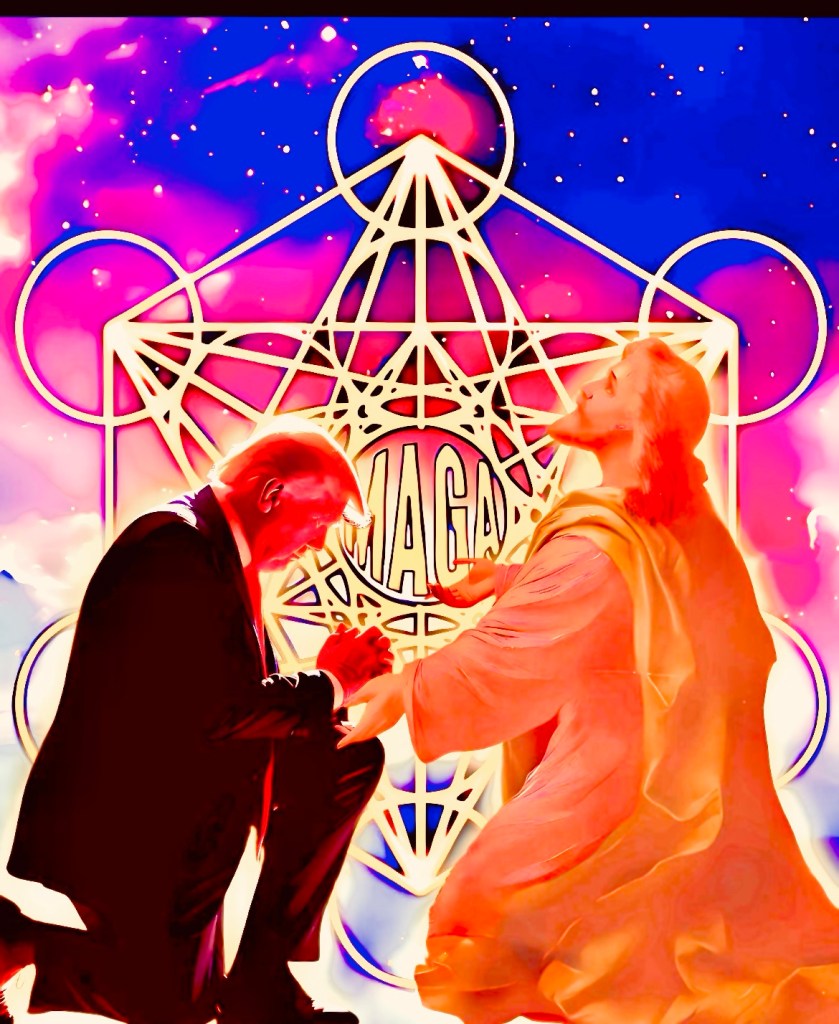
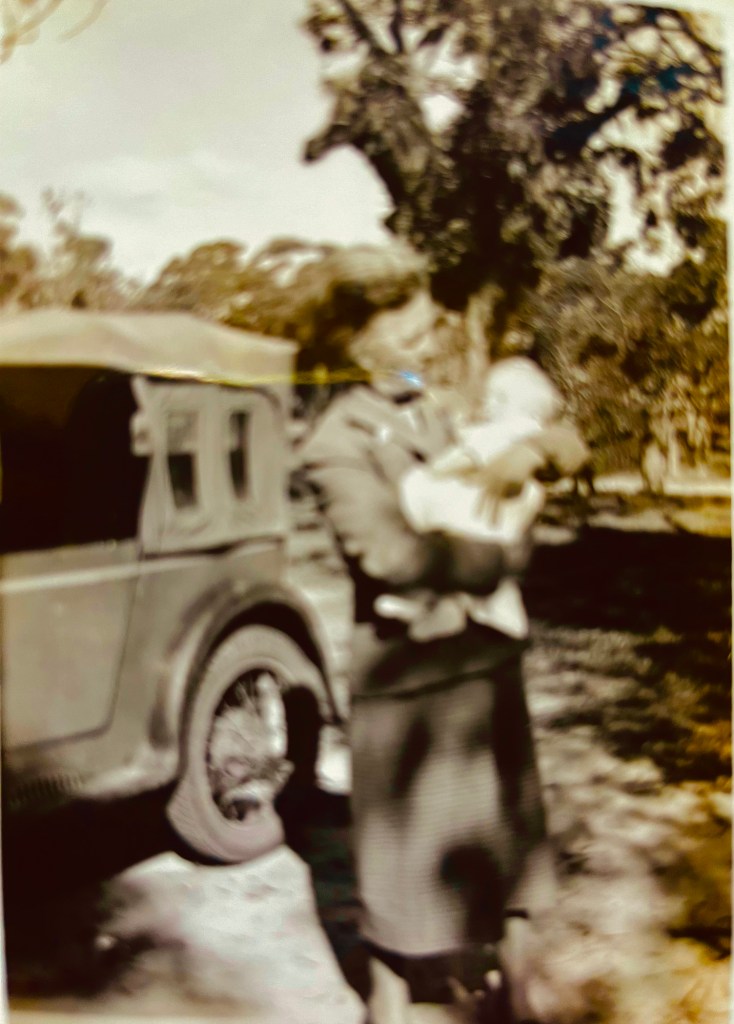


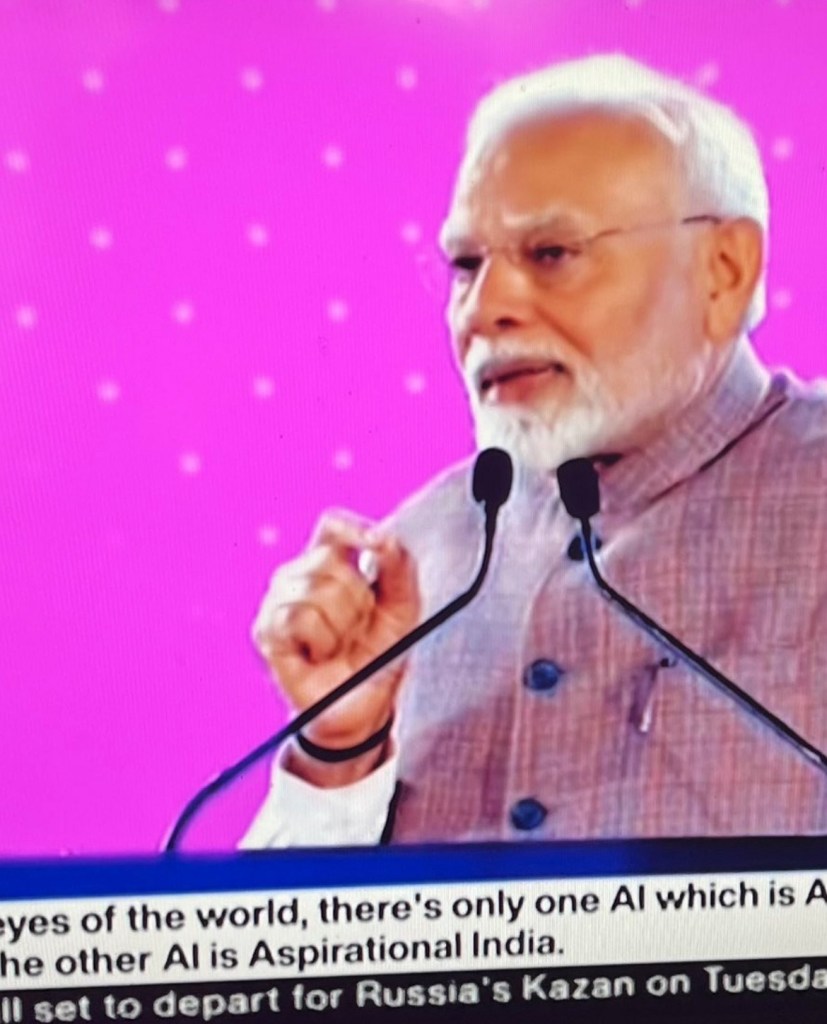
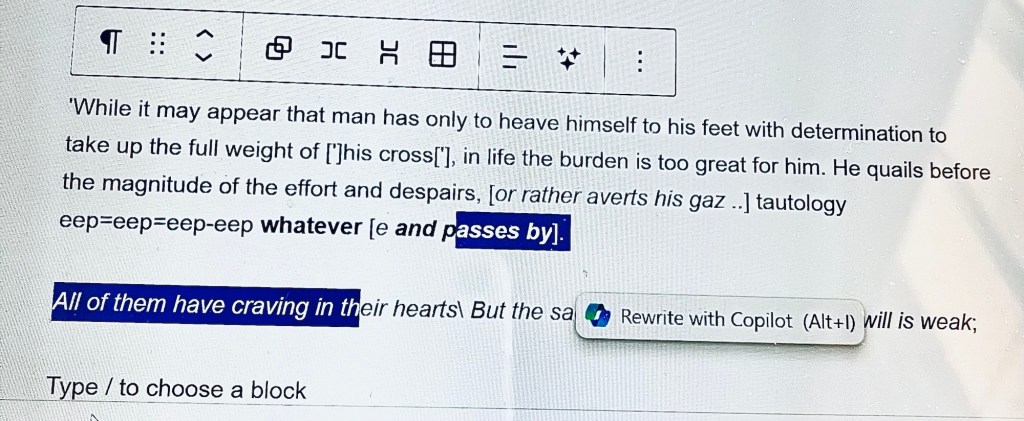
 YouTube·Rotterdam Philharmonic Orchestra – Topic·Jul 10, 2024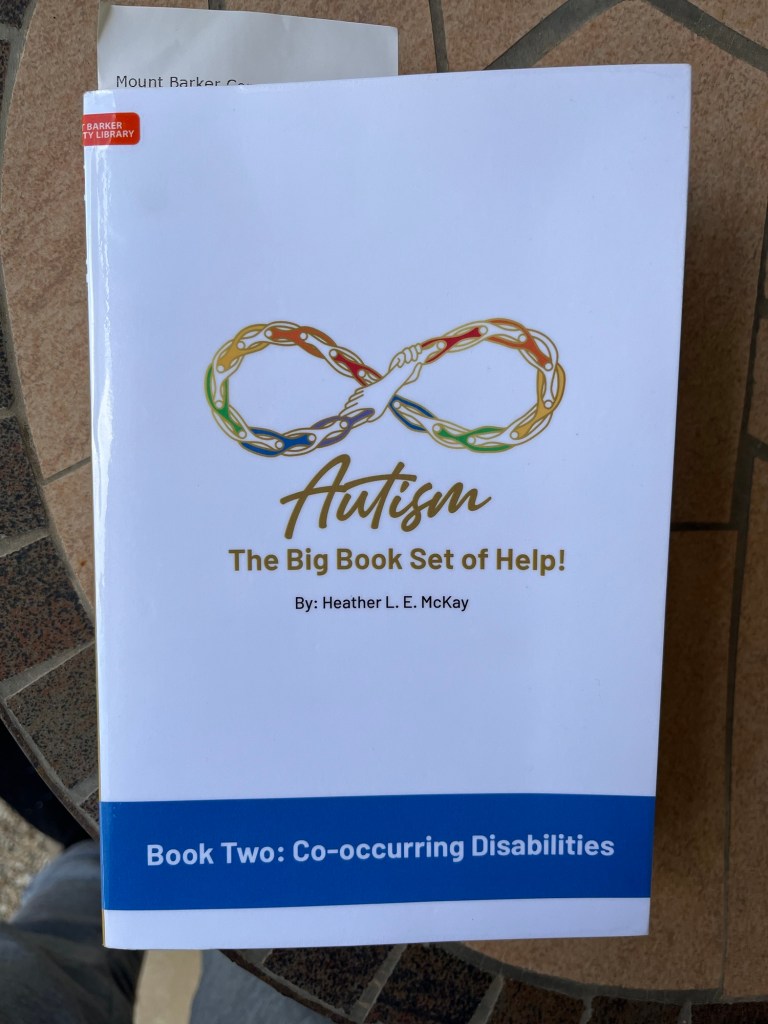
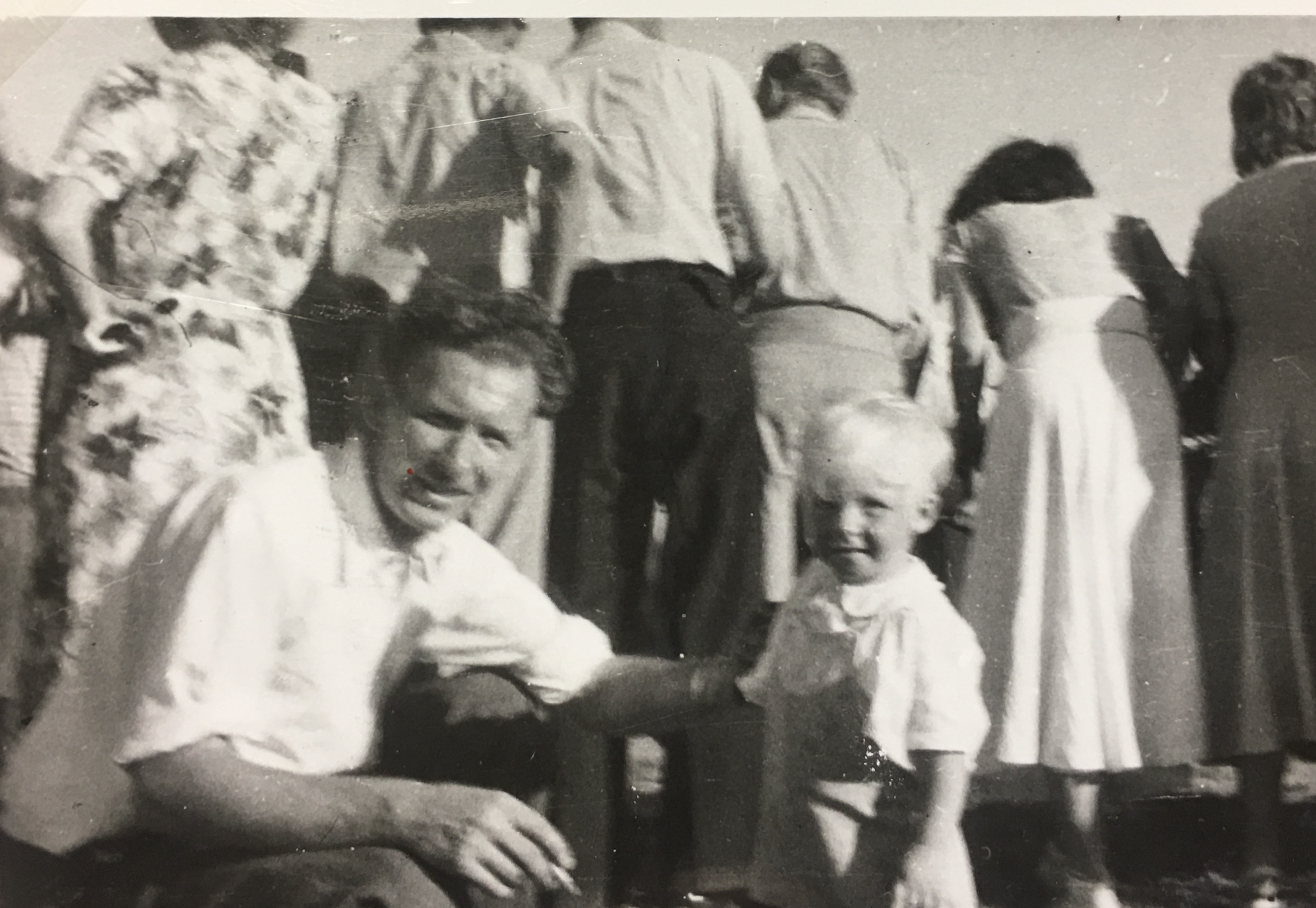
_Publicity_Still.jpg)
.png)


 Related video: What If the Oceans Lose Oxygen? (See To Believe)


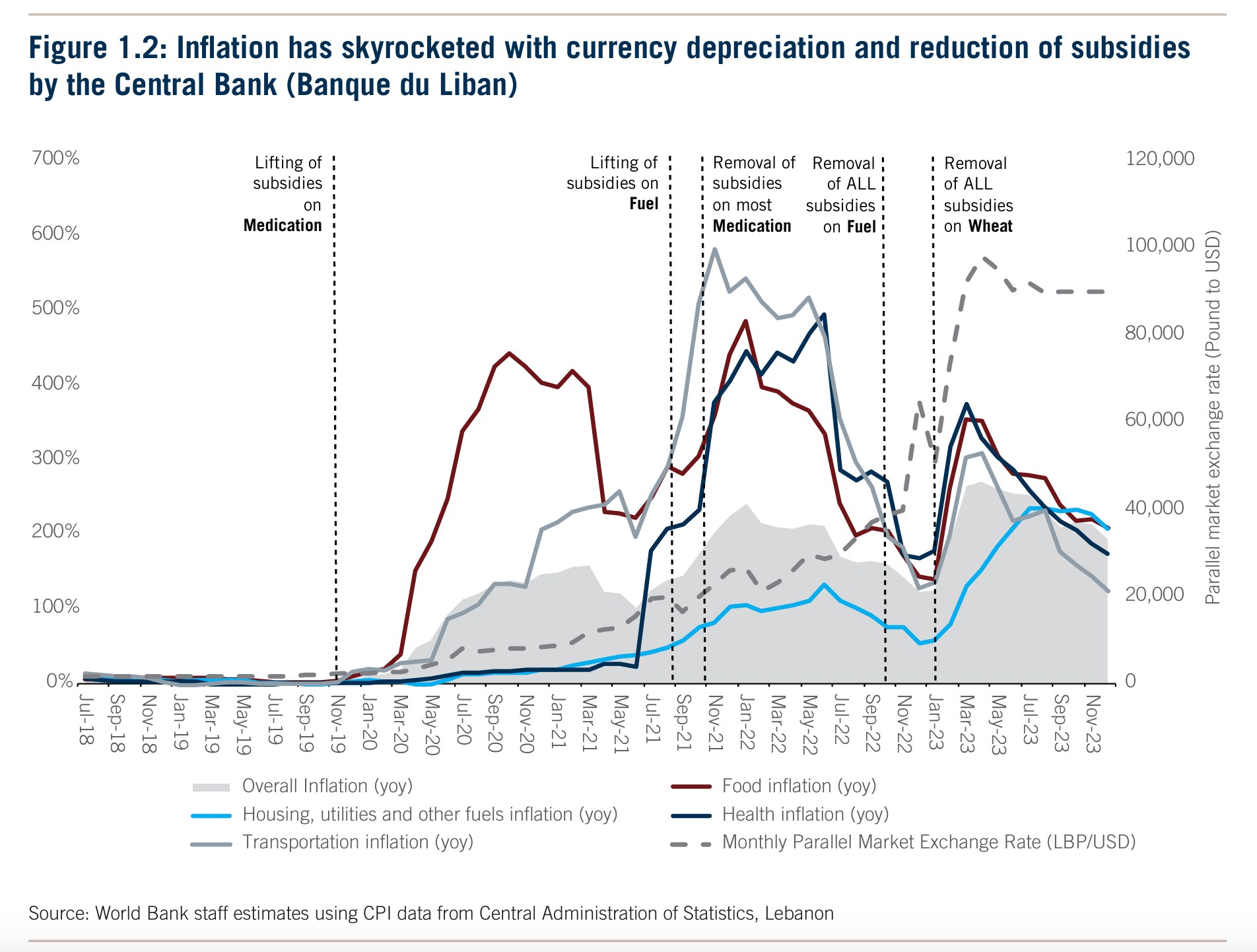

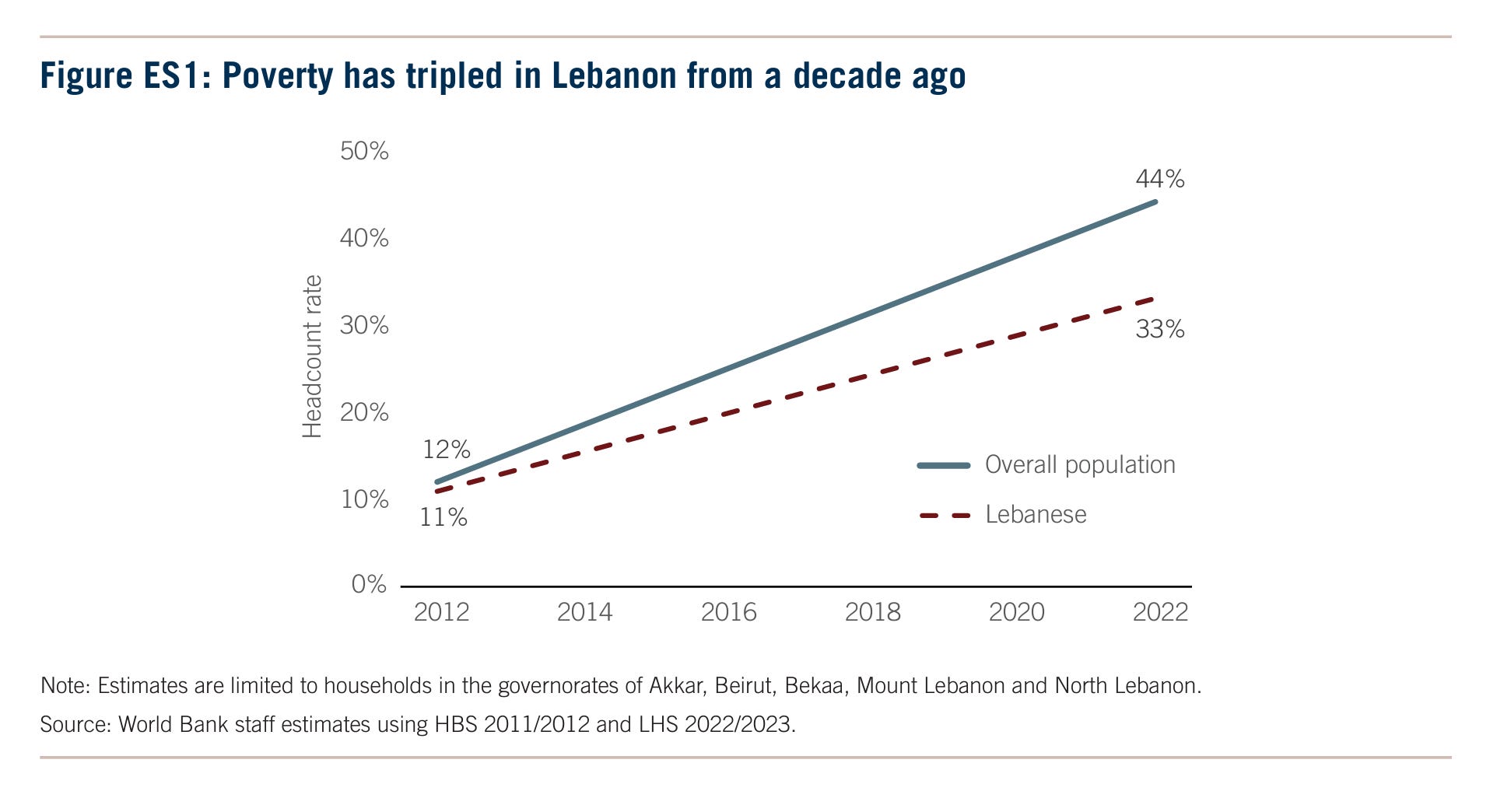
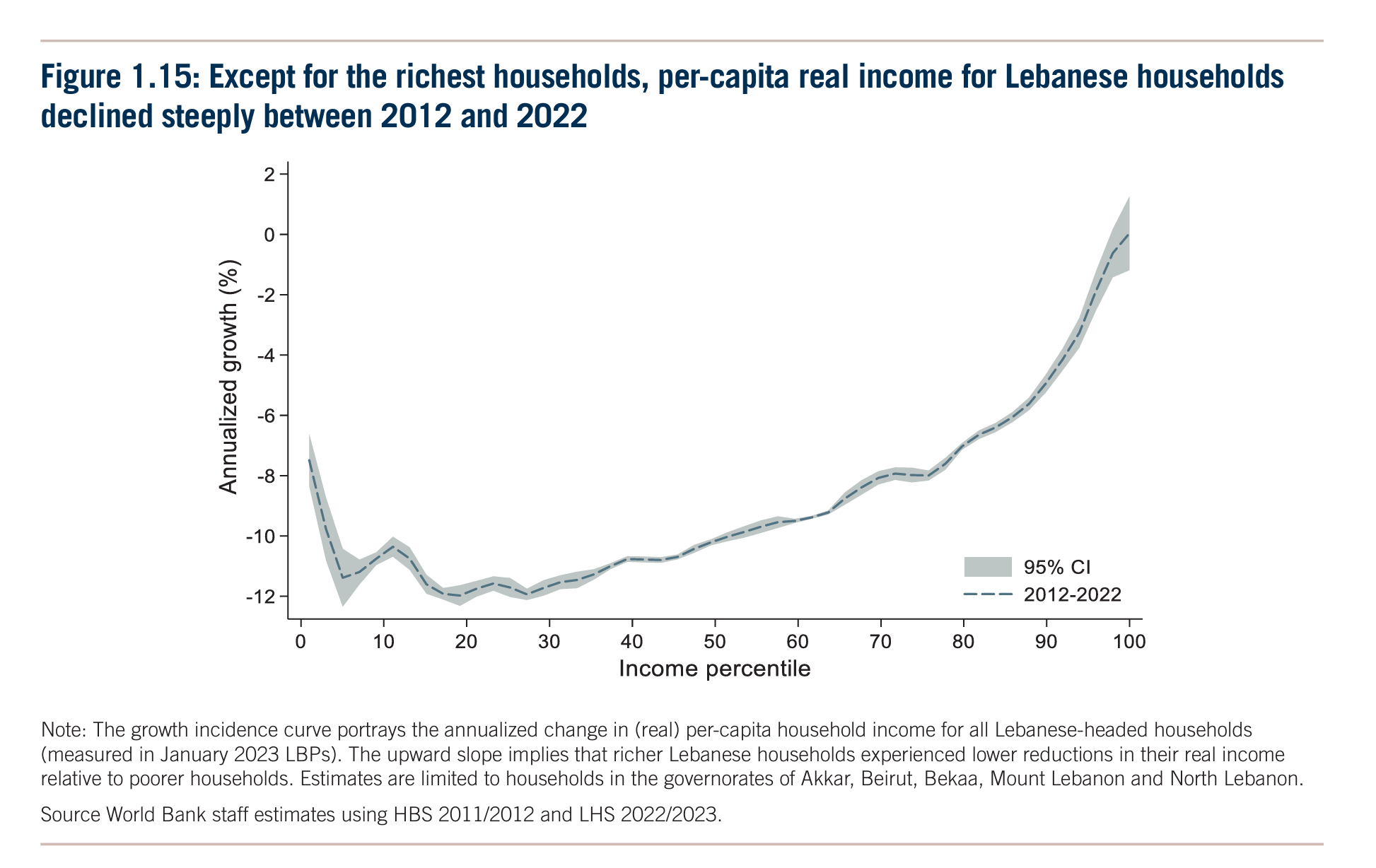
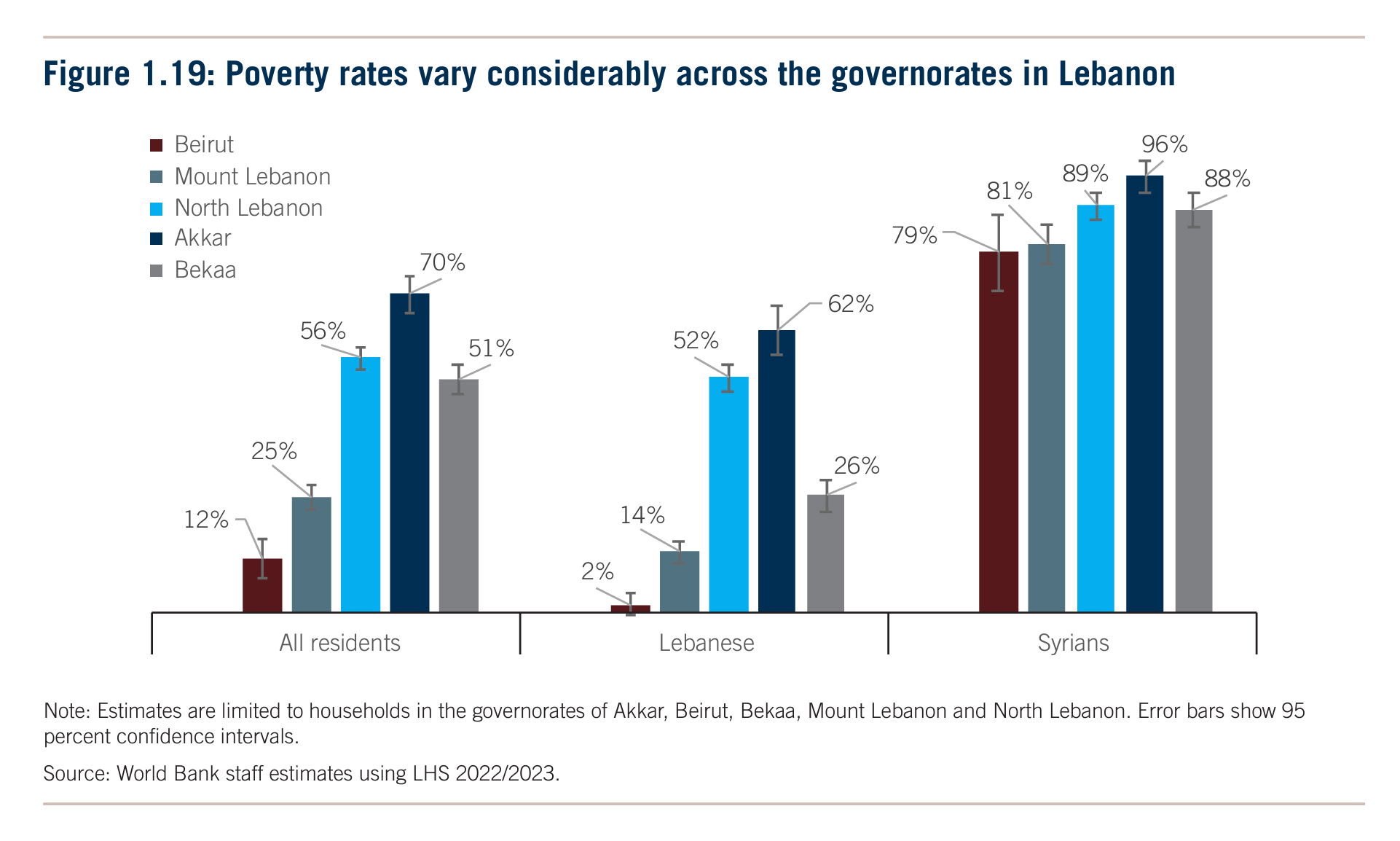





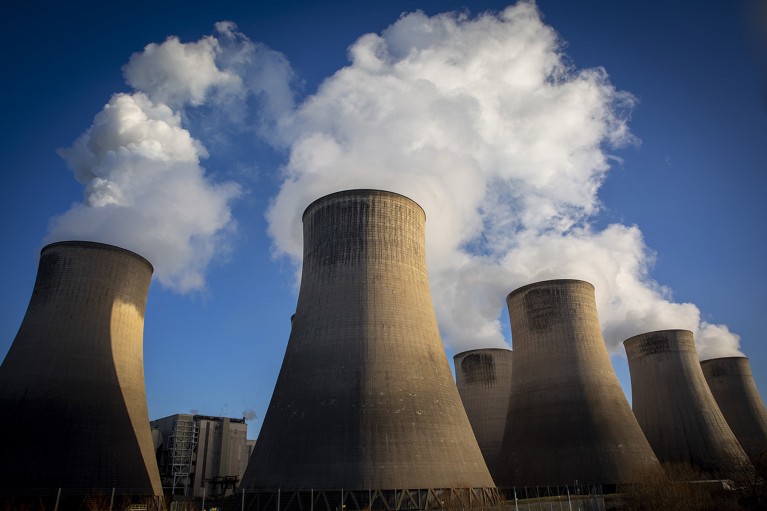

 Billionaire-🙈🙊🙉🐒s with Olivettis