Part-time independent journalist, Australian regenerative & organic farming pioneer 1988 until a total family & Labor Party/ CPSU fraud, lived in virtual exile 13 1/2 years, now part time commercial organic b/ d veg gardener central Adelaide Hills
The race of man shall perish from the earth before the glory of Ciceroshall perish from their memories. VELLEIUS PATERCULUS
Cicero stands near the end of the age of conflict and disruption. From his pages we can reconmstruct much of the story of his time, as seen from the viewpoint of a member of the aristocracy. He was born in 106 BC and was put to death by Antony a year after the murder of Julius Caesar in 44 BC. His extant works take up eighteen volumes in a small pocker edition published in 1823; three volumes of ‘rhetorical’ treatises (or literary criticism and ‘education’), six volumes of speeches written to be delivered in Senate or law-court, four of philosophical works and one of fragments. In all these pages there is little that tells us of the manner of life led by the majority; in Latin literature, as in Greek, the outlook is that of the few. In Rome the government was in the hands of an oligarchy drawn from families ennobled by service to the state and counting among its numbers the most highly cultivated men of the day, In the writings of Cicero, the strength and the weaknesses, the blind prejudices, the massive culture, and the corruption of private and pulic integrity stand out clearly. He was a ‘new man,’ that is, he did not belong to one of the old families; he came from Arpinum, and like many before him he had migrated to Rome to stand for office as the preliminary to a public career. He was eminently successful, and after his famous consulship in 63 BC had held a short and inconspicuous term of office as proconsul in Cilicia. In senatorial circles – for, of course, he was a senator – he moved freely, for he was a leading advocate, politician and man of letters. Occasionally a slight trace of social uneasiness can be detected. He loved Rome and was miserable when away from it. To him and to his circle the only work that counted as work was in the service of the state (negotium); all else, no matter how urgent or exacting, was ‘time off,’ even though it might include a man’s main livelihood. For this class, land was the only worthy occupation; trade and industry were not acceptable pursuits. It was not that these men were above money; money was their curse, and some of the largest fortunes of history were gathered into the hands of men like Lucullus and Crassus, and were often expended on luxuries wicked and futile; moreover, towards the end of the Republic, senators evaded the rules forbidding them to have interests in trade and industry and transacted business of all kinds through intermediaries. What they disliked was retail trade and the routine of manufacture. But they were on close terms with contractors and producers ‘in a big way’ and with financiers and bankers; and they readily sold their estates and country houses and bought others, and speculated in the land and ‘house-property’ markets.
These men of senatorial rank moved about Rome and Italy and the provinces as though they were a race apart.. [Section report //]
NOW LADIES i WANT YOU’ALL TO BE ON your BEST BEHAVIOUR ALRIGHT ALRIGHT ALRIGHTAS WE ‘GO’ TO ( b ) THE FIRST AND SECOND CENTURIES A. D.
O Jupiter of the Capital, O Mars Gradivus, author and stablisher of the Roman name, O Vesta, guardian of the sacred flame that burns forever, and all the gods who have lifted this massive Roman Empire to the grandest pinnacle of the whole world – upon you in the name of the people I call in supplication : guard, preserve, protect this order, this power, this Emporer : [and when he has discharged his spell of duty upon earth, as prolonged as it can be, then raise up at the last hour men to succeed him, men whose shoulders shall be no less broad to bear the burden of world empire than we have seen this Emporer’s to be : and of the counsels of all citizens prosper what is pleasing to you, [and bring to nought what is unpleasing.] VELLEIUS PATERCULTUS
… the unmeasured majesty of the Roman [peace]. PLINY THE ELDER
[Rome is our common fatherland.] MODESTINUS (Digest)
I’m not at all incommoded by @Wordpress having whipped $164 and a $5 International Transaction Fee out of my bank last Saturday week the 2nd of March.
I was of course greatly cheered by this kind-hearted gesture.. Let’s face it team: we really are complete dopes who need these folk, along with the estimated 400,000 Chinese-Organised-crime conscientious Call-centre Team-players labouring mightily for us in frontier Thai, Malaysian, Burmese & Cambodian prison camps to organise our spontaneous little shopping centre, Fly-buys and extraordinary 85 North East Road, Collinswood, Adelaide, 5081 +61 8 8343 4000/ +61 8 8343 4000/ 0467 922 891/ 1300 222 891 lives for us OK?
As a global internet reformer and lethal opponent of the Gates-Huang-Bezos-Apple-Feku cabal’s socially engineered dumbdown, or systematic deskilling of my race, which is indeed the only one i’ve got and is plainly not doing well subject to the multiple paroxysms of its neoliberal trade-priorities death economy AND – hats we can handle hats – especially ‘Mortar-boards’ – plasterers of the World unite you’ve nothing to lose but your mental chains, you Galahs1 – a person with a few hundred dollars of assets for the storage of which he pays $190 per month and an Australian government pension income forced out his rental home by a major Oi-oi Land Political Class real estate corporation Ray White per its shelf-company Ray White Property Management at the end of 2021 and living with a barking-mad rich lady, a rapidly-ageing South Australian business-woman – think the former MHR for Boothby or her @AustralianLabor successor 1950s style Welfare Lady Louise Miller-Frost or the Liberal Independent @AdelaideBook who ran against them both having no idea what government was but displaying a passionate dislike of former federal Attorney General Christian Porter – or the completely postmodern @LSEGreen Cities an’ excellent music an’ social fluidity an’ Doughnut-economics person who ran against all three of them – BUT WITH each lady (or chaplet) 20-40 years older, yeehagghhh, who reckons I’m simple-minded, mentally 9 years old and VERY naughty) as the same country’s three major political parties mounted and launched a national housing affordabilty crisis now hurting 2.4m households and requiring 8m women, men, teenagers & children to skip or skimp meals EXPRESSLY TO HELP RICH PEOPLE & FOREIGN INVESTORS because nobody else would vote them back into office next time. Yee-ha.
Theda Bara
Yep, in 43 languages.
Data, we got data.
From @Wikipedia, the free encyclopedia that virtually costs the earth or at the very least of it worldwide human society by 20322
(i) acultural entertainment industry bullshit which is grossly diseducational and virtually moronising for young people, primary schoolers, little kids and toddlers
(ii) fresh water, and
(iii) vast carbon dioxide + Big Oil extractive, flaring, refining & transport + now almost inconceivably large volumes of Permafrost-melt, eutrophic (bacterially & virally attacked) glacier-melt CH4 methane gas discharged to the earth’s lower atmosphere
Bara was one of the more popular actresses of the silent era and one of cinema’s early sex symbols. Her femme fatale roles earned her the nickname “The Vamp” (short for vampire, here meaning a seductive woman),[a] later fueling the rising popularity in “vamp” roles based in exoticism and sexual domination.[4] The studios promoted a fictitious persona for Bara as an Egyptian-born woman interested in the occult. Bara made more than 40 films between 1914 and 1926, but most are now lost, having been destroyed in the 1937 Fox vault fire. After her marriage to Charles Brabin in 1921, she made two more films and then retired from acting in 1926; she never appeared in a sound film.
Bara was born Theodosia Burr Goodman on July 29, 1885, in Cincinnati, Ohio.[5] She was named after the daughter of U.S. Vice PresidentAaron Burr.[6] Her father was Bernard Goodman (1853–1936),[7] a prosperous Jewish tailor from Poland. Her mother, Pauline Louise Françoise (née de Coppett; 1861–1957), was born in Switzerland.[8] Bernard and Pauline married in 1882. Theda had two younger siblings: Marque (1888–1954) and Esther (1897–1965), who went by the nickname “Lori”.[9][b]
In 1890 the family moved to Avondale, a Cincinnati suburb with a substantial Jewish community.[12] Bara attended Walnut Hills High School, graduating in 1903.[13] After attending the University of Cincinnati for two years, she worked mainly in local theater productions, but did explore other projects. After moving to New York City in 1908, she made her Broadway debut the same year in The Devil.[14]
Most of Bara’s early films were shot along the East Coast, where the film industry was centered at that time, primarily at Fox Studios in Fort Lee, New Jersey.[15]
Bara lived with her family in New York City during this time. The rise of Hollywood as the center of the American film industry forced her to relocate to Los Angeles to film the epic Cleopatra (1917), which became one of her biggest hits. No complete prints of Cleopatra are known to exist today, but numerous photographs of Bara in costume as Cleopatra have survived. [16]
Bara was the Fox studio’s biggest star between 1915 and 1919, but tired of being typecast as a vamp, she allowed her five-year contract with the company to expire. Her final Fox film was The Lure of Ambition (1919). In 1920, she turned briefly to the stage, appearing on Broadway in The Blue Flame. Bara’s fame drew large crowds to the theater, but her acting was savaged by critics.[17]
At the height of her fame, Bara earned $4,000 per week (equivalent to $67,500 in 2022). Her better-known roles were as the “vamp”, although she attempted to avoid typecasting by playing wholesome heroines in films such as Under Two Flags and Her Double Life. She appeared as Juliet in a version of Shakespeare‘s Romeo and Juliet. Although Bara took her craft seriously, she was too successful playing exotic wanton women to develop a more versatile career.[citation needed]
Manuel Rosenberg autographed sketch of fellow Cincinnatian, Theda Bara, 1921 Cincinnati Post
The origin of Bara’s stage name is disputed. The Guinness Book of Movie Facts and Feats says it came from director Frank Powell, who learned Theda had a relative named Baranger, and that Theda was a childhood nickname. In promoting the 1917 film Cleopatra, Fox Studio publicists noted that the name was an anagram of Arab death, and her press agents, to enhance her exotic appeal to moviegoers, falsely promoted the young Ohio native as “the daughter of an Arab sheik and a French woman, born in the Sahara“.[18][19] In 1917, the Goodman family legally changed its surname to Bara.[7]
Bara was known for wearing very revealing costumes in her films. Such outfits were banned from Hollywood films after the Production Code (a.k.a. the Hays Code) started in 1930 under Will H. Hays and then rigorously enforced beginning in mid-1934 by Joseph Breen. It was popular at that time to promote an actress as mysterious, with an exotic background. The studios promoted Bara with a massive publicity campaign, billing her as the Egyptian-born daughter of a French actress and an Italian sculptor. They claimed she had spent her early years in the Sahara desert under the shadow of the Sphinx, then moved to France to become a stage actress. (In fact, Bara never had been to Egypt, and her time in France amounted to just a few months.)
A 2016 book by Joan Craig and Beverly F. Stout chronicles many personal, first-hand accounts of the lives of Bara and her husband Charles Brabin.[20]
Bara married British-born American film director Charles Brabin in 1921. They honeymooned at The Pines Hotel in Digby, Nova Scotia, Canada, and later purchased a 400-hectare (990-acre) property down the coast from Digby at Harbourville, Nova Scotia, overlooking the Bay of Fundy, eventually building a summer home they called Baranook.[21] They had no children. Bara resided in a villa-style home in Cincinnati, which served as the “honors villa” at Xavier University. Demolition of the home began in July 2011.[22]
Bara’s niche in the Great Mausoleum, Forest Lawn, Glendale
On April 7, 1955, after a lengthy stay at California Lutheran Hospital in Los Angeles, Bara died of stomach cancer.[27] She was survived by her husband, her mother, and her younger sister, Lori.[27] She was interred as Theda Bara Brabin at Forest Lawn Memorial Park Cemetery in Glendale, California.[28]
In addition to these, a few of her films remain in fragments, including Cleopatra (less than a minute of footage), a clip thought to be from The Soul of Buddha, and a few other unidentified clips featured in the documentary Theda Bara et William Fox (2001). Most of the clips can be seen in the documentary The Woman with the Hungry Eyes (2006). As to vamping, critics stated that her portrayal of calculating, cold-hearted women was morally instructive to men. Bara responded by saying “I will continue doing vampires as long as people sin.”[32] Additional footage has been found which shows her behind the scenes on a picture.[33] While the hairstyle has led some to theorize that this may be from The Lure of Ambition, this has not been confirmed. Small fragments from Salomé were discovered in 2021 by an intern at Filmoteca Española.[34]
In 1994, she was honored with her image on a U.S. postage stamp designed by caricaturist Al Hirschfeld.[35] The Fort Lee Film Commission dedicated Main Street and Linwood Avenue in Fort Lee, New Jersey, as “Theda Bara Way” in May 2006 to honor Bara, who made many of her films at the Fox Studio on Linwood and Main.[36]
Over a period of several years, filmmaker and film historian Phillip Dye reconstructed Cleopatra on video. Titled Lost Cleopatra, the full-length feature was created by editing together production-still picture montages combined with the surviving film clip. The script was based on the original scenario, with modifications derived from research into censorship reports, reviews of the film, and synopses from period magazines.[37] Dye screened the film at the Hollywood Heritage Museum on February 8, 2017.[38]
The short piano suite Silhouettes from the Screen, Op. 55 (1919) by Mortimer Wilson includes a miniature musical portrait of Theda Bara, who is portrayed in an atonal, expressionistic style.[41]
Bara was one of three actresses (Pola Negri and Mae Murray were the others) whose eyes were combined to form the Chicago International Film Festival‘s logo, a stark, black and white close up of the composite eyes set as repeated frames in a strip of film.[45]
The International Times‘ logo is a black-and-white image of Theda Bara. The founders’ intention had been to use an image of actress Clara Bow, 1920s “It girl“, but a picture of Theda Bara was used by accident, and once deployed, not changed.[46]
In June 1996, two biographies of Bara were released: Ron Genini’s Theda Bara: A Biography (McFarland) and Eve Golden‘s Vamp (Emprise).
In October 2005 TimeLine Films of Culver City premiered the film biography Theda Bara: The Woman with the Hungry Eyes.
Bara appears as a character in the books Vampyres of Hollywood and Love Bites by Adrienne Barbeau, and in Coldheart Canyon: A Hollywood Ghost Story by Clive Barker.
In May 2016, a memoir titled Theda Bara, My Mentor, Under the Wings of Hollywood’s First Femme Fatale, by Joan Craig with Beverly Stout, was released. Young Joan, in the companionship of Bara during the 1940s and 1950s, includes tales of Bara’s husband, Charles Brabin, friends Marion Davies, Clark Gable, Victor Fleming, and other stars of the past.
^ Both of Bara’s siblings joined her for a time in the movie business. Marque worked briefly as a director.[10] After an unsuccessful attempt to establish an acting career, Lori became a screenwriter.[11]
^ Garza, Janiss (2008). “Cleopatra (1917)”. Movies & TV Dept. The New York Times. Archived from the original on October 8, 2008. Retrieved May 29, 2011. Film review.
^ Craig, Joan; Stout, Beverly F. (2016). Theda Bara, My Mentor: Under the Wing of Hollywood’s First Femme Fatale. McFarland and Company, Inc. ISBN9781476662831. LCCN2016009417.
^ Adinolfi, Francesco (2008). Mondo Exotica: Sounds, Visions, Obsessions of the Cocktail Generation. Translated by Pinkus, Karen; Vivrette, Jason. Durham, NC: Duke University Press. p. 25. ISBN9780822341321. OCLC179838406.
^“Theda Bara”. Hollywood Walk of Fame. Hollywood Chamber of Commerce. Retrieved September 21, 2017.
^Panati, Charles (1998). Sexy Origins and Intimate Things: The Rites and Rituals of Straights, Gays, Bi’s, Drags, Trans, Virgins, and Others. Penguin Books. p. 295.
^“Theda Bara Makes ‘Camille’ Reality”. Hartford Courant. October 30, 1917. Archived from the original on August 31, 2012. Retrieved October 8, 2019. Heralded as one of the screen triumphs of the day, “Camille”, adapted from the Dumas novel, and with Theda Bara the featured player, fulfills the promises of the management of Poli’s Theater, where this film really heads the bill this half of the week. Vaudeville must…
Your sociology, neurocognitive health, authentic post Socratic & post 20th century neoclassical 13th century English ruling class Vernacular versus Sacramental 2-5 set series Quantum-relations logic, political theory, post global-death economics, 21st century Philosphy of Science and Immediate Reform of approximately 25,000 Universities servant.
South Australia
1 Australian bird
@PWCUS 2021 now $1 Aussie company Scyne Advisory i think – therefore i was pickled politically by emotionally troubled bean counters – those were the days
2 The 2032 completely #Science & hard data/ #facts-based projection of largely extinguished mammalian Life on Earth Mr Blundell made and published in his mid-’90s to 2003 (hand-written after 17/4/1998 when he was forced into virtual exile for 13 1/2 years, by the South Australian and Australian federal governments) faxed global newsletter Community Economist Publications Worldwide; yarda -yarda you crim bastards I shall ‘bury’ you
Relayed article : Readers my apology but Microsoft is not presently allowing me access to @X at all on the HP laptop on which i write this and is now apparently jumbling my @Wordpress.1
So the following appears to be a critically important article – it asserts on one set of projections – typically not detailed or explained GAT rises of 14 to 25 degrees.. I’ll see if i can put it up on @X directly on my iOS phone.
What a great choice of historical moment to further sabotage suppress, censor and continue obscenely siloing and locking away from public scruting the deadly serious reports and studies of the world’s Global Heating educators? I find it disheartening but so what? My work in this now obviously pre-apocalyptic field since August 1994 has never beeen about me or any Hillary Rodham Clinton village damned to wrack, ruin, hell-fire or indeed Israeli Caterpillar ‘bulldozers with deep rippers but upholding an International Law ‘rules-based’ order and preventing ecocidal criminal malfeasance in those few remaining areas where it’s not belated and pointless.
These communication ‘road-blocks’ to a leading international writer and scholar across several fields with
1) the arrest & reversal of the Billionaires’ Global Deskilling Project and,
2) a virtual revolution in 25,000 universities via the overturn and discarding of rhetoric-, ideological polemic- and opinion driven neoclassical neoliberal and raison d’etat 1870-origin geopolitical Bismarckian – the so-called Fact & Value normative and normalising PhD avalanche Social-science post the Senator Joseph McCarthy and Hollywood Screen Actors’ Guild era, are patently down to
3) the ludicrous and internationally embrrassing Australian Government Department of Home Affairs and Cybersecurity
John Blundell
Post Socratic 2-5 set QR Governance-shift Planning Logic
Scientists make concerning discovery after analyzing bottom of the ocean: ‘A stronger impact … than we are currently taking into account’
We all know that the Earth is getting hotter — but new research indicates that it may be warming even faster than scientists had predicted.
What’s happening?
Scientists from NIOZ Royal Netherlands Institute for Sea Research analyzed sediment from the bottom of the Pacific Ocean for the study, which was published in the journal Nature Communications and reported by SciTechDaily. The researchers used a newly developed method to derive past atmospheric carbon dioxide content and compare CO2 levels in a single location over the past 15 million years.
Their results indicated that doubling atmospheric CO2 levels would increase the planet’s average temperature by 13 to 25.2 degrees Fahrenheit,
“The temperature rise we found is much larger than the 2.3 to 4.5 degrees Celsius (4.1 to 8.1 degrees Fahrenheit) that the U.N. climate panel, [the Intergovernmental Panel on Climate Change], has been estimating so far,” said the study‘s first author, Caitlyn Witkowski.
Why are CO2 levels so important?
Scientists have already drawn a correlation between the amount of CO2 we release into the atmosphere and the amount of planetary overheating we experience. This new research makes the correlation clearer than ever.
“This research gives us a glimpse of what the future could hold if we take too few measures to reduce CO2 emissions and also implement few technological innovations to offset emissions,” said another of the study’s authors, Professor Jaap Sinninghe Damsté, a senior scientist at NIOZ and professor of organic geochemistry at Utrecht University.
Related video: What If the Oceans Lose Oxygen? (See To Believe)
“The clear warning from this research is: CO2 concentration is likely to have a stronger impact on temperature than we are currently taking into account,” Damsté added.
Global overheating is leading to, among other things, the melting of glaciers, which is causing ocean levels to rise and coastal communities to flood; various changes to the climate that are causing more frequent and intense extreme weather events; the spread of infectious diseases; crops becoming ungrowable in many previously hospitable climates; and heat-related deaths.
What’s being done about rising global temperatures?
Several industries are responsible for releasing massive amounts of CO2 into the atmosphere — chief among them is the dirty energy industry, which releases huge quantities of carbon dioxide whenever its oil and methane gases are burned.
To prevent catastrophic planetary overheating, we must leave these energy sources of the past behind and switch instead to clean, renewable energy sources such as wind and solar.
1 I express my thanks to Sundararajan Pichai and Google Alphabet for allowing the john blundell account back into play on @LinkedIn
At this beginning and at the end below but not in the middle I joyfully – joie joie joie – acknowledge my debt – well Billionaire Typing Monkeys1 does – to Chartbook. – We all drive, strive3 to become as life the engenderer and revitaliser of worlds.
“Apropos the questions “Do we know what time it is?” and “How do we actually inhabit the global condition?”, I’ve been preoccupied these last few weeks by how little the world that I am in, is talking about Bangladesh.
“I started thinking about Bangladesh regularly after writing a section of Shutdown on the impact of COVID on the global garment sector, a sector in which Bangladesh plays a pivotal role. Bangladesh is the 8th most populous country in the world. In the last half century and particularly in recent decades it is one of the great development success stories. Bangladesh has often been touted as a story of pro-poor-growth driven above all by NGOs. This graphic from the Economist is typical of the genre. From a desperately low level in 2000, it shows Bangladesh overtaking first Pakistan and then India in GDP per capita.
“Bangladesh is the 8th most populous country in the world. In the last half century and particularly in recent decades it is one of the great development success stories. Bangladesh has often been touted as a story of pro-poor-growth driven above all by NGOs. This graphic from the Economist is typical of the genre. From a desperately low level in 2000, it shows Bangladesh overtaking first Pakistan and then India in GDP per capita.Bangladesh is one of the most-climate exposed “big” country in the world. As the IMF reported back in 2019, by 2050, Bangladesh will lose 17% of its territory due to rising sea levels, resulting in the loss of 30% of the country’s agricultural land.On August 5 2024, barely a month ago, a student-led revolution toppled the elected authoritarian regime of Sheikh Hasina and rather than celebrating this fact (or denouncing it), the really eerie thing is that it is as though nothing happened. Check out FT, Foreign Affairs, Foreign Policy etc to see how minimal the reaction has been. I’m really grateful to Cam Abadi and the Foreign Policy for giving us the space to talk about Bangladesh on the pod a few weeks back
“Your audio..
“Why Are Food Prices Surging?.. It was good to engage with the news on the show, but tbh I’ve remained haunted ever since.What does it mean that this dramatic upheaval can be happening in this huge and important country and “we” are largely oblivious? The only conversations I have had about Bangladesh other than with Cam are with Uber drivers in Manhattan. They were generally in a buoyant mood.Returning to the question of the last newsletter: Are we actually capable of inhabiting our reality in this moment? Are we actually capable of being in medias res?The question has become all the more urgent for me as I’ve read more about Bangladeshi history and realized the extent to which Bangladesh was present in global discourse half a century ago, at the time of independence in 1971.Upgrade to paidOf course, you might say that we are simply overwhelmed. Our modern world is so much more complex. There were 3.7 billion people on the planet in 1971. Now there are 8.2 billion. We are flooded with impressions and news. But looking at the case of Bangladesh then and now I can’t help fearing that a further problem is that our channels of information are less capable of delivering informed and sophisticated reactions to events. Does that reflect the fact that the West is less curious and less engaged? Has the West become provincialized also in that sense?I am sure there are serious ways of assessing those kinds of questions. I’m too over-extended right now to do anything more than to record my dismay and puzzlement and to offer in this newsletter a few things I have learned about Bangladesh in recent weeks that strike me as particularly interesting. I am going to focus on the founding crisis of the country in the late 1960s and 1970s, which is both utterly fascinating from a historical point of view and topical because it was a proposal to introduce quotas to favor descendants of veterans of 1971 that triggered the student uprising.
“#1 elementary fact: One tends to assume that new nations that “break away” will be smaller in population than the states from which they split. In the Pakistani case in 1971 the reverse was the case.The lopsided construction of Pakistan in 1947 joined together two predominantly Muslim regions of the Raj, regardless of the huge ethnic and cultural differences that divided East Pakistan (Bangladesh) from the West (modern Pakistan). It also created a strange mismatch of demography, economics and political influence. According to the 1961 census, politically dominant West Pakistan, where the military had their center of power, had a population of 42 million. At the same time, East Pakistan was estimated to have a population of 50 million. So when democratization was attempted and the Bengali Awami League established its hegemony in East Pakistan, they held the majority in the joint Pakistani parliament, a fact that both the West Pakistani military leadership and the elected leaders in West Pakistan were unwilling to concede.
“#2 Surprise: In the 1960s, under military rule, Pakistan was widely touted as highly successful growth models. This gave the East Pakistani leadership resources and authority both at home and abroad. But it also sowed seeds of division.Under the authoritarian, modernizing leadership of General Ayub Khan (1958-1969), Pakistan was touted as one of the original “Asian tigers” . Crucially, West Pakistan accelerated far ahead of its great rival India.This growth was fueled by exceptionally high levels of foreign aid in the 1960s, which, as is true of aid generally, has attenuated since. Pakistan today, despite its strategic significance, its huge population and urgent needs receives far less aid as a share of GDP from a far richer world than it did in the 1960s.Source: World BankBut that ultra rapid growth in the 1960s, also intensified the disparities between two parts of Pakistan, with West Pakistan seeing much larger investment and growth and East Pakistan lagging relatively speaking behind.Source: Industrial Policy In PakistanThis was particularly galling because the Bengali economy of East Pakistan was historically one of the region’s great export engines and its earnings continued to fill the coffers of the Pakistani state.
“#3 Student protest was widespread across the globe in “1968”. But nowhere was it more consequential than in Bangladesh where an East Pakistani student movement, effectively challenged West Pakistani rule, setting the stage for a national uprising and the formation of an independent Bangladesh.You would never know this from standard accounts of 1968, which focus on campuses in the West. It is a point ably made by Srinath Raghavan in his indispensable study of the global politics of 1971.This interview is a great accompaniment to his crucial book.There is an excellent essay by Samantha Christiansen on the culture and politics of student protest in Bangladesh which has striking echoes in the present.
“In 1968, of course, students were causing headaches for government leaders far beyond Pakistan’s national borders and regional scale. While newspapers were under strict censorship and were limited in their ability to run stories about the activities of anti-government activity in Pakistan, they were free to report on the activities of students elsewhere, and they did so in high volume. In fact, in the Pakistan Observer for the year of 1968, student uprisings dominate the coverage, occupying as much attention as the Vietnam War. There was also a weekly column reporting on student political uprisings entitled “The Angry Young World” which ran articles on a variety of uprisings. The sense from reading these dailies was of a world being turned upside by youth revolt; thus, even though the papers did not have any stories regarding student activity in Pakistan, they fomented a spirit of youth political agency through reportage on other arenas, and created an international scale into which students at Dhaka University could place themselves. These newspaper stories provided the linkage of Dhaka University students with the larger “imagined community” of the youth in the Global Sixties (Anderson 1991; Zolov 1999). Of particular interest was the rising young star in the British New Left, Tariq Ali. …
“The brutal assassination of Asad uz Zamman, a student at Dhaka University and a well-known political activist on campus, had a profound mobilizing effect on the movement. The student community was affected deeply and personally by the death of such a popular and prominent member of the campus. A gruesome image of his dead body just after being shot, with blood pouring from the back of him was printed on the cover of virtually every newspaper the next morning, and SAC declared three days of mourning on his behalf. Students gathered the morning after the death and raised Asad’s bloodied shirt onto a pole. Thousands of students gathered in mourning for their fallen comrade. Tofail Ahmad recalls, “At that day, we took an oath that Asad’s death would not be in vain. He was one of us—not just a Bengali—a student of Dhaka University, truly one of us. We felt a sadness deep in our bellies” (Personal interview 2010). Asad was declared a martyr by the students. A well circulated poem for the martyred Asad, captures the mood of the students
Like bunches of blood-red Oleander Like flaming clouds at sunset Asad’s shirt flutters In the gusty wind, in the limitless blue. To the brother’s spotless shirt His sister had sown With the fine gold thread Of her heart’s desire Buttons which shone like stars; How often had his ageing mother, With such tender care, Hung that shirt out to dry In her sunny courtyard. Now that self-same shirt Has deserted the mother’s courtyard, Adorned by bright sunlight And the soft shadow Cast by the pomegranate tree, Now it flutters On the city’s main street, On top of the belching factory chimneys, In every nook and corner Of the echoing avenues, How it flutters With no respite In the sun-scorched stretches Of our parched hearts, At every muster of conscious people Uniting in a common purpose. Our weakness, our cowardice The stain of our guilt and shame- All are hidden from the public gaze By this pitiful piece of torn raiment Asad’s shirt has become Our pulsating hearts’ rebellious banner.
“#4 As the crisis escalated in 1971 and the Pakistani military cracked down with massive force, the mass killings directed at the political opposition but also the Hindu minority in East Pakistan, were soon described both on the spot and in the global media as a genocide and comparisons to the Holocaust were drawn.Down to the present day, Pakistani and Bangladesh researchers and propagandists debate the question of “3 million” victims. Al Jazeera made this attempt at a summary in the context of war crimes trials staged by Sheikh Hasina’s regime in the 2010s.What is beyond question is that there was a vast and deliberate massacre. This resulted in a gigantic refugee exodus to India. It was seen as a matter of international concern that went beyond questions of internal affairs and national sovereignty. And it attracted worldwide attention on that basis.Thanks to the archive of Youtube, fifty years later, we can watch both original TV reports, concerns and engaged poetry from the period, which give a vivid impression of how the crisis was seen in living rooms around the world.As amongst news reporting from 1971 on youtube two have so far stood out for me: This comprehensive report by Dateline Bangladesh on Youtube I am using this awkward link because the content is truly graphic and Youtube won’t permit a direct link.This ITN compilation gives an eye-opening insight into post-colonial British coverage.
“#5 The role of the Nixon administration and Kissinger in particular has been widely discussed. The protests to Washington by the staff at the US Consulate in Dhaka at the violence they were witnessing went unacknowledged. It was to be a formative moment for ethical discourse within the US foreign service. Gary Bass’s book is a vital reminder of all this.But apart from its callousness. The singularity of US policy is brought out even more clearly by Raghavan’s comparative global treatment of the crisis, which shows how the US was the only major global player whose diplomacy ignored the regional context of the Bangladesh crisis and reduced it, to the exclusion of all else, to a brutal Cold War logic of my enemy’s enemy. What Washington was interested in, to the exclusion of all else, was using Pakistan as a conduit to Beijing, with a view to outplaying the Soviet Union. Ironically, on Raghavan’s reading both the Soviet Union and China took a more sophisticated view of the crisis. The subversive implication is that Kissingerian realism was not just ethically barbarous. In its reduction of the crisis to a logic of simple geopolitics, it was not so much realistic as simply crude and one-dimensional.
“#6 The indignation in the West at the scale of the massacres in Bangladesh and Western complicity in them, sparked a truly dramatic mobilization of pop culture.This was more short-lived than the mobilization around the civil rights movement and Vietnam. But in the reach of its global imagination the mobilization for Bangladesh in 1971 was impressive and still stirs a chord. This report on the famous Concert for Bangladesh headlined by George Harrison and Ravi Shankar in Maddison Square Garden, is remarkable viewing.Joan Baez did a beautiful tribute for Bangladesh in her own quieter style. For those with a strong stomach you may also wish to savor Allen Ginsberg’s memorial to the refugee treks on Jessore Road.What is striking about these contributions is not necessarily their artistic quality, but three things. The strong sense of global engagement. Secondly, the insistence on the rhetoric of “millions” to convey the sheer scale of the violence and the exodus and the association with the Holocaust. And finally, the sense of excitement and novelty you hear in people’s voices as they pronounce the name of a new nation – Bangladesh. As Wikipedia explains, it is a typical creation of modern nationalism conjuring ancient roots.The etymology of Bangladesh (“Bengali country”) can be traced to the early 20th century, when Bengali patriotic songs, such as Aaji Bangladesher Hridoy by Rabindranath Tagore and Namo Namo Namo Bangladesh Momo by Kazi Nazrul Islam, used the term in 1905 and 1932 respectively.[26] Starting in the 1950s, Bengali nationalists used the term in political rallies in East Pakistan.
“#7 Following independence, the new nation of Bangladesh was born into intense crisis. It was massively dependent on India, which did not hesitate to exploits its new leverage. Amidst the oil price and food price shocks of the early 1970s, Bangladesh was one of the weakest links. It suffered an accelerating inflation in 1972-3, which issued into a full blown famine in 1974. This too left deep marks on national politics and the Bangladeshi development model.Bangladesh from the 1980s onwards would become one of the key laboratories for new forms of development finance, notably in the form of the Grameen bank and its model of microfinance. This fascinating book by Naomi Hossain argues that this Bangladeshi success story is rooted in the traumatic shocks that accompanied the birth of the new state in the early 1970s.From an unpromising start as ‘the basket case’ to present-day plaudits for its human development achievements, Bangladesh plays an ideological role in the contemporary world order, offering proof that the neo-liberal development model works under the most testing conditions. How were such rapid gains possible in a context of chronically weak governance? The Aid Lab subjects this so-called ‘Bangladesh paradox’ to close scrutiny, evaluating public policies and their outcomes for poverty and development since Bangladesh’s independence in 1971. Countering received wisdom that its gains owe to an early shift to market-oriented economic reform, it argues that a binding political settlement, a social contract to protect against the crises of subsistence and survival, united the elite, the masses, and their aid donors in the wake of the devastating famine of 1974. This laid resilient foundations for human development, fostering a focus on the poorest and most precarious, and in particular on the concerns of women. In chapters examining the environmental, political, and socioeconomic crisis of the 1970s, the book shows how the lessons of the famine led to a robustly pro-poor growth and social policy agenda, empowering the Bangladeshi state and its non-governmental organizations to protect and enable its population to thrive in its engagements in the global economy. Now a middle-income country, Bangladesh’s role as the world’s laboratory for aided development has generated lessons well beyond its borders, and Bangladesh continues to carve a pioneering pathway through the risks of global economic integration and climate change.There is no neat conclusion to this list of points. I simply hope that it is useful and that I find the time, energy and headspace to keep adding to it.”
..this is how we boogie in world politics
John Blundell
The New Neurolinguistics Post Socratic 5 part Quantum-relations Logic Post Neoclassical Philosophy & Raison-d’etat Geopolitics Post Neoliberal Economy Now mercifully ‘post’ having my life & times & property stolen from me by Australian political thugs
Australia
1 greeneconomyaction.com ( not wired4weld,com, that account name got Disappeared by Breitbart News, the Daily Beast, the Betoota Advocate, those zany Australian Broadcasting Corporation private schoolboys, Mark Zuckerberg or Hunter Biden or some shit )
I love writing Chartbook. I am delighted that it goes out for free to tens of thousands of readers around the world. What supports this activity are the generous donations of active subscribers. Click the button below to see the standard subscription rates.
Chartbook 312 Hezbollah’s shadow bank and Lebanon’s disaster capitalism.
Electricite Du Liban said that the last remaining production unit of the Zahrani power plant has been “forcibly shut down” and that the blackout will affect the country’s airport, ports, water pumps, sewage systems and prisons, state-run National News Agency
This leaves better-off Lebanese relying on generators. Those need fuel that can normally only be procured for hard currency. For most Lebanese that is in desperately short supply. Even if the Algerian oil makes it to Lebanon, it is far from clear how the locals will pay for it.
Upgrade to paid
To reduce a once-prosperous country like Lebanon to these dire straits takes more than a single shock. It takes more than a single catastrophe, even if it has the epic force of the Beirut blast of 2020. It takes more than a war, even one as costly as that with Israel in 2006. It is the result of multiple converging forces that go back to the civil war of the 1970s and 1980s and the sectarian power-sharing deal that followed, forces that paralyzed reconstruction after 2006 and gave Hezbollah a decisive role in parliament in 2018. Lebanon’s problems were compounded by the fiasco of Western policy in Iraq and after 2011 by the disastrous civil war in Syria, which drove millions to seek refuge in Lebanon. As dysfunction multiplied, water supplies failed, garbage went uncollected, wildfires raged without government response and bankruptcy approached, in the autumn of 2019 Lebanon entered a phase of open crisis. Street protests and impending default triggered capital flight and an accelerating collapse in the currency. Meanwhile, the government decision to slash subsidies and raise taxes hiked the cost of living. As the World Bank describes the spiraling disaster:
The sharp deterioration of the Lebanese pound, which lost 98 percent of its pre-crisis value by December 2023, propelled inflation to new heights. With imports constituting about 60 percent of the consumption basket (World Bank, 2022), the plunging currency led to triple-digit inflation which rose steeply from an annual average of 3 percent between 2011 and 2018, to 85 percent in 2019, 155 percent in 2020, and 221 percent in 2023. Inflationary pressures were exacerbated by the rise in global food prices since the war in Ukraine and Lebanon’s heavy reliance on wheat imports, along with the destruction of its strategic wheat reserves in the August 2020, Beirut port explosion. … inflation was consequently even more dramatic, skyrocketing from 4 percent in 2019 to 254 percent in 2020 and has remained in triple-digits through 2023. Faced with falling foreign exchange reserves, the government withdrew subsidies on medication, fuel, and wheat further fueling rising costs of healthcare and transport (Figure 1.2).
In the spring of 2020 Lebanon failed to make payments on $32 billion of international bonds. The Lebanese political class did not have the will to enter into serious negotiations with its creditors, resulting in a “hard default”. As the crisis escalated, it was revealed that without government approval the financial elite had used the accounts of the central bank to support Lebanon’s private banks, to the tune of tens of billions of dollars.
As the currency plunged, prices soared and the banking system shut down, normal economic activity collapsed. In purchasing power parity terms, the World Bank estimates that GDP per capita has fallen by 45 percent.
This is one of the most dramatic implosions ever suffered by a modern economy. In July 2022, the World Bank downgraded Lebanon’s status from upper-middle income country, a position it had held for almost 25 years, to lower middle income country
At the bottom of the income pyramid, poverty has surged. As the World Bank describes it:
Monetary poverty in Lebanon has more than tripled from over a decade ago. New survey data2 covering the population residing in five governorates of Akkar, Beirut, Bekaa, North Lebanon and most of Mount Lebanon reveal a rise in consumption-based poverty in the covered areas from 12 percent in 2012 to 44 percent in 2022.3 Among the Lebanese residing in these five governorates, one out of every three individuals was poverty-stricken in 2022, up from 11 percent in 2012.4 Not only has the share of poor Lebanese increased, but they are also falling deeper into poverty. The depth of their poverty or poverty gap—which is the minimum financial amount required to bring the spending levels of the poor up to the poverty line, expressed as a share of the latter—rose from 3 percent in 2012 to 9.4 percent in 2022. A new, unofficial poverty line was developed for 2022 to better reflect the consumption behavior of households amidst the ongoing economic crisis. The existing national poverty line is outdated as it relies on consumption patterns from 2012 that no longer reflect the realities and conditions faced by households in Lebanon today. Overall prices have increased by nearly 15 times over the past decade, eroding the purchasing power of lira-denominated incomes. Survey data also reflects this change in consumption patterns – Lebanese households in 2022 residing in the covered governorates are consuming a third of the amount of (mostly imported) meat and seafood from a decade ago while the consumption of more affordable bread and cereals has risen by over 20 percent.
Rapid inflation acted effectively as a highly regressive tax, striking hardest at the poor and those with fixed, lira-denominated incomes. Lebanon has increasingly become a cash-based dollarized economy, which works to the benefit of those getting paid in a foreign currency. The size of the dollar-denominated cash economy is estimated to have increased from 26 percent in 2021 to around 46 percent of GDP in 2022 (World Bank, 2023a). Dollarization of the economy can be an impediment to economic growth as it raises the risk of money laundering, informality, and tax evasion (World Bank, 2024a). However, individuals who earn partially or fully in dollars are insulated from the loss of purchasing power induced by the sharply depreciating currency.
Apart from position in the income distribution, the fate of Lebanese is decided by where they live in the country. Beirut is relatively well protected compared to the Northern provinces where poverty is rife. In much of the territory no data can be collected. But what is clear is that the direst emergency is that facing the millions of Syrians who fled to Lebanon to escape the civil war. Amongst the refugee population, poverty rates stand at over 80 percent.
Earlier this year, the EU mobilized a new support package offering support to the tune of $1.06bn, but that money is directed, as the EU openly insists, towards the support of refugees notably from Syria. What is on Europe’s mind is the possibility of another migrant crisis, not the welfare of the Lebanese themselves. Unsurprisingly, resentment towards the refugees has become an easy topic for Lebanon’s failed political class to exploit. In a cynical act of scapegoating the Lebanese state has begun forcibly deporting thousands of Syrians.
Meanwhile, the Lebanese parliament in a grotesque act of self-dealing in January 2024 passed a budget that promised to close the budget deficit of 12.8 of GDP by raising regressive value-added tax whilst decreasing the progressive taxes levied on capital gains, real estate and investments. For lack of reforms, the IMF is refusing to disburse any of the $3bn package that are allocated to Lebanon.
The strategy of Lebanon’s relatively well-insulated elite seems to be to wait out the crisis hoping that in due course foreign donors will recognize that they have to provide support even in the absence of reform. Meanwhile, the on-going crises leave Lebanese with no option but to rely on the social and political forces that over the last decades have created the disastrous status quo. The most powerful of these is Israel’s antagonist Hezbollah.
Subsidies from Iran help to sustain the Hezbollah operation in Lebanon. They are reckoned to amount to hundreds of millions of dollars per annum, far larger than anything Iran has ever provided to Hamas.
But Hezbollah is not merely an Iranian influence operation. It is deeply embedded in what is left of the Lebanese economy.
The escalating crisis in Lebanon since 2019 has stirred political opposition against Hezbollah. But it has also made Hezbollah’s infrastructure even more important for everyday life.
To give one critical example, the failure of central electricity supply makes local government and privately operated generators into key suppliers. As Samara Azzi and Hanin Ghaddar report electrical supply becomes political in the most direct sense:
the two Shia parties own the generator networks in Beirut’s southern suburbs and the country’s south. It does not cover the Baalbek-Hermel area, but local observers confirm the same trend there.52 Generator networks are run in one of three ways in Hezbollah-controlled areas: (1) They are owned and operated by the municipalities—which are typically controlled by Hezbollah (or Amal) members.53 (2) The party works through an individual to run the network as a private enterprise, even as the investment and profits consist mostly of Hezbollah cash. Or (3) they operate through a “private-public partnership” involving the municipality and private actors. Whichever the arrangement, the infrastructure and funding come from the “Party of God” and ultimately benefit Hezbollah operations. Unsurprisingly, the individuals and their companies are usually fronts for Hezbollah, or parts of its business network.54
Since the collapse of the Lebanese financial system in 2020, the Hezbollah-controlled financial firm known as al-Qard al-Hasan Association, or AQAH has expanded from paying Hezbollah’s army and officials to supplying liquidity to the wider Lebanese economy.
In 2021, several of AQAH’s branches began installing ATMs that dispense large sums of Lebanese pounds and U.S. dollars to borrowers. Borrowers can withdraw as many dollars as they want and renew loans indefinitely, so long as they provide the collateral of gold, whose value is currently at an all-time high. Although there have been reports of gold confiscations in response to defaults, these cases are limited due to the negative impact this would have on Hezbollah’s public image. Instead, Hezbollah tends to hold onto the depositor’s gold while offering the option of renewing loans against it indefinitely upon repayment.
Under US sanctions since 2007, Hezbollah’s shadow bank operates at arms length from the officially licensed and regulated banking system. It relies on a network of front operations and helpful connections in friendly Arab states. It may be cumbersome and rudimentary in its techniques. But, all told, it boasts of providing billions of dollars in loans to Lebanon’s families and small businesses.
Many of the loans are secured against gold, meaning that Hezbollah has become an aggregator of savings and assets, on the basis of which it can make rotating loans. To get its hands on dollars, Hezbollah, with the consent of local financial interests, operates a network of exchange shops. As Azzi and Ghaddar explain, Hezbollah exists not in isolation but in mutually beneficial cooperation with Christian business interests in Lebanon:
In the Lebanese cash economy, Hezbollah’s Christian allies control the foreign remittance services and the hard currency coming from abroad, while Hezbollah and Amal actors run the foreign exchange houses, and the internal transfer market— which deals mainly with payment to government ministries—is controlled by former Zgharta mayor Mouawad. This three-way setup ensures the financial health of the Hezbollah-Amal-Bassil axis—which in turn relies on BDL, the facilitator of a highly corrupt process, and the Ministry of Finance, the collector of payments and the distributor of contracts to internal transfer companies.
Hezbollah has friends not just in Teheran but in Baghdad too. Iraq’s foreign exchange regulations allow tourist travel schemes to be exploited to shuffle dollars into Lebanon.
A further source of revenue comes from Hezbollah’s connections to the Captogen drug-running schemes that have become a key pillar of the Iran-backed Assad regime in Syria.
Even further afield, investigations by the US authorities have exposed a set of connections between Hezbollah and the Syrian and Lebanese diaspora in South America and particularly in Venezuela. Most recently these networks appear to have been trading Iranian oil for Venezuelan gold, which is hoarded by the financial authorities in Teheran. As a result in 2000 Washington labeled Hezbollah not only as a terrorist organization, but as a transnational criminal organization along with MS-13 and the major Mexican cartels.
I’m in no position to judge the plausibility of these, at times, surreal seeming claims. Are there really Hezbollah-aligned clans dotting the Atlantic coastline of Venezuela?
The Atlantic Council thinks so, and what that means for Lebanon is that there is not just a war with Israel to worry about, but the Damocles sword of the Paris-based Financial Action Task Force (FATF. As Politico’s Matthew Karnitschnig reports the global financial watchdog may be on the brink of grey-listing Lebanon:
In the coming weeks it (FATF) is expected to place Lebanon on its “gray list” of wayward jurisdictions and determine what reforms the country would have to implement in order to receive a good bill of health and avoid FATF’s dreaded “blacklist.” Though FATF — which was set up by the G7 in 1989 and has since grown to include dozens of members from around the world — has no formal enforcement powers, its evaluations can have a chilling effect on a nation’s ability to operate in the world of international finance. … Officials familiar with FATF’s investigation, who spoke to POLITICO on the condition they not be named, said Lebanon would normally be an open and shut case, given how egregious the evidence of money laundering and terror financing in the country is. … Yet the broader dynamic in both Lebanon and the Middle East has complicated things. To begin with, Hezbollah’s influence over Lebanon’s core institutions means its central government is unable to enforce even the most basic international money laundering norms. An even bigger problem, the western diplomats said, is that several countries in the region, including Bahrain and Libya, have locked arms with Lebanon in opposing international regulators’ push for a crackdown, making it all but impossible to effectively target Hezbollah’s illicit financing.
Whether the current escalation of tension results in full-scale warfare, one thing is for sure: the imbrication of politics and everyday life goes far too deep to be extirpated through bombing, shelling or assassination.
I don’t think Lebanon is more corrupt than other countries.
The problem with Lebanon is that for Israel to feel secure, everything around needs either be crashed (all republics) or made totally subservient (all kingdoms). The words sanctions appears only once in the post. One sees similar analyses about Venezuela, for instance, with its economy on the doldrums, analyses that never report on the sanctions imposed by the US.
Iraq is blackmailed to support US presence and abide by some US diktates by having all its oil proceeds forced through New York banks and blocked in case of disobedience.
But the last sentence indicates the failings of western policies towards Lebanon and the wider area: “Whether the current escalation of tension results in full-scale warfare, one thing is for sure: the imbrication of politics and everyday life goes far too deep to be extirpated through bombing, shelling or assassination.” But this will not stop with an Israel in the chockehold of a rabid ethnonationalistic frenzy. Maybe somebody should have a serious talk with Israel? Would solve a lot of problems in the area…
I am a secular American living in Israel. Can any of you please explain why Hezbollah has been launching missiles at Israel for the past 10 months? Are we fighting over land? Have innocent Lebanese civilians been forced out of Israel? It sounds like all of you are followers of Iran; America is the Great Satan and Israel the Little Satan. Poor Lebanon, it would be the jewel of the world were it not for Israel. Pity those Iranians, if only Israel didn’t exist, there would not have been an Islamic revolution. and Yemen, oh great and wonderful Yemen. Israel is the reason it has not progressed in, well, ever.
This story should have ended the day Israel beat back 6 Arab armies in 1948. You lose a war, the spoils go to the victor. Instead, the Arabs and their sympathizers (most of the commentators here) decided to rewrite the definition of “refugee”, which incomprehensibly remains in effect to this day (again, thanks to the support of yourselves). Since several of you do not like Capitalism, perhaps you would prefer to live under the thumb of the Chinese or the Soviets? Ask the Eastern Europeans how much they loved 4 decades of oppressive Communism.
..4ROM and brought 2U by MONKEYS ex Community Economist Publications Worldwide 1996 through to 2003 when the writer quit for a bit as he realised and wrote and published that we were all headed for a fossil-fuels burning business-as-usual heating ‘bio-meltdown’ by 2032
@wired4weld as accessible to a readership (downloadable presumably – I think – do I care, No-nein-нет) and published that is to suggest uploaded per my super-cheap Ruslan Kogan ‘Vodie=vibes’ – Australian comedy, baby-talk and dad jokes no we don’t normally do Australian comedy, poo jokes and stuff people at the Bloo-ie E/ p’s Broad & Bloke Casting Corporation get paid $120 thousand a year to pump out – TOTALLY Richard Branson-free thankfully greeneconomyaction.com – if you like the Pentagon and the evil mediaeval Central Intellgence Agency only ever read what you want to read for your perverted prurient vacuous pleasure then we really do have news for you.
“AI analysed 1,500 policies to cut emissions.”
Izzuhnt AI extraordinarily useful to Man\ What a piece of work is man/ how noble in his execution of the most complex sensorimotor tasks anyone ever dreamed of or saw a @YouTube video a @TedTalk or heard about team.
” Only 63 climate change interventions led to significant reductions in carbon emissions.. Xiaoying You “
Taxes were particularly effective at reducing emissions associated with electricity generation in high-income countries.Credit: Andrew Aitchison/In pictures via Getty
“Researchers used machine learning to analyse roughly 1,500 climate policies and identify those that have dramatically reduced carbon emissions. Their study, published in Science today, found that policies that combine several tools are more effective in slashing emissions than are stand-alone measures1.
“Using the right mix of policies is more important than using a lot of policies, says Annika Stechemesser, a co-author and researcher at the Potsdam Institute for Climate Impact Research in Germany. For example, the UK’s phasing out of coal-fired power stations worked because it was used in tandem with pricing mechanisms, such as a minimum carbon price, while in Norway, banning combustion engine cars was most effective when combined with a price incentive that made electric cars cheaper.
“To my knowledge, it is a first-of-its-kind study providing such a global evaluation,” says Jan Minx, an environmental economist with the Mercator Research Institute on Global Commons and Climate Change in Berlin.
Road to reductions
As part of the analysis, Stechemesser and her colleagues used a database of 1,500 climate policies implemented between 1998 and 2022 in 41 countries, including the top three greenhouse gas emitters globally: China, the United States and India. The policies fell into 48 categories, ranging from emission trading schemes to fossil-fuel subsidy reforms.
“Previous evaluations have typically concentrated on a narrow set of prominent policies in selected countries, overlooking the hundreds of other measures,” Stechemesser says.
“The authors combined machine learning with a statistical analytical approach to identify large emission reductions in four high-emitting sectors — buildings, electricity, industry and transport. They compared the results with policies in the database to assess which policies and policy combinations led to the biggest emission drops.
“This is a rather clever method,” says Zheng Saina, who has analysed global climate policies at Southeast University in Nanjing, China. The conventional way would have been to review the large number of policies and select the important ones, but that approach is subjective and cumbersome, she adds. “The authors instead used machine learning to detect major emissions changes. It is more objective.”
Right mix
The results showed that certain policy combinations worked better in specific sectors and economies. In terms of reducing emissions associated with electricity generation, for instance, pricing interventions such as energy taxes were particularly effective in high-income countries, but less so in lower-and-middle income countries.
In the building sector, policy mixes that included phased out and banned emissions-generating activities more than doubled the reductions resulting from implementing those policies individually.
“Taxation was the only policy that achieved nearly equal or larger emission reductions as a stand-alone policy, as opposed to a policy mix, in all four sectors.
“Minx says the study’s AI-enhanced approach allowed the researchers, for the first time, to evaluate the effectiveness of a large number of climate policies from a global set of emission inventories covering different countries and sectors.
“For other researchers, the paper is alarming. “This study provides a warning to countries around the world that their climate policies have had very limited effects so far,” says Xu Chi, an ecologist at Nanjing University. “Existing polices will need to be re-evaluated, and changes will need to be made,” Xu adds.
“The world’s annual emissions are projected to be 15 Gt of CO2 equivalents higher by 2030 than would be required to keep global warming to less than 2 °C above pre-industrial levels, according to the United Nations.
The phenomenology of the new neurolinguistics makes abundantly and powerfully clear that the socio-cultural and the psychosomatic are body-mind belief systems in the complete control of the well healthy person per the vibrant instantaneously co-operational sympathetic and parasympathetic nervous systems. In short the psychological is the socio-cultural and the raison d’etre (the reason for being or being alive) and multifarious raisons d’etat (the individual adult, couple, household, neighborhood, geo-community, region OR nation motifs and causes we all air and display) are psychological – equally and indivisibly the outcomes of socialisation, acculturation, mores, beliefs, tropes, memes, aphorisms, slogans, prayers, wishes, aspirations and ‘upbringing.’
Plato’s Race-memory, environs and genetic predispositionform an authentic mental trinity (or ‘triad’) in contrast to the sacramentalor supposed (classical monist AND dualist) metaphysical.
The person depicted above’s name is pronounced Kah-mahla, with equal accent or emphasis on the leading and trailing syllables -as indicated by the – conjunctor or classical hyphen above- and used in contemporary Greek speech – there can be no snappy if not terse or grunty or perhaps nasal emphasis on the first syllable and the use of the notorious Mary-Anne Fahey’s – not herself but her The Comedy Company character of 1989 Kylie Mole’s – Rising-debbie is frowned upon or at least frightens old ladies and gentlemen
(1) By way of a critical wierdshow corporate lawyers’ preamble go ‘here..’
“Previously, the site was hosted on the servers of Bomis, a company mostly owned by Jimmy Wales. With the announcement of the Wikimedia Foundation on June 20, 2003, the ownership of all domain names was transferred to the Foundation. The site is run by the community of Wikipedians guided by the five pillars.
“Wikipedia is a non-commercial website run by the Wikimedia Foundation, a 501(c)(3) non-profit organization based in San Francisco.
“Who owns Wikipedia?
“Wikipedia’s tech framework is supported by the Wikimedia Foundation, which also supports Wikipedia’s sister projects, including Wiktionary, Wikibooks, and others, and owns all of their domain names.
“Who governs Wikipedia?
“The Wikimedia Foundation is controlled by its Board of Trustees, which is required according to its Bylaws to have several members chosen from the Wikimedia community. The Board and Wikimedia Foundation staff do not usually take a role in editorial issues, and projects are self-governing and consensus-driven.
“Founded by Jimmy Wales and Larry Sanger on January 15, 2001, Wikipedia has been hosted since 2003 by the Wikimedia Foundation, an American nonprofit organization funded mainly by donations from readers. Initially only available in English, editions of Wikipedia in more than 300 other languages have been developed.
“The text contained in Wikipedia is copyrighted (automatically, under the Berne Convention) by Wikipedia contributors and licensed to the public under the GNU Free Documentation License (GFDL). The full text of this license is at Wikipedia:Text of the GNU Free Documentation License.”
What are the Four Trauma Responses Fight, flight, freeze, and fawn are a broader collection of natural bodily reactions to stressful, frightening, or dangerous events. This sympathetic nervous system response dates back to our ancestors coming face-to-face with dangerous animals. Jun 24, 2024
(2) For the hard and hurty for mental 11 year-olds facts, go ‘here..’
I, John Blundell, independent scholar and the man who is bringing to a dead end the notional Five hundred +15 Year \\ Five Hundred Fifteen year Romance Era and equally, necessarily and comprehensively ALL patronising and ‘matronising faux feminist’ micro-behavioural Raison-d’etat Warrior-prince Explorer-scientist depersonalising sexualising psychiatric Object-relations anodyne conversational patter3 passed off as intelligent human discourse since the Church pitted the pietistic1 sacramental against Dante Alighieri’s2 vernacular pronounce the Nineteenth-century neoclassical academic Fight, flight, freeze, and fawn ‘dead in the roiling global heating water’ and demand the immediate retirement of all peddlers-for-business-profit of evolutionary biology against the James Lovelock thesis Gaia (originally published in 1979, reissued in 2000 with a new preface, and reissued again in 2016 with a second preface as part of the Oxford Landmark Science series blah-didly-bitly-blah-diddly-blah-bla).
The Italian Peninsula
– Elegantly transition your heads team to Fight Feed Fuck Freeze Flee. Forget the FFF Flee Flummox read-out on greeneconomyact on @X I put out say three months ago. I am overjoyed if not triumphant to directly ideationally connect the animal, though mammalian animal in particular5 and human at moments of terror for some (ALL rape victims for example) as the individual’s (in new micro- -meso- -macro economic theory Centre Circle One’s of 9’s under a weather-systems smashed, roiling, now literally deoxygenating and sulfurising sky C10) Freudian parapraxes moments, mental crossovers – naming synonym as antonym, misnaming in general, malicious-aforethought hyperbole and dumbed-down or ‘de-skilled’ essentially diseducated “Bullshit-baffles-the-brain” SCIENTIFIC False-equivalence – the individial human Edward Bernays-esque Manhattan Rand, Greenspan and Branden (pop psychology hack)1960s polemical public relations human cultural mental ‘catastrophe’ – meditative-state, short-term recall failure, clinical shock, trance.. “being paralysed by fear..” Alzheimers,’ loss of brain-sympathetic executive (expressive) responses, dementia and catatonia..
‘Freeze,’ billions of us said, muttered or thought, repeatedly, habitually, unselfconsciouisly, reflexively like we were burping, poop-ing or gaily [\ not] kicking the “word” down some road, its dust invisibly suffused with depleted uranium we couldn’t see, hear, taste, smell, touch or come-on-down and put on a show about besides the FBI, CIA, Joe Rogan, Australian politician Dan Tehan, Marine le Pen, the Vatican Treasury office and the editor of Readers Digest would be onto us in a ‘flash’ if we so much as opened our mouths about the Matter.
Kerlahnck that’s me done for this morning.. and the next day.
..except my virtual greetings and salutations to all who want to expunge malfeasant fake science from their blessed households, neighborhoods and geographical communities around the world
..and the people of Baghdad
We sure know it’s been hellish hot for many weeks
كيف حالك؟
BLUNDELL
21,2 Aug 2024
3 famously, powerfully resoundingly condemned by Thunberg as Blah 28/9/20213A
1 fanciful-fatuous-fictive in the letter (or de jure qua demonstrable legal intent) and judgmental, condescending, mentally-calculated to cause harm to another or others & interpersonally violating in spirit
2Italian Peninsula regional story-teller/ fabulist poet late 13th C to 14/9/1321
3A Fascinatingly enough indeed the date of the fourth “anniversary” of what socially metastastasised into a now evidently permanent ‘rolling’ entropic Australian political class & ‘cognoscenti’ “Seniors-moment” – the3AA diagnostic and indeed prognostic certainly pro Gnostic psychological regression to RG Menzies era Reverse Class-warfare – psychological “downward” envy pitted manfully against “Pearl-clutching” or “Bed-wetting” – and some phenomenon the “hard core” ideological activists among the “crackers” public menaces call Being-awake(?). I think therefore I’ve probably made a Dog’s-breakfast of these Looney-tunes’ tightly-argued if not epistemologically fraught principal premises https://aje.io/5n3kq damn
3AA Grammatic definite object as dialecticised with the indefinite object culturally emergent in southern Europe particularly c’est/ say after Athenian city-state at the time of ‘heroic’ comedy acts Play-dough, Sock-crates & Harris Tottle (?)
4 “The Freudian slip is named after Sigmund Freud, who, in his 1901 book The Psychopathology of Everyday Life, described and analyzed a large number of seemingly trivial, even bizarre, or nonsensical errors and slips, most notably the Signorelli parapraxis.”
5 In a dementing world where hundreds of thousands of people are ‘earning’ the equivalent of $100k per annum (triple the lowest liveable income in Australian contemporary urban and suburban society including large regional centres, those ‘fed’ by huge supermarket chains) by & large children’s heads are pumped full of paleo-biology and all young people and adults 20 to110 know ten times as much about the reptilian brain – that human culturally-dominant foment of immediate gratification of wants and lusts, for example nowadays on display as random knife attacks on groups which idiots in public relations, security agencies and parliaments attribute to what they call terrorism and fiercely assert & aver have no connection with mental illness – while their opponents babble about empathy with the “neuro-divergent” as fundamental to a supposedly ideologically sound shared vision of lberal democratic society (for affluent white people like themselves, those with feet-on-ground & eyes not on screens wonder) – in the 21st century that is so plainly the psycho-social and diseducational precursor of ALL Autism-spectrum and ‘Attention Deficit Disorder’ (pharmaceutical corporation 45 year ‘Ritalin’ bonanza) neurocognitive (50% of causation) disorders – as about their own.
People of voting age cry out for representation in councils and parliaments and for regional through national leadership by government.
So they get together, do social activities and raise money – both of which pursuits are hugely aided by taxation exemption, concession, deduction and direct public (ex taxation revenues, largely overseas ‘growth-fund’ exports investment profits and immigrant, student or affluent tourist spending) subsidies.. a tartly named Activity Trap (the title of a short paper or magazine article by a business “man-age-meant” guy, a pom called I think George Robertson from my social psychology & social work studies days (the 1970s) i cldnt successfully search unsurprisingly enough because it was critical operant mature adult thinking discourse or peroration of the sort every pavlovian ‘Hit or Give’ ghoul in the billionaires’ e-comms de-skill Cabal hates and simply censors out of his or her or indeed – classically in grammatically off though it may be – their, increasingly ‘putrefying’ product in really and truly an apocalyptic runaround for innocent kids, working people and vain neurocognitively impaired old men..
Sarah Hanson-Young Campaign Kickoff – with Adam Bandt
Tuesday, September 3, 2024, 6:00 PM to 8:00 PM at Chateau Apollo, 74 Frome St, Adelaide
Join us as we kick off the Greens SA campaign to re-elect Sarah Hanson-Young to the Senate and win Sturt!
Greens Leader Adam Bandt will be heading to town, straight from his press club address.
So grab a friend, get your tickets, enjoy a snack from the platters, and hear from Sarah and Adam about the plan for re-electing Sarah!MORE INFO
What’s On in August?
The Greens | Branch | Action Group | Community
TODAY: Volunteer Welcome Night
Wednesday, August 14, 2024, 5:30 PM to 7:30 PM at The Greens SA State Office, 7/291 Angas Street, Adelaide
Hear from Greens organisers and volunteers about how a strong people powered campaign can win elections and how you can be a part of it!
Learn about the different ways you can get involved. From letterboxing to phone banking, doorknocking and market stalls. There is something for everyone.
Thursday, August 15, 2024, 5:00 PM to 7:00 PM at Miss Perez Kitchen & Bar, 2 Druid Avenue, Stirling
Join Greens MLC, Robert Simms for a drink and casual conversation on the big issues impacting our day-to-day lives: cost of living and the housing crisis, rising inequality, the climate crisis, the ramping crisis, and more! Drinks will be available for purchase at the bar. MORE INFO
Food waste lecture by Dr Stephen Lapidge CEO of End Food Waste Australia
Thursday, August 15, 2024, 5:00 PM to 7:00 PM at Hetzel Lecture Theatre, Institute Building, State Library of SA, North Terrace, Adelaide
If food waste was a country it would be ranked the third highest emitter of greenhouse gases after China and the USA. EFWA is committed to creating a more productive, sustainable, and resilient Australian food system by ending food waste and food insecurity. Cost $10MORE INFO
Doorknock Prep Working Bee
Friday, August 16, 2024, 11:00 AM to 2:00 PM at The Greens SA State Office, 7/291 Angas Street, Adelaide
Help prepare the doorknocking lists for the weekend sessions.
Drop in to state office during the day on Friday to prep the doorknocking lists.
A lot of work has to be done to ensure our events are successful and our campaigns productive so come along and share the load. REGISTER
Silent Vigil for Palestine
Friday, August 16, 2024, from 06:30 PM at The Malls Balls, Rundle Mall, Adelaide
Join Health Workers for Palestine in memory of, and solidarity with our colleagues in Gaza and the West Bank. Wear your scrubs/uniform if you can. Non HCW folk, families and children are all welcome.MORE INFO
Did you know almost a third of South Australians are renters? Rents are increasing 5x faster than wages and both major parties refuse to support a rent freeze or rent caps.
Join Rob Simms for a doorknock and connect with renters in Sturt.REGISTER
Adelaide & Sturt All-In Doorknock
Saturday, August 17, 2024, 2:00 PM to 5:00 PM at Howard Florey Reserve, Campbell Road, Parkside
Adelaide and Sturt are joining forces once more for an ALL IN doorknock on the border of the two electorates.
We will hit the streets to talk to the good people of Parkside and Fullarton before heading to the Parkside Hotel for a social catch up and celebration.REGISTER
Join Anti Nuclear campaigners in SA to talk about and plan how to stop the Nuclear power plant proposals in SA and nationwide.
If you missed the previous online briefing you can watch it here.MORE INFO
🦊🐿️🦔🐁🐀🐇🐰🐩🐕🦮🐈⬛🐈🐠🐟
You have received this ‘Billionaire 🐒🐒🐒🐒🐒🐒s Olivetti Research Group’ – at Noam Chomsky’s (but not the startling funtionalist University of California Berkeley’s Erving Goffman’s) old place of sitting-in-your-office typing shit and also talking a lot the Massachusetts Institute of Technology (known to old rich people as the alma mater) compendious big-data frogshit newsletter because we’ve got your profile and your consumer transactions totally typed and thought you’d like to read ‘something’ divergent, macro-scaled and opposite not apposite to the endless falling-to-vortical-infinity and it’s dark down there in that hole – goodness me children now y’all look the other way – of the lunatic neoclassical anodyne Right-thinking (traditional, original and at least 10k year-old human societies’ Right-side value, belief and cultural praxis that is exactly to say their law) academic cultural hegemons of late nineteenth century England (particularly the northern industrial indigenous and exogenous slave economies of one of my own four great-grandfathers) and those who sucked to and fiscally nurtured it among the ‘Ivy League’ colonial aristocrats of the East Coast USA including of course the slavers of the USA South and the Caribbean – right down 400.5 decades (officially) of retrograde pre-civil society brutalisation ‘reducing’ employee wages and maximising not optimising business profit without regard toany law, to a plainly ecocidal and tberefore within another decade genocidal result or end, or as we address the orgiastically ignorant Christian Old Testament fundamentalist halfwits my scholarly liberal socialist educated grandfather ACL Sanders so deplored and fought exercising political power absent of scrutiny by any court or legislative or administrative authority – or horrific man-made End of Times end as in the officially ‘expanded’ Northern Territory Top End economic circle 6 global region of Australia this day.
That “endless falling-to-vortical-infinity:” tell me the above image is not flat, dumb, two-dimensional and in terms of the Paris 1968 upper middle-income liesure-time chatter (all day & half the night, right) notArt
Join the Sturt Greens team as we chat with voters and listen to what issues matter to them.
At the start of the session you’ll meet your team and have a quick training before heading out to talk to voters. No experience is necessary – if you’re new, we can pair you up with an experienced doorknocker.REGISTER
Greens at Save the Cranker Rally – Sarah & Rob both speaking
Sunday, August 18, 2024, 1:00 PM to 4:00 PM at Tarntanyangga/Victoria Square, Adelaide
The grassroots campaign to save the “Cranker” – Crown & Anchor Hotel continues with a massive rally followed by live music on two stages at Adelaide’s most loved pub. Join Greens Senator Sarah Hanson-Young and Greens MLC Robert Simms to show your support for saving this iconic Adelaide place.
It is not just a heritage listed façade. It is not just a historical pub. It is not just a live music venue. It is alive, and we cannot lose it.REGISTER
Campaign Working Bee
Tuesday, August 20, 2024, 5:30 PM to 7:30 PM at The Greens SA State Office, 7/291 Angas Street, Adelaide
Drop in to state office for an evening of volunteer recruitment, data entry and all the behind the scenes tasks that make our campaigns run.
Please bring a laptop and a phone, or let us know if you need them to be provided. REGISTER
Recruitment Systems Training
Wednesday, August 21, 2024, 5:30 PM to 7:30 PM at The Greens SA State Office, 7/291 Angas Street, Adelaide
Learn how to use ListManager, our platform for creating calling lists and recruiting volunteers. This will be a crucial tool for your campaign team. The training will cover how to use the systems, log your calls and contact notes, how to create a phone calling list and some best practice tips and tricks when on the phone!REGISTER
Sturt Market Stall at Fullarton
Saturday, August 24, 2024, 8:15 AM to 2:00 PM at Fullarton Market, Fullarton Road
Join the Sturt Greens team at the Fullarton Market to chat to locals about Greens policies and campaigns.
You can help out for the whole morning, or just pop by for a quick stint. Any and all help is appreciated! REGISTER
Sturt Weekend Doorknocks
Saturday, August 24 & Sunday, August 25, 2024
Join the Sturt Greens team as we chat with voters and listen to what issues matter to them.
At the start of the session you’ll meet your team and have a quick training before heading out to talk to voters. No experience is necessary – if you’re new, we can pair you up with an experienced doorknocker.
Saturday, August 24, 2024, 6:30 PM to 10:00 PM at Unley Community Centre, 18 Arthur Street, Unley
The Australia West Papua Association SA invites you to join our Quiz Night. Support the cause for the respect and empowerment of West Papuans’ human rights!
Doors open 6.30 for 7pm start. BYO food and drink. Admission $20 waged / $10 concession. Tables of up to 8-10 are welcome, as are individuals or small groups. Please bring some gold coins for games between the main quiz rounds.
Sunday, August 25, 2024, 2:00 PM to 4:30 PM at Park 8, Adelaide Parklands, Melbourne Street/Princes Hwy, Adelaide
Join the Adelaide Greens team as we chat with voters and listen to what issues matter to them.
At the start of the session you’ll meet your team and have a quick training before heading out to talk to voters. No experience is necessary – if you’re new, we can pair you up with an experienced doorknocker.REGISTER
Sturt Week of Action
Monday, August 26 to Sunday, September 1, 2024
If you’ve been meaning to get involved in the campaign to win Sturt, then this is the week to do it!
Monday 26th August to Sunday 1st September: Sturt Letterboxing Blitz – help us deliver leaflets in your own time throughout this whole week.
Tuesday 27th August, 5.30-7.30pm: Campaign Working Bee – drop in to State Office to help out with volunteer recruitment, data entry, and all the behind the scenes tasks that make our campaigns run.
Calling all experienced doorknockers for our midweek POWER DOORKNOCKS:
Join us for one or more of our weekend doorknocks as we chat with voters and find out about the issues they care about. No experience necessary, training will be provided:
Saturday, September 14, 2024, 9:00 AM to 12:00 PM at Tarntanyangga/Victoria Square, Adelaide
Walk for Respect – A peaceful, non-confrontational walk to raise awareness of the key signs of Domestic Violence & Coercive Control against women, men children!MORE INFO
AFOPA Quiz Night 2024
Saturday, September 14, 2024, 06:30 PM to 10:00 PM at Goodwood Community Centre, 32 Rosa Street, Goodwood
Young AFOPA invites you our annual night of fun and friendly competition, with all proceeds to support the work of AFOPA. BYO nibbles or supper. Tea, coffee, drinks available. Great prizes to be won!MORE INFO
Get involved in the campaign to win Heysen! We’re knocking on doors in Aldgate to hear from our community about the issues they care about.
At the start of the session you’ll meet your team and have a quick training before heading out to talk to voters. No experience is necessary – if you’re new, we can pair you up with an experienced doorknocker.REGISTER
Six fun rounds including political, local, environmental, music/movies, geography/history.
Tables of 8 – or come as a single, couple or other combination and we’ll match you to a table.REGISTER
The Koalas – A movie about survival
Sunday, September 29, 2024, 4:00 PM to 7:00 PM at Palace Nova East End Cinema, 3 Cinema Place, Adelaide
Join us for the ADELAIDE PREMIERE THE KOALAS – a movie about survival that tells stories of resilience of this iconic species in the face of threatened extinction in the wild.
Following the screening will be a panel discussion with Greens Senator for South Australia Sarah Hanson-Young.
“Action comes out of brilliant movies like The Koalas” – Bob Brown
“You’ll be charmed. You’ll be dismayed. And then i bet you’ll be as angry as hell” – Tim Winton AOMORE INFO
The Jerseys have been professionally designed and feature the logos of key sponsors. For a limited time, there is an introductory price reduction for the first 50 sold. Get in early, buy a jersey, and fly the flag of support for Palestinian resistance on the streets of Adelaide.
Join us on our regular rides and also for the major AFOPA Run Walk and Ride for Palestine at Glenelg to be held on Sunday 13th October. ORDER ONLINE
ANMF Union Members Open Letter for Gaza
To all ANMF union members, retired members, nursing/midwifery students- let’s tell our union to speak up for human rights and healthcare in Gaza.
Please support us and share the link with nurses, midwives and personal care assistants. The open letter is national.
Do you have any old Greens (or just green) tshirts lying around that are really no longer fit to be worn? Here is the perfect recycling pathway for them!
Jacqui Hunter of Hunter Gatherings is organising a Nature Festival event celebrating the Adelaide Parklands, and is collecting old green tshirts to be cut up and transformed into scarves. If you have something suitable, they can be dropped to the Adelaide Sustainability Centre at The Joinery (111 Franklin Street, Adelaide) or to The Greens SA State Office (7/291 Angas Street, Adelaide) by Friday 6th September.
Interested in helping to raise campaign funds? Please contact Peta-Anne Louth on hello@peta-anne.com to find out more about the Fundraising Working Group.
DONATE TO THE HEYSEN CAMPAIGN
Only 991 new votes are needed to win Heysen. We invite you to make a regular, or a one-off donation to the Heysen 2026 election campaign. All donations above $2.00 are tax-deductible. We thank you for your generosity.DONATE NOW
Join the Heysen Campaign Team Chat
Mayo Branch is campaigning for victory in the state seat of Heysen in 2026. We need just 991 new votes to win! Join the team and stay up to date with all the campaign developments and opportunities in our secure, end-to-end encrypted group chat.JOIN CHAT
Sign up to Adelaide Hills Councillor Melanie Selwood’s Newsletter
Want to stay updated on initiatives and community projects in the Adelaide Hills? Sign up to Greens member, Councillor Melanie Selwood’s email newsletter for issues, events, and green wins in the Hills. Staying informed will help us win the seat of Heysen at the next state election.SIGN UP
Join the Queer Greens SA
Join the Queer Greens SA to find out about local actions and planning sessions related to LGBTIQA+ issues, and to get involved with social activities.
South Australia is in the middle of a full-blown housing crisis. Join the Greens SA Housing & Homelessness Action Group to find out more about what we can do to take action in local communities.
If you are under 30, come along to our monthly meeting on the second Sunday of every month, newcomers welcome! Link below to check out our socials for more info on the next meeting and other activities.
The Australian Greens acknowledge the proud traditional custodians of the land upon which we’ve sent this email from, and where we live and work. We pay respects to the Elders, past, present and future, across the many Nations, for they hold the memories, the traditions, the culture and the hopes of Aboriginal and Torres Strait Islander peoples across Australia. Their ancestral ties to country have never been extinguished, and sovereignty never ceded.
This message has been sent to Greens SA volunteers from The Greens SA State Office
V-mail is the formal notification of The Greens SA party and other events and is emailed weekly to volunteers.
I’d as a new-century political theorist & public educator eradicate Carrot & stick/ Hit or Give barbarism – the Dialectics of the Damned Green Economist 1994
The following song excerpt – 4 paragraphs ahead – and of course the title of this wistful document about how we really make successful liberal democracies out of bourgeois consumer society pluralism when the lower middle class on five continentas is being hollowed out, devoured, extinguished no-bones-spat-out by the billionaire’ mil-ind-sci-financier cabal – is not for my part anything much to do with the inspiration of Ray Charles, boy-girl stories or “other lovers (goodness-me),”Harrison dcd 2002’s first wife PH, marijuana, cocaine, Crystal(🥳) methamphetamine, the Maharishi Mahesh Yogi, 1969, Ritalin, MDMA mescaline, ‘Bipolar,’ “affective” disorder, other depressive mental illness originating in overstimulation shock or psychological/ physiological trauma, the scores of recording ‘industry’ covers or the millions of utterly useless human vanity-project words and tributes a lá the disappointed preacher Ecclesiastes* some fools expect to zip & flash & whoosh up & down & about bits of quartz with teeny-weeny welds & circuits, pins, plugs & wires on them for decades, even hundreds of years for Christ’s sake, in huge sheds or factories, energy profligate, and within two or three years impossible to cool with fresh water because there’ll be entire cities that can no longer get enough of that stuff), in Semiconductor fabrication plants, email account-fleecing captive labour camps, gulags and USA prisons – is what i offer at this time as kind of cry of the common man or woman.
‘You’re asking me will my love grow I don’t know, I don’t know You stick around, now it may show I don’t know, I don’t know..’
So yes we need to talk about what works. That’s me done for today.
Lake Eyre South 1953: stick around: we’re all here to learn
🐥🦉🐉🐀🦡🦜🐿️🦢🐃🐈🐇🦮🦨🐁
Political Science professor at Bryn Mawr College, a newly established women’s college in Bryn Mawr, Pennsylvania, then 12 years at @Princeton. Second Presbyterian Church elder.
Amidst the market focus on AI, Nvidia and the fab 7, and the political cycle which is directing attention towards VP-picks and rallies, I worry that a big story of last week may get swept under the rug: the catastrophic news out of Intel.
Last week Intel, announced 15,000 job cuts, and suspended a dividend that has been in place since 1992. As Bloomberg reported, Wall Street is “losing patience”. “Investors are pulling the kill switch.”
The stock has plunged to levels not seen in a decade.
Not because the world is short of the kind of chips that intel is struggling to make. On the contrary, we are just slowly exiting a cyclical glut. If Intel does manage to establish itself as a chip designer and a significant maker of chips (fab operator) that will offer more choice to buyers. But this is not why Intel really matters.
Why Intel matters is geopolitics and the new political economy of industrial policy.
In a world of geoeconomics, decoupling, derisking and disentangling from China, Intel is claiming the role as a national champion. As Susannah Glickman explains in this excellent piece for Phenomenal World Intel has since the late 1960s been at heart of the state-business nexus that defines chip manufacturing and the political economy of high-tech everywhere around the world.
In the last few years under the sign of the new industrial policy, Intel has attracted giant subsidies both from the US, via the CHIPS act, and in Germany. All told, the subsidies committed to Intel around the world, at least on paper, run to more than $20 billion, for one, private company, not in lguarantees, but in hard cash.
Back in 2023 when the industrial policy hype was at its max, I was a sceptic. I did a bunch of TV and other interviews in Germany questioning the logic of Berlin’s public subsidy for Intel. What I was worried about was:
The staggering capital intensity of the industry. This is a sector where private companies will spend over $10 billion per quarter in capex. Source: Semiconductor IntelligenceIn an industry operating on this scale and at this pace, is the public balance sheet big enough to play? I know that sounds like a crazy question, but the CHIPS act allocates .. drumroll … $39 billion in subsidies for creating or expanding U.S.-based semiconductor fabs and an additional $11 billion in research and development. And the money takes many, many months to disburse. In the world of semiconductors that is the spending of one player for one year. For Germany, hobbled by the debt brake, this is very deep water to be playing in.
The semiconductor industry, an ultra high-tech commodity sector with long lead times, is dominated by the vicious swings of a classic commodity cycle (think “hog cycle”). In 2023 policy-makers were harking back to the post-COVID chip shortage, whereas at that very moment we were heading into an industry wide downturn and glut. Again, the industry moves far faster than politics. Source: WSTS
Furthermore, industrial policy makes most sense at an early stage where it can hope to exercise something like a formative influence, or in industries with many players and plenty of opportunity for benchmarking and competition. The global semi-conductor industry, by contrast, is a vast oligopoly in which the winning and losing hands were already distributed. Taxpayer-funded industrial policy has virtually no chance to creatively reshape the industry. Anyone wanting to play the chip game on a substantial scale has to get in bed with the big players. And amongst those, intel is the big loser.
Intel was once a world leader. It formed a combination with Microsoft and IBM in the 1980s which shaped the early stages of desktop IT. But in the 2000s it missed the boat on chips for cellphones. Then on the fab side it made fundamental missteps in manufacturing. And then it missed the boat on AI. So now it is playing catchup on all fronts. On chip design, as the Economist notes, Intel is miles behind:This year it expects to sell $500m of its Gaudi ai chips. Nvidia sells $20bn of its ai chips each quarter. What is more, success in the market for ai chips is about more than the chips themselves. Nvidia sells networking gear that ties together hundreds or thousands of its processors. It also has cuda, a software platform, which allows customers to fine-tune the chips.
Finally, more superficially, Intel’s leadership are no doubt highly skilled engineers, but the current CEO is perhaps best described as “weird”. Back in 2022 in seeking to goad Congress into acting faster on the CHIPS act, he remarked about the EU: “This complex 27-member socialist union . . . is now ahead of the US by a solid six months.” Unless this was intended tongue in cheek, and that does not seem like Pat Gelsinger’s style, this is someone who does not understand that he does not understand the people he is dealing with.
Amidst the hoopla of securing the Intel commitment to Germany, I though a fragile coalition in Berlin was underestimating the risks of getting into bed with this firm. I thought the same was probably true for Bidenomics too Washington, but Washington, at least potentially, has resources to play in the big leagues. Intel is an American company. Added to which, Intel was promising to build the “silicon heartland” in Ohio and, you know, when it came to the heartland there was no arguing with the Bidenomics people.
Online in press releases from a few months back, Intel pitches a story of global expansion and its range of partners.
In the US, we are expanding our existing operations in Arizona, New Mexico, and Oregon, and investing in two new leading-edge chip factories in Ohio. We have submitted all four of our major project proposals in Arizona, New Mexico, Ohio, and Oregon to the US Department of Commerce’s CHIPS Program Office. These projects are estimated to represent over $100 billion of US manufacturing and research investments over the next f ive years. In the EU and Israel, we have announced a series of investments spanning our existing operations in Ireland and Israel, as well as a planned investment of more than $33 billion in Germany to build a leading-edge wafer fabrication mega-site. We have also announced our plans to invest up to $4.6 billion in an assembly and test facility in Poland, and the start of high-volume manufacturing using Intel 4 technology and extreme ultraviolet (EUV) technology in Ireland. … Intel teams across the globe are installing new tools, delivering new clean rooms, and completing construction of new buildings. To give an idea of the sheer scale of operations, in 2023, about 145,000 tons of steel—roughly the weight of 20,743 African elephants—was used in our construction and expansion projects, Our construction teams also poured over 2 million cubic yards of concrete—enough to build the Empire State Building 32 times over.
But, all this talk about factories and machinery and steel and concrete, cannot hide the fact that twelve months on from the German announcement and two years on from the CHIPS act, in terms of actually mass-producing ultra high-end chips that are competitive at the global level and able to generate profit, Intel is way behind its competitors and the gap will not close anytime soon.
CEO Gelsinger tells a story to analysts of building two world-class companies: the Fab side and the product-development side. The product designer will be able to choose not just intel production facilities, but fabs anywhere in the world. The fabs will make not just intel chips, but will be open for business from all comers, which makes them particularly attractive from a US strategy point of view.
But as one Timothy Prickett Morganremarks, this may be a good patter but, “that is a lot calmer than the situation really is. This is going to be hard to watch over the next couple of years, and even harder to do.”.
The results that caused the stock value to crash tell the story.
Here ends the Chartbook item
Dubbya & Pope Discuss Fabs & the extraordinary inside-out man Colon Powell
BLUNDELL
I did set out to pull down a paragraph for that magnanimous pusillanimous awesome short essay + photo-essays Little🚀🧨🚀🧨🚀🧨🚀Man @X account – mine doesn’t get stuck up Concentric Economic ⭕️ 10 – Blundell 1995 Australia 🦘🌏 – GEA.
But several times a day industrious professional writers everywhere are irritated if not annoyed – some of us even mentally fit to ‘kill’ – about the time-wasting – as much 2 or 5 minutes an hour – overlaid, or to use a mechanical metaphor (hydraulics) fancy-arsed but data-jumble incident ridden monumentally useless ‘5G’ information ‘servo systems’ whose only known or ever demonstable purposes are to sell deskilled kids crap product and even more execrable deracinated – unrooted in lived experience or regional socio-economic-cultural or political transactions. So to end the long macro story for some micro WHAMMO the machine wouldn’t let me neatly excise a carefully selected say 220 Character paragraph easily so i copied the whole ‘shooting match’ and published it here AS A GREAT PROMO FOR THE AUTHENTIC HISTORIAN GUY❗️
John Blundell
Post Socratic Logic, Neurolinguistics, VG Childe’s 1940’s ‘household’, or oikonomia (Greek οἰκονομία), usually translated as MICRO ‘governance’ which he spelled OEkomenia I recall & Philosophy of Science

_Publicity_Still.jpg)
.png)


 Related video: What If the Oceans Lose Oxygen? (See To Believe)


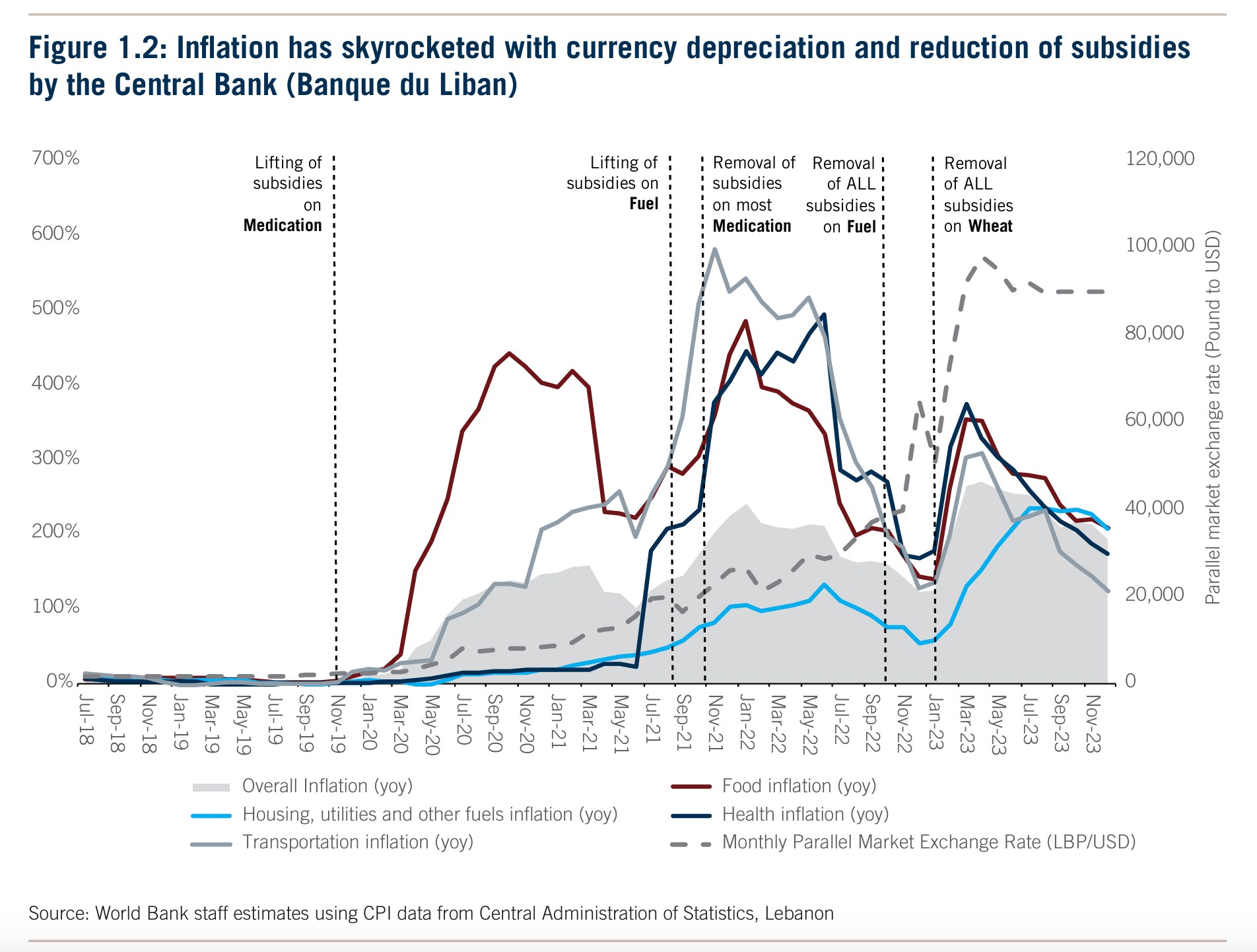

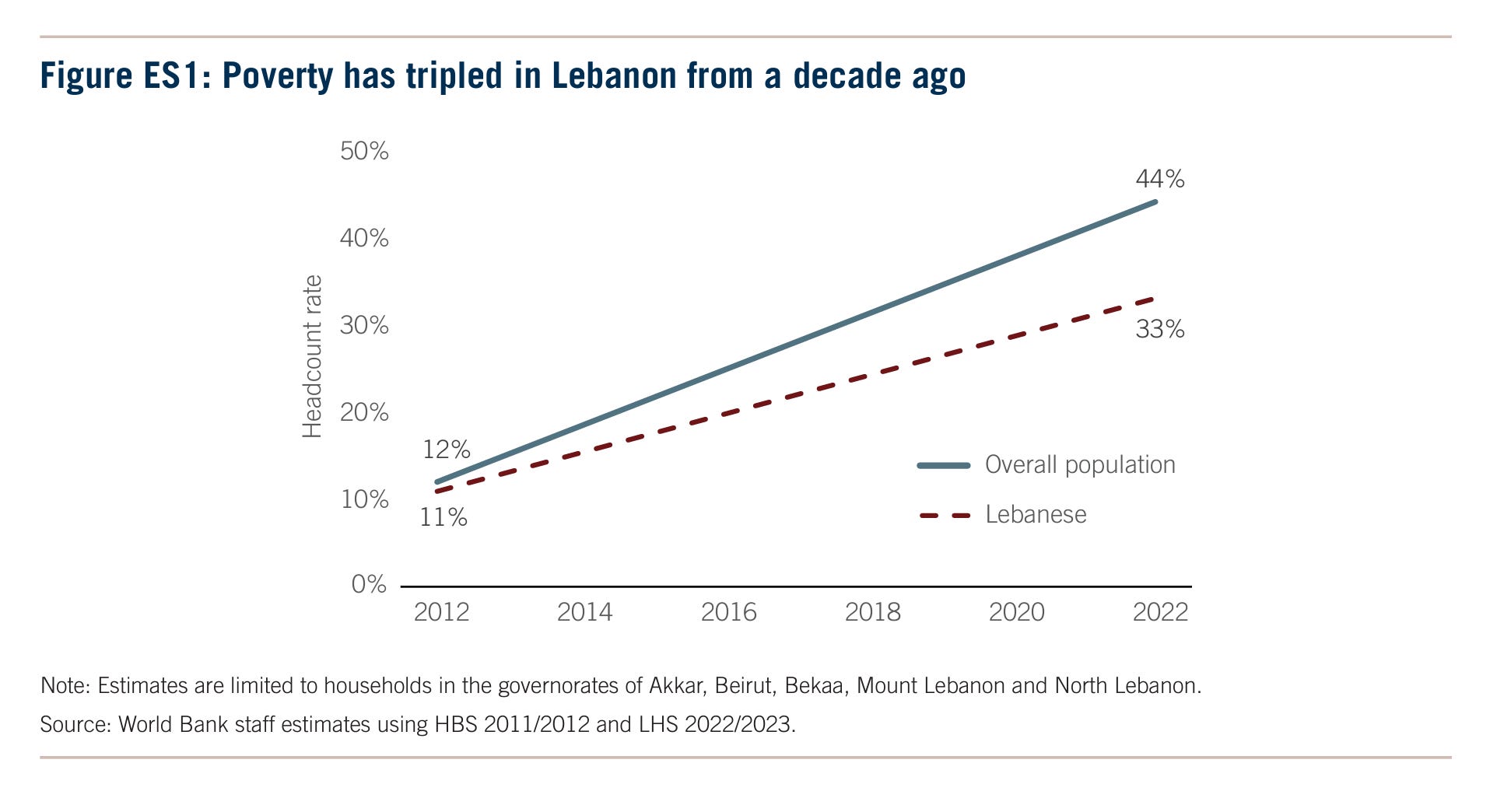
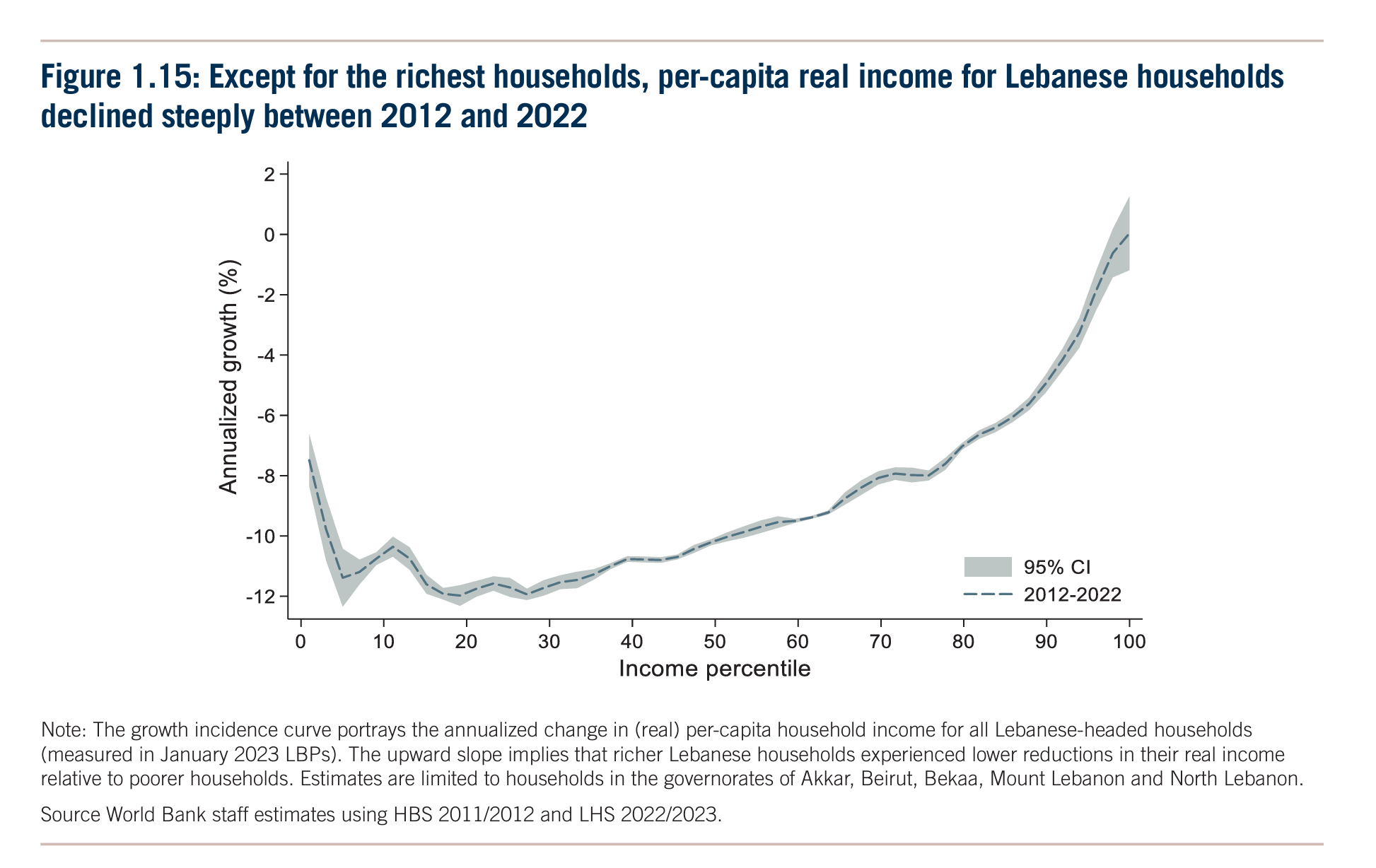
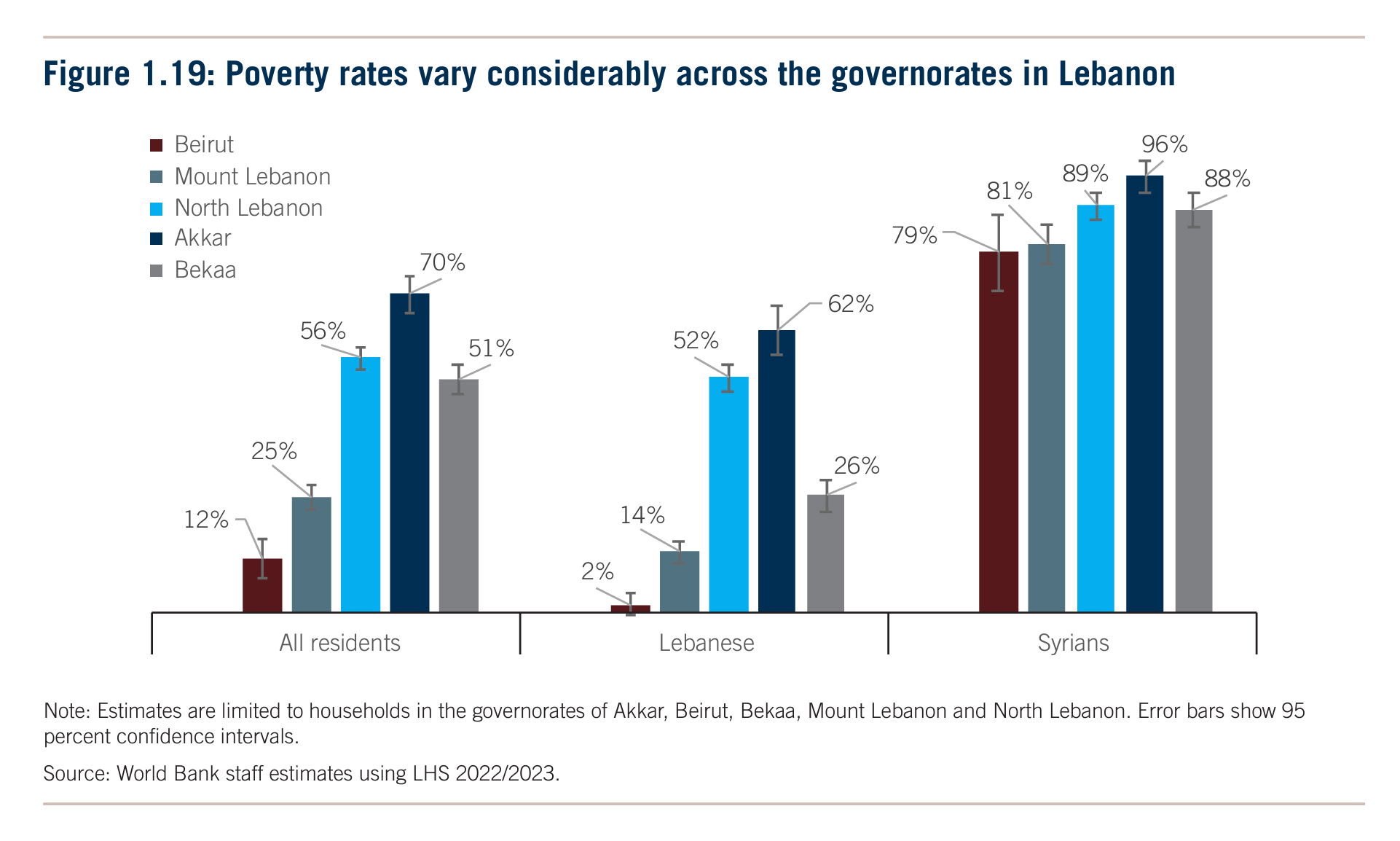





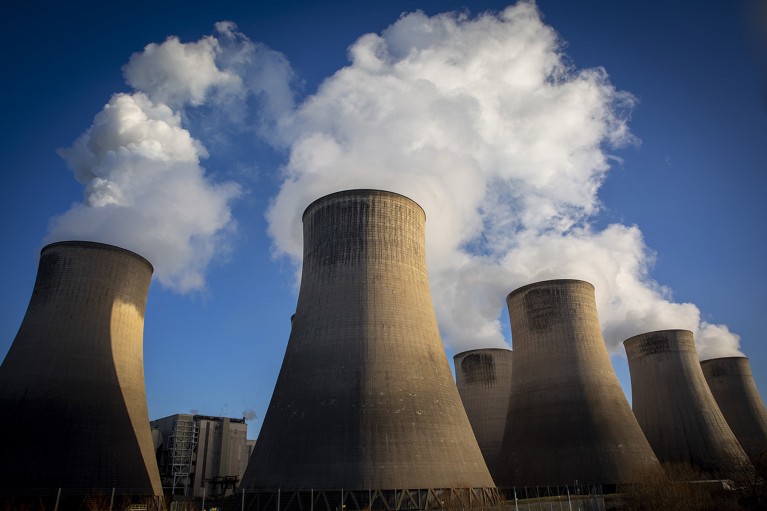
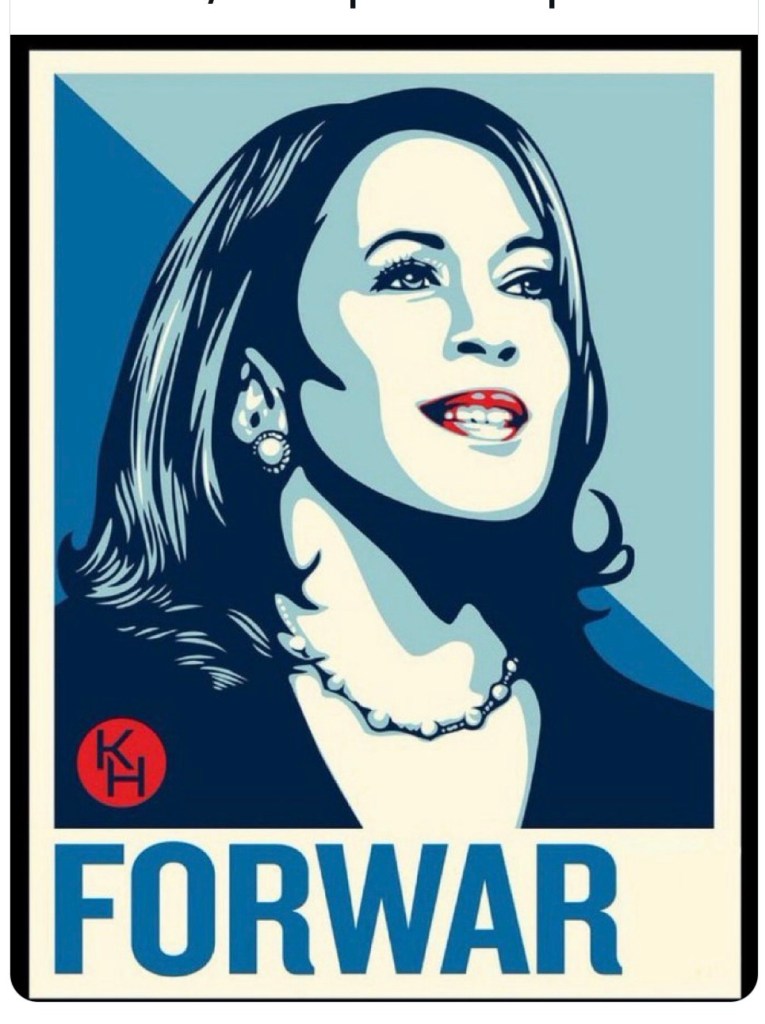
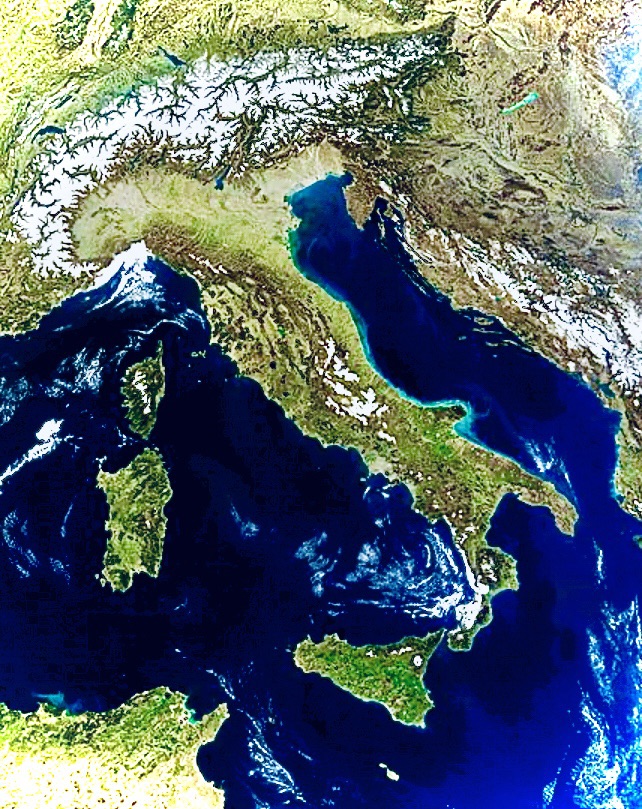
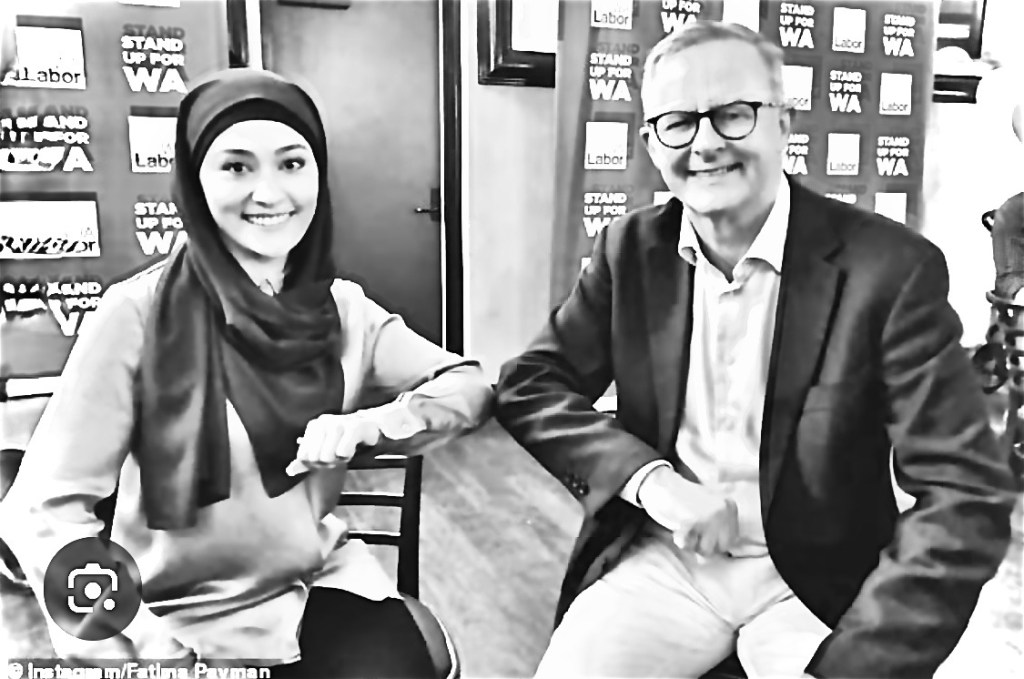

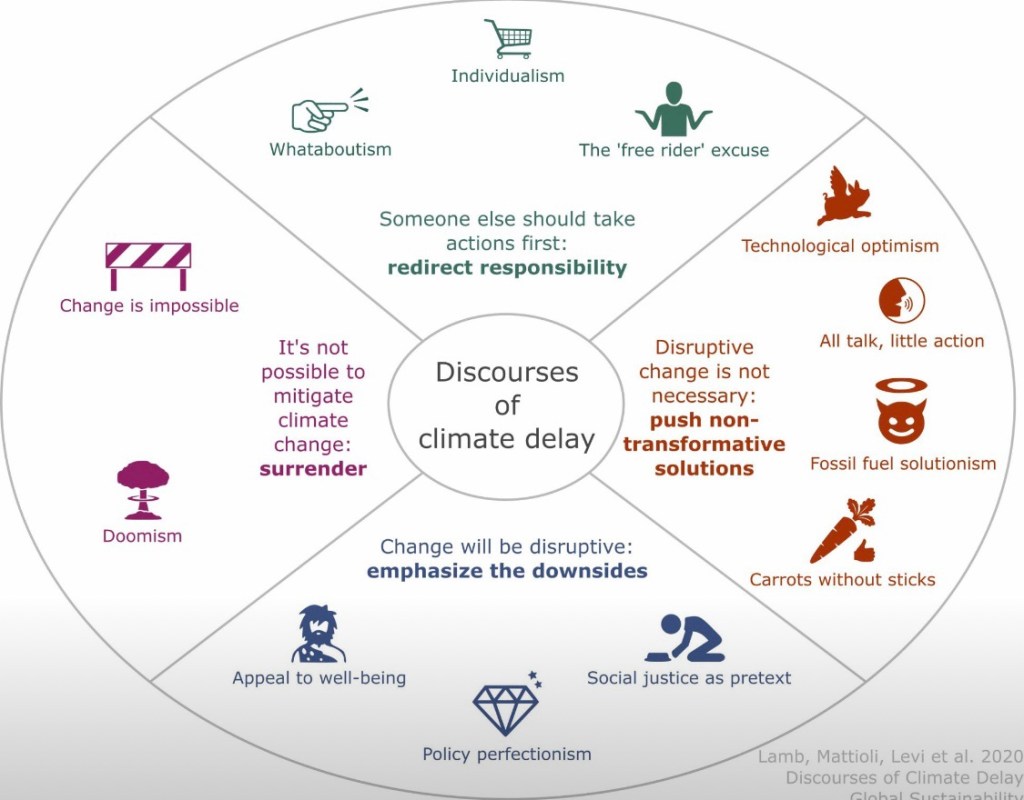




 Billionaire-🙈🙊🙉🐒s with Olivettis