Part-time independent journalist, Australian regenerative & organic farming pioneer 1988 until a total family & Labor Party/ CPSU fraud, lived in virtual exile 13 1/2 years, now part time commercial organic b/ d veg gardener central Adelaide Hills
You may copy or order a copy through Copies Direct or use the online copy for research or study; for other uses Contact us for further information about copying.Reason for copyright status:Creator Date of Death is Before 1955
Copyright status was determined using the following information:Material type:Literary, dramatic or musical workPresumed date of death of creator (latest date):1874Published status:PublishedPublication date:1859
Copyright status may not be correct if data in the record is incomplete or inaccurate. Other access conditions may also apply. For more information please see: Copyright in library collections.
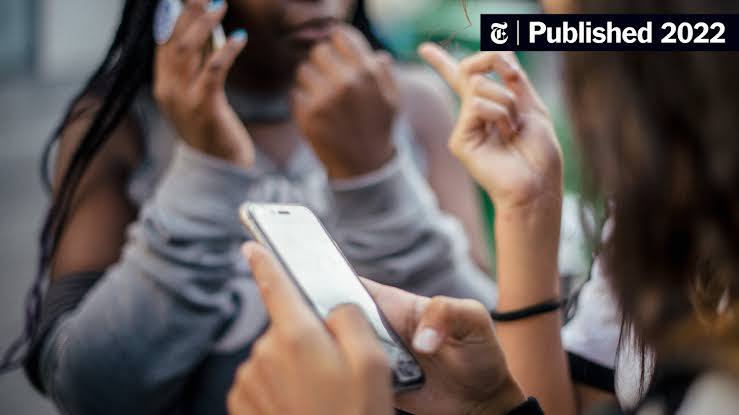
Children who use social media more often are likely to have lower cognitive function than their peers, a new US study has claimed.
The study, published in the JAMA network1 found children who increased their social media use between the ages of nine and 13 performed worse than their kids with less social media usage.
Thousands of kids were categorised into groups based on their social media usage, and then tasked with completing a range of memory, reading and vocabulary tests to chart whether social media usage impacted cognitive abilities.
For example, children with zero or low social media usage scored an average of 103.5 in an oral reading recognition test, whilst kids with low increasing usage and high increasing usage scored 99.4 and 96.7, respectively.
The study found social media usage remains low at the age of nine, but increases dramatically as kids turn 12 years old and enter high school.
“This analysis found that both low and high increases in social media use throughout early adolescence were significantly associated with lower performance in specific aspects of cognitive function,” the authors of the study wrote.
“The finding that even low levels of early adolescent social media exposure were linked to poorer cognitive performance may suggest support for stricter age restrictions.”
The findings come as Australia prepares to implement its world-first social media ban on children under the age of 16.
Communications Minister Anika Wells fronted media today to launch an advertising campaign ahead of the ban being enforced from December 10.
Wells claimed it was important for kids impacted by the ban to watch the campaign to get a greater understanding as to why it is going ahead.
Information Shall Be Free
..as Community Economist Publications Worldwide wrote and published in 1996 to the best of my recall (all business, technical and academic papers together with at least 400 titles, including several of my maternal grandfather Alexander Charles Lancaster Sanders, economist & humanities student and pioneer South Australian with his wife frmrly T Millie Swan on behalf of the Methodist Church’s books were stolen from the Blundell Orchards office and library at Lindner Ave Ashton SA 5137 effectively 17th April 1998, which marked the last occasion i was to so much as see my freehold home and approx 3.2k tree gardens for 14 years.
As now a ‘full-time’ economist, neurocognitive health, (ma2) thematics logic & internet reformer who (as the reader might be very well advised to read and gather from thisdocument) is concerned to undertake the immediate marked post neoclassical academic ‘scholarship’ reform of the some 25,000 universities on Earth with the obvious attendant changes of attitude & practice at every stage of the education of the child and young person beginning essentially with the discarding of ludicrous & nonsensical pedagogic Silicon Valley USA supply-side gamegirl, gameboy or @Google & @Wikipedia OR ANY OTHER EXISTING GATES-JOBS ERA APP Search garbage-in-garbage-out figurative “knuckle-drag & chest-beat” power-over relations woman-splaining & mansplaining where there is not even consultation let alone listening out of basic and fundamentally non-coercive non humiliating and non mental-illness inducing (literally maddening) respect for 12 to 17 year-olds’ “demand-side” – uses, processes, learning, healing, growth and mental development (socially healthy maturation).
John Blundell
South Australia
1AI Overview
A study published in JAMA Network found that children who significantly increased their social media use between the ages of nine and 13 generally performed worse academically compared to those who used social media less, suggesting a potential negative correlation between increased social media usage during this developmental period and academic performance.
Key points about the study:
Focus on age group: The study specifically looked at children between the ages of nine and 13, a crucial period for social and academic development.
Increased social media use: The study found that children who increased their social media usage over time showed a decline in academic performance compared to those who did not increase their use as much.
Potential negative impact: The findings suggest that excessive social media use during this developmental stage may negatively impact academic outcomes.
Important considerations:
Correlation not causation: While the study shows an association between increased social media use and lower academic performance, it does not prove a direct causal relationship. Other factors could be contributing to the observed trend.
Individual differences: Not all children will experience negative effects from social media use, as individual responses can vary depending on personality and usage patterns.
Adolescent screen use and mental health – Black Dog Institute* More frequent use of social media. * to interact with people known in. * real life is linked with lower levels. * of depression…Black Dog Institute
Social Media and Mental Health in Children and TeensThe advisory indicates that frequent social media use could be associated with changes in parts of the brain related to emotions a…Johns Hopkins Medicine
Social Media and Youth Mental Health – NCBIMore research is needed to fully understand the impact of social media; however, the current body of evidence indicates that while…National Institutes of Health (NIH) | (.gov)
Dangerous effects of social media and smartphones on Aussie kids5 days ago — The report showed social media in particular fuels daily stress, with almost a third of Gen Z reporting negative impacts…News.com.au
ℐ DECIDED TO SPEAK TO MY FATHER. Not because we were particularly close. My father was undemonstrative, and could neither share his feelings with his children, nor deal with the feelings we had for him. For a long time [i] believed there must be a wealth of undiscovered treasure behind that uncommunicative manner, but later [i] wondered if there was anything behind it at all. Perhaps he had been full of emotions as a boy or a young man, and by giving them no outlet had allowed them over the years to wither and die.
But it was because of the distance between us that [i] sought him out now. I wanted to talk to the philosopher who had written about Kant and Hegel, and who had, [i] knew, occupied himself with moral issues. He should be well positioned to explore my problem in the abstract, and, unlike my friends, to avoid getting trapped in the inadequacies of my examples.
When we children wanted to speak to our father, he gave us appointments just like his students. He worked at home and only went to the university to give lectures and seminars. Colleagues and students who wished to speak to him came to see him at home. I remember queues of students leaning against the wall in the corridor and waiting their turn, some reading, some looking at the views of cities hanging in the corridor, others staring into space, all of them silent except for an embarrassed greeting when we children went down the corridor and said hello. We ourselves didn’t have to wait in the hall when our father had made an appointment with us. But we too had to be at his door at the appointed time and knock to be admitted.
I knew two of my father’s studies. The windows in the first one, in which Hanna had run her fingers along the books, looked out onto the streets and houses. The windows in the second looked out along the plain over the Rhine. [The house we moved to in the early 1960s, and where my parents stayed after we had grown up, was on a big hill above the city. In both places the window did not open the room to the world beyond, but framed and hung the world in it like a picture. My father’s study was a capsule in which books, paper, thoughts, and pipe and cigar smoke had created their own force field, different from that of the outside world.]
My father allowed me to present my problem in its abstract form and with my examples. ‘It has to do with the trial, doesn’t it?’ But he shook his head to show that he didn’t expect an answer, or want to press me or hear anything that [i] wasn’t ready to tell him of my own accord. Then he sat, head to one side, hands gripping the arms of his chair, and thought. He didn’t look at me. I studied him, his grey hair, his face, carelessly shaven as always, the deep lines between his eyes and from his nostrils to the corners of his mouth. I waited.
[When he answered he went all the way back to first principles. He instructed me about the individual, about freedom and dignity, about the human being as subject and the fact that no one may turn him into an object. Don’t you remember how furious you would get as a little boy when Mama knew best what was good for you? Even how far one can act like this with children is a real problem. It is a philosophical problem, but philosophy does not concern itself with children. It leaves them to pedagogy, where they’re not in very good hands. Philosophy has forgotten about children.’ He smiled at me. ‘Forgotten them forever, not just sometimes, the way I forget about you.‘
[‘But…‘
[‘But with adults i unfortunately see no justification for setting other people’s views of what is good for them above their own ideas of what is good for themselves.‘
[‘Not even if they themselves would be happy about it later?‘
[He shook his head. ‘We’re not talking about happiness, we’re talking about dignity and freedom. Even as a little boy, you knew the difference. It was no comfort to you that your mother was always right.’]
Today [i] like thinking back on that conversation with my father. I had forgotten about it until after his death, when [i] began to search the depths of my memory for happy encounters and shared activities and experiences with him. When [i] found it, I was both amazed and delighted. [At the time [i] was confused by my father’s mixing of abstraction and concreteness. But eventually [i] sorted out what he had said to mean that [i] did not have to speak to the judge, that indeed [i] had no right to speak to him, and was relieved.
[My father saw my relief. ‘So do you like philosophy?’
‘Well, [i] didn’t know if one had to act in the circumstances [i] described, and [i] wasn’t really happy with the idea that one must, and if one really isn’t allowed to do anything at all, [i] find that…’ I didn’t know what to say. A relief. A comfort? Appealing? That didn’t sound like morality and responsibility. ‘I think that’s good’ would have sounded moral and responsible, but [i] couldn’t say [i] thought it was good, that [i] thought it was any more than a relief.]
‘Appealing?’my father suggested.
I nodded and shrugged my shoulders.
[‘No, your problem has no appealing solution. Of course one must act if the situation as you describe it is one of accrued or inherited responsibility. If one knows what is good for another person who in turn is blind to it, then one must try to open his eyes. One has to leave him the last word, but one must talk to him – to him and not to someone behind his back.’]
Talk to Hanna? What would I say to her? That I had seen through her lifelong lie? That she was in the process of sacrificing her whole life to this silly lie? That the lie wasn’t worth the sacrifice? That that was why she should fight not to remain in prison any longer than she had to, because there was so much she could still do with her life afterwards. Could i deprive her of her lifelong lie, without opening some vision of the future to her? I had no idea what that might be, nor did [i] know how to face her and say anything at all. I didn’t know how to face her.
I asked my father: ‘And what if you can’t talk to him?’
He looked at me doubtfully, and i knew that that question was beside the point. There was nothing more to moralise about. I just had to make a decision.
[‘I haven’t been able to help you.’ My father stood up and so did [i]. ‘No, you don’t have to go, it’s just that my back hurts.’ He stood bent over, with his hands pressed against his kidneys. ‘I can’t say I’m sorry I can’t help you. As a philosopher, I mean, which is how you were addressing me. As your father, I find the experience of not being able to help you almost unbearable.’]
I waited, but he didn’t say anything else. I though he was making it easy on himself: I knew when he could have taken care of us more and how he could have helped us more. then [i] thought that perhaps he realised this himself and found it really difficult to bear. But either way [i] had nothing to say to him. I was embarrassed, and had the feeling he was embarrassed too.
‘Well then..’
‘You can come any time.’ My father looked at me.
I didn’t believe him, and nodded.
“For generations to come, people will be reading and marvelling over Bernhard Schlink’s The Reader” a Random House property 1997 Great Britain/ cover page blurb from the https://www.standard.co.uk/
John
Kangaroos, meat pies, dead Kennedys, dead Hearsts, dead ex church school ruling class neofascist thugs, liberte egalite fraternite merchandise, turgid country music and no coastal fishery you what… .
With manifold – well, hang on a tick let’s just keep it to the quadratic youknee-versal four OK - thanks to Bernhard Schlink
I beg of you all to carefully examine the last section of this report from the @Wikipedia Druids Collective of Nottingham, address 1 Montgomery St., Suite 1600, San Francisco, CA 94104, U.S.A.¹
John Blundell
Internet & University Reform
Quantum-relations Thematics Logic
The Human Project
Australia
Old Sock-crates on Fire Again circa 455 BCE
BARBARA ARROWSMITH YOUNG
..Canadian author, entrepreneur and lecturer. She is the founder of the Arrowsmith School in Toronto and the controversial Arrowsmith Program which forms the basis of the school’s teaching method. In 2012 she published The Woman Who Changed Her Brain which combines an autobiographical account of her own severe learning disabilities and the method she developed to overcome them with case studies of learning disabled children who she claims overcame similar problems by using her method.
Arrowsmith Young was born in Toronto on November 28, 1951, to Jack and Barbara Young. Her father was an electrical engineer who worked for Canadian General Electric. Her mother was a teacher. As a child she had exceptional visual and auditory memory, but it was coupled with several severe deficits in other areas, including dyslexia, dyscalculia, and problems with spatial reasoning, logic, and kinesthetic perception. With the help of her mother she eventually achieved basic literacy and numeracy. However, she struggled throughout elementary and high school.
Despite her learning difficulties, she graduated with a B.A.Sc in child studies from the University of Guelphin 1974. After graduating she worked for two years as the head teacher of the university’s laboratory preschool before embarking on a master’s degree in applied psychology at the University of Toronto’s Ontario Institute for Studies in Education (OISE). She completed her Masters dissertation, A follow up study of a clinical sample, in 1982.[4] It examined the progress of 62 students who had been previously assessed as learning disabled at the OISE’s education clinic.
In 1977 she had met Joshua Cohen, a PhD student at OISE who also had learning disabilities and ran a small clinic for learning disabled children. Cohen introduced her to the work of Alexander Luria. According to Arrowsmith Young, Luria’s 1971 book The Man with the Shattered World which documented the recovery under his treatment of the brain-injured soldier Lev Zasetsky was profoundly influential on her, as was the work of Mark Rosenzweig on neuroplasticity. Using the ideas of Luria and Rosenzweig, she began developing a series of exercises in 1978 which she states finally helped to overcome her learning disabilities.
Arrowsmith Young and Cohen married in 1980 and opened the Arrowswmith School for learning disabled children in Toronto that same year. Its curriculum was based on the exercises which Arrowsmith Young had developed for herself and which came to be known as the Arrowsmith Program. She named the school after her paternal grandmother (born Louie May Arrowsmith in 1883), who as a young girl had been one of the pioneer settlers of Creston, British Columbia. The Toronto school gradually expanded and in 1991 she and Cohen opened a second school in Brooklyn, New York. The Toronto branch was wound down and closed. However, the New York school folded a few years later, and in 1994, Arrowsmith Young and Cohen’s marriage ended. She returned to Toronto and re-opened the original school. Cohen remained in New York and died there in 2000.
The Arrowsmith Program
The re-opened Arrowsmith School in Toronto attracted increasing numbers of students and eventually opened other branches. The Arrowsmith Program was also franchised to other private schools and in some public ones as well. In 2012 she published The Woman Who Changed Her Brain, an autobiographical account of how she overcame her own severe learning disabilities combined with 30 case studies of learning disabled children who she says overcame similar problems by using her method.[8][9]
Additionally, other experts, including clinical psychologist and neuropsychologist Tim Hannan, speech pathologists Alison Clarke and Caroline Bowen, and at least one human rights tribunal have made similar concerns, citing lack of evidence and improper tests on the program. Clarke even argues the program to be based on pseudoscientific methodology.
Robert Shepard, a clinical psychologist with 25 years of private practice, forensic and family health team experience, as well as a critic of Norman Doidge and his work, makes a ten-point argument against the Arrowsmith Program. Explaining each point in short essay format, he argues that these are essential to marketing a product when no evidence exists that it actually works.
Our More than Half-destroyed Society & Habitat’s actual Entrepreneurs
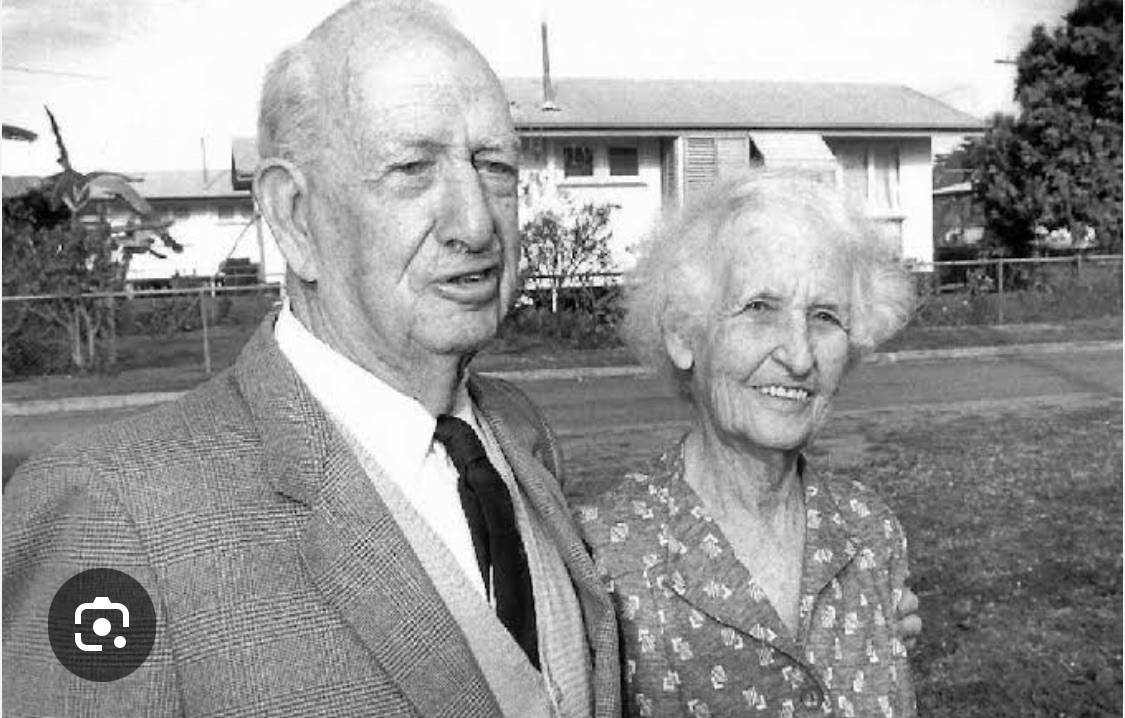
Long-serving Mayor Rex Pilbeam & he’s wife at Rockhampton
Ch⑤ The Case
“Senior Inspector Pierce is a widower, aged thirty-nine, with two small boys.. and has two full-time assistants. One of them, following on a petition to the Department from local women’s groups, is a woman.”
Ch ⑱ in full
“Now that the number of victims has reached the magic figure of a century there are seven identikit pictures, and the strange thing is that they are no longer the cliches of three months ago; each of them has now developed a distinctive character. What we are faced with, it seems, is seven prowlers, all working in the same strictly defined area and using the same methods.
“This surely is too much of a coincidence. The work of a prowler begins to look like the cooperative efforts of a gang; except of course that by their very nature these crimes are private and solitary. Or perhaps a club has been formed to act out the assaults as they have been described in the newspaper. A bizarre notion! Who would devise such an entertainment and why? Still, imitators there are, and more than one of them. Of this the police have no doubt.
“And how does the prowler himself feel about this, the original prowler, I mean, the initiator, whose integrity consists in his commitment to his own crimes? How strange if his path should cross that of one of the others, if they should meet face to face over the body of a victim; or stranger still, if two of the false prowlers should meet, each just sufficientltly like the original to be recognizable but each seeing in the other enough that is different to make clear how much of themselves they have allowed to creep in, to what an extent they are no longer imitators of the prowler but significant variants. If two of the false prowlers were captured would there be enough in common between them for the real prowler to be identified? And supposing all seven to be taken, would it be clear which of them was real? All seven, as the police know, would lay claim to the first attack, might even create a prior one, in order not to be deprived of the rest. (Perhaps one might guess that the least insistent of them, assured of his authenticity, would be the true original.) This is clear from the large number of men who have already come forth and confessed to the crimes. Men of all ages and occupations, from a fifteen-year-old schoolboy to a retired ship-builder of seventy-seven: widowers, pensioners, young men newly married, metho-drinkers, known homosexuals – all desperate, it would seem, to have the prowler’s acts define them.
“Some of these men simply want to draw attention to themselves. Others have become obsessed with the assaults and long to be their perpetrator, to appropriate to themselves the daring, the fierce aura of sexuality they believe the prowler must be possessed of, his deepest sense of relief when, returning to his own house, he stands naked before the mirror and says ‘Yes, I am the prowler’, or, concealing his violence behind a front of patient domesticity, slips in quietly beside his wife.
“There are those among these men who genuinely believe they are the prowler. Faced under the glare of the arc-lamps with indisputable proof they are not, they break down and sob, they plead with Senior Detective Pierce to examine the evidence again, to find something, some small detail, that will convict them; they resist, they fight, they clutch at straws. Senior Detective Pierce finds these men pathetic. Of all the men in the suburb, they alone are above suspicion,since the one thing they lack (what else does their behaviour mean?) is the courage to commit the crime.
“As for the others, the self-confessed prowlers who know they are lying, Senior Detective Pierce has begun to dread their arrival, more even than a new victim. Each of them has a bad conscience. Confessing to the prowler’s crimes is a kind of diversion tactic. It is meant to save them from confessing to the real crime they have committed – or think they have committed. They are the men who are laden with guilt, who hope that punishment and conviction for one crime, even if it is not their own, will be sufficient and will relieve them of dread. the real crime, in some cases, is trivial, the anxiety is not. And it is the weight of all this secret guilt that Senior Detective Pierce finds so oppressive, since he cannot absolve the men of it, and could not, even if he were to extend to them the one thing in his dispensation, the recognition that the prowler’s crimes are theirs. Faces with the men’s despair when he declares them innocent, their deep sense of grievance, their sullen hostility, Senior Detective Pierce, on one or two occasions, has come close to breaking down. He has been trained to deal with crime – specific incidents – not with deep, unspecified guilt.
“Still, information about all these men is fed into the computer; thy become part of Senior Detective Pierce’s memory bank. Even if they did not commit the prowler’s crimes, they reflect them. Only when all the facts had been collated, and many things that are not facts as well, will some sort of pattern emerge.
“But when will that be? And what pattern?
“Senior Detective Pierce has come to believe, as the number of victims continues to rise and the identikit pictures top thirteen, that sooner or later the whole male and female population of the suburb will find its way into his files, every man a potential prowler, every female a victim. And then what?”
Hopping mentally from the content to the formatting (micro to macro, sure) i would be very grateful if you were all to make some note of the so-called classical textual communication layout used in this exquisite statement ( commas preceding ‘and,’ deft use of semi-colons and even an entire stand-alone 19 word sentence Per.. to ..nal. enclosed by brackets like an 3250 to 394 years Before-common-era 🇪🇬 cartouche – some whopper thematics logic SET that, hooowhheeee, but techically true & fine).
Read to learn live heal grow and improve, all that
My dedication-of-document is to Alex i knew at the Glenelg Surf Lifesaving Club
• John the busted fruitgrower, food value adder, one-time exporter, marketer & establisher with his late partner-in-marriage RM Joyner who was from SEQ of OG retail July 1993
• Reform of 25k universities: immediate overhaul of neoclassical academia
• Thematics-maths (2-5set series Quantum-relations) post Socratic Logic
• DESTROYING so-called AI & the vile Dalle 3, 4 &c
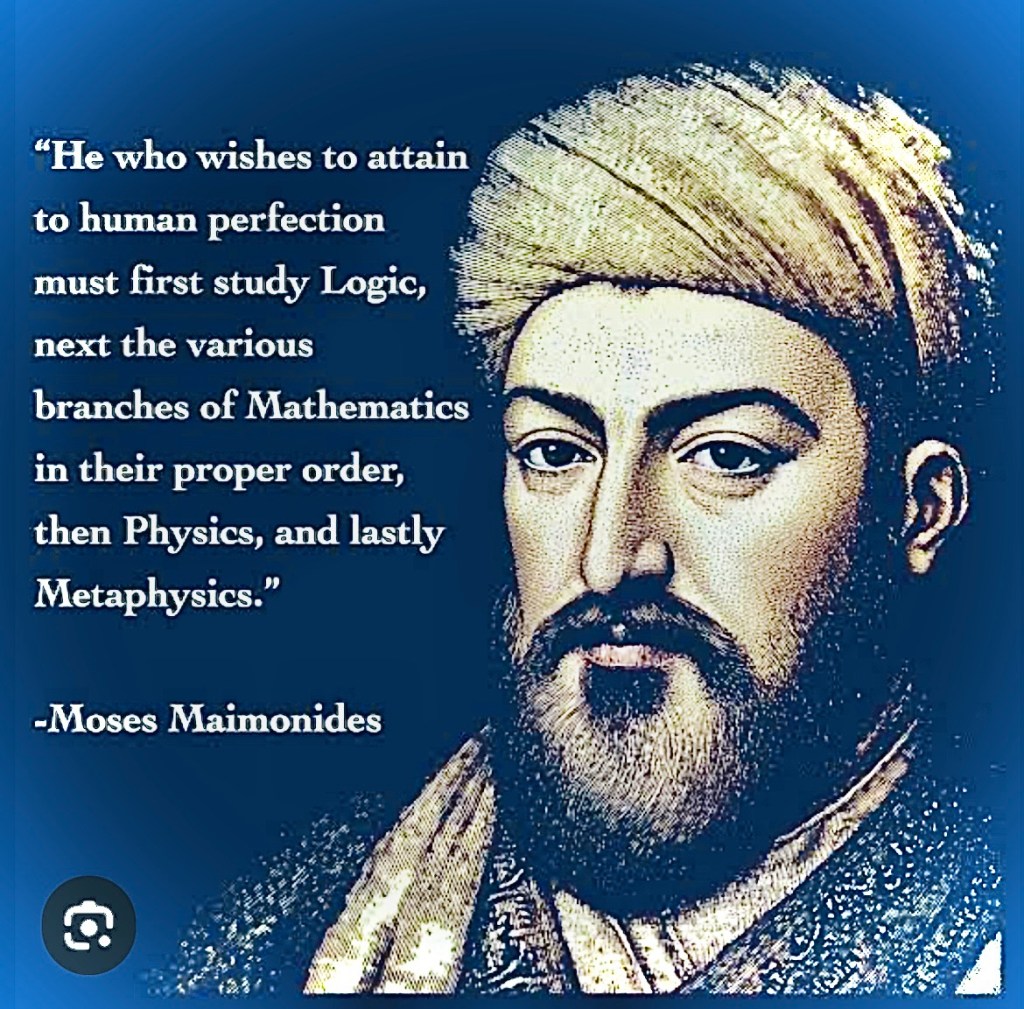
‘A Guide for the Perplexed’ Moses ben Maimon phlsphr & physcn to Saladin (KURDISH cmmndr & Sultan of Egypt & Syria who died 4/11/1193)
Bye their Works-projects ye shall know them aargghh Cap’n Hornblower would you mind awfully doing your share of the wiping up Dude.. like after your blowing number?
16 Ye shall know them by their fruits. Do men gather grapes of thorns, or figs of thistles?
17 Even so every good tree bringeth forth good fruit; but a corrupt tree bringeth forth evil fruit.
18 A good tree cannot bring forth evil fruit, neither can a corrupt tree bring forth good fruit.
19 Every tree that bringeth not forth good fruit is hewn down, and cast into the fire.
20 Wherefore by their fruits ye shall know them.
PERSONAL SURVEY which might LEAD YOU TO EXAMINE MAKE NOTE of how you operate in the psycho-cultural spiritual mental or commonly RCQS-side reflective, thoughtful, imaginative “ideas – not things” MACRO and micro lived experience domains..
~ in face to face relationships (in your own micro or community-level school, workplace, household or recreational domain) – technically called the Household- or truly Domestic-economy after Community Economist international faxed newsletter after October 1994
~ in the psycho-cultural spiritual or commonly RCQS-side reflective, thoughtful, imaginative “ideas – not things” MACRO mental domain or OTHER SIDE OF CONSCIOUSNESS Emily Ngwarrai of Utopia around 1991 called in Eastern Arrente “landguage” KUHTA-NGUHLU
Do you hold yourself interpersonally in adversarial or defensive relation to others
(i) Do you hold yourself interpersonally in non face 2 face, anonymous or virtual social RELATIONS where the other (party] is not known to you directly or personally in adversarial, defensive or basically suspicious or untrusting relation to THEM
(ii) How are your interpersonal RELATIONSHIPS with others affected by THEIR physical size or social skills in speech or writing (that is to imply how physically and socially or politically empowered these people are in relation to yourself)
NO NON no Monkeys and Green Ec DO NOT WANT your Survey responses emailed in. The notes you make are STRICTLY FOR YOUR FUTURE USE. GEA and ‘Billionaire Monkeys with MIT Olivetti Group Typewriters AUSTRALIA’ are as you may already know the LETHAL enemies of PROLIFERATING GREY ECONOMY & Organised-crime CRAZY-ARSED START-UP consumer information theft OR gleaning bandit business outfits to further grow the disgusting and literally DUMBING DOWN AND ECOCIDAL for Christ’s sake Alpha-ON-Alpha (20%+ per year) profits of $0.5t – 1.0t a YEAR gargantuan accountancy “houses,” investment 4 the already super-rich “behemoths” and advertising & public relations robber barons, megalomaniacs and hateful old people.
You’ve probably heard five life-times worth of Socratic gadfly (pesky to Athenian horses rebellion, early 20th century ‘Young Turks’ ( the Armenian genocide and attempted Kurdish one ongoing – with Israel, Syria & Iran) and undergraduate revolutionary shouties with NO economics and an abiding hatred of Karl Marx’s dreaded Yoeman Farmers – Jeremy Clarkson I mean I askew, er Asquith, er arks-you Noahꜝ, I mean these are only words an’ words are all I have to ‘steal your heart away ‘for vivisectional and let’s face it Sweetheart, Organ-harvesting purposes BUT YOU TAKE CHARGE NOW & do the work !
If you don’t feel good about your new read-outs in week 2 through say the 3 month mark i won’t only feel disappointed but DEEPLY personally hurt because humanity – ALL OF IT – has no time to fool around or whistle Dixie BECAUSE it is losing the lot fast.
John BLUNDELL
~ the now obviously not-so-sucker who officially polled Two-party preferredᵛ 46% against a provincial @LiberalAus wonderful ‘Democracy-sausage ABC’ pluralist* ‘SA Police Bikies Government-blackfellas and Brothel-keepers’ gentleman on 20th May 1992
~ 2 – 5 set series quantum relations thematics logic neurocognitive health learning healing and psycho-spiritual mental growth and maturation special topics 12-17s, 18-25s, 26-35s & 36-45 (HEY it’s all workin’ OK – and the money)’s
~ Reform of 25k universities
~ With any luck the 2025 Nobel Prize for Physics
ꜝ the quadratic is squared off in your proverbial Four-cornered Newtonian-though-with-perturbations symmetrical youkneeverse by the straight man or woman’s (iv) Ask-you OK? ꜝ
ꜝ⁺¹ I was thinking an unscaled incommensurable macro note to soften and romanticise the preceding 4 part harmony/ clangour of the boring old mechanomorphic micro symbol-shuffle that ‘SS3’ – 4 sets & 3 conjunctors – but it’s slipped my mind yeah.. it will probably turn up on my @XComms in an hour or two.. you know me and i like you too
ᵛ young people that’s 2PP vote-counting if you’re really bored silly, or have an assignment, Willy, you could @Google “it” – though Pahpa can tell you quickly it’s counting the TWOs (or 3’s if “it’s” still tied up) to add to Candidate 1 and to C2’s primary vote tally
*you may have to look Pluralism up – along with ‘incrementalist,’ ‘meliorist,’ ‘gradualism’ + the mathematics term Lowest-common-denominator*⁺¹ (= how to destroy entire societies with 1948 Oxford Union debating club abstruse irrelevant inapposite non-germane Socratic neoclassical academic conversational compromise) and a swag of really quite interesting 1920s – ’60s liberal democratic political studies terms
*⁺¹NOT Liquid Crystal Display, you doughty Year 8 kids: just keep workin’ OK
“The Food Forest is a 15 hectare property in Gawler where we grow over 160 varieties of fruit, nuts, grains, vegetables and timber.”
Community planting day on the Gawler River, new Northern Parklands (1000 hectares), Nature Festival, lowline sheep, Gawler’s diprotodon and more…View this email in your browser
Food Forest News: September 2025
Welcome to our newsletter, published about 4 times per year. You can subscribe via a signup box at the bottom of each page of our website.
Community Planting Day on the Gawler River
Landholders along the Gawler River and volunteers attended a fantastic planting day on August 16th, planting over 700 native tubestock on the north bank of the River to extend one of its most significant revegetation precincts.
It was a super-efficient team and we were able to do replanting of some tubestock that failed to make it through SA’s most severe one-year drought ever recorded. We were entertained by Sulphur Crested Cockatoos and Kookaburras who are nesting in the area.
Adelaide’s Northern Parklands
A bill will soon be presented in State Parliament to form new parklands for Adelaide, occupying over 1000 hectares.
It will incorporate the Gawler River corridor, a major multi-sport precinct, walking and cycling trails and many other recreational spaces as well as restoring our river. Planning will occupy the next year and practical on-ground works are programmed to commence by 2028. The Food Forest will effectively be within the parklands.
Nature Festival on the Gawler River
Nature Festival supports events along the Gawler River.
A range of events for the public, schools and youth will introduce the ecology, history and food of the river during Nature Festival from 26th Sept – 12th Oct. Two local primary schools will continue their exploration, recording and impressions of the river through ‘Artists in residence’ activities, with Adelaide based visual artist Laura Wills, creating beautiful artworks in many media. Meanwhile a youth workshop has constructed a model of a prehistoric creature called a Diprotodon that roamed the riverbanks 30 thousand years ago.
Three public walk and talk events will uncover the mysteries of the Catchment, its culture and history, biodiversity, art and food, and organic growing and permaculture design in action.
See all the details at the end of this newsletter.
Lowline Sheep set for orchards, vineyards, solar farms and the dinner table
The comprehensive break in SA’s record drought enabled a lightning-fast sowing of barley and medic and we have allowed the crop/pasture to establish well before grazing. We thank RuralAid for providing two large bales of cereal hay which combined with feed-grade organic grain from Tarlee to help the 10-month old ram lambs pictured above (and their cohort) to attain terrific growth.
It was a stretch to hand-feed the breeding flock and we thank those who bought the meat from the previous year’s wethers, and gave us wonderful feedback (as well as reducing feed bills)!
We expect the meat from 1 year-old lambs this year will be a higher price (to pay for feed). Let us know if you are interested in some sustainable lamb. This year’s lambing will be in Sept-Oct and we are hoping for lots of little ewes, to expand the breed.
Shelter in a changing climate
An icy blast of weather reached SA from Antarctica on 30 Aug and tested the design of our ‘trellis-release’ orchard which catches hail and, when the load is sufficiently heavy, the bungee straps spring apart and dump it along the inter-row, so avoiding and damage to fruit or flowers. The structure is strong enough to also be used as a trellis that can support >8 tonnes of fruit.
The trees are trained to a ‘Palmette’ form which makes picking, pruning and spraying quick and convenient.
Now entering their second or third cropping year, the trees have done well in an environment that shelters them from birds, excessive radiation, frost, wind and livestock as well as increasing humidity in summer.
Gawler’s diprotodon
Large herds of these mighty marsupials, each weighing over 2.5 tonnes, roamed Australia in the Pleistocene, and when Thomas Molan was digging at his cottage in Gawler, near the South Para River (in 1891) his shovel struck an old bone.
It was part of a skeleton, identified as a Diprotodon by a palaeontologist Walter Howchin, who happened to be lecturing in Gawler town! The herbivore was the largest of Australia’s marsupial megafauna and became extinct some 25 thousand years ago. Interestingly, the Diprotodon had already lived for some 25 thousand years during human occupation of Australia, suggesting that a strong relationship probably existed between it and early aboriginal people, in a similar way as native creatures have been adopted as totems in more modern Aboriginal society.
Incidentally the first owner of The Food Forest site, John Ragless (who built our homestead in 1840), also owned the property at Lake Callabonna, in SA’s North, where a herd of some 400 diprotodons had become stuck in the drying lake and perished during the Pleistocene era, creating one of Australia’s most amazing fossil beds.
Upcoming events for Nature Festival on the Gawler River – details and bookings
Attend a range of public events along the River to understand its fascinating prehistory, culture, geology and wildlife. See River images created by people of its catchment and enjoy its food. Get involved!
Experience a free guided walk in Gawler along a section of the River to view the ephemeral artworks of Rivers Meeting, a socially engaged art and environment project. The artworks are created by students from Gawler and Hewett Primary Schools & the local community, under the creative guidance of Adelaide based visual artist Laura Wills and indigenous interpreter and artist Violet Buckskin.
Meet one of the ancient megafauna that once roamed these lands, a Diprotodon, which was created by Gawler Youth for this event. It now returns through art and storytelling.
Hear stories of the River from artists, writers, environmental educators and historians.
2. ‘Food River’ talk, walk and taste of the Catchment Saturday Oct 11, 10.30am-2.30pm
Food River is part of the Rivers Meeting project at The Food Forest, a 15 hectare permaculture property 6km down-stream from the town of Gawler, with the River FLOWING along its northern boundary.
Through a series of First Nations engagements, school and community workshops, environmental and creative research, collaborative artworks have been made under creative guidance of Laura Wills, sharing the river’s stories. Art works from the Rivers Meeting project will be displayed along the river.
This special event also includes a ‘tasting experience’ and guided walk along this section of the river where you can engage with the local environment. Listen to the sounds of the wind in the trees, the flow of water, the calls of birds. View the artworks, taste something from nature and hear stories of the water as it flows to the coast at the International Bird Sanctuary.
Chef Kane Pollard, award-winning food magician and owner of Topiary and PLACE, and Food Curator of Tasting Australia will celebrate the 3 main stages of the River; the Hills, the Plains and the Coast. Canapes will be created to capture the essence of these stages as guests stroll the riverside, followed by a lunch dish highlighting the organic produce of The Food Forest.
3. ‘Food grown with Nature’ – a river and farm walk Sunday Oct 12, 10am-1pm
Join us for a diverse experience as an organic farm meets a wild river. This guided tour takes you along a stretch of the Gawler River (Kadlitiparri), that flows along the northern edge of The Food Forest permaculture farm, cutting its way through the Adelaide Plains creating cliffs, flooded flats, red gum forests and waterholes on its journey to the coast at the Adelaide International Bird Sanctuary.
You’ll learn about the biodiversity borne by water in our dry environment as well as the human history of land-use along the river.
You may well see the web-footed Rakali, bearded dragons, dragon flies, sacred kingfishers, tiny wrens, or different birds of prey; perhaps even a turtle.
The farm walk will take you through The Food Forest’s organic vegetable gardens, vineyards and orchards and demonstrates the integration of chickens, geese and mini-sheep to control weed and pasture growth in the orchards.
You will also be able to view passive solar-designed buildings, some of which are constructed with strawbales.
Republished by courtesy Crashing Billionaire 🙊🙊🙊🙊s with @OlivettiGp @MIT Typewriters that spout vile AND socio-economically useless disempowering & ultimately humiliating audio-visual and textual pfaff
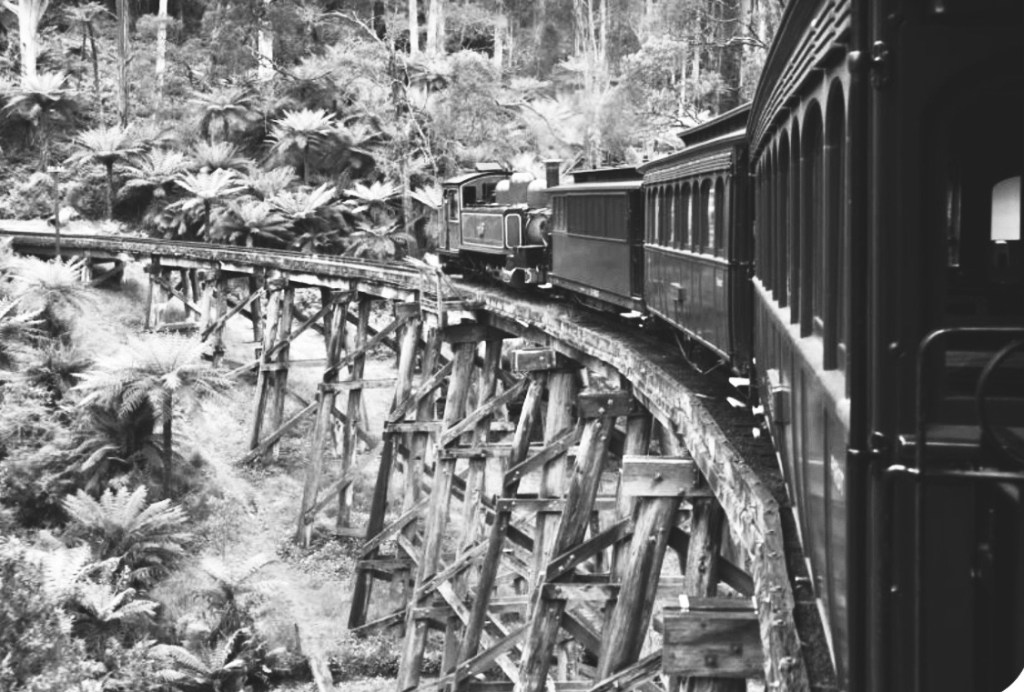
Temper democratic, bias Australian – Den circa 1910, Dandenongs.
Joshua fit the battle around Jericho Around Jericho around Jericho Joshua fit the battle around Jericho And the walls come tumblin’ down
God knows that Joshua fit the battle around Jericho, Jericho, around Jericho Joshua fit the battle around Jericho And the walls come tumblin’ down
Good morning sister Mary Good morning brother John Well I wanna stop and talk with you Wanna tell you how I come along
I know you’ve heard about Joshua He was the son of Nun He never stopped his work until Until the work was done
God knows that Joshua fit the battle around Jericho, Jericho, Jericho Joshua fit the battle around Jericho And the walls come tumblin’ down
You may talk about your men of Gideon You may brag about your men of Saul There’s none like good old Joshua At the battle of Jericho
Up to the walls of Jericho He marched with spear in hand “Go blow them ram horns”, Joshua cried “‘Cause the battle is in my hands”
God knows that Joshua fit the battle around Jericho, Jericho, Jericho Joshua fit the battle around Jericho And the walls come tumbling down
You may talk about your men of Gideon You may brag about your king of Saul There’s none like Joshua At the battle of Jericho
They tell me, great God that Joshua’s spear Was well nigh twelve feet long And upon his hip was a double edged sword And his mouth was a gospel horn
Yet bold and brave he stood Salvation in his hand “Go blow them ram horns”, Joshua cried “‘Cause the devil can’t do you no harm”
God knows that Joshua fit the battle around Jericho, Jericho Jericho Joshua fit the battle around Jericho And the walls come tumblin’ down
Then up to the walls of Jericho He marched with spear in hand “Go blow them ram horns”, Joshua cried “‘Cause the battle is in my hands”
Then the lamb ram sheep horns began to blow The trumpets began to sound Old Joshua shouted, “Glory” And the walls come tumblin’ down
God knows that Joshua fit the battle around Jericho, Jericho Jericho Joshua fit the battle around Jericho And the walls came tumblin’ Down, down, down, down, down, tumbling down
Whenever I see these numbers my mind reels: The Entire globalization shock to the United States is an increase in imports as a share of GDP from 5 percent (!!!!) in 1970 to 15 percent today.
The key number is something known as the Armington elasticity. This asks the question, what happens to the relative demand for imports compared with domestic goods when the price of imports rises? Specifically, if import prices rise by one percent, by how many percent does the relative demand for imports fall? There have been many, many, many attempts to estimate the Armington elasticity. One recent survey found 3,524 reported estimates. The average, which is also the number many estimates seem to cluster around, is about 3. So what do I get if I assume an 18 percent tariff rate and an Armington elasticity of 3? In 2024 U.S. imports of goods were 11.2 percent of GDP. By my estimate, Trump’s tariffs will reduce this to 7.1 percent. That’s a 36 percent decline, roughly comparable to the 40 percent decline in the import share that took place between 1929 and 1932, although the story behind that decline was very different.
The Aug. 1 deadline has come and gone, and Donald Trump hasn’t made any trade deals. What some gullible reports call “deals” are at best “frameworks” in which other countries have suggested — without signing anything — that they’ll do things that might help the U.S. economy. For the most part even these understandings are vaporware. For example, the European Union…
As Robert Rotberg has written, sub-Saharan Africa is “experiencing the most rapid population increases anywhere, ever”, such that “half of all the babies born on the planet between now and 2050” will be delivered in the region. African women begin having babies, on average, in their early 20s, meaning that generations compound faster than elsewhere. Thanks to improved medicine, more of those infants, and mothers, now survive. The population statistics are far from reliable, but those collected by the World Bank at least give a sense of scale. On average, women in sub-Saharan Africa have 4.3 children each. In some countries, including the Democratic Republic of the Congo, Somalia and Chad, they have more than six each. Whereas, in 1975, Africa had half as many people as Europe, by the middle of this century it will have three times more, and the median African will still be in their mid-20s. This growth will be concentrated in urban Africa. The continent has 15 of the world’s 20 fastest-growing cities, and in the coming decades many of its urban centres will double or triple in size.
THANK YOU for opening the Chartbook email. I hope it brightens your day.
I enjoy putting out the newsletter, but tbh, what keeps this flow going is the generosity of those readers who clicked the subscription button.
If you are persuaded to click, please consider the annual subscription of $50. It is both better value for you and a much better deal for me, as it involves only one credit card charge. Why feed the payments companies if we don’t have to.
“To the success of our hopeless cause” – What an extraordinarily self-reflective opening to this review by Sheila Fitzpatrick of Benjamin Nathans Pulizer-prize winning history of Soviet dissidents.
Soviet dissidents saw things differently from those around them and asserted their right to do so. This was a phenomenon of the post-Stalin period, and specifically of the second half of the 1960s and the 1970s: the aftermath of Khrushchev’s Thaw, which happens to be the period in which I first encountered the Soviet Union as a British exchange student in Moscow. Naturally their dissenting opinions tended to be unpopular with their fellow citizens. Equally naturally, given the Cold War, the opposite was true in the West, where they were greatly admired. I had my own dissenting opinion about the dissidents back then: I thought they were an annoying distraction. This was in part a reaction to the uncritical publicity Soviet dissidents received in the Western press, where they were seen as heroes and moral exemplars, and more broadly to the Cold War, which generated both the publicity and the aura of sanctity. As a graduate student in Soviet history at St Antony’s, Oxford’s ‘spy college’, I saw some of the Western myth-making close up. But my attitude was also formed by personal experience. I was brought up in Australia, where my father – a bohemian intellectual who reflexively opposed the government on any issue of free speech – had invented the professional dissident role for himself. In his case that meant shunning paid employment in favour of unpaid freelance ‘civil liberties’ (what we would now call human rights) activity, much of it conducted in the pub. I therefore grew up with a strong feeling that dissidence, morally admirable though it might appear, was basically a lifestyle choice, fun for natural troublemakers but tough on their families. When I first went to Moscow, in 1966, it was with a firm determination to avoid the two categories of locals easiest for a foreigner to meet: dissidents on the one hand, KGB informers on the other. Given these prejudices, it’s lucky that it was not I but the fair-minded Benjamin Nathans who set out to write the history of Soviet dissidents. He likes them, but stays this side of idolatry.
▸Samsonov was shown a map and studied it intently. He issued an order naming a village about six miles from Neidenburg, beyond which no unit was to withdraw. He had strong hope that at any moment the regiments of Sirelius’ Guards Division would turn up to reinforce Mingin. Samsonov was expecting either General Sirelius himself, or his Corps Commander, General Kondratovich, to arrive at Army Headquarters that morning, but neither of them appeared.
▸Samsonov wondered whether he had been wrong in sending an officer to clarify the news from General Mingin; perhaps he should have gone to have a look himself. But if he were to go to Mingin’s division, some vital report from another sector was bound to come posting in.
▸.[Thus with no reliable information on the course of operations and therefore having no particular task to carry out, Samsonov spent the first half of the day in uncomfortable suspense]. For some of the time he went for a ride with General Knox¹, he conferred with the supply staff; he visited the Medical Director of the hospital; then he saw Postovsky, and followed this by studying the telegrams from North-Western Army Group. It was nearly lunchtime when a Cossack patrol brought a message from Blagoveshchensky2 which had been dispatched at 2 a.m. that morning.◂
The foregoing was an excerpt from the Solzhenitsyn story first published in English by The Bodley Head in 1972 translated from the Russian by Michael Glennie, Young People of the Glorious Post Michel Foucault post Fact Republic where life is rightly all about facts YP of the GPM.PFR, and opinions are naturally neither dared to be nor allowed to be aired in the interests of national security OK on pain of shitloads of pain, dispossession of property and stuff. Ja-ja-jahbingle, team.
Now a literary treat. Tip: it’s about self-disciplined men and women working diligently to describe human society in all of its once thought to be symmetrical and subsidiary to a Sky Wizard or alternatively Matters Arising from the gruesome Nottingham Forest @Wikipedia self-stropping Druids Collective Oh Boy in Cailliff-hornier You Essay but we’ve all learned better now ▸
⟿ Translator’s Note\ The translator wishes to record his gratitude for the invaluable help given to him in the form of research, editorial assistance and specialist advice by Vera Belyavina-Dixon, Leonid Vladimirov, Jacqueline Mitchell, Archpriest Sergei Hackel and Linda Aldwinckle; as well as for the skill, support and unfailing patience of the directors and editorial staff of The Bodley Head. He is also greatly indebted to his colleagues of the Department of Russian Language and Literature and of the Centre for Russian and East European Studies, @unibirmingham, without whose sympathy and co-operation this translation could not have been made.
The maps on pages 648-55 have been specially drawn for this edition [Penguin re-print 1974] by Arthur Banks.
You’ll note it’s in an 18th century industrial slavery ☉’ar (actually crudely △’ar) trans Atlantic-ocean #Economy-‘stupored’ nrthrn Angleterre city
🐒🐒🐒🐒🐒🐒🐒🐒🐒🐒🐒🐒🐒🐒
Another I hope and trust neurocognitively macro or ideational “grid” norming, -storming, -performing & -re-forming quadrisphere ‘rewarding’ quick-read from Billionaire Gangster Monkeys with Keypads from John Blundell totally independent Take NO bullshit/Give No quarter/ 60 years-in-education unpaid journalist in Thematics, Logic & Human Health Australia
¹ a visiting English army chappie
2 The Russian letter “Щ” (shcha) represents a unique sound, often transliterated as “shch” or “šč” in English. While it’s commonly described as a combination of “sh” and “ch”, it’s essentially a single, palatalized sibilant sound in modern Russian. In Ukrainian and Rusyn, it represents a /ʃt͡ʃ/ sound









 Black Dog Institute
 Johns Hopkins Medicine
 National Institutes of Health (NIH) | (.gov)
 News.com.au


 With thanks to Copyright © David Malouf, 1982 and the writer’s gift to the men and women of Australia helping them mentally grasp by reflection and listening to the other what the actual they’ve perhaps – well a few if us – not really had much idea they were actually on about since 1982 – except the Dick & Dora, Doctors & Nurses, “A Country Practice,” Summer Bay, Stan Zemanek, Bob Francis, Gretel Killeen, Pru Goward, Margaret Court, Israel Folau, Sabrina Hahn, John Olsen, Kerry Chikarovski, Eddie Obeid, Kelly Vea Vea, Damien Carrick, Antony Funnell, Kerri-Anne Kennerley, Rowan Dean, Joyce Meyer, Joe Rogan, Greig Pickhaver, Indira Naidoo, Annabel Crabb Try-ball-aussie Thàng..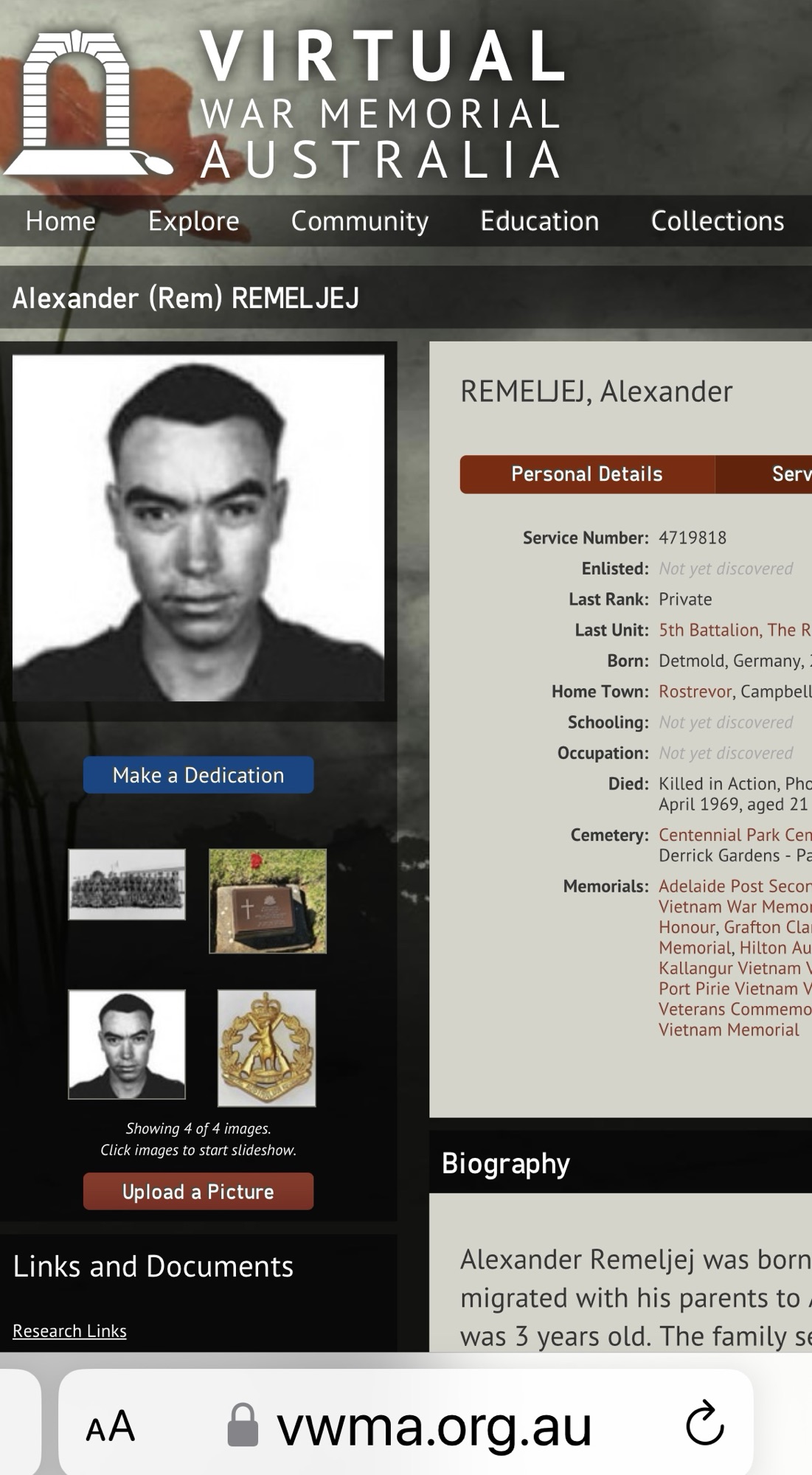




 Paul Krugman





 Billionaire-🙈🙊🙉🐒s with Olivettis