THEMATICS is/15 semantics, semiotics, explication-de-text and heavy-duty linguistics – post say 1300 CE both vernacular and sacramental without the Ma – 9C Icelandic number – up front, in the middle as say the Greek language equal accent on each syllable (we call these ‘little monkeys’ phonemes) of a word, or at the end – as in the categorised/ classified/ identifiered Romance languge French
The room contains no trace of me. I remove myself from it. An hour later I start awake where I have sunk back against the wall, perfectly alert and clear-headed, fully dressed even to the jacket, and with the haversack, in which the gun is hidden, already over my shoulder. It is after four.
Now begins the worst of it. I have nothing to do but wait. I am not required for several hours yet. I have nothing to do but wait, but here I am with my whole life on my hands and a mind that has thrown off weariness and the first shock that laid me out like a hammerblow, and is simply with me now as it always is, a machine with a life of its own and all the past available in its memory banks to be called as needed, and set for a future it never doubts for a moment is there.
[..set for a future it never doubts for a moment is there, you like💞, reader, SS4 maximal human poesis as honesty per 21st century* thematics ?
[You like💞. Fairy-clapping breaks out around your broken world. Too bad about your, er C6 economic region, er C9 world/ Pahpa John]
The mind imposes itself. It too has to be taken along [AND OUT THROUGH THE EVENT]. Meanwhile I would give anything for some fact or puzzle with which it might occupy itself and leave me free.
David Malouf, Child’s Play WITH Eustace and the Prowler which is pretty good – well excellent too if the reader seeks to understand suburban Robin Boyd Australian architect 1919-1971 phew CEW Bean Murdochism through a bogan Auss-ie busted ego-boundaries lens NOW with galactic new-age kaleidoscopics pixel splatter and super kiddie adventures MAKE SHIT UP text (as well as sex ahem) whooowheee-ie a short excerpt 1982 with GEA people enormous thnks 2 the author I am sure.
All of which lies conceptually and anaytically in sharp contradistinction to my late uncle Brian William Sanders, born around 1924 at Elliston the say 1895 ish Ngayiyo massacre British settlement site and Arfa Daley shyster Amerophile Marshall Plan Lend Lease @WECNuclear businessman’s/ biznismen’s certainty
John
Australia 27012026
most assuredly NOT ‘Sent 2 re,’ universal insanely misconstrued (objectivist doctrinaire 1920s ‘social-list’ misconstructed to mean available to human population groups or any 10k years behind the clock, Jock, animist monist crypto-classical ancient Greece ‘n Rome frogshit
For each true word, a blister! and each false/ Be as cauterising to the root o’ the tongue.
Reproduced here in honour of the memory and neurocognitive health teachings of Erich Fromm mid 20C psychiatrist: the optimism pessimism seesaw essential to Dzhugashvili No person = no problem obscenely tendentious doctrinaire ‘dialectical materialism’
[TIMON comes from his cave]
Timon. Thou sun, that comfort’st, burn! Speak, and be hang’d: For each true word, a blister! and each false Be as cauterizing to the root o’ the tongue, Consuming it with speaking!
First Senator. The senators of Athens greet thee, Timon
Timon. I thank them; and would send them back the plague, Could I but catch it for them.
First Senator. O, forget What we are sorry for ourselves in thee. The senators with one consent of love Entreat thee back to Athens; who have thought On special dignities, which vacant lie For thy best use and wearing.
Second Senator. They confess Toward thee forgetfulness too general, gross: Which now the public body, which doth seldom Play the recanter, feeling in itself A lack of Timon’s aid, hath sense withal Of its own fail, restraining aid to Timon; And send forth us, to make their sorrow’d render, Together with a recompense more fruitful Than their offence can weigh down by the dram; Ay, even such heaps and sums of love and wealth As shall to thee blot out what wrongs were theirs And write in thee the figures of their love, Ever to read them thine.
Timon. You witch me in it; Surprise me to the very brink of tears: Lend me a fool’s heart and a woman’s eyes, And I’ll beweep these comforts, worthy senators.
First Senator. Therefore, so please thee to return with us And of our Athens, thine and ours, to take The captainship, thou shalt be met with thanks, Allow’d with absolute power and thy good name Live with authority: so soon we shall drive back Of Alcibiades the approaches wild, Who, like a boar too savage, doth root up His country’s peace.
Second Senator. And shakes his threatening sword Against the walls of Athens.
Timon. Well, sir, I will; therefore, I will, sir; thus: If Alcibiades kill my countrymen, Let Alcibiades know this of Timon, That Timon cares not. But if be sack fair Athens, And take our goodly aged men by the beards, Giving our holy virgins to the stain Of contumelious, beastly, mad-brain’d war, Then let him know, and tell him Timon speaks it, In pity of our aged and our youth, I cannot choose but tell him, that I care not, And let him take’t at worst; for their knives care not, While you have throats to answer: for myself, There’s not a whittle in the unruly camp But I do prize it at my love before The reverend’st throat in Athens. So I leave you To the protection of the prosperous gods, As thieves to keepers.
Timon. Why, I was writing of my epitaph; it will be seen to-morrow: my long sickness Of health and living now begins to mend, And nothing brings me all things. Go, live still; Be Alcibiades your plague, you his, And last so long enough!
First Senator. These words become your lips as they pass through them.
Second Senator. And enter in our ears like great triumphers In their applauding gates.
Timon. Commend me to them, And tell them that, to ease them of their griefs, Their fears of hostile strokes, their aches, losses, Their pangs of love, with other incident throes That nature’s fragile vessel doth sustain In life’s uncertain voyage, I will some kindness do them: I’ll teach them to prevent wild Alcibiades’ wrath.
First Senator. I like this well; he will return again.
Timon. I have a tree, which grows here in my close, That mine own use invites me to cut down, And shortly must I fell it: tell my friends, Tell Athens, in the sequence of degree From high to low throughout, that whoso please To stop affliction, let him take his haste, Come hither, ere my tree hath felt the axe, And hang himself. I pray you, do my greeting.
Flavius. Trouble him no further; thus you still shall find him.
Timon. Come not to me again: but say to Athens, Timon hath made his everlasting mansion Upon the beached verge of the salt flood; Who once a day with his embossed froth The turbulent surge shall cover: thither come, And let my grave-stone be your oracle. Lips, let sour words go by and language end: What is amiss plague and infection mend! Graves only be men’s works and death their gain! Sun, hide thy beams! Timon hath done his reign.
[Retires to his cave]
First Senator. His discontents are unremoveably Coupled to nature.
Second Senator. Our hope in him is dead: let us return, And strain what other means is left unto us In our dear peril.
SEARCH FOOLISH OLD BLOKE WITH MORE THAN A LICK OF LCQS BUSTED RECALL SYNDROME THOUGH CALLING UPON AN EXTENSIVE COMPENDIUM OF RIGHT-🧠 RACE MEMORY, KEN BURNS NARRATIVE DRIVE & POST WWII FOLKLORE
(i) “Foolish bloke” / “Touch of..” : Timon is portrayed as a naive,, almost reckless philanthropist who ignores warnings from his steward, Flavius, about his dwindling fortune. His generosity is described as lacking common sense. Following his betrayal by friends, his deep disillusionment leads to a transformation, where he becomes a misanthrope who curses humanity, which some interpret as a form of madness or, at least, extreme, unbalanced behavior.
(ii) “Late 60s”: While Shakespeare does not explicitly state Timon’s age, he is often portrayed as an established, wealthy, and noble Athenian figure. Some scholarly discussions suggest that because he refers to Alcibiades as a “young man,” Timon might be considered a generation older, perhaps in his 40s or 50s, rather than specifically in his late 60s, though interpretations vary.
(iii) The Persona: In the first half of the play, he is a “spendthrift” who loves being liked and showers people with gifts. After going bankrupt, he transforms into a “man-hater” who lives in a cave,, rejects society, and dies in isolation.
🧢🧢🧢🧢🧢🧢🧢🧢🧢🧢🧢🧢
In essence, Timon of Athens is a study in excess—initially excessive generosity and later, excessive hatred—driven by a profound, almost foolish, inability to read the true nature of the people around him.
Our thanks to George Mason Youkneeversity oawh just joking
Dedication Joe King a northwest Tasmanian possum trapper of the 1950s well so Bill Mollison ✝️ told us at Stanley in 1987
Australia Day laughs and measures of Newtonian perturbation “thrown” in at absolutely no extra cost to our readers.
Putant, Cogitant, Arbitrantur etAiunt ∴ they are indeed – ∵ they think..
‘Je pense, donc je suis’ 1637 Discourse on the Method (French), altered to ‘I am, I exist’ 1641 Meditations on First Philosophy (Latin), in turn altered to ‘cogito, ergo sum’ 1644 Principles of Philosophy (Latin)2
‘..and is there honey still for tea/ Honey’s off, Love’ recorded in October 1958 and made available 4 public retail purchase December 1958 as part of the “album” (a 10′ plastic 33rpm ‘record’) The Best of Sellers on the ‘Parlaphone’ “label” (commercial 4 profit branding)
The Seppo Talkies Era 🥸now you’ve @TikTok and are desperately unhappy we know OK
JONNO THE MAN
Australia 🦘🇦🇺🇺🇸🥸🌏
1ego sum, ego existo – I am, I exist – Rene Descartes’ Version (ii) 1641
2 The phrase signififies that the [ACT] of doubting [ONE’s] own existence serves as proof of the reality of [ONE’s] mind, making it an undeniable [TRUTH]
John’s scientific not partricularly literaryᵛ pièce de résistance indeed..
Now that the love is gone
What are we supposed to do? After all that we’ve been through When everything that felt so right is wrong Now that the love is gone (love is gone)
What are we supposed to do? After all that we’ve been through When everything that felt so right is wrong Now that the love is gone
There is nothing left to prove No use to deny this simple truth Can’t find the reason to keep holding on Now that the love is gone (love is gone)
Now that the love is gone The love felt so right, so wrong Now that the love is gone
I feel so hurt inside Feel so hurt inside Got to find a reason
What are we supposed to do? After all that we’ve been through When everything that felt so right is wrong Now that the love is gone (now that the love, now that the love is gone)
There is nothing left to prove No use to deny this simple truth Can’t find the reason to keep holding on Now that the love is gone (now that the love) (Love is gone)
Got to find a reason Got to find a reason Got to find a reason Got to find a reason Got to find a reason to hold on
Love There’s nothing left for us to say Love Why can’t we turn and walk away?
What are we supposed to do? After all that we’ve been through (now that the love) When everything that felt so right is wrong (now that the love) Now that the love is gone (oh)
There is nothing left to prove No use to deny this simple truth Can’t find the reason to keep holding on Now that the love is gone (now that the love)
What are we supposed to do? After all that we’ve been through When everything that felt so right is wrong (yeah) Now that the love is gone (love is gone)
Dedication of this document is to David Malouf, now 91, of Tuscany, for his sins which were none like my beloved second wife Rosanne Mary Joyner born in Australia’s utterly startling South-east Queensland and to Vere Gordon Childe – driven it must be said to self-killing by Sydney academics, vice-chancellors & chancellors because of what indeed happened in history 19 October 1957 (age 65 years), Blackheath
John Blundell
• Global education and internet reform
• Post post Socratic logic (thematics maths)
• Eradication of gangsterism and the orgy of Raison-d’ètat ≣ neoliberalism
• Economies that serve the interests – social cultural and spiritual of which pecuniary is a mere statistical ‘sector’ (adult interpersonal relations but all my readers have known that since October 1995, right?) of the first-noted of those three terms
Denis Gabor\ Gábor Dénes Egyetem
Note re line 1 of this document ☞
^if you dear reader enjoy reading itit’s literature – they’d say in the raddled if not micro pop-culture demented days of the late twentieth century video-killed-the-radio-star now Aristotelian (so they keep telling me, the mental dodderers and wildly-overpaid corporate publicists) telos (micro) or teleology (macro, that is ideational operations) is swept away forever by ontos & ontology
Kurt Gödel was a mathematician, logician and philosopher, best known for his incompleteness theorem, and often referred to as one of the greatest logicians since Aristotle. Born in Austria in 1906, he immigrated to the United States in 1940 to escape Hitler’s growing power and to pursue his scholarly work. Plagued by mental illness but also highly accomplished in his field, he would easily make an interesting subject to pursue. But Yannick Grannec’s first novel, The Goddess of Small Victories, is not about Kurt Gödel; it is about his wife, Adele.
Adele was six years older than Kurt, and was employed as a dancer at a cabaret when they met in 1927. They were a couple for more than a decade (during which time she nursed him through several rounds of institutionalization) before they married, with the continuing disapproval of his family. Adele would face rejection and isolation in the academic community as well, particularly when the couple finally settled at Princeton, where he worked at the Princeton Institute for Advanced Study (IAS).
These details are a matter of historical record. Grannec’s foray into fiction begins with her other protagonist: it is 1980, Gödel has recently died of anorexia, and Anna Roth, an employee at the IAS, has been tasked with recovering Gödel’s archives from his widow. Adele lives in a nursing home, and continues to hold a grudge against the academic establishment that shunned her; she is known to be a prickly old woman, and at first lives up to her reputation. But she sees something she recognizes in Anna, the daughter of two egomaniacal Princeton professors, who never felt that she fit into that society, being a more timid sort. Gradually, as Anna makes regular visits to the nursing home, the two women begin to open up to one another. Adele calls it a trade: she’ll tell her story if Anna tells hers. Chapters of The Goddess of Small Victories alternate between a third-person view of Anna’s visits to Adele in 1980, and a first-person telling of Adele’s story as it happened chronologically, beginning in 1928.
In this way, “the younger woman” (as Anna is often labeled) gets to visit Adele’s past worlds: Vienna in the 1930’s, postwar Princeton, McCarthyism, the Cold War; the difficulties of being an immigrant with poor English, the thrill of close friendship with Einstein and other luminaries and, centrally, the challenge of marriage to a tortured genius. Gödel is concerned with the infinite, but unable to handle the minutiae of his life: he is a consistently and increasingly troubled man–gifted, but also cold and demanding. He suffers from depression and paranoia, starves himself, meticulously tracks his body temperature and bowel activity, and refuses to see anyone outside a small circle that includes Einstein, Oskar Morgenstern, Robert Oppenheimer and their wives. He harangues his friends with conspiracy theories and an insistent rehashing of his unpopular notions. These few individuals naturally compose Adele’s entire social world, as well. Gödel tests Adele mightily, but in the end her love persists, as does her belief in infinity (a popular topic in the Gödel marriage and within their intellectual circle).
In exchange, Adele enjoys hearing about Anna’s life, though it has been marked by broken relationships and fear. The elder woman is outspoken, where the younger is reticent; Adele is enlivened by the challenge of spicing up Anna’s professional and love lives. Anna, as it turns out, has had a gifted-but-troubled mathematician in her own life as well. As the book and the women’s relationship unfold, the reader’s perspective moves more deeply inside Adele’s head, hearing her more intimate thoughts and becoming privy to her fears and insecurities, which increase as she ages and her marriage disappoints her. Anna and Adele make a journey together, and soon Gödel’s archives are no longer the point (except for Anna’s employer).
In an author’s note at the end, Grannec succinctly outlines which parts of the story are historically confirmed, which are relatively safe conjectures, and which she has created. Sticklers for historical accuracy should be satisfied. The translation from French to English by Willard Wood is smooth, establishing appropriate voices for the two different protagonists, and creating the evolving atmospheres of nervousness, fear and, eventually, desperation that characterize the Gödel household.In the end, The Goddess of Small Victories delicately evokes both Adele’s varied experiences, in historical context, and also Anna’s more circumscribed life, which leaves room for future decision-making. While light is shed on the life and work of Kurt Gödel, he takes a backseat to his dynamic wife in Grannec’s compassionate telling. The finer technical details of Gödel’s work are outlined in narrative form, as Gödel reluctantly tries to tutor Adele, or discusses theories of philosophy with Einstein and the others. (Grannec also inserts footnotes regularly to offer further explanation, or to attribute quotations.) These mathematical and philosophical dialogues, the reader is reminded, are oversimplified; but they are enough to either whet the appetite, or impress upon one the magnitude of Gödel’s genius. The stars of this story, however, are two strong and intriguing women, who are stronger together. —Julia Jenkins
Other Press, $26.95, hardcover, 9781590516362, October 14, 2014
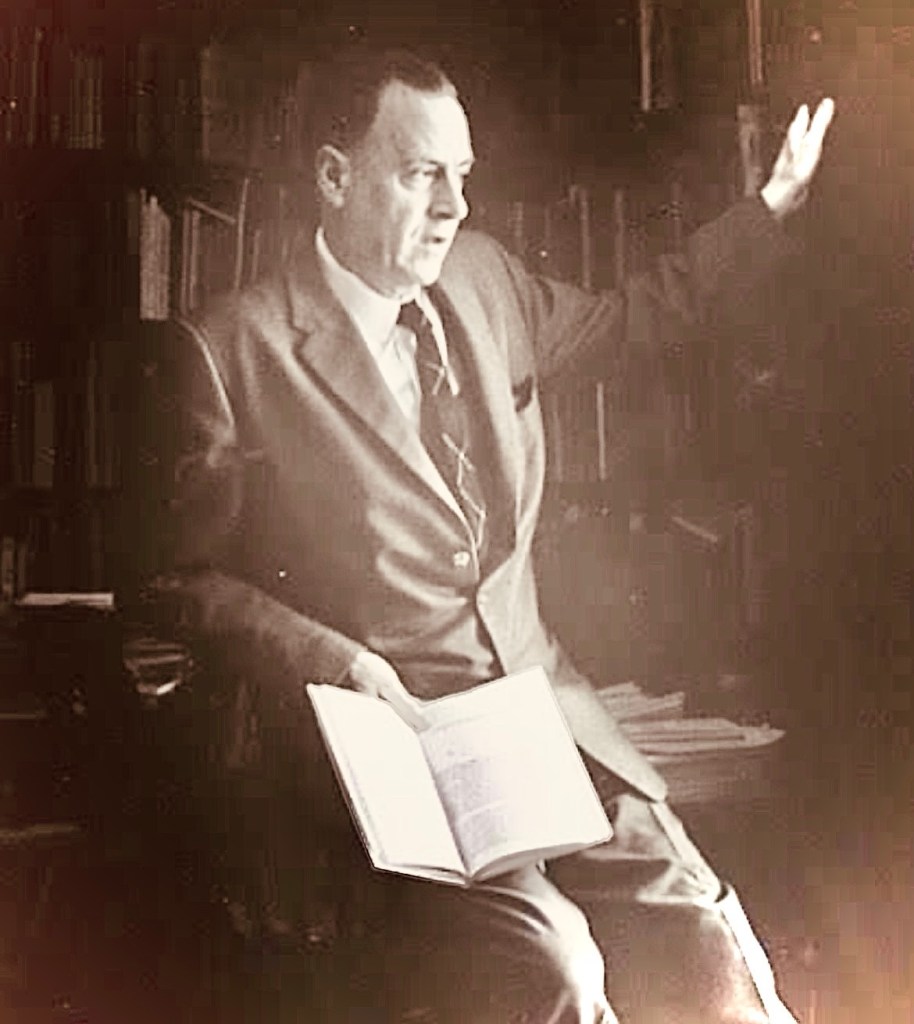
McLuhan with a discursive gesture some decades ago: you all shld hv caught one of his ‘quizzical’ looks: change yr lf 4 you t’hat
..the following being strictly, faithfully & scruplulousy reproduced for English language text & general Communications-production studies (urgent educational reform) purposes from The Antipodean Laboratory: Making Colonial Knowledge1770 – 1870, by Anna Johnston University of Queensland Centre for Critical and Creative Writing.. Faculty of Humanities and Social Sciences, excerpts ‘4ROM’ pages 221-225
Note: Billionaire Monkeys with Olivetti Group @MIT Typewriters’ document title is comic though like every word, sentence and paragraph of our text on the record historically factual.
I found the fabulously apposite to serious active human scholarship Persuasion quote in an afternoon’s study at the State Library of South Australia ten years ago.
Creating Colonial Readers and Imperial Networks ☞
Political problems could be managed over dinner, too. When members of a committee of inquiry into the Orphan School arrived in 1842, Jane Franklin entertained two of the reformist convict-ship surgeons who had been charged by Elizabeth Fry to check on conditions for female convicts and their children. Jane Franklin, notoriously judgemental of convict women, assured Dr Dunn and Mr Nain over dinner of her deep interest in convict welfare and organised a personal inspection tour for Dunn to the Female Factory. She targeted Nain over dinner, taking ‘some pains to impress him with my views of things since he is likely to be on the board of investigation. Jane Franklin’s dinner party diplomacy was highly effective, if not subtle, in managing the Franklins’ reputation locally and globally.
The publication of the Tasmanian Journal ignited intercolonial rivalries. The Sydney Herald compared it favourably to a publication from an English provincial town: ’emanating as it does, from the press of Van Diemen’s Land, and from a Scientific Society there, it is still more wonderful’. The paper uncomfortably noted that Sydney ‘as the Southern Metropolis’ might instead have been expected to have produced the first scientific society and journal of record. The Port Phillip Gazette declared the Tasmanian Journal to be very creditable, but used the opportunity to spruik an intended publication The Melbourne Magazine, spurring its colonists to to produce a rival ‘in emulation for the literary fame of Australia Felix’. So, too, Jane Franklin’s Ancanthe museum was ahead of its time in its vision of engaging the colonial public. The ‘vineyard of literature’ that had produced the Tasmanian Journal was distinctive and based in the robust Tasmanian print culture as well as marked by the considerable, if controversial, influence of both Franklins.
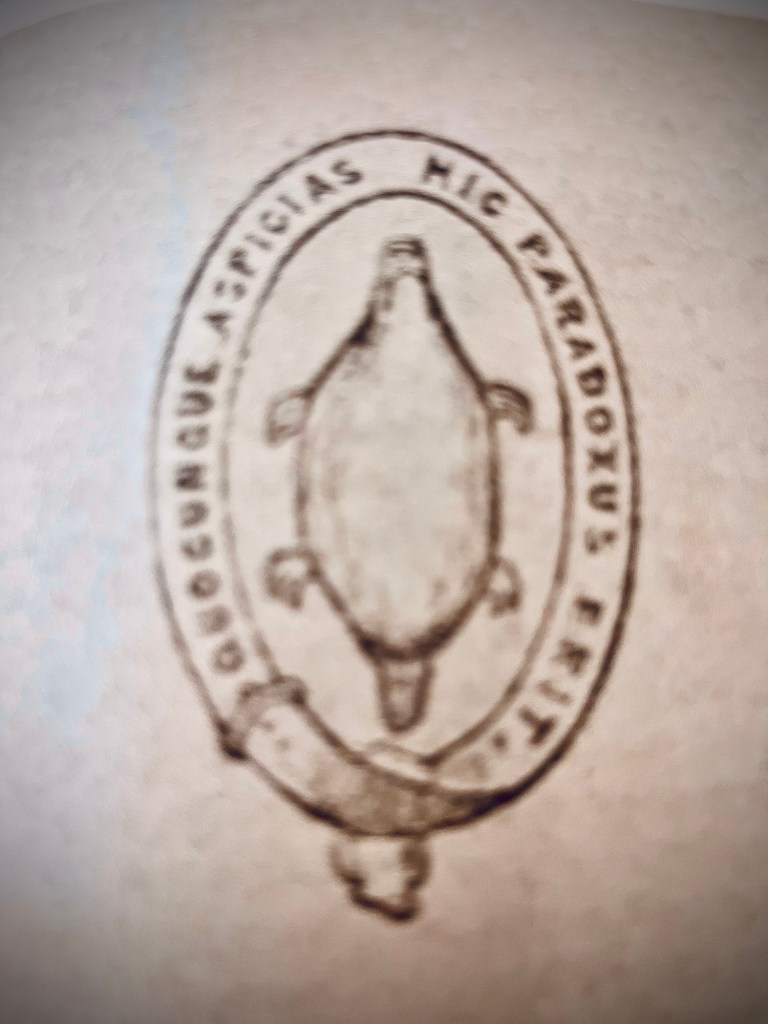
The Platypus Journal and the Felon Print Press.. 1820s-1840s At a large dinner party at Government House in August 1841, Franklin’s personal secretary, Francis Henslowe, artfully arranged the dinner table with the first edition of the Tasmanian Journal. Jane Franklin approvingly noted the copies were perused by ‘the ladies as well as the gentlemen with much curiosity and interest’. Sir John Franklin fondly called the Tasmanian Society’s publication the Platypus journal. Like the famed Ornithorhynchus anatinus, rumours of the journal were considered a hoax by sceptics such as Sir John Pedder. Pedder and the solicitor Robert Pitcairn expressed their delight when copies appeared on the dining table. The platypus was a fitting visual symbol that graced the journal’s title page, encircled by the single-sided surface with no boundaries that would be termed a Mobius strip in 1868 (Figure 6.2) with a Latin tag, Quocunque aspiucius, hic paradoxus erit: ‘Whichever way you look at it, this is baffling’, or, as Captain Parker quipped, ‘All things are queer and opposite here’.⁴⁶ Both the frame and the animal had been deemed impossible in European theories of nature. For Jane Franklin, Parker’s phrase became useful to explain everything from black swans to the colony’s erratic postal system; more broadly, it also became metonymic of perplexing knowledge produced through colonial science. ..
It was also a durable textual artefact that Sir John and Jane Franklin used as an intellectual carte-de-visite. Jane’s determined focus on its production concentrated the attention of busy members of the society.. saw the journal as her particular property, Alison Alexander suggests, soliciting papers ‘without consulting existing members, “considering myself invested with a general commission” ‘. .. Little situated the initiative within the broader contexts of scientific association and publication. The journal was efectively the ‘ “Transactions” of the infant Philosophical Society of Tasmania’, but Lillie disavowed its members’ pretensions to be philosophers ‘in the modern acceptation of the term’. Society members were characterised as sincere and passionate amateurs, labouring under the disadvantage of distance from the institutions and leaders of science in Europe. They were motivated to communicate the outcomes of their leisure-time scientific activities and thus, by example, to influence colonial society in ‘a salutary direction towards liberal and scientific pursuits’.
The journal’s scope included zoology, botany, geology, and meteorology, aiming, over a number of years, to publish a full account of Tasmanian flora and fauna. .. – again, Sir John’s contacts were invaluable, as his mail often contained new scientific publications. The journal heeded Matthew Friend’s admonition about colonial speculations on ‘dubious and undetermined questions of theory’: instead, it aimed to be ‘a trustworthy repository of well-ascertained facts’. Some of the utilitarian knowledge it produced was directly applicable in exploiting natural resources in agriculture, geology and botany.
JB
Thematics 2-5set series logic, Neurocognitive Health, Child Moral Development, Education Reform, Economy, the Human (isation) Project, in general teaching ALL, everywhere, of the fundmental mental distinction AND indispensable dynamism beyond age 11yrs of macro (reflective or ideational signifiers or no-things) and micro see-hear-taste-smell-touch supply-siders’ commonly marketed crap and staying well
⁴⁶ Franklin, ‘Lady Jane Franklin’s Journal: Van Diemen’s Land Vols. 8 and 9’, January 1842; see Moyal, Bright and Savage; Moyal, Platypus
⁵⁶ For example, the meeting on 6 November 1839 heard Sir John reads ‘a portion of Captain Washington’s last letter … relating to Dr Chotoley and his Australian Vocabulary, also Mrs Whiwell’s letter relating to the tidal phenomena at Port Arthur, when Sir John related the means which had been adopted to improve the observations made there, and an old letter of Mr Spence’s on the virtue of keeping large meshes for keeping off mosquitoes and flies,’ Lady Jane Franklin’s Journal: Van Diemen’s Land Vols. 3 and 4
This surely is too much of a coincidence. The work of the prowler begins to look like the cooperative efforts of a gang, except of course but by their very nature these crimes are private and solitary. Or perhaps a club has been formed to act out the attacks as they have been described in the newspaper. A bizarre notion! Who would devise such an entertainment and why? Still, imitators there are, and more than one of them. Of this the police have no doubt.And how does the prowler himself feel about this, the original prowler, I mean, the initiator, whose integrity consists in his comitment to his own crimes? How strange if his path should cross that of one of the others, if they should meet face to face over the body of a victim; or stranger still, if two of the false prowlers should meet, each just sufficiently like the original to be recognizable but each seeing in the other enough that is different to make clear how much of themselves they have allowed to creep in, to what an extent they are no longer imitators of the prowler but significant variants. If two of the false prowlers were captured would there be enough in common between them for the real prowler to be identified?ᵛ And supposing all seven to be taken, would it be clear which of them was real? All seven, as the police know, would lay claim to the first attack, might even create a prior one, in order not to be deprived of the rest. (Perhaps one might guess that the least insistent of them, assured of his authenticity, would be the true original. [19 words]) This is clear from the large number of men who have already come forward and confessed to the crimes [19 werdzz]. Men of all ages and occupations, from a fifteen-year-old schoolboy to a retired ship-builder of seventy-seven: widowers, pensioners. young men newly married, metho-drinkers, known homosexuals – all desperate, it would seeem, to have the prowler’s acts define them.
Some of these men simply want to draw attention to themselves. Others have become obsessed with the assaults and long to be their perpetrator, to approximate to themselves the daring, the fierce aura of sexuality they believe the prowler must be possessed of, his deep sense of relief when, returning to his own house, he stands naked before thew mirror and says ‘Yes, I am the prowler’, or, concealing his violence behind a front of patient domesticity, slips in quietly beside his wife.
Your Editor’s Schpiel 👉🏿
Popeye’s “I yam what I yam” can be a reminder that we are what we are in truth — the children of God. And that’s all that we are. DAILY BIBLE VERSE Now, O Lord, thou artour father; . . . and w e all are the work of thy hand.7 Jan 1981
But I got an emptiness deep inside
And I’ve tried
But it won’t let me go
And I’m not a man who likes to swear
But I never cared
For the sound of being alone
“I am”… I said
To no one there
And no one heard at all
Not even the chair
“I am”… I cried
“I am”… said I
And I am lost and I can’t
Even say why
“I am”… I said
“I am”… I cried
“I am”
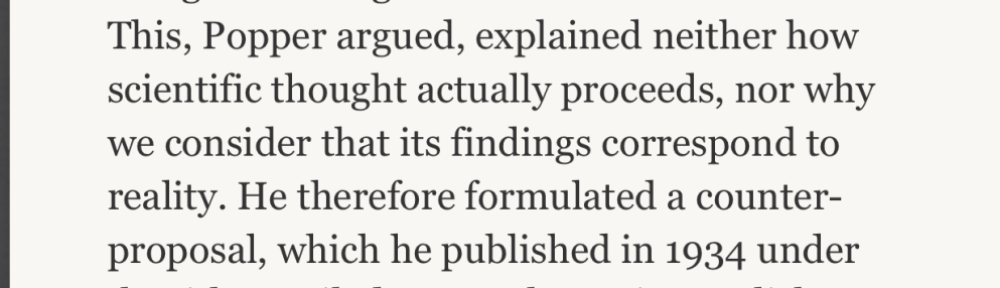
^UH OH senior students Pahpa John needs you get to mental work on that statement: your clues, guide-ropes and vicarious safety barriers are the mediaeval the Yes & the Not, Sir Karl Popper’s endless banks of Sideshow-alley open-mouthed brightly enamelled fibreglass clown-bust theories disproof and disestablishmentarian atheistic Anti-ism AND ALL OF the post 1945 fake political culture zeitgeist – whoopee this should be awesome fun for yous aull – burning mega-forest just off the road too ∻
..Fort McMurray AB, April 30 to June 1, 2016. In May 2016, wildfires broke out in northern Alberta resulting in the most expensive natural disaster in the history of Canada
This essay is a bit of a scramble but in terms of the NOW literal – you gotta learn to use that word NOT to mean fanciful or made-up, young people – i know WORD and MANY others like it represent a HUGE mental challenge to you all – particularly as only 5 per cent of older people including of course your parents understands their own bogan language they’ve bribed, bullied and blackmailed all schools to smash into your heads since the end of World War II – actual factual global psycho-cultural cataclysm hot on the honey-money (Y-U-C-k).
Point 2 it’s a cab that’s been waiting at the rank for weeks.. it’s a ψo -spiritual jungle in there ≣ 🚕🚕🚕🚕✡
John
ⱽ Fort McMurray AB, April 30 to June 1, 2016. In May 2016, wildfires broke out in northern Alberta resulting in the most expensive natural disaster in the history of Canada
My Lady D’Arbanville, why does it grieve me so? But your heart seems so silent, why do you breathe so low, why do you breathe so low?
Consumer Advisory: excoriating acid Peter Sellers Bal-ham, Gateway to the South2 style humour ☞you might like to sit down OK ➜ The Tasmanian Journal of Natural Science, Agriculture, Statistics, etc. late August 1841 – 1849 Anna Johnston 2023 begin ?verso-recto page 214 at at-a-glance Level 4.7 (of 10 of course 9th century Kitab al Jabr Kurdish Persian Babylonian الجبر (al-jabr), your Fecunt bedtime Mood-meter Crescent read-out or some such post Global Human Deskilling Project ‘AI’ Prescriptive-text classical cocko.
GEA Monkeys again thank Anna Johnston University of Queensland Australia – only criminal scumbag plagiarist true Marxian societal parasites and the heirs & successors of Euro-amer-aus Belle Epoch flaneurs or boulevardeiers profit from the republication of her writing per MINE ➪➪➪ CEP Worldwide 1996 Information shall be free refers.
AJ
Due to his success in 1820s Arctic exploration, Sir John Franklin was lionised within ‘arctic circles’ and embedded in highly influential networks of knowledge, exploration and science9. Franklin was part of a scientific social world that forged professional as well as personal relationships, including marriages between elite families. … John’s first wife, the poet Eleanor Porden, while his second wife, Jane, became adroit at managing the scientific and government networks that surrounded her husband10. The period of the Tasmanian Journal provided an opportunity for Jane to observe her husband’s correspondence networks with learned gentlemen with political influence – and develop her own voice and interests within those networks – that would underpin her later, tireless advocacy following Sir John’s disappearance on his final Arctic voyage after his ignominious recall from Van Diemen’s Land.
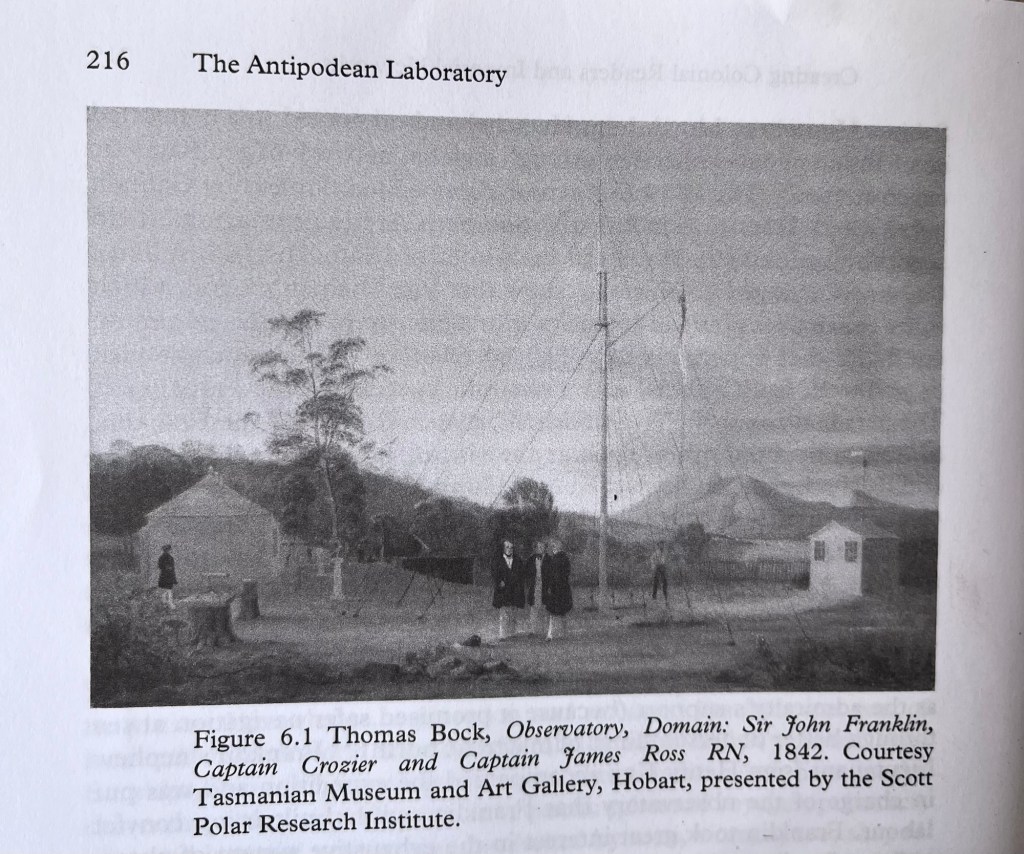
The 1830s saw new directions in British science that made the Franklins’ tenure in Tasmania particularly valuable to the advancement of knowledge. The ‘Magnetic Crusade’ successfully advocated by Edward Sabine, Humphrey Lloyd, John Herschel and others led to a concerted acceleration of data collection through a global network of geomagnetic observations11. The 1839 Erebus and Terror expedition led by Captain James Clark Rose to establish the Southern Arctic geomagnetic field spent three months in Hobart in the winter of 1840. The Hobart Town Courier encouraged colonists to ‘show that Van Diemen’s Land, which is the maximum point of intensity in magnetism is not the minimum one in all that appertains to the social relations of life’, and the visit proved to be both a social and a scientific success to the Franklins12. The personal connections established between Ross and John Franklin, as well as between others such as the visiting botanist Joseph Hooker and local scientific enthusiast Ronald Gunn, underpinned years of later correspondence on scientific matters, and colonial and imperial politics.. joint scientific and strategic.. pure and applied aspects that ensured the support of the Royal Society (because the massive data collection promised to lead to principles that might join laws of terrestrial magnetism to ‘cosmical’ theories of the earth’s field) as well as the admiralty’s support (because it promised safer navigation at sea through better understandings of magnetic north)13. Franklin’s nephew Lieutenant John Henry Kay accompanied the expedition and was put in charge of the observatory Franklin swiftly built using convict labour. Franklin took great interest in the exhaustive system of observations, funding and appointing additional men when the first technicians were overwhelmed by the process; he also advocated for their promotion through the admiralty. He reported regularly in his letters to Sabine, Ross and others about the local contribution made the Tasmanian magnetic observatory. Jane Franklin named the facility Rossbank and commissioned a portrait of it by convict artist Thomas Bock as part of Franklin’s vision of the interconnected, improving cultures of arts and sciences (Figure 6.1)14
The Franklins’ role in this well-regarded global enterprise was undoubtedly motivated by scientific factors, but John Franklin was also aware that his support kept open strategic communications channels that could be used to pursue his political interests in London while he was in Hobart … national rivalry between Britain and France in the geomagnetic field. The geomagnetic campaign was central to the establishment of the British Association for the Advancement of Science (1831), a crucial part of British ambition and scientific nationalism that also led innovation in science communication. Remote colonies had a significant role to play in establishing British leadership in these observational sciences, which had important political and economic objectives, in addition to their intellectual prestige.
The Tasmanian initiatives joined efforts in other Australian colonies. The Philosophical Society of Australasia was established in Sydney in 1821 as an exclusive cadre of gentlemen with a general interest in science. …
Rumker and Brisbane’s observations from New South Wales were sent to influential international journals, societies and collaborators. Yet personal enmities and colonial politics stymied lasting local scientific outcomes21. The Sydney Philosophical Society was short-lived, and Brisbane’s ambitions to bring ‘the Science of Political Economy’ to Australia were thwarted. .. John Franklin revived the Mechanics Institute in the late 1830s, but because Franklin rarely attended meetings the institute languished26 Each of these experiments with associations created the conditions for local scientific publication, but did not coalesce until the Tasmanian Journal appeared in 1841. …
..John Franklin described it as ‘a little private scientific society consisting only of half a dozen individuals which meets every fortnight in my library to read papers and converse. It is without name and seeks to hide itself from public notice27. Members included key colonial officials, such as the treasurer Adam Turnbull, who had reported on the 1830 visit of Captain Matthew Friend. Science was linked to the nascent school system, represented by.. principal of Queen’s Orphan School, and.. The Presbyterian minister Revd John Lillie provided the moral authority for science.. Francis Henslowe, who was also John Franklin’s private secretary at Government House. … Visiting officers with interests in science and exploration were made corresponding members, such as Dumont D’Urville (the French rear admiral and gifted natural scientist whose second Antarctic voyage was launched from Hobart in 1840) and the Erebus and Terror officers Ross, Hooker and James Robertson. So too John Gould, who, with his wife Elizabeth, stayed with the Franklins for a considerable time.. ‘Count’ Paul Strzlecki, as well as Alexander Maconochie and the Revd Thomas Naylor, then both at Norfolk Islandᵛᵛ.. the interests of the society and the ambitions of Jane Franklin..29
Footnote14 was it uh
Named Rossbank by My Lady Fandango oa woa woa woa wó
John Blundell
🦘⌨️🥸🌐
*/1 a sacrifice in which the offering was burned completely on an altar.
2 The “best seller” by Peter Sellers released in 1958 was his first studio album, a comedy LP titled The Best of Sellers.
9 see the excellent doctoral thesis by Annaliese Jacobs, ‘Arctic Circles‘
10 Jacobs, ‘Arctic Circles‘
11 Cawood, ‘Magnetic Crusade‘
12 Savours and McConnell, ‘History of the Rossbank‘, 533. On Jane Franklin’s role in maximising the social and intellectual influence of the Ross expedition in Tasmania, see Alexander, Ambitions, 114-16
13 see Cawood, ‘Magnetic Crusade‘, 494-96
21 Field, Geographical Memoirs. Field also published the first book of poety in Australia, First Fruits of Australian Poetry (1819)
26 See Alexander, Ambitions, 109
27 John Franklin to Francis Beaufort, 17 February 1840, in Franklin, ‘Lady Jane Franklin’s Journal: Letters to Mary Simpkinson‘
29 Franklin, Lady Jane Franklin’s Journal: Van Diemen’s Land Vols 3 and 4, 18 May 1839
^^ readers of “@wired4weld“\ greeneconomyaction.com may be kind enough and sufficiently earnest & dogged in their studies (reading) to inspect our 9/12 and 10/12/ 2025 pieces – Where sYDNEY cOVE.. and Cadwallader having Sex.. OK
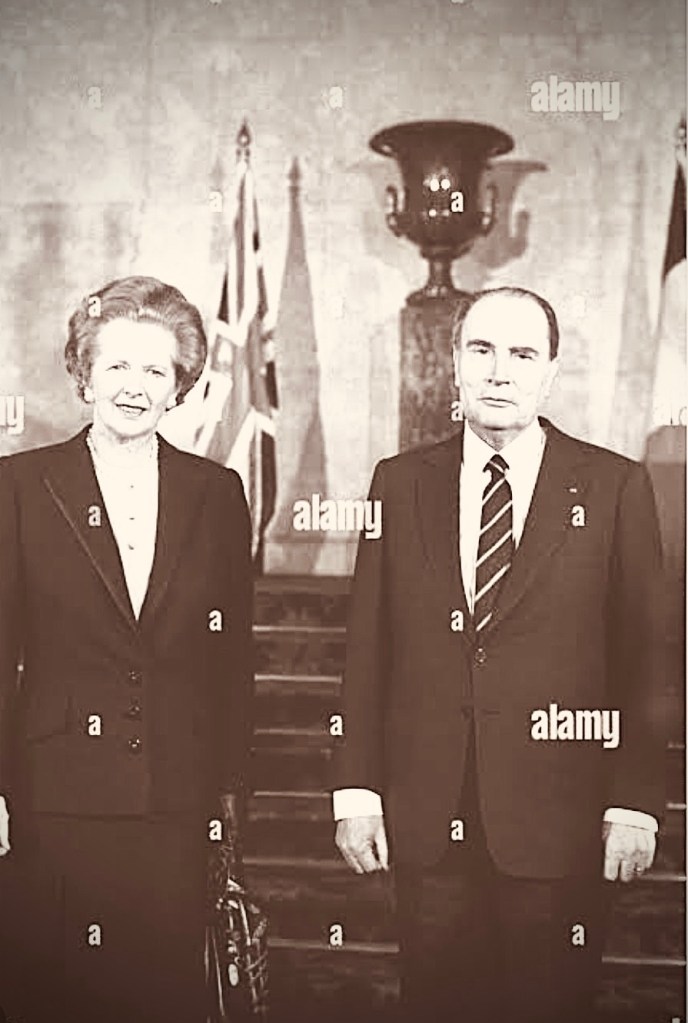
Margaret Thatcher (UK PM 1979-1990) and François Mitterrand (French President 1981-1995)
Kevin you are dashed lucky you weren’t thrown into one of those Forensic Psychiatry Facilities to be found in every state capital run by Geoff Kennett, Ian Hickie and the psychotropic drugs for teens 2008 Australian of th.. oh
STUDENTS
You are human and that is a magnificent if humbling fact of life on earth OK so say (I suggest by the surging resurgent mellifluous high internsity interval training bodily carry-on in which you all so righteously yet, [Ahem 1960s USA soft-covers comic book textual reworking on reductionist neoclassical academic lines meaning makes-funny-throat-clearing- grandpa [der] Großvater-opa-pahpa-noise], er, [granddad, grandfather, geezer, pop, fogey] humbly persist and obtain) but goodness you all have to learn to read your own enthusiasms because if you are so Up to Copy a 4,200 word-or-so super new world macro political consciousness document across from your Hewlett Packard was a motor car and you-guessed-dell-was-text-and-image Comics THAT you jubilantly press Control v twice you’ll lose the f_cker.
On the other hand you may save all that publication palaver and get on with @TripleJ Unearthed bangin’ AND WRITE SOME NEW LESS SCARY MUCH-MORE-EDUCATIONAL AND FUN ‘STUFF.’
This actualised choice of Second-pic was against Fly Away Peter – έτσι κι έτσι
John Blundell
Thematics Logic, Nrcgntv Health, Edication, Economy, Kangaroos & all sorts of micro bullshit since the evening of Sat 20/5/1992
First we took Caracas then we all felt kinda funny in the head.
🥸🥸🥸🥸🥸🥸🥸🥸🥸🥸🥸🥸🥸🥸
Chapter 12
I DECIDED TO SPEAK TO MY FATHER. Not because we were particularly close. My father was undemonstrative, and could neither share his feelings with his children, nor deal with the feelings we had for him. For a long time [i] believed there must be a wealth of undiscovered treasure behind that uncommunicative manner, but later [i] wondered if there was anything behind it at all. Perhaps he had been full of emotions as a boy or a young man, and by giving them no outlet had allowed them over the years to wither and die. But it was because of the distance between us that [i] sought him out now. I wanted to talk to the philosopher who had written about Kant and Hegel, and who had, [i] knew, occupied himself with moral issues. He should be well positioned to explore my problem in the abstract, and, unlike my friends, to avoid getting trapped in the inadequacies of my examples. When we children wanted to speak to our father, he gave us appointments just like his students. He worked at home and only went to the university to give lectures and seminars. Colleagues and students who wished to speak to him came to see him at home. I remember queues of students leaning against the wall in the corridor and waiting their turn, some reading, some looking at the views of cities hanging in the corridor, others staring into space, all of them silent except for an embarrassed greeting when we children went down the corridor and said hello. We ourselves didn’t have to wait in the hall when our father had made an appointment with us. But we too had to be at his door at the appointed time and knock to be admitted. I knew two of my father’s studies. The windows in the first one, in which Hanna had run her fingers along the books, looked out onto the streets and houses. The windows in the second looked out along the plain over the Rhine. The house we moved to in the early 1960s, and where my parents stayed after we had grown up, was on a big hill above the city. In both places the window did not open the room to the world beyond, but framed and hung the world in it like a picture. My father’s study was a capsule in which books, paper, thoughts, and pipe and cigar smoke had created their own force field, different from that of the outside world. My father allowed me to present my problem in its abstract form and with my examples. ‘It has to do with the trial, doesn’t it?’ But he shook his head to show that he didn’t expect an answer, or want to press me or hear anything that [i] wasn’t ready to tell him of my own accord. Then he sat, head to one side, hands gripping the arms of his chair, and thought. He didn’t look at me. I studied him, his grey hair, his face, carelessly shaven as always, the deep lines between his eyes and from his nostrils to the corners of his mouth. I waited. When he answered he went all the way back to first principles. He instructed me about the individual, about freedom and dignity, about the human being as subject and the fact that no one may turn him into an object. Don’t you remember how furious you would get as a little boy when Mama knew best what was good for you? Even how far one can act like this with children is a real problem. It is a philosophical problem, but philosophy does not concern itself with children. It leaves them to pedagogy, where they’re not in very good hands. Philosophy has forgotten about children.’ He smiled at me. ‘Forgotten them forever, not just sometimes, the way I forget about you.’ ‘But…’ ‘But with adults i unfortunately see no justification for setting other people’s views of what is good for them above their own ideas of what is good for themselves.’ ‘Not even if they themselves would be happy about it later?’ He shook his head. ‘We’re not talking about happiness, we’re talking about dignity and freedom. Even as a little boy, you knew the difference. It was no comfort to you that your mother was always right.’ Today I like thinking back on that conversation with my father. I had forgotten about it until after his death, when [i] began to search the depths of my memory for happy encounters and shared activities and experiences with him. [When I found it, I was both amazed and delighted. At the time I was confused by my father’s mixing of abstraction and concreteness. But eventually I sorted out what he had said to mean that I did not have to speak to the judge, that indeed I had no right to speak to him, and was relieved. My father saw my relief. ‘So do you like philosophy?’ ‘Well, [i] didn’t know if one had to act in the circumstances [i] described, and [i] wasn’t really happy with the idea that one must, and if one really isn’t allowed to do anything at all, [i] find that…’ I didn’t know what to say. A relief. A comfort? Appealing? That didn’t sound like morality and responsibility. ‘I think that’s good’ would have sounded moral and responsible, but [i] couldn’t say [i] thought it was good, that [i]thought it was any more than a relief. ‘Appealing? ‘my father suggested. I nodded and shrugged my shoulders. ‘No, your problem has no appealing solution. Of course one must act if the situation as you describe it is one of accrued or inherited responsibility. If one knows what is good for another person who in turn is blind to it, then one must try to open his eyes. One has to leave him the last word, but one must talk to him – to him and not to someone behind his back.’ Talk to Hanna? What would I say to her? That I had seen through her lifelong lie? That she was in the process of sacrificing her whole life to this silly lie? That the lie wasn’t worth the sacrifice? That that was why she should fight not to remain in prison any longer than she had to, because there was so much she could still do with her life afterwards. Could i deprive her of her lifelong lie, without opening some vision of the future to her? I had no idea what that might be, nor did [i] know how to face her and say anything at all. I didn’t know how to face her. I asked my father: ‘And what if you can’t talk to him?’ He looked at me doubtfully, and i knew that that question was beside the point. There was nothing more to moralise about. I just had to make a decision. [‘I haven’t been able to help you.’ My father stood up and so did [i]. ‘No, you don’t have to go, it’s just that my back hurts.’ He stood bent over, with his hands pressed against his kidneys. ‘I can’t say I’m sorry I can’t help you. As a philosopher, I mean, which is how you were addressing me. As your father, I find the experience of not being able to help you almost unbearable.’ I waited, but he didn’t say anything else. I though he was making it easy on himself: I knew when he could have taken care of us more and how he could have helped us more. then [i] thought that perhaps he realised this himself and found it really difficult to bear. But either way [i] had nothing to say to him. I was embarrassed, and had the feeling he was embarrassed too. ‘Well then..’ ‘You can come any time.’ My father looked at me. I didn’t believe him, and nodded.
1 OH WELL F re 1 – don’t ask me what i think of you i might not give the answer that you want [ me two]; oh well – let stork 𓅣 RETAILING shall we?
Two years without a little bit of you know which Two years, he went without it and during that time He did indulge in a bit of self-styled psychedelic hand shaking I’m sure all the men would appreciate that it does always seem to come down to a time When you’ve got to do the rattlesnake shake
The store specializes in retailing desirable brand name men’s underapparel, accessories, cosmetics, footwear and housewares.
Many outlets though sport multiple formats for retailing food, apparel, fashion, electronics, lifestyle products, music and books.
Its businesses cover gold ornament, jewellery, watch, fashion and gift retailing, bullion trading, securities broking and diamond wholesaling.
Internationalization in retailing: modeling the pattern of foreign market entry.
The depot became an owner-operated sawmill and landscaping business while the service station is gradually being developed for retailing and hospitality.
In addition, online retailing or e-commerce is leading to disintermediation.
It comprises all the basic to the standard amenities like shopping, retailing, wi-fi, waiting hall, metro connectivity etc.
A building where such retailing takes place (commonly a superficially unremarkable home) is a tinnie house.
In 1907 his father purchased a meat retailing business in town and became a butcher, peddling meat products door to door on a horse-drawn wagon.
Thus, franchisees are not in full control of the business, as they would be in retailing.
These examples are from corpora and from sources on the web. Any opinions in the examples do not represent the opinion of the Cambridge Dictionary editors or of Cambridge University Press or its licensors.
AHMM 2 “CONCLUDE” THIS WORDPRESS “LONGREAD” ®☟
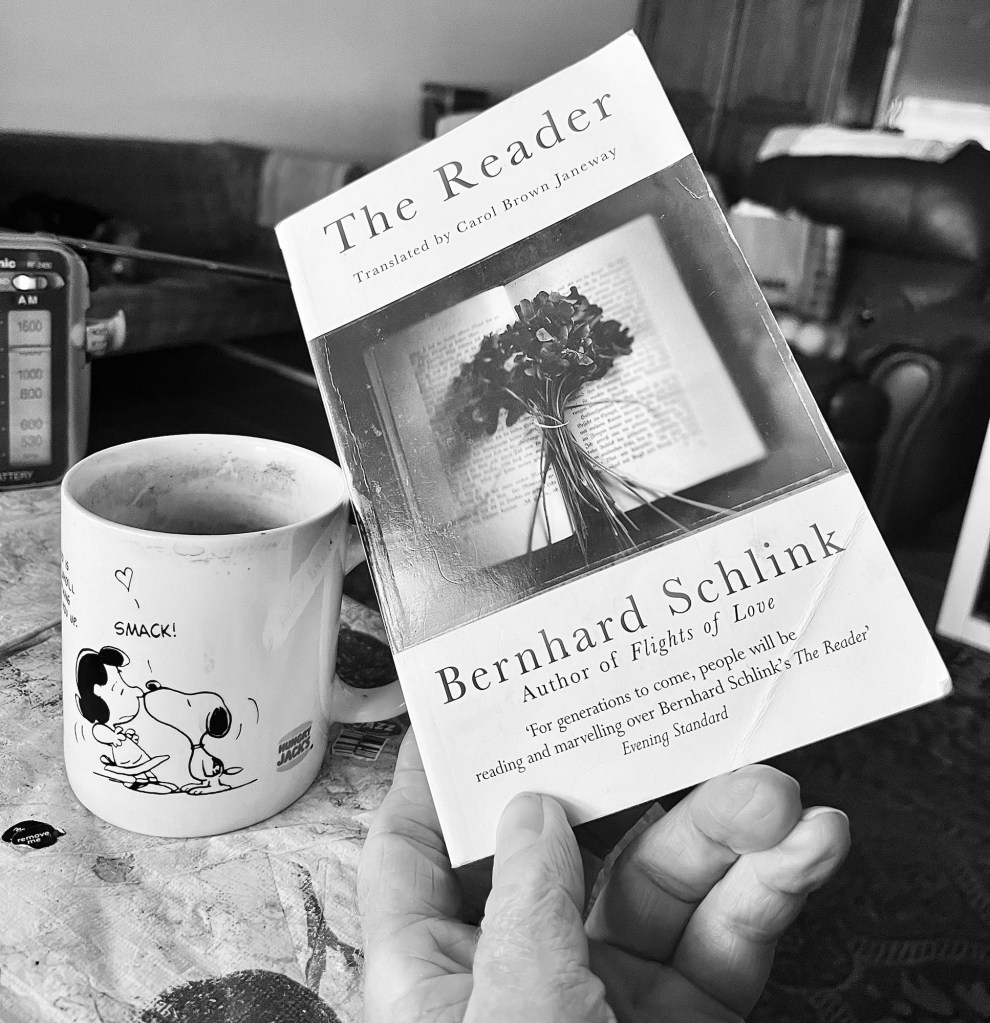
Billionaire 🐒🐒🐒🐒 and World Politics’ superordinate short-essay documents from #auspol GEA gratefully thank Bernhard Schlink
YOUNG PEOPLE there will be a test next oooowheeee it is Tuesday morning in south-cntrl Australia and the prime minister of the country is Mr Anthony Albanese – the peacenik lady is called Francesca but her face & speech are not allowed to be ‘aired’ on Australian television because she’s Germaine Greer Greta Thunberg Julian Assange Stella Morris South African lawyer type leftie type-shit
Start with the basic building block of all narrative, Dummkopf
Penguin 1986, say p8
My father had been a lawyer in the Old Country but worked now at the Vulcan Can Factory. He was passionately interested in philosophy, and the Professor was his only companion on those breathless flights that were, alon with the music of Beethoven and Mahler, his sole consolation on the raw and desolate shore where he was marooned. Seeing me come wobbling towards them with the Pils – which I had slopped a little – held breast-high before me, all golden in the sun, [he would look startled, as if I were a spirit of the place he had failed to allow for]. It was the Professor who recogniized the nature of my errand. ‘Ah, how kind,’ he would say. ‘Thank you my dear, and thank the good mama too. Anton, you are a lucky man.’ And my father, reconciled to the earth again, would smile and lay his hand very gently on the nape of my neck while I blushed and squirmed.
The Professor had no family – or not in Australia. He lived alone in a house he had built to his own design. It was of pine wood, as in the Old Country, and in defiance of local custom was surrounded by trees – natives. …
So there he was all through my childhood, an intimidating presence, and a heavy reminder of the previous world, where his family owned a castle, and where he had been, my mother insisted, a real scholar. …
‘I wish, when the Professor comes,’ my mother would complain, that you try to speak better. The vowels! For my sake, darling, but also for your father, because we want to be proud of you,’ and she would try to detain me as, barefoot, in khaki shorts and an old T-shirt, already thirteen, I wriggled from her embrace. ‘And put shoes on, or sandals at least, and a nice clean shirt. I don’t want that the Professor think we got an Arab for a son. And your Scout belt! And comb your hair a little, my darling – please!
Those 4cyl ’65 👑s with electric overdrive
TEAM
The explainer is that this excerpt of David Malouf’s Antipodes was going nowhere for me as a useful psycho-spiritual educative lit piece so I abandoned it.
However, putting it in full 1934 Piagetian (rather than wooden mechanomorpic micro 1934 Popperian) Formal-operations or ‘critical thinking’ terms with that ⤴ groovy document titling has however relatively saved the proverbial day – and the ink not,
John Mon 5 Jan 1:45 ………………………………………………………………………………………………………………………………………………………………………………………………………………………………………………………………………………………………………………………………………………………………………………………………………………………………………………………………………………………………………………………………………………………………………………………………………………………………………………………………………………………………………………………………………………………………………………………………………………………………………………………………………………………………………………………………………………………………………………………………………………………………………………………………………………………………………………………………………………………………………………………………………………………………………………………………………………………………………………………………………………………………………………………………………………………………………………………………………………………………………………………………………………………………………………………………………………………………………………………………………………………………………………………………………………………………………………………………………………………………………………………………………………………………………………………………………………………………………………………………………………………………………………………………………………………………………………………………………………………………………………………………………………………………………………………………………………………………………………………………………………………………………………………………………………………………………………………………………………………………………………………………………………………………………………………………………………………………………………………………………………………………………………………………………………………………………………………………………………………………………………………………………………………………………………………………………………………………………………………………………………………………………………………………………………………………………………………………………………………………………………………………………………………………………………………………………………………………………………………………………………………………………………………………………………………………………………………………………………………………………………………………………………………………………………………………………………………………………………………………………………………………………………………………………………………………………………………………………………………………………………………………………………………………………………………………………………………………………………………………………………………………………………………………………………………………………………………………………………………………………………………………………………………………………………………………………………………………………………………………………………………………………………………………………………………………………………………………………………………………………………………………………………………………………………………………………………………………………………………………………………………………………………………………………………………………………………………………………………………………………………………………………………………………………………………………………………………………………………………………………………………………………………………………………………………………………………………………………………………………………………………………………………………………………………………………………………………………………………………………………………………………………………………………………………………………………………………………………………………………………………………………………………………………………………………………………………………………………………………………………………………………………………………………………………………………………………………………………………………………………………………………………………………………………





 Billionaire-🙈🙊🙉🐒s with Olivettis