
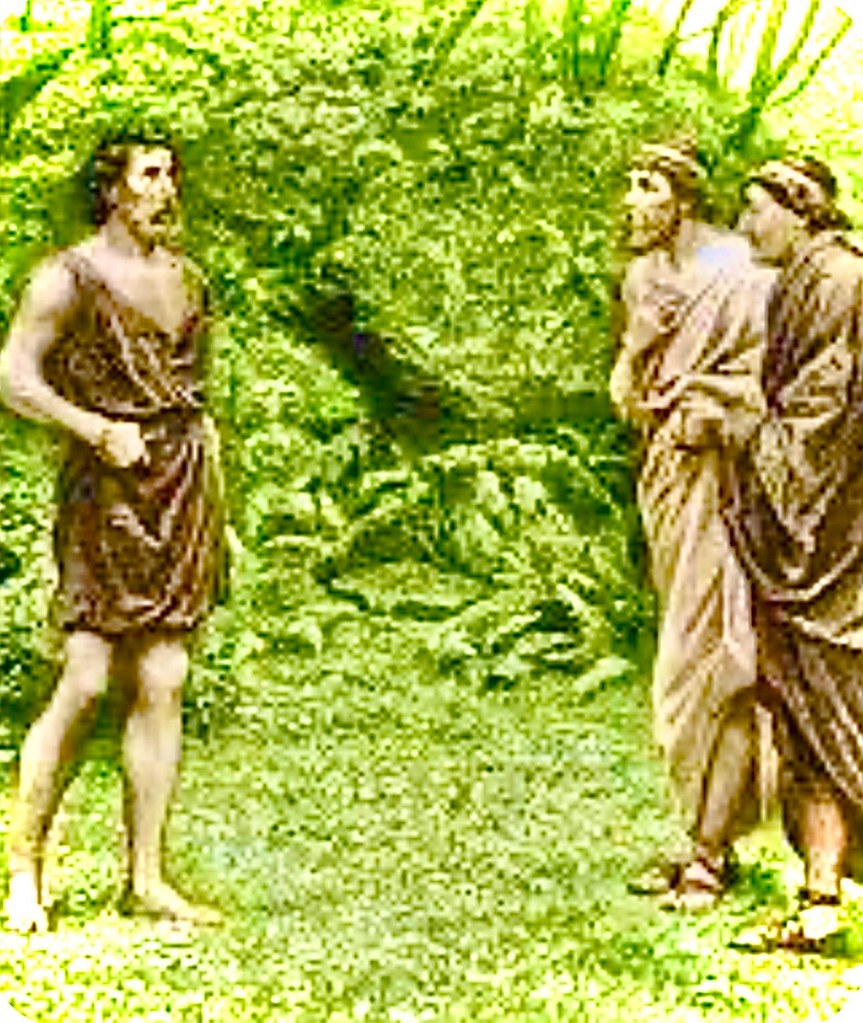
Reproduced here in honour of the memory and neurocognitive health teachings of Erich Fromm mid 20C psychiatrist: the optimism pessimism seesaw essential to Dzhugashvili No person = no problem obscenely tendentious doctrinaire ‘dialectical materialism’
[TIMON comes from his cave]
- Timon. Thou sun, that comfort’st, burn! Speak, and
be hang’d:
For each true word, a blister! and each false
Be as cauterizing to the root o’ the tongue,
Consuming it with speaking! - First Senator. Worthy Timon,—
- Timon. Of none but such as you, and you of Timon.
- First Senator. The senators of Athens greet thee, Timon
- Timon. I thank them; and would send them back the plague,
Could I but catch it for them. - First Senator. O, forget
What we are sorry for ourselves in thee.
The senators with one consent of love
Entreat thee back to Athens; who have thought
On special dignities, which vacant lie
For thy best use and wearing. - Second Senator. They confess
Toward thee forgetfulness too general, gross:
Which now the public body, which doth seldom
Play the recanter, feeling in itself
A lack of Timon’s aid, hath sense withal
Of its own fail, restraining aid to Timon;
And send forth us, to make their sorrow’d render,
Together with a recompense more fruitful
Than their offence can weigh down by the dram;
Ay, even such heaps and sums of love and wealth
As shall to thee blot out what wrongs were theirs
And write in thee the figures of their love,
Ever to read them thine. - Timon. You witch me in it;
Surprise me to the very brink of tears:
Lend me a fool’s heart and a woman’s eyes,
And I’ll beweep these comforts, worthy senators. - First Senator. Therefore, so please thee to return with us
And of our Athens, thine and ours, to take
The captainship, thou shalt be met with thanks,
Allow’d with absolute power and thy good name
Live with authority: so soon we shall drive back
Of Alcibiades the approaches wild,
Who, like a boar too savage, doth root up
His country’s peace. - Second Senator. And shakes his threatening sword
Against the walls of Athens. - First Senator. Therefore, Timon,—
- Timon. Well, sir, I will; therefore, I will, sir; thus:
If Alcibiades kill my countrymen,
Let Alcibiades know this of Timon,
That Timon cares not. But if be sack fair Athens,
And take our goodly aged men by the beards,
Giving our holy virgins to the stain
Of contumelious, beastly, mad-brain’d war,
Then let him know, and tell him Timon speaks it,
In pity of our aged and our youth,
I cannot choose but tell him, that I care not,
And let him take’t at worst; for their knives care not,
While you have throats to answer: for myself,
There’s not a whittle in the unruly camp
But I do prize it at my love before
The reverend’st throat in Athens. So I leave you
To the protection of the prosperous gods,
As thieves to keepers. - Flavius. Stay not, all’s in vain.
- Timon. Why, I was writing of my epitaph;
it will be seen to-morrow: my long sickness
Of health and living now begins to mend,
And nothing brings me all things. Go, live still;
Be Alcibiades your plague, you his,
And last so long enough! - First Senator. We speak in vain.
- Timon. But yet I love my country, and am not
One that rejoices in the common wreck,
As common bruit doth put it. - First Senator. That’s well spoke.
- Timon. Commend me to my loving countrymen,—
- First Senator. These words become your lips as they pass
through them. - Second Senator. And enter in our ears like great triumphers
In their applauding gates. - Timon. Commend me to them,
And tell them that, to ease them of their griefs,
Their fears of hostile strokes, their aches, losses,
Their pangs of love, with other incident throes
That nature’s fragile vessel doth sustain
In life’s uncertain voyage, I will some kindness do them:
I’ll teach them to prevent wild Alcibiades’ wrath. - First Senator. I like this well; he will return again.
- Timon. I have a tree, which grows here in my close,
That mine own use invites me to cut down,
And shortly must I fell it: tell my friends,
Tell Athens, in the sequence of degree
From high to low throughout, that whoso please
To stop affliction, let him take his haste,
Come hither, ere my tree hath felt the axe,
And hang himself. I pray you, do my greeting. - Flavius. Trouble him no further; thus you still shall find him.
- Timon. Come not to me again: but say to Athens,
Timon hath made his everlasting mansion
Upon the beached verge of the salt flood;
Who once a day with his embossed froth
The turbulent surge shall cover: thither come,
And let my grave-stone be your oracle.
Lips, let sour words go by and language end:
What is amiss plague and infection mend!
Graves only be men’s works and death their gain!
Sun, hide thy beams! Timon hath done his reign.
- First Senator. His discontents are unremoveably
Coupled to nature. - Second Senator. Our hope in him is dead: let us return,
And strain what other means is left unto us
In our dear peril. - First Senator. It requires swift foot.
[Exeunt]
🤠🧢🎓💂🎩👮🏽👒🪖⛑️🥳🐒⌨️🐒⌨️🐒⌨️🐒⌨️💰😷🤢🤒🤮⌨️
SEARCH FOOLISH OLD BLOKE WITH MORE THAN A LICK OF LCQS BUSTED RECALL SYNDROME THOUGH CALLING UPON AN EXTENSIVE COMPENDIUM OF RIGHT-🧠 RACE MEMORY, KEN BURNS NARRATIVE DRIVE & POST WWII FOLKLORE
(i) “Foolish bloke” / “Touch of..” : Timon is portrayed as a naive,, almost reckless philanthropist who ignores warnings from his steward, Flavius, about his dwindling fortune. His generosity is described as lacking common sense. Following his betrayal by friends, his deep disillusionment leads to a transformation, where he becomes a misanthrope who curses humanity, which some interpret as a form of madness or, at least, extreme, unbalanced behavior.
(ii) “Late 60s” : While Shakespeare does not explicitly state Timon’s age, he is often portrayed as an established, wealthy, and noble Athenian figure. Some scholarly discussions suggest that because he refers to Alcibiades as a “young man,” Timon might be considered a generation older, perhaps in his 40s or 50s, rather than specifically in his late 60s, though interpretations vary.
(iii) The Persona : In the first half of the play, he is a “spendthrift” who loves being liked and showers people with gifts. After going bankrupt, he transforms into a “man-hater” who lives in a cave,, rejects society, and dies in isolation.
🧢🧢🧢🧢🧢🧢🧢🧢🧢🧢🧢🧢
In essence, Timon of Athens is a study in excess—initially excessive generosity and later, excessive hatred—driven by a profound, almost foolish, inability to read the true nature of the people around him.
Our thanks to George Mason Youkneeversity oawh just joking
Dedication Joe King a northwest Tasmanian possum trapper of the 1950s well so Bill Mollison ✝️ told us at Stanley in 1987
Australia Day laughs and measures of Newtonian perturbation “thrown” in at absolutely no extra cost to our readers.
Putant, Cogitant, Arbitrantur et Aiunt ∴ they are indeed – ∵ they think..
‘Je pense, donc je suis’ 1637 Discourse on the Method (French), altered to ‘I am, I exist’ 1641 Meditations on First Philosophy (Latin), in turn altered to ‘cogito, ergo sum’ 1644 Principles of Philosophy (Latin)2
‘..and is there honey still for tea/ Honey’s off, Love’ recorded in October 1958 and made available 4 public retail purchase December 1958 as part of the “album” (a 10′ plastic 33rpm ‘record’) The Best of Sellers on the ‘Parlaphone’ “label” (commercial 4 profit branding)
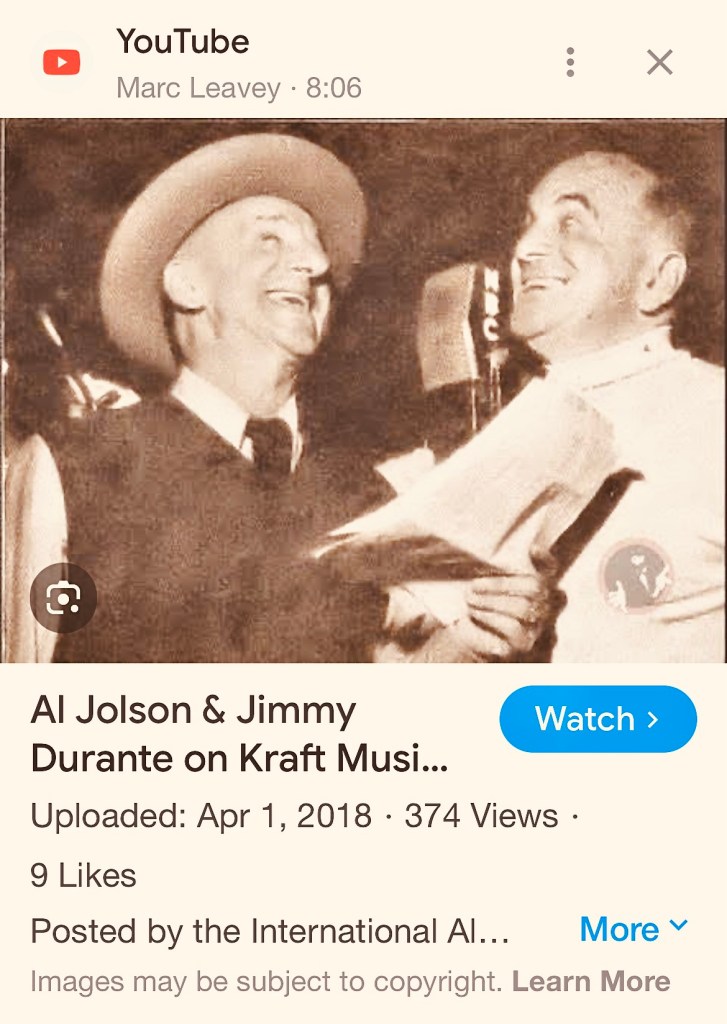
JONNO THE MAN
Australia 🦘🇦🇺🇺🇸🥸🌏
1 ego sum, ego existo – I am, I exist – Rene Descartes’ Version (ii) 1641
2 The phrase signififies that the [ACT] of doubting [ONE’s] own existence serves as proof of the reality of [ONE’s] mind, making it an undeniable [TRUTH]
 Billionaire-🙈🙊🙉🐒s with Olivettis