“When men and women are relieved of excessive preoccupation and anxiety involved in obtaining the means of sustenance, they become concerned with measures for maintaining and improving their own physical health and general welfare and those of their chidren. And when it is necessary they can limit their families and/ or space their children to the best advantage for themselves and their offspring. Further, when they are not harassed by the daily care of excessive numbers of children for whom they cannot perforce adequately care physically and emotionally, and are as a result healthy and at ease with themselves and with their children, they seek the knowledge and the skills necessary to assure happiness in their roles as husbands, wives and parents.
“As a first step, their major need is information in areas they themselves recognize as most important for human relationships, namely sex and reproduction, areas about which there is more secrecy, misinformation, superstition and taboo than in any other aspect of contemporary human life. The facts are few and relatively simple to impart to adults. To transmit them to children is much more difficult, however, and the manner in which this is done by parents reflects their own state of development and points up the importance of attitudes as they are associated with and involved in such personal and intimate questions.
“The Margaret Sanger Research Bureau has been organized to render service and education and to conduct research in the fields of contraception and infertility, preparation for marriage and parenthood, and marriage consultation to men and women who seek help in problems of their marital relationships, particularly in the areas of sex and reproduction.
“The nature of problems as seen in the Bureau is fraught with much conscious and unconscious anxiety and guilt because of the extant taboos and superstitions about sex and reproduction. The ease with which the therapist or the counselor deals with these subjects, the directness of the approach and good feeling resulting from sharing with others what is so in problem, are among the factors that contribute greatly to whatever success is achieved.
“A variety of potency disturbances, problems of infertility, and sterility are presented in contraceptive and infertility clinics. The physical examination, diagnoses, and recommendations for treatment of the emotional aspects which patients discover as causing or contributing to physical conditions, help greatly in their accepting psychotherapy.
“At times the sex problems that occur early in marriage are the only ones the men and women are concerned with; but it is also possible to impart knowledge of, and then insight into, their immediate problems to the total emotional relationship, as well as to their own specific conflicts. Increasingly, as men and women seek greater happiness and contentment in their marriage, as all other aspects of their interpersonal relationships are brought to light, these are dealt with in marriage consultation service, and the approach to these problems is psycho-bio-social. It implies that a man is a total person, with a body, intellect and emotions. He has a genetic inheritance and acquired characteristics as a result of having been in a particular sequence and relation in the family [constellation] and in a particular [environment]. One is never isolated or alone; one is always involved in relationships and always in a social [environment] which influences one and which, in turn, one influences.
“The existence of varied capacities of an individual, constitutional in nature, are stressed. This points up an important factor in indications for, and treartment of, emotional disturbances.. Some of our patients are puzzled by the fact that though the same psychopathology with severe mental emotional disorders is present in some patients, it yet allows them to [function] in areas in which well-adjusted persons do not. It brings clearly to focus the uniqueness of the individual, and also that an identical pathology may be quantitatively different. THEY discover that strongert constitutional capacities in a disturbed person may make the difference between adequate and inadequate [functioning].
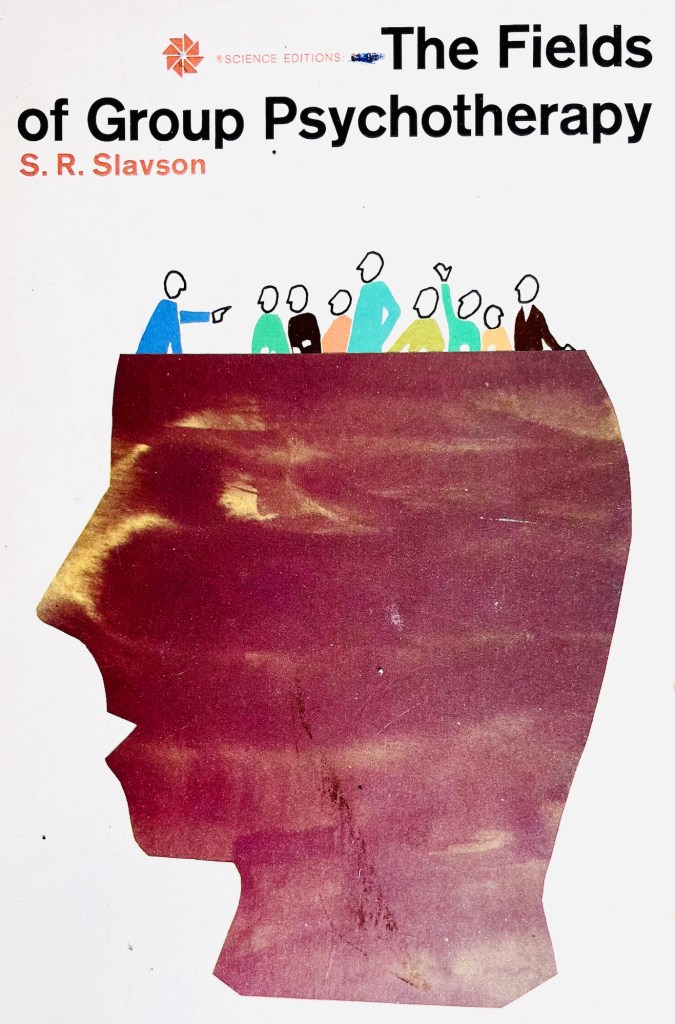
“Psychotherapy in our Service is used as a method of [treatment] of emotional disturbances as palliative, curative, and preventive. The psychotherapy is psychoanalytically oriented, eclectic in nature, emphasizing both Freudian and non-Freudian concepts, whatever applies in the particular case or group.
“It was found that group treastment offers a more realistic approach to many problems of interpersonal relationships as we see them in our Service than does individual counseling and treatment. Emotional nedds that can be satisfied by a person himself without involving others are relatively few. Most of these are satisfied through or in relation with some other person. Satisfactory [adjustment] to living when it involves another person is dependent upon the manner in which one acts and reacts in a relationship, on how feelings, thoughts and actions are expressed, modified or repressed out of consideration for the other individual involved. In a group one discovers not only why one behaves in a particular manner, but also how this behaviour appears to others, how and why they accept or reject it, and how they think one should modify it.
All our group sessions begin with a 10 to 15 minute discussion by the therapist of the psychodynamic factors in the particular problem under consideration. General mental [hygiene] concepts, social values, and sociological changes as they affect the problem, are also discussed. Beyond this the sessions are [unstructured]
..
“The content of the series of sessions is planned on the dynamic concept that people marry to satisfy certain basic needs such as love, sex and parenthood, and that these needs are influenced by early childhood experiences, by social and cultural [forces] which either reinforce positive attitudes or produce negative ones. The lack of information, the misinformation, the fears and anxieties from the prohibition of ordinary sexual [needs], the difficulties resulting from inadequate child-parent relationships – all adversely affect the capacity to love and prevent the development of a mature personality, culminating in difficulties in marital [adjustment]. It is anticipated that the presentation of the these concepts inculcate more positive attitudes and help to develop ionsight into what young people, as individuals are bringing to their marriage [s] and what the marital relationship involves.
“A series of three sessions is held to deal respectively with love, sex and parenthood. The number has been found adequate to to present the material and to ensure full discussions. Each session usually lasts from three to three and a half hours. Most of the young people are primarily interested in contraceptive advice, but some in more information about sexuality. The approach is to treat sexual [adjustment] in marriage as part of a total emotional relationship.

 Billionaire-🙈🙊🙉🐒s with Olivettis