Ashley Crowther had come home after more than twelve years to find himself less of a stranger here than he expected.
He had been at school in England, then at Cambridge, then in Germany for a year studying music, and might have passed anywhere on that side of the world for an English gentleman. He spoke like one; he wore the clothes – he was much addicted to waist coats and watch chains, an affectation he might have to give up, he saw, in the new climate; he knew how to handle waiters, porters, commisionaires, etc. with just the right mixture of authority, condescension and jolly good humour. He was in all ways cultivated, and his idleness, which is what people here would call it, gave him no qualms. He took a keen interest in social questions, and saw pretty clearly that in the coming years there would be much to be done, stands to be taken, forces to be resisted, changes to be had and come to terms with. The idea excited him. He approved of change. With all that to think of he didn’t see that one had to have a vocation, a job named and paid for and endured for a certain number of hours each day, to be a serious person.
Ashley Crowther was a very serious person. He was dreamy, certainly, and excitably inarticulate, but he liked what was practical, what worked, and in the three years since he came of age had owned four automobiles. Now he was interested in the newest thing of all, the air. He didn’t fly himself, but his friend Bert did, and he was quite content, as in other cases, to play the patron and look on.
In the crude categories that had been in operation at Cambridge, athlete or aesthete, he had found himself willy-nilly among the latter. He had nevber been much good at games – his extreme thinness was against him – and he not only played the piano, Chopin and Brahms, but could whistle all the Leitmotifs from The Ring. But his childhood had been spent in the open, he had never lost his pleasure in wide spaces and distant horizons, in climbing, riding, going on picnics, and the creatures he had been surrounded by in those formative years had never deserted his dreams. Moving as they did in the other half of the world, far under the actualities of the daylight one, they had retained their primitive power and kept him in touch with a continent he had been sent away from at eleven but never quite left. Perhaps that is why when he came back at tweenty-three he has not a stranger.
Waking up that first morning in the old house – not in his own room, the room of his childhood, but in the big main bedroom since he was now the master – he had been overwhelmed by the familiarity of things; the touch of the air on his skin – too warm; the sharpness of the light even at twenty to seven – it might have been noon elsewhere; above all, since it is what came closest to the centre of his being, the great all-embracing sound that rose from the dazzling earth, a layered music, dense but deeply flowing, that was clippered insects rubbing their legs together, bird-notes, grass stems chaffing and fretting in the breeze. It immediately took him up and carried him back. He stepped out onto the verandah in his pyjamas – no need for even the lightest gown – [and it was all about him, the whole scene trembled upon it]. The flat earth had been transposed into another form and made accessible to different sense. An expansive monotone, its excited fluting and throbbing and booming from distended throats had been the ground-bass, he saw, of every music he had ever known. It was the sound his whole being moved to. He stood barefoot on the gritty board sand let it fill his ear.
‘How can you do it?’ his friends back there had said, commiserating but admiring his courage, which they altogether exaggerated.
‘It’s my fate,’ he had replied.
The phrase pleased him. It sounded solemn and final. But he was glad just the same to discover, now he was here, that he was not a stranger, and to feel, looking out on all this, the contentment of ownership and continuity.
It was his grandfather who had taken up the claim and put his name to the deeds; but he had died while the land was still wild in his head, a notion, no more, of what he had staked out in a strange and foreign continent that his children must make real. Ashley’s father had created most of what lay before him. Now it was his.
There was still everything to do – one saw that at a glance. But Ashley saw things differently from his father and grandfather. They had always had in mind a picture they had brought from home’, orderly fields divided by hedgerows, to which the present landscape, by planning and shaping, might one day be made to approximate. But for Ashley this was the first landscape he had known and he did not impose that other, greener one upon it; it was himself. Coming back, he found he liked its mixture of powdery blues and greens, its ragged edges, its sprawl. the sense it gave of being unfinished and of offering no prospect of being finished. These things spoke of space, and of a time in which nature might be left to go its own way and still yield up what it had to yield; there was that sort of abundance. For all his cultivation, he liked what was unmade here and could, without harm, be left that way.
There was more to Ashley Crowther’s image of the world than his formal clothes might have suggested – though he was, in fact, without them at this moment, barefoot on scrubbed boards – or, since he was shy, his formal manners, which were not so easily laid aside.
After breakfast he changed into a cotton shirt, twills, boots and a wide-brimmed hat and took a ride round his property, beginning with the little iron fenced enclosure where his parents, his grandparents and several smaller brothers and sisters were interred under sculptured stone.
.. Bert came with his flying machine. They watched it wobble in over the swamp, then circle the house and touch down, a bit unsteadily, in the home paddock. It sat there in the heat haze like a giant bird or moth while cows flicked their tails among cow-pats, and did not sem out of place. It was a landscape, Ashley thought, that could accommodate a good deal. That was his view of it. It wasn’t so clearly defined as England or Germany; new things could enter and find a place there. It might be old, even very old, but it was more open than Europe to what was still to come.
He also discovered Jim.
.. ‘What were you doing?’ he asked. It was a frank curiosity he expressed. There was nothing of reproach in it.
‘Watchin’ that Dollar bird,’ Jim told him. ‘You scared it off.’
‘Dollar bird?’
‘Oriental,’ Jim said. ‘Come down from the Moluccas.’
His voice was husky and the accent broad; he drawled. The facts he gave were unnecessary and might have been pedantic. But when he named the bird, and again when he named the island, he made them sound, Ashley thought, extraordinary. He endowed them with some romantic quality that was really in himself. An od interest revealed itself, the fire of an idividual passion.
Ashley slipped down from the saddle, and they stood side by side, the grass almost at thigh level. Jim pointed.
‘It’s in that ironbark, see?’ He screwed up his eyes. ‘There, over to the left. Second branch from the top. Red beak. Purple on the throat and tail feathers. See?’
Ashley stared, focused, found the branch; and then, with a sharp little leap of surprise and excitement, the bird – red beak, purple throat, all as the young man had promised.
‘I can see it!’ he exclaimed, just like a child, and they both grinned. The young man turned away and sat on a log. He took the makings of a smoke from his pocket. Ashley stumbled forward.
‘Have one of mine,’ he insisted. ‘No, really.’ He offered the case, already snapped open, with the gold-tipped tailor-mades under a metal band that worked like a concertina.
‘Thanks,’ the young man said, his square fingers making an awkward job of working the band. He turned the cylinder, so utterly smooth and symmetrical, in his fingers, looking at the gold paper round the tip, then put it to his lower lip, struck a wax match, which he cupped in his hand against the breeze, and held it out to Ashley, who dipped his head towards it and blew out smoke. Jim lit his own cigarette and flipped the match with his thumbnail. All this action carried them over a moment of nothing-more-to-say into an easy silence. Ashley led his horse to a stump opposite, and crossing his legs, and with his body hunched forward elbow to knee, fell intensely still, then said abruptly:
‘Are you out here often? Watching, I mean?’
‘Fairly.’
‘Why?’
‘I dunno. It’s something to do, isn’ it?’ He looked about, his grey eyes narrowed, and the land was a flat circle all round, grass-tips, tree-stumps, brush, all of it seemingly still and silent, all of it crowded and alive with eyes, beaks, wing tips.
.. Ashley followed his gaze .. he was intensely aware for a moment how much life there might be in any square yard of it. And he owned a thousand acres.
.. Ashley laughed too. He drew himself tighter together, the knotted legs, the elbows in hard against his body, and the laughter was like an imp he had bottled up in there that suddenly came bubbling out.
“Listen,’ he said, ‘how would you like to work for me? How would you – ‘
.. ‘into an observing place, a sanctuary. It’s mine, I can make what I like of it. And you’d be just the man.’
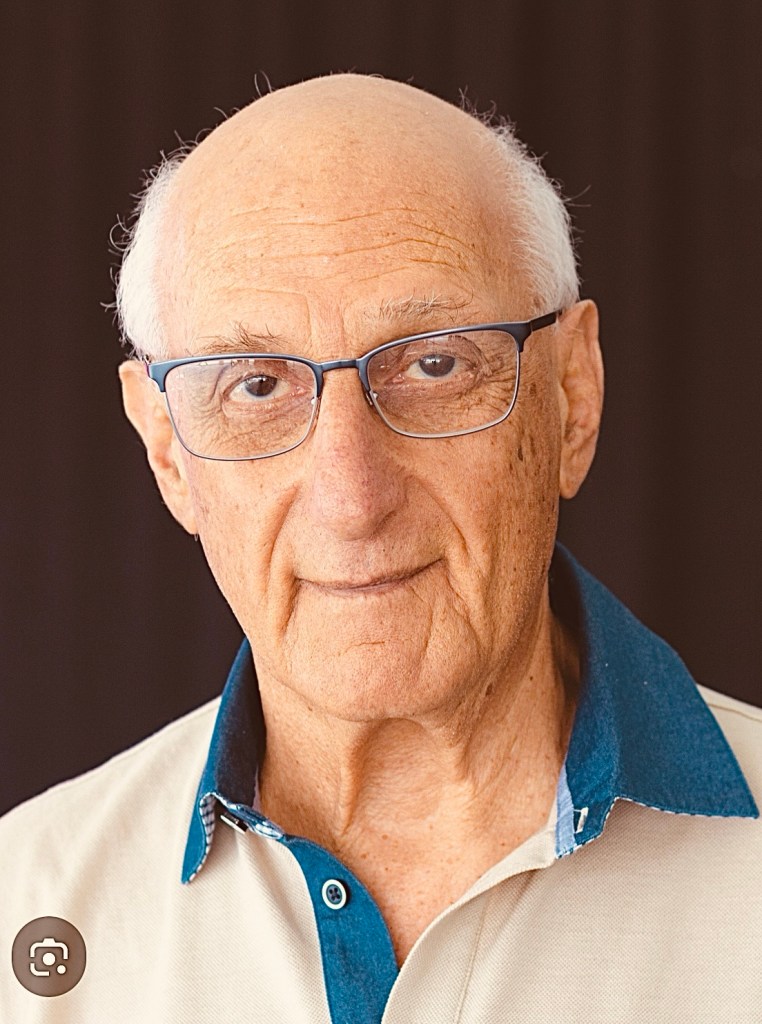
What went before-after above-below (Quantum-superposition gag there} – was the 2nd chunk of ‘Fly Away Peter’ published on ‘Monkeys,’ David Malouf’s writing, this first ‘out’ 43yrs ago when Paul Keating, who had volunteered at ex Premier Lang – the Big Fella’s – office as a student, found his feet as federal Treasurer. My thanks are extended to the writer.. with more than a few thoughts as to the place and part of revitalising textual literary product about public participation, aegis, authority, autonomy, agency, ownership, authenticity, clarity, decision & relationships: in sum the new humanising or collaborative project that hoves into imaginary macro view as global institututions render themselves utterly irrelevant if not obscenely dysoperational.
The other side of the .. it’s been micro-rewarding to let most excellent Australian mid 20th century fiction ‘roll,’ be read and transcribed. This kind of work-as-fun is dead-set contributory to a culture, society and economy in lethal (deadly) trouble communicating anything but gruntiness and customer service patter to other adults and kids, bless their increasingly dizzy trending dozy bewildered Sam Altman, Jensen Huang, AWS Oceania Auckland, McKinsey & Company Australia & New Zealand, Nickelodeon, Wiggles, Bluey & Jarjums comprehensively falsely equivalenced Fake-science heads ..and ahmm hearts.
John Blundell
Adeal-lide, Addled-laid damn, the Palermo of the Sthrn Hmsphr (except Italy’s done some work to fix theirs) Adelaide
Speshull zoo animals & stuff
Alpha-profits fish & chip shops
Have those accountants got a deal for you – cheerio to Merv Nancarrow and Adelaide Rotary
South Australia
 Billionaire-🙈🙊🙉🐒s with Olivettis