
“The Food Forest is a 15 hectare property in Gawler where we grow over 160 varieties of fruit, nuts, grains, vegetables and timber.”
Community planting day on the Gawler River, new Northern Parklands (1000 hectares), Nature Festival, lowline sheep, Gawler’s diprotodon and more…View this email in your browser
Food Forest News: September 2025
Welcome to our newsletter, published about 4 times per year.
You can subscribe via a signup box at the bottom of each page of our website.
Community Planting Day on the Gawler River
Landholders along the Gawler River and volunteers attended a fantastic planting day on August 16th, planting over 700 native tubestock on the north bank of the River to extend one of its most significant revegetation precincts.
It was a super-efficient team and we were able to do replanting of some tubestock that failed to make it through SA’s most severe one-year drought ever recorded. We were entertained by Sulphur Crested Cockatoos and Kookaburras who are nesting in the area.
Adelaide’s Northern Parklands
A bill will soon be presented in State Parliament to form new parklands for Adelaide, occupying over 1000 hectares.
It will incorporate the Gawler River corridor, a major multi-sport precinct, walking and cycling trails and many other recreational spaces as well as restoring our river. Planning will occupy the next year and practical on-ground works are programmed to commence by 2028. The Food Forest will effectively be within the parklands.
Nature Festival on the Gawler River
Nature Festival supports events along the Gawler River.
A range of events for the public, schools and youth will introduce the ecology, history and food of the river during Nature Festival from 26th Sept – 12th Oct. Two local primary schools will continue their exploration, recording and impressions of the river through ‘Artists in residence’ activities, with Adelaide based visual artist Laura Wills, creating beautiful artworks in many media. Meanwhile a youth workshop has constructed a model of a prehistoric creature called a Diprotodon that roamed the riverbanks 30 thousand years ago.
Three public walk and talk events will uncover the mysteries of the Catchment, its culture and history, biodiversity, art and food, and organic growing and permaculture design in action.
See all the details at the end of this newsletter.
Lowline Sheep set for orchards, vineyards, solar farms and the dinner table
The comprehensive break in SA’s record drought enabled a lightning-fast sowing of barley and medic and we have allowed the crop/pasture to establish well before grazing. We thank RuralAid for providing two large bales of cereal hay which combined with feed-grade organic grain from Tarlee to help the 10-month old ram lambs pictured above (and their cohort) to attain terrific growth.
It was a stretch to hand-feed the breeding flock and we thank those who bought the meat from the previous year’s wethers, and gave us wonderful feedback (as well as reducing feed bills)!
We expect the meat from 1 year-old lambs this year will be a higher price (to pay for feed). Let us know if you are interested in some sustainable lamb. This year’s lambing will be in Sept-Oct and we are hoping for lots of little ewes, to expand the breed.
Shelter in a changing climate
An icy blast of weather reached SA from Antarctica on 30 Aug and tested the design of our ‘trellis-release’ orchard which catches hail and, when the load is sufficiently heavy, the bungee straps spring apart and dump it along the inter-row, so avoiding and damage to fruit or flowers. The structure is strong enough to also be used as a trellis that can support >8 tonnes of fruit.
The trees are trained to a ‘Palmette’ form which makes picking, pruning and spraying quick and convenient.
Now entering their second or third cropping year, the trees have done well in an environment that shelters them from birds, excessive radiation, frost, wind and livestock as well as increasing humidity in summer. 
Gawler’s diprotodon
Large herds of these mighty marsupials, each weighing over 2.5 tonnes, roamed Australia in the Pleistocene, and when Thomas Molan was digging at his cottage in Gawler, near the South Para River (in 1891) his shovel struck an old bone.
It was part of a skeleton, identified as a Diprotodon by a palaeontologist Walter Howchin, who happened to be lecturing in Gawler town! The herbivore was the largest of Australia’s marsupial megafauna and became extinct some 25 thousand years ago. Interestingly, the Diprotodon had already lived for some 25 thousand years during human occupation of Australia, suggesting that a strong relationship probably existed between it and early aboriginal people, in a similar way as native creatures have been adopted as totems in more modern Aboriginal society.
Incidentally the first owner of The Food Forest site, John Ragless (who built our homestead in 1840), also owned the property at Lake Callabonna, in SA’s North, where a herd of some 400 diprotodons had become stuck in the drying lake and perished during the Pleistocene era, creating one of Australia’s most amazing fossil beds.
Upcoming events for Nature Festival on the Gawler River
– details and bookings
Attend a range of public events along the River to understand its fascinating prehistory, culture, geology and wildlife. See River images created by people of its catchment and enjoy its food. Get involved!
1. ‘Rivers Meeting’: Kadlitpari / Gawler Rivers Immersive Walk
Sunday Sept 28, 2-5pm
Experience a free guided walk in Gawler along a section of the River to view the ephemeral artworks of Rivers Meeting, a socially engaged art and environment project. The artworks are created by students from Gawler and Hewett Primary Schools & the local community, under the creative guidance of Adelaide based visual artist Laura Wills and indigenous interpreter and artist Violet Buckskin.
Meet one of the ancient megafauna that once roamed these lands, a Diprotodon, which was created by Gawler Youth for this event. It now returns through art and storytelling.
Hear stories of the River from artists, writers, environmental educators and historians.
This event is suitable for all ages and bookings are essential.
Bookings via Humanitix.
2. ‘Food River’ talk, walk and taste of the Catchment
Saturday Oct 11, 10.30am-2.30pm
Food River is part of the Rivers Meeting project at The Food Forest, a 15 hectare permaculture property 6km down-stream from the town of Gawler, with the River FLOWING along its northern boundary.
Through a series of First Nations engagements, school and community workshops, environmental and creative research, collaborative artworks have been made under creative guidance of Laura Wills, sharing the river’s stories. Art works from the Rivers Meeting project will be displayed along the river.
This special event also includes a ‘tasting experience’ and guided walk along this section of the river where you can engage with the local environment. Listen to the sounds of the wind in the trees, the flow of water, the calls of birds. View the artworks, taste something from nature and hear stories of the water as it flows to the coast at the International Bird Sanctuary.
Chef Kane Pollard, award-winning food magician and owner of Topiary and PLACE, and Food Curator of Tasting Australia will celebrate the 3 main stages of the River; the Hills, the Plains and the Coast. Canapes will be created to capture the essence of these stages as guests stroll the riverside, followed by a lunch dish highlighting the organic produce of The Food Forest.
3. ‘Food grown with Nature’ – a river and farm walk
Sunday Oct 12, 10am-1pm
Join us for a diverse experience as an organic farm meets a wild river. This guided tour takes you along a stretch of the Gawler River (Kadlitiparri), that flows along the northern edge of The Food Forest permaculture farm, cutting its way through the Adelaide Plains creating cliffs, flooded flats, red gum forests and waterholes on its journey to the coast at the Adelaide International Bird Sanctuary.
You’ll learn about the biodiversity borne by water in our dry environment as well as the human history of land-use along the river.
You may well see the web-footed Rakali, bearded dragons, dragon flies, sacred kingfishers, tiny wrens, or different birds of prey; perhaps even a turtle.
The farm walk will take you through The Food Forest’s organic vegetable gardens, vineyards and orchards and demonstrates the integration of chickens, geese and mini-sheep to control weed and pasture growth in the orchards.
You will also be able to view passive solar-designed buildings, some of which are constructed with strawbales.
Bookings via Humanitix.Copyright © 2025 The Food Forest, All rights reserved.
You are receiving this newsletter because we have you on our mailing list, please let us know if you’d like to unsubscribe.
Our mailing address is:
The Food Forest
PO Box 859
Gawler, SA 5118
Australia
unsubscribe from this listupdate subscription preferences
Copyright © 2025 The Food Forest, All rights reserved.
You are receiving this newsletter because we have you on our mailing list, please let us know if you’d like to unsubscribe.
Our mailing address is:
The Food Forest
PO Box 859
Gawler, SA 5118
Australia
unsubscribe from this listupdate subscription preferences
Republished by courtesy Crashing Billionaire 🙊🙊🙊🙊s with @OlivettiGp @MIT Typewriters that spout vile AND socio-economically useless disempowering & ultimately humiliating audio-visual and textual pfaff
Temper democratic, bias Australian – Den circa 1910, Dandenongs.
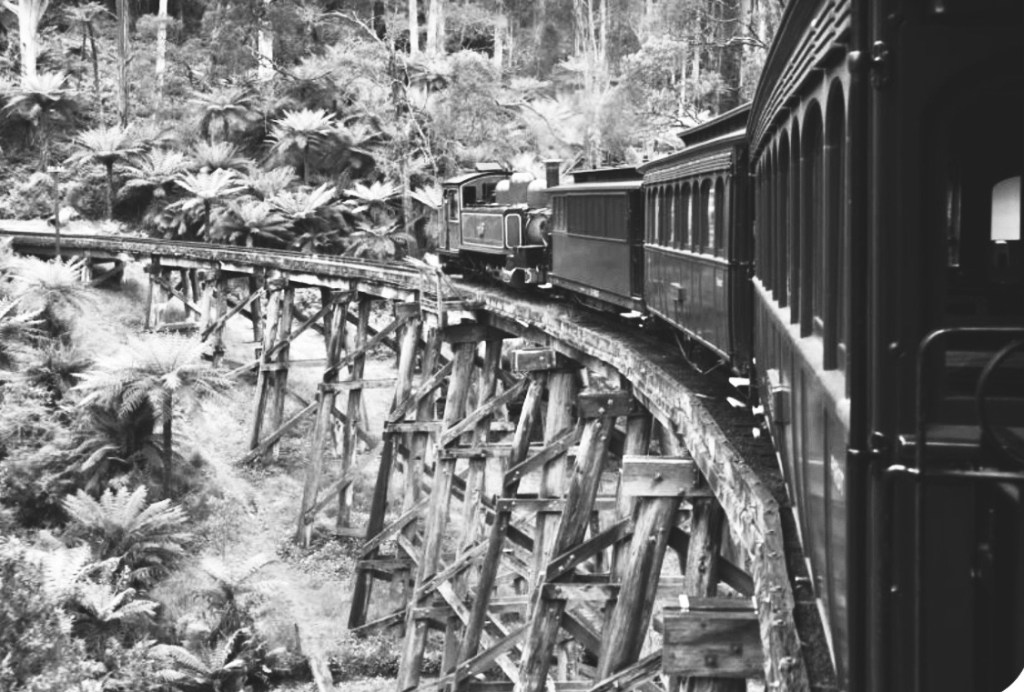
 Billionaire-🙈🙊🙉🐒s with Olivettis