..that title conveys a really wicked fancy-arsed lie – the casualty ‘Fact-thats..’ of evil Atheist-objectivist/ Symmetric-universe/ “crush-all-perturbations” dementing old rich men in Bernaysian-Freudian public relations & advertising of junk product pondering the t-ruth amid-the-alien-corn of those wonderful “Bargain-basement” 🇺🇦-ian1 or were those 1913 🇨🇦-ian grainlands..
SO. Hah. We can not only listen to digital or Frequency Modulation band radio music but get a living intellectual, social & spiritual death Microsoft New Text Document.txt g-o-i–n, er. Drowsily with good hot-chocolate milk in our tummies for a kind of 9 degrees Celsius afternoon tea, I proceed to write to no-one from Anna Funder’s extraordinarily engaging marital relations soap opera of 1920’s through 50’s upper middle income aspirational or prospective wannabe Great Men in History in Suffolk, which, young people, was a county, a kind of local government area in the English part of Great Britain – but More-on government, public administration and the ever re-vitalising clashes of capital owners and those trades unionists later.

🐒⌨️🐒⌨️🐒⌨️🐒⌨️🐒⌨️🐒🎹🦍⚠️
❝ . . . and who is she?
Eileen really looks at other human beings. She observes them ‘as if their faces and manners were glass’, a novelist friend later writes of a character based on her. ‘What she sees are their feelings.’
Lydia writes that she was ‘Sophisticated, fastidious, highly intelligent and intellectual, . . . perhaps no less gifted, though in different ways, [FROM] the man she married.’
Physically, she was very attractive, though rather gawky in the way she moved. She was tall and slender, and had what is commonly regarded as Irish colouring: dark hair, light-blue eyes and delicate white and pink complexion, though the colour in her cheeks, she told me, was due to her using rouge. ‘Must you put it on,? I protested. “If I didn’t I’d look as though I were about to pass out,’ she replied. She had what George called ‘a cat’s face’…
He wears “proletarian fancy dress’ as a provocation, but she genuinely doesn’t care what she wears, which is usually good-quality but ‘shabby and unbrushed clothes, generally black.’ Duspite being ‘rather unkempt’ she has a particular grace, ‘ a body beautifully poised on her legs.’ Eileen is ‘very thoughtful, very philosophical.’ [And she is an extraordinary listener, taking her time to reapond, ‘because her aense of life was so intense she got the full impact of anything ghat turned up and saw it not isolated but with all its connections.’] When she speaks it’s thrilling, funny, worth waiting for. People wait.
‘When she told you something amusing,’ Lydia remembered, [‘her eyes would dance and the whole of her features become suffused with laughter . . . You knew that she habitually embrodered her stories, that things did not happen quite as amusingly or unexpectedly as she described; nevertheless, you never questioned the accuracy of her accounts – it did not seem to matter. Her exaggeration was rarely malicious . . .
But sometimes they are. Earnest Lydia finds that her friend can ‘lash with her tongue’. Eileen doesn’t suffer fools, and she doesn’t spare anyone. ‘Her stories were often told against herself,’ Lydia said, or against the members of her own family. She talked of her family with nhat seemed to be an utter and deliberate frankness, revealing their relationships with one another as if she were discussing people in a book. Later on, she talked the same way about herself and George.
A person who can describe her relationships with an ‘utter and deliberate frankness’, as if ‘discussing people in a book’, is someone with a novelist’s instinct for what it is to be another. Eileen could distil herself and others, human and animal, into characters with lives – and therefore plots – of their own. All her life she turned her experiences into stories, which involved seeing those around her more clearly, in many cases, than they saw themselves. But this ability to imagine yourself in the skin of another can be an openness to the other so radical it leaves you unprotected; it can be a sign of someone who may not even be on their own side. Eileen’s elusiveness, her whimsy, her lack of self-care and her untended intellectual brilliance lead Lydia, eventually, into paroxysms of protective frustration.
Eileen came from a ‘mad gay’ Anglo-Irish family from then north of England, more securely upper middle class than Orwell’s, whom he famously labelled ‘lower-upper-middle'(meaning upper-middle class without money). While Orwell was in Burma she won a scholarship to Oxford, where she read English, focusing on Chaucer and Wordsworth. JRR Tolkien was one of her teachers, the poets Auden, Spender and Mac Niece her contemporaries…
If I were writing a novel, I would invent a character to enact that kind of sexism, invisible and ubiquitous as air. It might look like a hand – hairy or pale, ringed or unringed – on her thigh, an unspoken demand for a kiss-for-credit, or something worse. Or, it might have been that she simply corrected a man – as she did later in her psychology class – and so infuriated him.
In any event, from this point forward her efforts to put writing at the centre of her life are displaced. She will not write academic work on literature. She will not persevere with the poetry she has been writing. Now her literary talents will be sublimated into helping other people realise theirs….
In 1934, Eileen finally found a qualification ideally suited to her keen insight,. her empathic gift and her steel-trap mind – a Master of Psychology at University College London. Her head of department was Professor Cyril Burt, ‘a short, brisk, eloquent’ man who had begun his career in 1912 with a thesis proving that girls had equal general intelligence to boys… In any event Burt considered Eileen to have ‘more than ordinary aptitude…’
‘..and her ability to prick the absurdities of those around her clearly delighted him. Eileen was the embodiment of the ‘fundamenta decency’ of human beings Orwell treasured. [Over his career he came to realise this was the single most important quality that could save us from mindless capitulation to power gone wrong – to the structures that oppress us while selling themselves on keeping us ‘safe’. It was a quality he would have liked to have had.]❞
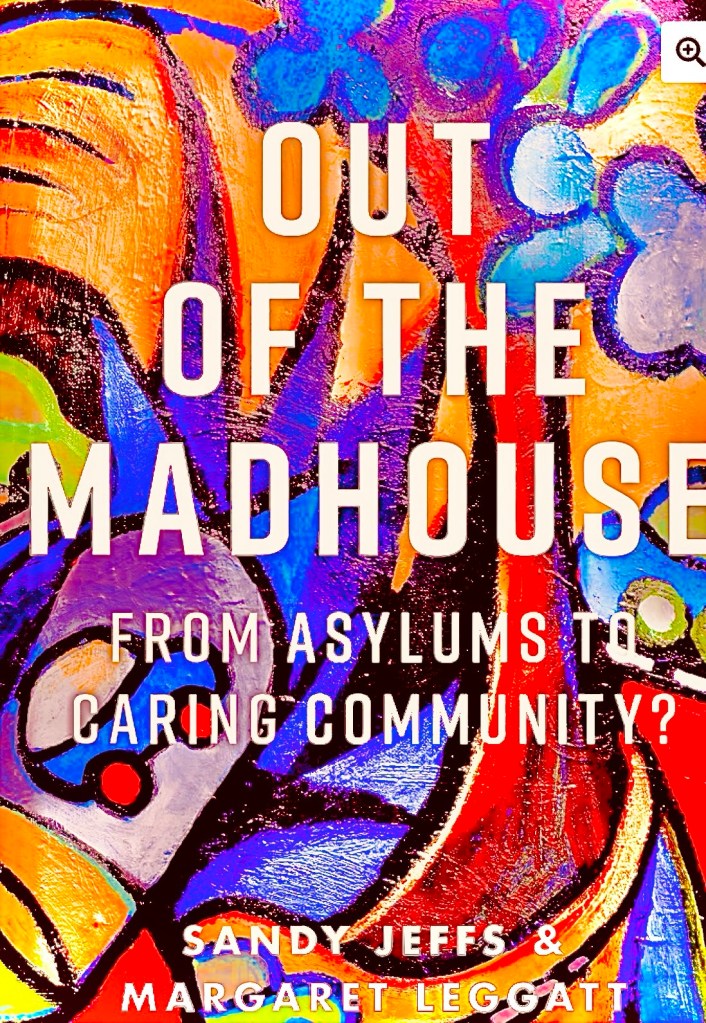
..the foregoing having been selected parts of the pp 40-45 chapter . . . AND WHO IS SHE ? of Anna Funder’s Wifedom: Mrs Orwell’s Invisible Life, Hamish Hamilton, a Penguin imprint 2023
John Blundell
•Meat Pies Kangaroos Holden-cars & Departing 20th C Politicians
•Neurocognitive Health
•Real Economy
•2-5-set series post quadratic logic
• the Historical ‘butt-end’ of the Faux-feminisation Era in (the last of 10,000 years of human organisation into towns, Places de sûreté² villages of delineated & militarily defended territories commonly called) Civilisation
1 alluding to the huge (?) take-up of Ukrainian grainlands by North Americans principally forcing up prices beyond the capacity of people of the region to buy back
² ‘🇫🇷-‘Protestants,’ some hundreds of year ago, young people
 Billionaire-🙈🙊🙉🐒s with Olivettis