
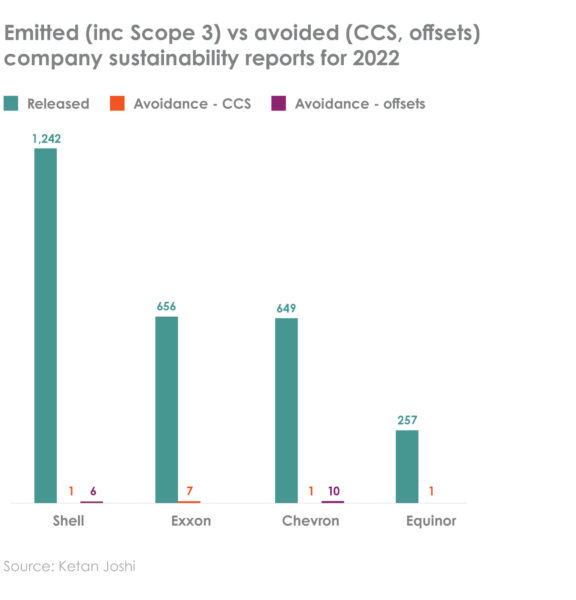
Thanks to Ketan Joshi whose graph outing the BS of big #oil’s #CCS ploy got me and the whole Climate & Capital Media team thinking about the dangers of the many false shiny objects posing as #climate solutions. Here’s our “Ten climate ‘solutions’ that don’t help – Many shiny new “green” ideas do more to preserve fossil fuels than to replace it.” We start off with the mother of all distractions Carbon Capture and Storage (CCS) and wrap with the endlessly distracting, Traditional fission nuclear power.
See what you think? And what did we miss?
Project Drawdown Tim Buckley International Energy Agency (IEA) Fortescue Future Industries ExxonMobil Shell
My thanks to the preparers of this authoritative presentation.
It’s collaboration – economists will immediately realise the absolute antithesis of what was actually unabashedly called Competition Policy in the Milton Friedman 1990s – or a ‘hell-on-earth’ neoliberalism collapse and meltdown of human society now.
John BLUNDELL Neurolinguistics Health and Philosophy of Science South Australia’s thanks are conveyed to all contributors in climate education and this Ten “Solutions” article from Climate & Capital Team..

Ten climate “solutions” that don’t help
by Climate & Capital Team | Aug 09, 2023
Share on



Many shiny new “green” ideas do more to preserve fossil fuels than to replace it
The world continues to face a major obstacle to addressing the climate crisis: deliberate distraction with a proliferation of new whiz-bang technologies and ideas. Some are well-intentioned, some are strategic, some delusional, but most are outright greenwash to justify the continued use of fossil fuels and to distract from the inevitable move to less expensive renewable energy.
Historically, this innovation and testing would have been carried out at research universities funded by government grants with a commitment to finding the best and most useful solutions. Today, much of this work is sponsored by individual businesses or sectors — notably, by coal, oil and gas companies.
An entire suite of bad ideas is being pushed by a fossil fuel industry determined to slow global efforts to decarbonize. This week the Climate & Capital team looks at some of these “shiny objects” distracting the world from forming effective climate solutions.
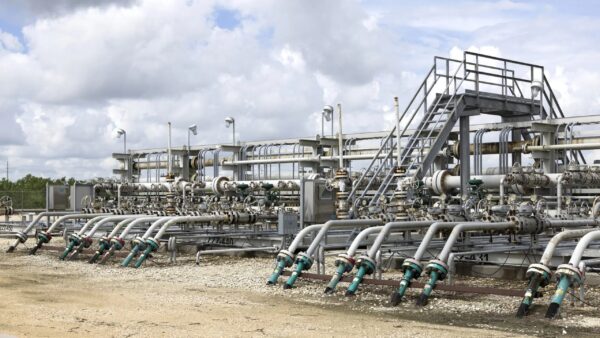
Chevron’s Gorgon Project. Source: Chevron
1. The mother of all distractions: Carbon Capture and Storage
Carbon Capture and Storage (CCS) has long been touted by the fossil fuel sector as THE answer to their enormous greenhouse gas emissions problem. CCS (not to be confused with direct air capture of carbon) involves collecting CO2 from power plants and then injecting it underground, or using it for some other industrial purpose.
Sources like Saudi Arabian negotiatorsand former Goldman Sachs CEO Hank Paulson argue for developing carbon capture technology while pushing back against efforts by the G20 industrialized nations to phase out fossil fuels.
An entire suite of bad ideas is being pushed by a fossil fuel industry determined to slow global efforts to decarbonize.
Forget the hype. This is the reality of the contribution of CCS to reduce emissions today: virtually nil.
Consider this simple chart created by energy researcher Ketan Joshi comparing emissions generated by gas and oil giants (black bars) to those avoided by relying on CCS technology (green) and another questionable solution, “carbon offsets” (purple).
Not convinced? Consider there are 196 CCS projects globally “in the pipeline,” with 30 in operation, 11 under construction, 153 in development and two suspended. The carbon capture capacity of all of these projects is estimated to be only around 242 million tons per year. The International Energy Agency (IEA) sayscapacity needs to reach 1.6 billion tons per year for the technology to be effective.
Attempts to build power plants using CCS are also numbingly expensive and, so far, have all but failed. Oil giant Chevron recently acknowledged its flagship CCS project built in 2017 off the northwest coast of Australia is operating at just one-third of its capacity because of problems at the facility.
Tim Buckley, director of Climate Energy Finance and contributor to Climate & Capital, says Chevron’s admissions are an indictment of the technology: “Dismal operating performance since [the plant] opened six years ago shows the technology has little future.” Buckley notes that most carbon sequestration worldwide is “aimed at extracting more oil and gas from reservoirs.”
Iron ore magnate and passionate climate solution technology investor Andrew “Twiggy” Forrest lashed out at CCS recently, saying it’s a failed technology and a ploy created by oil and gas companies so they can continue extracting fossil fuels, In short, an industry “just waiting for the next idiot to come along.”
Bottom line: CCS is an expensive, ineffective technology being used to extend the useful life of fossil fuels, and masquerading as a climate change solution.
Time to move on.
Denbury Inc. pipeline. Source: Denbury
2. Deceptively distracting: Dirty hydrogen branded as “clean” by its proponents
Hydrogen, when used in a fuel cell, is clean, producing only water as a byproduct. But don’t be fooled. The so-called “clean hydrogen” – we will call it by its true name ‘dirty hydrogen’ — is being promoted by the oil industry to keep burning toxic methane gas.
According to the IEA, 6% of global natural gas and 2% of global coal now goes to hydrogen production, a threefold increase since 1975. And that is expected to keep rising. Dirty hydrogen is an anti-climate solution. Production of hydrogen, the IAE says, is responsible for annual greenhouse gas emissions equivalent of CO2 emissions of the United Kingdom and Indonesia combined.
Carbon capture and dirty hydrogen forms the bedrock of ExxonMobil’s strategy to extend the lifespan of fossil fuels.
The fossil fuel industry would have you believe that the solution to this is also, you guessed it, CCS! The world’s largest non-government oil producer, ExxonMobil, has said it needs carbon capture in order to develop methane-fueled hydrogen.
Carbon capture and dirty hydrogen forms the bedrock of ExxonMobil’s strategy to extend the lifespan of fossil fuels. Last month it paid $4 billion to acquire Denbury Inc., which uses the largest carbon dioxide pipeline network in the U.S. to extract more petroleum from existing oil fields.
And surprise, surprise, Exxon’s purchase could not have happened without new carbon dioxide tax subsidies from the U.S Inflation Reduction Act.
“CCS is an enabler of hydrogen until such time as we’re able to cost-effectively produce green hydrogen,” according to the company.
Source: Shutterstock
3. Net nothing: 2050 Net Zero targets
If there is one blindingly obvious conclusion from this summer’s disastrous weather, it is that we are running out of time. This calls into question conventional wisdom to rely on squishy climate targets to create a “net zero” balance of releasing new carbon in the atmosphere with “sequestering,” or taking other carbon out of the atmosphere.
Net zero was always a compromise idea hashed out at the last minute at COP21 in Paris in 2015. It represented progress, yes, because it got nations to agree to a roadmap to reduce carbon emissions and send a signal that fossil fuels were over.
Sure it is impressive that almost two thirds of the 2,000 largest publicly traded companies in the world have now made corporate commitments, according to Net Zero Tracker. But so what? So far the result seems to have a perverse effect of delaying climate action by creating targets so far in the future that present corporate leadership cannot be held accountable for ever meeting those targets. A recent white paper “Avoid greenwashing and get the claims right” by the Finnish start-up Compensate – Getting the Claims Right — says corporate climate claims such as carbon neutrality, climate neutrality, and net zero structure “while useful” offer little transparency in how these terms are defined.
Source: Unsplash
4. BS: Chevron’s “renewable” cow dung
Chevron has a great idea and is pumping millions of dollars of advertising (in Semafor, The New York Times, etc.) to promote “renewable natural gas” (RNG). It is “renewable” because it uses cow manure. Seriously. They call the process “anaerobic digestion.”
Not only is it not really “renewable” in the same sense as wind, solar or hydroelectric power, it will have no real impact on global warming. Why? It is wildly expensive to make. RNG is five times as expensive as traditional fossil-produced gas.
Chevron markets it as a means of reducing “life cycle carbon intensity” (another meaningless concept made up by the oil and gas marketers) “while meeting the world’s growing energy needs.” The company says it’s all “part of Chevron’s portfolio of technologies and solutions.”




Bottom line: “Renewable natural gas” is Chevron PR — an effort to give their business a green veneer while staving off regulations that would curtail gas consumption.
Source: INDYCAR
5. Silly: Renewable race fuel
Shell is currently working with INDYCAR to develop “100% renewable” fuel for race cars on the track at the Indianapolis 500. The fuel is largely ethanol derived from sugarcane waste in Brazil, resulting in a 60% reduction of greenhouse gas emissions for the event (compared to 2005), according to Shell.
If it’s true that this fuel “is going to be used by all the cars on the grid” in the future, as the company’s promotional videosuggests, that would mean Shell could phase out most of its gasoline-based fossil fuel business, right?
Racing fuels like RNG are just one of many promotional gimmicks used by fossil fuel producers to distract consumers from the problems of continued oil and gas production.
But imagine scaling sugarcane production to meet global demand for 100% ethanol “for all cars” – an effort that would most certainly accelerate deforestation in places like the Amazon, worsening global warming.
Racing fuels like RNG are just one of many promotional gimmicks used by fossil fuel producers to distract consumers from the problems of continued oil and gas production.
Source: Exxon
6. Embarrassing: Exxon’s Ill-fated green algae gas
Here’s another one. You may have seen the Exxon ad featuring earnest looking scientists as “energy farmers” with the company claiming it is harvesting algae to produce “renewable biofuels.”
After more than a decade, and an investment of $350 million on the project and another $60 million on advertising, Exxon dropped the initiative late last year saying, “We need to get on the deployment curve for carbon capture for hydrogen [and] biofuels. Algae still needs some more work,” Exxon told Bloomberg. Coincidently, a few months later, Exxon spent $4 billion for a carbon capture pipeline (see above).
Why did Exxon and other oil companies drop the algae solution? It’s a no brainer. Spending billions on a “renewable” project like Denbury prolongs the use of fossil fuels while cooking up an algae alternative does the opposite. An algae-based biofuels, Exxon says, had not been able to generate enough energy to compete with highly subsidized fossil fuels — and has no carbon capture subsidy benefits.
ADNOC Ruwais refinery. Source: ADNOC
7. Most intense distraction: “Least carbon intensive” oil and gas from Saudi Arabia and the UAE
Saudi Arabia and the United Arab Emirates (UAE) are competing to be known as the “least carbon intensive” producers of fossil fuel. The goal? Help solve the climate crisis? Of course not. It’s to monopolize oil production and eliminate “dirtier” competitors like pesky Texan natural gas frackers or tar sands oil producers from Oman and Canada.
First they paid for a dubious study that “proved” the world’s second-largest oil producer had the most climate-friendly oil and gas because it emitted less methane, and required less energy to extract and process. Such hair splitting is also being used by the UAE to justify increasing annual oil and gas production to 7 billion barrels by 2030 from 5 billion barrels now.
It’s why, says UAE President Sheikh Mohammed bin Zayed al-Nahyan, the UAE is a “responsible supplier of energy,” and is needed to “continue playing this role for as long as the world is in need of oil and gas.”
We’d suggest that that time is rapidly running out.
Source: Saudi Middle East Green Initiatives
9. Most annoying: A 50 billion tree planting project
In 2021, Saudi Arabia unveiled plans to plant 10 billion trees at home and another 40 billion across the Middle East. Yes, 50 billion! Planting trees is good — they provide shade, habitat, erosion control, water retention, carbon capture and more. But massive tree planting projects have often fallen short of their promises. Failure to keep trees alive is one major problem. Massive, single species tree planting projects have messed with biodiversity and died off from insect infestations, fires and drought.
Big tree projects tend to be a cover for doing business as usual. Accounting and reporting on the success of tree planting projects has proven dubious. A report by Oxfam says using land for tree planting to achieve carbon neutrality is “almost impossible” and would require all the farmland on earth to be forested.
Also a challenge, Saudi Arabia doesn’t have the labor force to plant trees with millions of migrant workers from poorer countries filling its much needed blue collar ranks. Nor does it have the water: more than half of the kingdom’s drinking water already comes from desalination plants.
Meanwhile, Saudi Arabia, has announced plans to increase crude oil production and export through 2025. We don’t know whether the Saudis’ planned 50 billion trees might offer shade across the region one day decades from now. But the plan sure does provide PR cover for ramping up oil production.
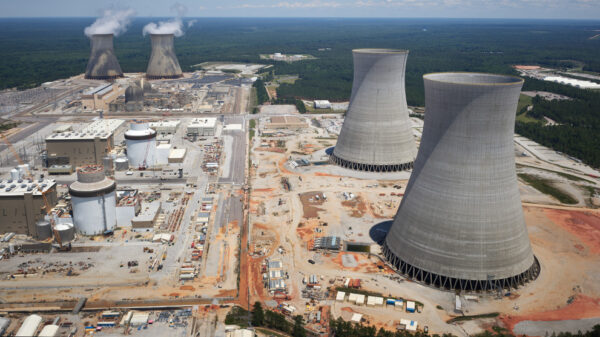
Source: Georgia Power
10. Endlessly distracting: Traditional fission nuclear power
If you have seen the film Oppenheimer, you can understand that nuclear energy has challenges. The only thing that is more terrifying than going extinct from the climate crisis is going extinct by nuclear annihilation.
When it comes to cost and speed to market there is no competition between solar and nuclear. Unless subsidized, nuclear always loses on both counts.
No matter how hard the nuclear industry tries, it is impossible to separate nuclear fission and nuclear bombs. Nuclear energy from uranium or plutonium have always been “atoms for peace” and the core fuel for thermonuclear bonds.
That means as long as fission nuclear plants are built, there will be concerns about nuclear proliferation, how to store highly radioactive waste, and the potential for nuclear meltdown. To wit: Three Mile Island, Chernobyl, Fukushima and now, the wartime threat to Ukraine’s nuclear reactors.
Ok, let’s say you waved that all away with your magical wand. Now there is the ugly economics of nuclear power. When it comes to cost and speed to market there is no competition between solar and nuclear. Unless subsidized, nuclear always loses on both counts.
This week, for example, the first new nuclear power plant in decades in the U.S. is now at full power at Georgia Power Co. after years of delays and billions in cost overruns. Total cost for the plant is $25 billion — 75% more than the original estimated pricetag of $14.3 billion. Compare that to new solar development of a similar size: The Phoebe Solar Project in Texas, now under construction, is projected to cost $397 million and to take less than one year to bring online.
Unless you are a government with no profit incentive, don’t bet on nuclear.

Written by
Climate & Capital Team
Our team aims to lead in the vibrant conversation taking place among entrepreneurs, climate scientists, investors, NGOs, policymakers and corporate leaders around climate change. What’s driving that discussion is a shared realization that building a sustainable future is both a moral imperative and an economic opportunity with potentially exponential returns for our portfolios and most importantly, our planet.
 Billionaire-🙈🙊🙉🐒s with Olivettis