..his influence on literature, philosophy and the visual arts
Warning: This Short Essay Contains Acid Humour, Millions of Dead People and Abundant Authentic Non Machine-“Learning” Non-fascist References
Wilhelm Richard Wagner
[Wagner’s] protean abundance meant that he could inspire the use of literary motif in many a novel employing interior monologue; … the Symbolists saw him as a mystic hierophant; the Decadents found many a frisson in his work.[223] [..cwoarrhh].
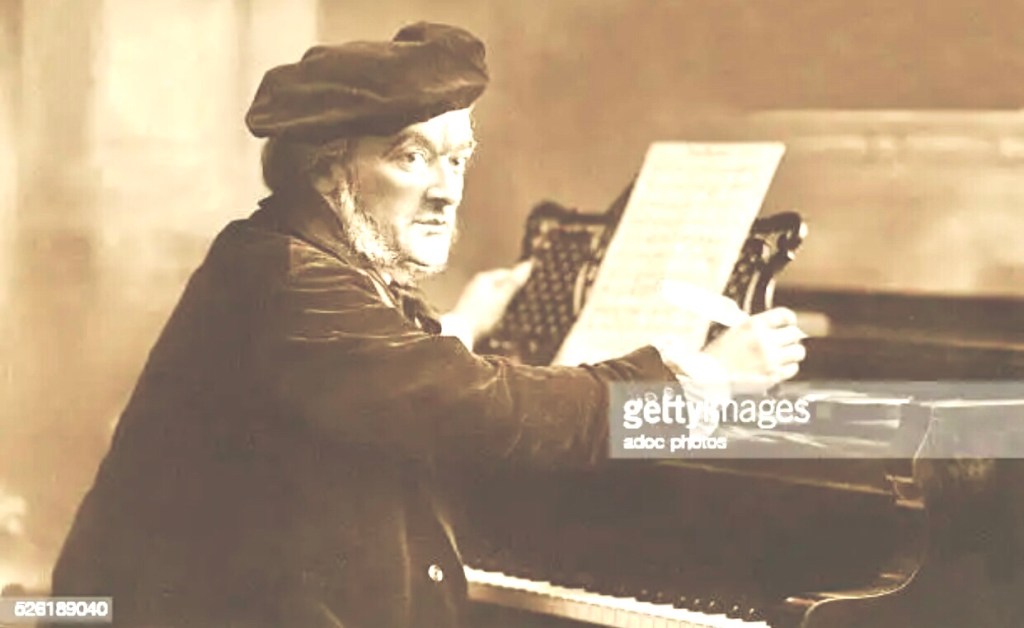
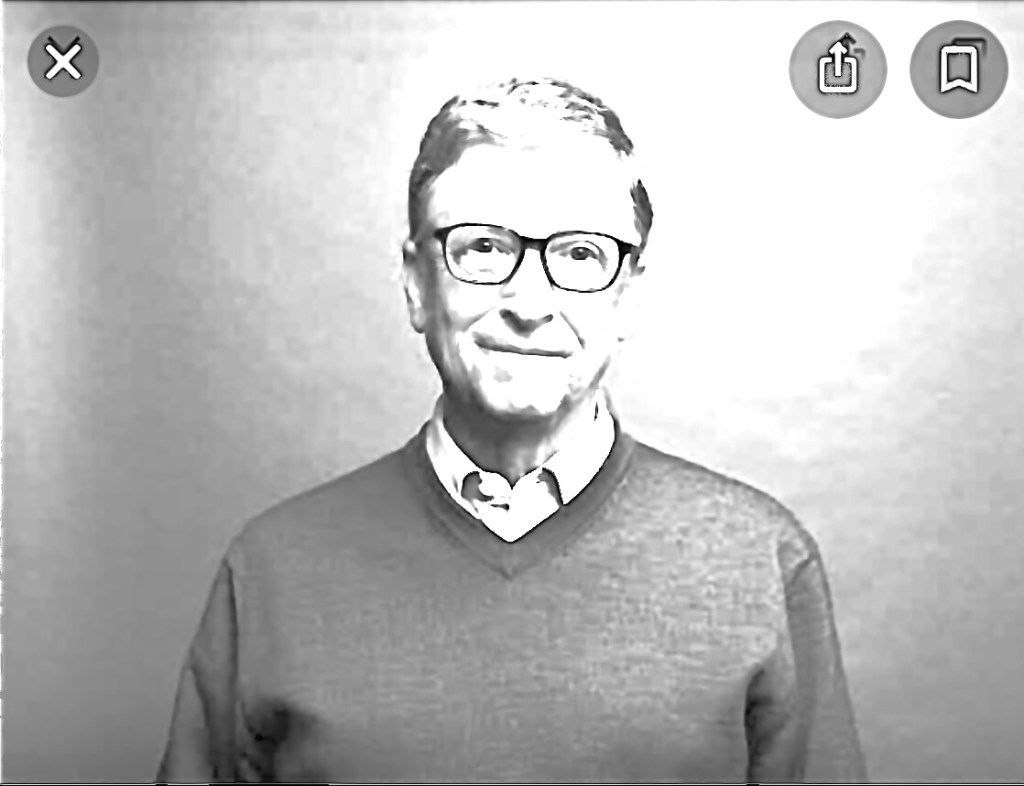
…an old white genitalman, location & provenance uncertain
Wagner’s operatic works are his primary artistic legacy. Unlike most opera composers, who generally left the task of writing the libretto (the text and lyrics) to others, Wagner wrote his own libretti, which he referred to as “poems”.[152] From 1849 onwards, he urged a new concept of opera often referred to as “music drama” (although he later rejected this term),[153][n 16] in which all musical, poetic and dramatic elements were to be fused together—the Gesamtkunstwerk. Wagner developed a compositional style in which the importance of the orchestra is equal to that of the singers. The orchestra’s dramatic role in the later operas includes the use of leitmotifs, musical phrases that can be interpreted as announcing specific characters, locales, and plot elements; their complex interweaving and evolution illuminates the progression of the drama.. @Wikipedia
The Master-singers Story: “Die Meistersinger von Nürnberg occupies a unique place in Wagner’s oeuvre. It is the only comedy among his mature operas (he had come to reject his early Das Liebesverbot) and is also unusual among his works in being set in a historically well-defined time and place rather than in a mythical or legendary setting. It is the only mature Wagner opera based on an entirely original story, and in which no supernatural or magical powers or events feature. It incorporates many of the operatic conventions that Wagner had railed against in his essays on the theory of opera: rhymed verse, arias, choruses, a quintet, and even a ballet. The story is set in Nuremberg in the mid-16th century. At the time, Nuremberg was a free imperial city and one of the centers of the Renaissance in Northern Europe. @Wikipedia
“The story is set in Nuremberg in the mid-16th century. At the time, Nuremberg was a free imperial city and one of the centers of the Renaissance in Northern Europe. The story revolves around city’s guild of Meistersinger (Master Singers), an association of amateur poets and musicians who were primarily master craftsmen of various trades. The master singers had developed a craftsmanlike approach to music-making, with an intricate system of rules for composing and performing songs. The work draws much of its atmosphere from its depiction of the Nuremberg of the era and the traditions of the master-singer guild. One of the main characters, the cobbler-poet Hans Sachs, is based on a historical figure, Hans Sachs (1494–1576), the most famous of the master-singers.” Again, courtesy @Wikipedia
“Friedrich Nietzsche was a member of Wagner’s inner circle during the early 1870s, and his first published work, The Birth of Tragedy, proposed Wagner’s music as the Dionysian “rebirth” of European culture in opposition to Apollonian rationalist “decadence”. Nietzsche broke with Wagner following the first Bayreuth Festival, believing that Wagner’s final phase represented a pandering to Christian pieties and a surrender to the new German Reich. Nietzsche expressed his displeasure with the later Wagner in “The Case of Wagner” and “Nietzsche contra Wagner.[224]” @Wikipedea
This was of course the neoclassical Romance & Rhetorick Era when Ruling Caste European & East Coast USA men bestrode the psycho-sexual landscape like titans and selected womenfolk supplied modest quanta of theatrical noise, colour, inclusivity and ethnic diversity, much as Marie Antoinette’s costumed dancers on the lawns at Versailles.
“The poets Charles Baudelaire, Stéphane Mallarmé and Paul Verlaine worshipped Wagner.[225] Édouard Dujardin, whose influential novel Les Lauriers sont coupés is in the form of an interior monologue inspired by Wagnerian music, founded a journal dedicated to Wagner, La Revue Wagnérienne, to which J. K. Huysmans and Téodor de Wyzewa contributed.[226] In a list of major cultural figures influenced by Wagner, Bryan Magee includes D. H. Lawrence, Aubrey Beardsley, Romain Rolland, Gérard de Nerval, Pierre-Auguste Renoir, Rainer Maria Rilke and several others. [227]”
Whoops, there goes the twentieth century Rather Naughty European Men neighbourhood.
“In the 20th century, W. H. Auden once called Wagner “perhaps the greatest genius that ever lived”,[228] while Thomas Mann[224] and Marcel Proust[229] were heavily influenced by him and discussed Wagner in their novels. He is also discussed in some of the works of James Joyce,[230]as well as W. E. B. Du Bois, who featured Lohengrin in The Souls of Black Folk.[231]Wagnerian themes inhabit T. S. Eliot‘s The Waste Land, which contains lines from Tristan und Isolde and Götterdämmerung, and Verlaine’s poem on Parsifal.” [232]
Whoops there goes the twentieth century European Flaneurs & Tormented Souls neighborhood.
“Many of Wagner’s concepts, including his speculation about dreams, predated their investigation by Sigmund Freud.[233]Wagner had publicly analysed the Oedipus myth before Freud was born in terms of its psychological significance, insisting that incestuous desires are natural and normal, and perceptively exhibiting the relationship between sexuality and anxiety.[234] Georg Groddeck considered the Ring as the first manual of psychoanalysis.”.[235]
Oh my giddy Oscar Wilde aunt there goes the genitally overwhelmed primitive psychiatry & John Maynard Keynes/ big-time stock market trader’s animal spirits neighbourhood as well.m
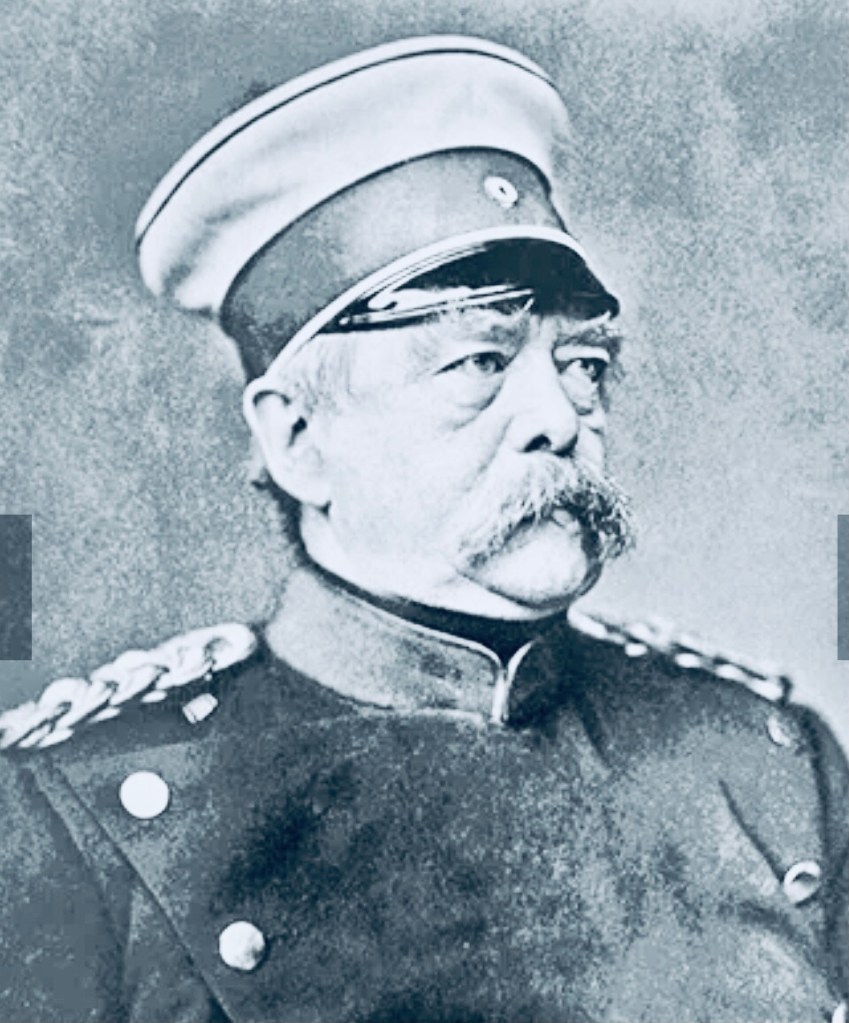
If perchance your appetite is whetted for more sex, dear reader, though I cannot for the life of me think why: the violent genocidal thrusting and parrying of post Otto von Bismarck vs Napoleon III warfare between jumped-up trumped-up regional mediaeval principalities of blood, conquest and really-excellent-paintings become the grandly named Nation States of this calamitous day will indeed put us all off sex permanently (by 2032 according to my own guesstimate of 2003 – Atmospheric and Weather Science advocates rarely if ever pass up an opportunity at self-promotion – the money’s lousy and publication moments are few and far between because the entire intellectually, cognitively, spiritually and morally bereft 20th century political class, numbering say three-million wordwide, fears, hates and dreads economic reform and seeks to persist with the complete demolition of liberal democracy for heroic gerontocrat Wagnerian fascism – with which cockamamie political outcome the others of us, some 7,000,000,097, disagree vehemently), try this: Psychoanalysis, Sexuality, and Lytton Strachey’s Theory of Biography Martin Kallich Vol. 15, No. 4 (WINTER 1958) pp. 331-370 The Johns Hopkins University Press
https://www.jstor.org/stable/26301654


I’m John Blundell, global ecosystems, economic redesign, the teaching revolution, neurolinguistics, cultural hegemonics, human health and Philosophy of Science.
J
This essay is dedicated to Em Prof Barry Boettcher Univ of Newcastle notably on his neurology work & advice to me circa July 1969 Flinders University of SA
 Billionaire-🙈🙊🙉🐒s with Olivettis